
Omolio Folk-Agricultural Showroom Marinos Antipas
Omolio Folk-Agricultural Showroom Marinos Antipas
Omolio is a historical settlement of the Municipality of Agia surrounded by great natural beauty. Located in a central location, 40 km from the capital of the Larissa regional administration, just three kilometers from the Athens-Thessaloniki national road and at a minimum distance from the sea. According to Homer, the city participated in the Amphictyony of Delphi, while the mint of Ancient Omoli was one of the greatest in central Greece. The ruins of this ancient city and citadel still remain close to current Omolio.
Conditions brought the village back close to major historical events. This is the soil in which Marinos Antipas is buried, one of the most important figures of Greece in the fight to defend civil liberties. When Antipas came to Thessaly, where he took over as caretaker of the property of his uncle, he changed social conditions in the region. Although he was in a position of strength, he deleted agricultural debts, applied Sunday as a day off and set the remuneration of tenant farmers based on 75% of production (instead of 25% as was up to then in force). His murder was the natural consequence in a place dominated by lthe andowners of the time.
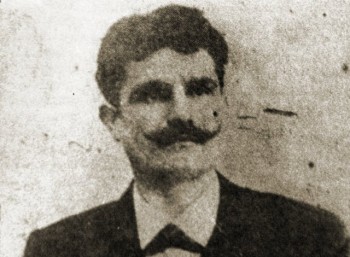
Μαρίνος Αντύπας / Marinos Antypas
Nowadays, the local community commemorates him, recognizing his contribution to changing social conditions, both in the region and across the country. It built a modest monument erected in Omolio where events are held every year in memory of the great fighter. At the same time, it gave his name to the small museum built in the village: Omolio Folk-Agricultural Showroom Marino Antipas, housed in the former Community chambers, located in the village square.
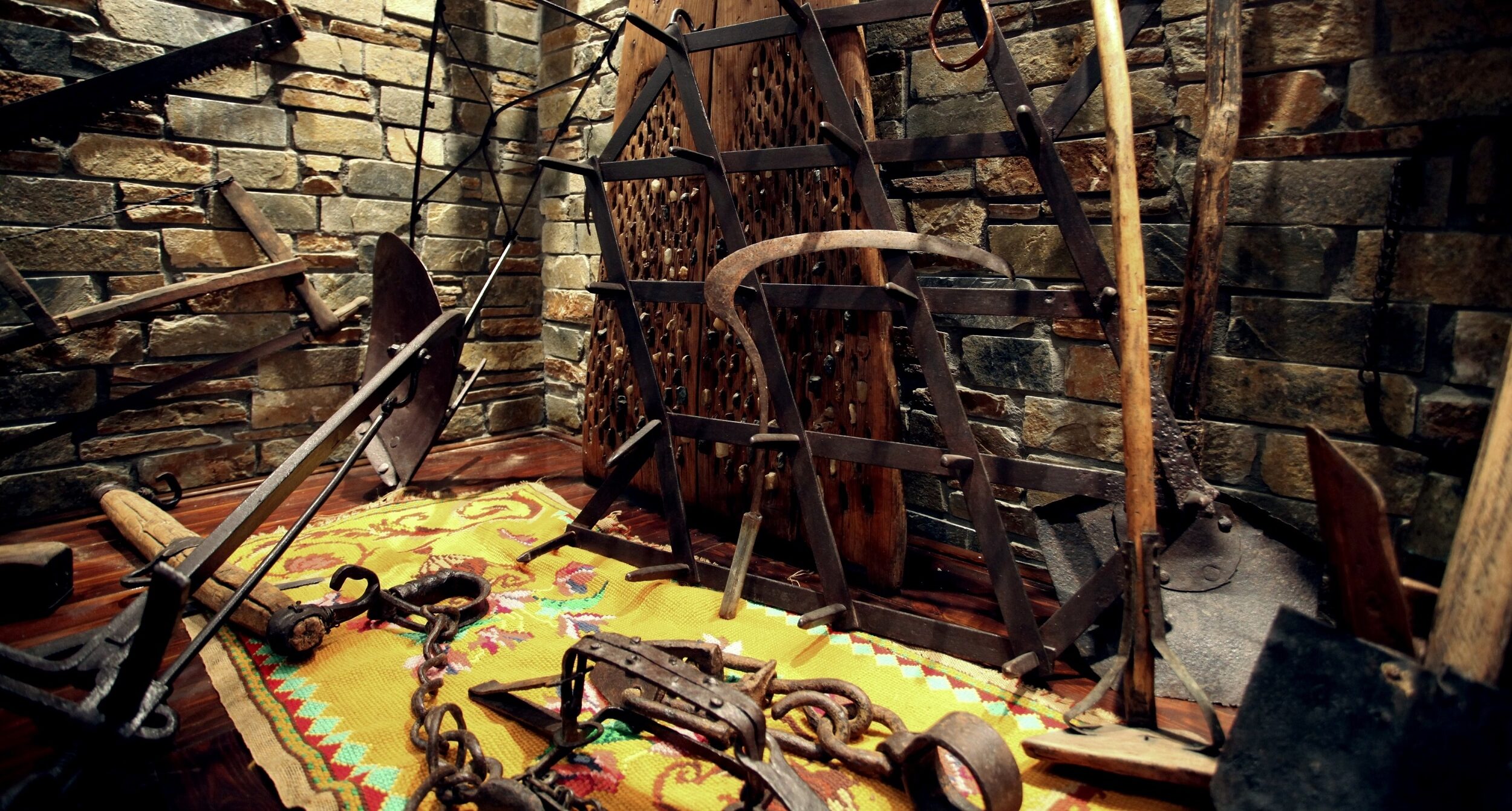
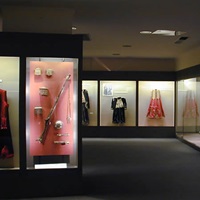
Today, the exhibition presents the tools used by the people for whom Antipas fought. Inaugurated on 18 March 2007 to mark the 100th anniversary of his death (murdered in 1907 in Pirgetos). Premechanical agricultural and foraging tools are hosted in the exhibition venue. Visitors can also admire tools of traditional occupations (fishermen, shoemakers, weavers, etc.) and objects from daily life of local people: handicrafts, embroidery and textiles, utilitarian household items (sofras (low tables), pots, pinakoti (bread levening boards)), local costumes, traditional clothing, woodwork items, postcards and engravings, coins, antique furniture, and a local bisiki (cot).
The collection includes artifacts that may be considered historical documents: a local’s military diary, which describes in detail the experience of the war in Asia Minor, but also photographs of social events and the occupations of the inhabitants. The showroom has a conference hall that holds 50-60 people.
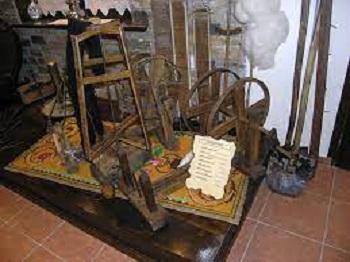
Λαογραφικό-Γεωργικό Εκθετήριο Ομολίου Μαρίνος Αντύπας
Places like the Omolio Folk-Agricultural Showroom Marinos Antipas, although exhibiting objects from earlier times, alsoshow that traditional culture is not a static body of evidence that survives only in a museum. Because on the one hand, tools and materials actually bear witness to the immutable characteristics of an era (available resources, raw materials), however, they also reveal the basic principles of human creativity that lead to evolution. The name of the exhibition reminds us, at the same time, that this creativity should always be developed with concepts such as respecting the principles of human law and social justice.

GSA- Historical Archives/Museum of Hydra | “THREE CONTINENTS—THREE VOICES” | August 7, 2026
The Hydra Cultural Association and the GSA/Historical Archives-Museum of Hydra will welcome, on Friday, August 7, 2026, at 8:30 p.m., two distinguished Greek musicians, violinist Alexandros Gavriilidis-Petrin and Hydra-born pianist Stamatis Vlachodimitris, for a special concert titled “Three Continents – Three Voices.” A musical journey from Europe to Russia and America, through three different musical languages and three important composers: Johannes Brahms, Sergei Prokofiev, and Aaron Copland. The PROGRAM opens with Johannes Brahms’s Sonata No. 3 for Violin and Piano in D minor, Op. 108, one of the most important works in the repertoire for violin ...More
University of Thessaly | MSc in “Environmental Management” | Call for Applications (Phase II, Academic Year 2026–2027)
The Department of Environment at the School of Technology of the University of Thessaly invites interested individuals to apply for admission to the MSc Program entitled “Environmental Management” for the 2026–2027 academic year. The objective of the MSc Program in “Environmental Management” (Government Gazette B’ 3608/July 11, 2022) is to provide advanced scientific knowledge and technologies, an understanding of legislative frameworks and their application, and methodological approaches related to the Environmental Sciences. The following are required for the award of the Degree: ➢ Successful completion and examination of ten (10) required courses. ➢ Preparation and successful ...More

Extension of the Application Deadline for the 5th Research Residency Program of the G. & A. Mamidakis Foundation
The residency program launched by the G. & A. Mamidakis Foundation in 2022 marks its fifth anniversary this year, thereby continuing a tradition of hosting artists and researchers that has been in place for decades. Greek researchers, creators, and professionals in the cultural field who are active at the intersection of art, science, and technology are invited to submit, by Thursday, August 20, 2026, to the program, which will take place from November 1–8, 2026, in Agios Nikolaos, Crete. The residency program is aimed at professionals from a wide range of disciplines, including artists, researchers, scientists, ...More
Orthodox Academy of Crete | Great Vespers for the Feast of the Transfiguration
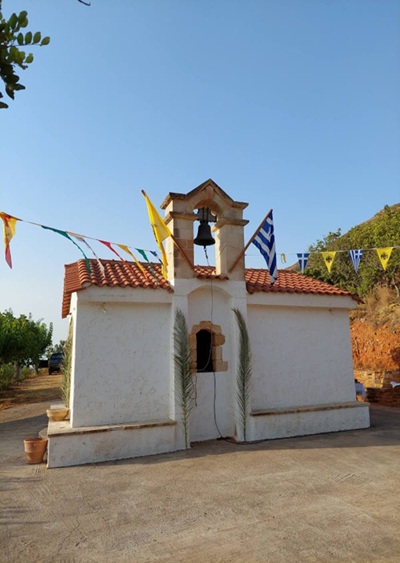
The Orthodox Academy of Crete (OAC) announces that the Great Vespers for the Feast of the Transfiguration of the Savior will be held at the celebrating Holy Church of the Euro-Mediterranean Youth Center (EKN), a branch of the OAK, in Nopigia, will be held on Wednesday, August 5, 2026, at 7:00 p.m. The Great Vespers will be followed by the blessing of the fruits of the earth and refreshments for those in attendance.

Patakis Publications| Yanis Varoufakis: Raise Your Soul: A Personal History of Resistance
Yanis Varoufakis’s published work, ''Raise Your Soul: A Personal History of Resistance'', is the author’s seventh book. He describes it as a “historical fiction” It covers the period from 1923 to 2023, and unfolds as a heartfelt account, as the world-renowned professor describes his family’s rise, the difficult moments of their active involvement in the geopolitical developments of the Greek community in Cairo, and the post-civil war years in Greece. Grandfathers, grandmothers, parents, and spouses come to share personal stories of their experiences amid the tectonic shifts that reshaped the geopolitical landscape of the Mediterranean—from the ...More

Park your Cinema – Park your Cinema Kids | Open-air cinema under the stars at Stavros Niarchos Park | August–September 2026
The Stavros Niarchos Foundation Cultural Center (SNFCC) continues its successful outdoor film screening series, “Park your Cinema” and “Park your Cinema Kids,” at the Glade in Stavros Niarchos Park—as always, with free admission! This year, adult audiences can enjoy popular “musicals under the stars” curated by the Thessaloniki International Film Festival, while children will watch films centered on friendship and family, selected by the Athens International Children’s and Youth Film Festival. The August program features four iconic musicals starring legendary actors (Cabaret, Singin’ in the Rain, New York, New York, and Mamma Mia!), while in September ...More


Leave A Comment