
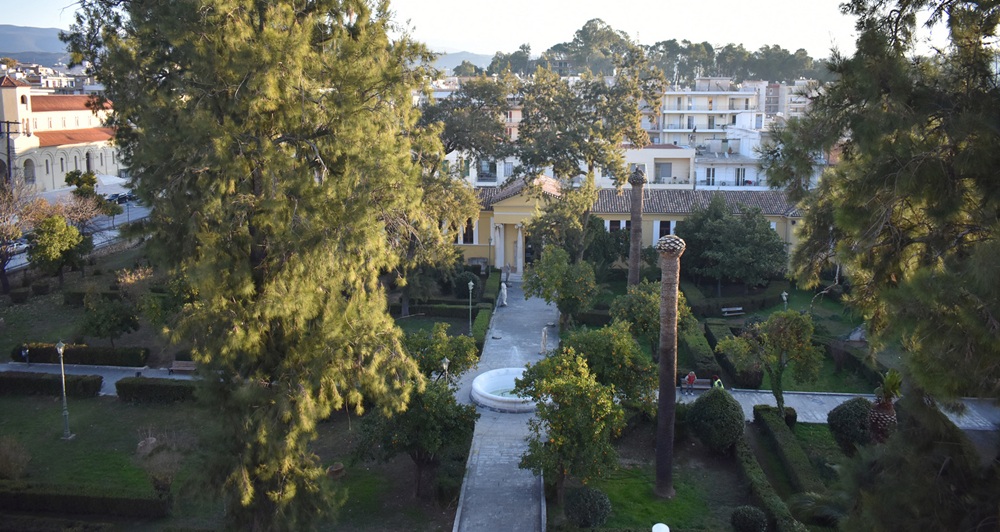
The project to modernize and expand the Old Archaeological Museum of Sparta is rapidly moving forward.
The Minister of culture Lina Mendoni stated: “The Old Archaeological Museum of Sparta, located in the city center and directly connected to its historic urban fabric, is an iconic monument linked to modern Greece’s vision of showcasing the heritage of Ancient Sparta. It was the first museum outside Athens, built in 1874 to designs by the Danish architect Theophil Hansen, housing the great finds of Lacedaemon. The most significant among them are the finds from the great sanctuaries of Sparta. The restoration work and the underground expansion are proceeding according to plan, under the supervision of the relevant departments of the Ministry of Culture, as we observed during our recent on-site inspection. The new architectural approach nearly triples the usable space. It provides for the creation of two new underground halls with artificial lighting, the installation of modern support infrastructure, and the functional revitalization of the preserved garden-sculpture gallery environment. In this way, all subsequent unauthorized alterations are removed, highlighting the authentic monumental character of the neoclassical building. The new permanent exhibition is enhanced with interactive digital media, transforming the Old Museum into a contemporary museum, an international attraction, open to the public.”
The Archaeological Museum of Sparta, built in a romantic neoclassical style, features a central Ionic portico and originally had two exhibition halls. In the early years, the forecourt remained undeveloped, while the garden was landscaped later. During the 20th century, the building underwent successive expansions, and in 1995 it was designated a historic monument, along with the surrounding municipal garden. The project to restore and modernize the existing building of the Archaeological Museum of Sparta aims to address the extensive damage and operational issues it currently faces, as well as to upgrade its infrastructure and enhance the overall visitor experience. The expansion is organized into distinct categories of interventions concerning the surrounding area, the functional layout, the exhibition infrastructure, and the technical facilities. Key objectives include highlighting the building’s historical character, restoring its original form and functional layout, ensuring full accessibility, to improve the conditions for the storage and display of exhibits, to upgrade the building envelope for energy efficiency, and to modernize its infrastructure.
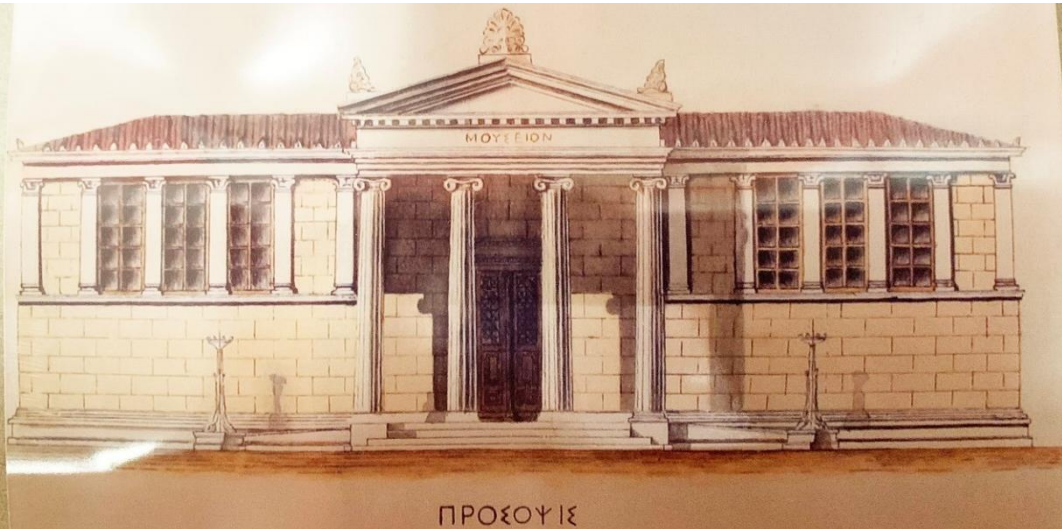
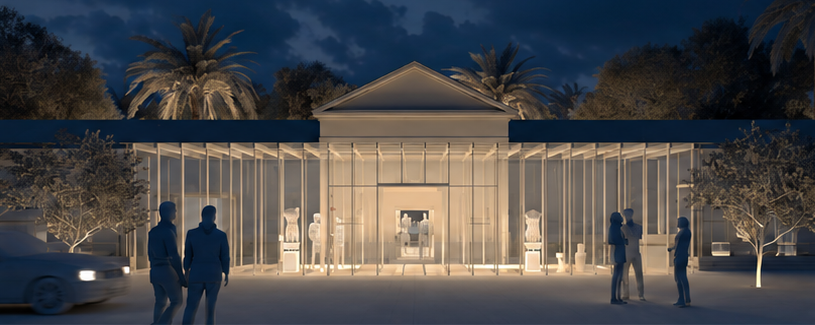
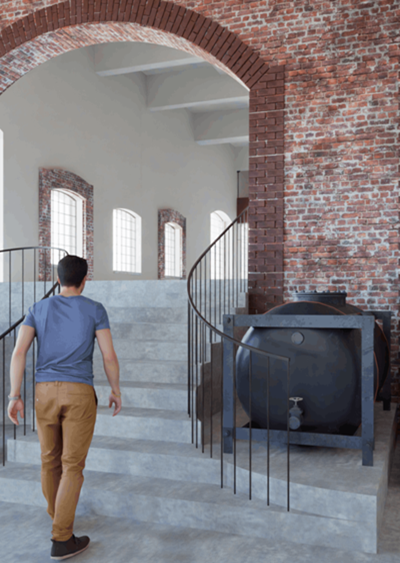
The central design principle is to expand the Museum with the least possible impact on the historic building. For this reason, the new spaces are being developed underground, around the perimeter of the existing structure. The expansion is organized through rectangular halls, identical to those of the existing building, ensuring morphological and functional continuity. The connection between the old and new sections is achieved through a discreet glass entrance on the east facade, which functions as a reception and circulation hub without affecting the monument’s visual integrity. At the same time, the removal of later additions and storage areas helps to highlight the building’s original form.
The redesign and enhancement of Agios Nikonos Street will strengthen the Museum’s connection to the public space and the city, while the roof of the extension will be transformed into a “sculpture garden,” providing the opportunity to host outdoor exhibitions. The new exhibition spaces feature a minimalist architectural design, utilizing modern materials, and are equipped with advanced lighting, air conditioning, and environmental control systems to protect and showcase the exhibits. The functional layout includes new entrances, a gift shop, staff and office areas, creating a modern, accessible, and functionally upgraded museum complex. The mezzanine level features restrooms and visitor service areas, as well as a viewing point overlooking the permanent exhibition hall. The basement houses two main halls, one for permanent exhibitions and one for temporary exhibitions and educational programs, while storage areas, electromechanical facilities, and emergency exits, ensuring the smooth operation and safe functioning of the Museum.
The landscaping plan calls for the restoration and enhancement of the Museum’s historic garden, the preservation and expansion of green spaces, and the upgrading of outdoor amenities. Plans include the creation of an accessible entrance for people with disabilities. In addition, plans call for the installation of a small, independent kiosk-café within the garden to serve visitors.


Leave A Comment