
Omolio Folk-Agricultural Showroom Marinos Antipas
Omolio Folk-Agricultural Showroom Marinos Antipas
Omolio is a historical settlement of the Municipality of Agia surrounded by great natural beauty. Located in a central location, 40 km from the capital of the Larissa regional administration, just three kilometers from the Athens-Thessaloniki national road and at a minimum distance from the sea. According to Homer, the city participated in the Amphictyony of Delphi, while the mint of Ancient Omoli was one of the greatest in central Greece. The ruins of this ancient city and citadel still remain close to current Omolio.
Conditions brought the village back close to major historical events. This is the soil in which Marinos Antipas is buried, one of the most important figures of Greece in the fight to defend civil liberties. When Antipas came to Thessaly, where he took over as caretaker of the property of his uncle, he changed social conditions in the region. Although he was in a position of strength, he deleted agricultural debts, applied Sunday as a day off and set the remuneration of tenant farmers based on 75% of production (instead of 25% as was up to then in force). His murder was the natural consequence in a place dominated by lthe andowners of the time.
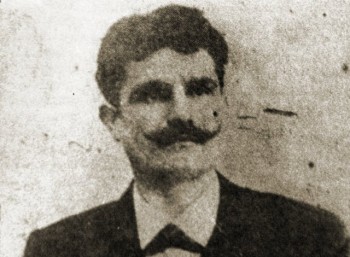
Μαρίνος Αντύπας / Marinos Antypas
Nowadays, the local community commemorates him, recognizing his contribution to changing social conditions, both in the region and across the country. It built a modest monument erected in Omolio where events are held every year in memory of the great fighter. At the same time, it gave his name to the small museum built in the village: Omolio Folk-Agricultural Showroom Marino Antipas, housed in the former Community chambers, located in the village square.
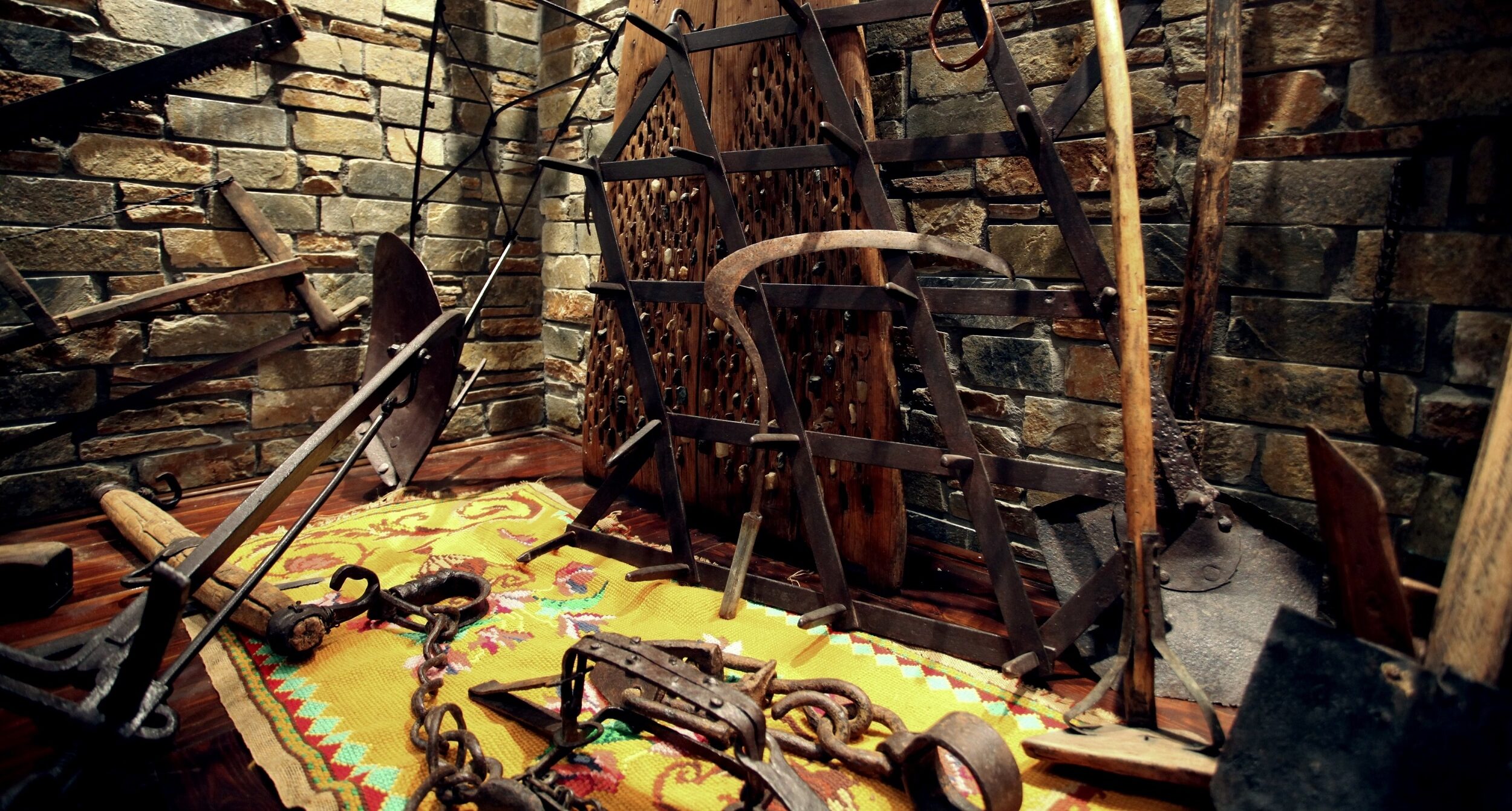
Today, the exhibition presents the tools used by the people for whom Antipas fought. Inaugurated on 18 March 2007 to mark the 100th anniversary of his death (murdered in 1907 in Pirgetos). Premechanical agricultural and foraging tools are hosted in the exhibition venue. Visitors can also admire tools of traditional occupations (fishermen, shoemakers, weavers, etc.) and objects from daily life of local people: handicrafts, embroidery and textiles, utilitarian household items (sofras (low tables), pots, pinakoti (bread levening boards)), local costumes, traditional clothing, woodwork items, postcards and engravings, coins, antique furniture, and a local bisiki (cot).
The collection includes artifacts that may be considered historical documents: a local’s military diary, which describes in detail the experience of the war in Asia Minor, but also photographs of social events and the occupations of the inhabitants. The showroom has a conference hall that holds 50-60 people.
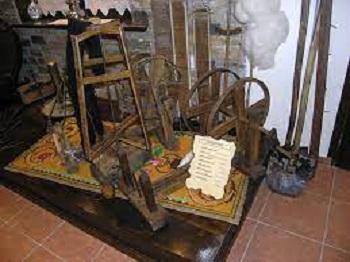
Λαογραφικό-Γεωργικό Εκθετήριο Ομολίου Μαρίνος Αντύπας
Places like the Omolio Folk-Agricultural Showroom Marinos Antipas, although exhibiting objects from earlier times, alsoshow that traditional culture is not a static body of evidence that survives only in a museum. Because on the one hand, tools and materials actually bear witness to the immutable characteristics of an era (available resources, raw materials), however, they also reveal the basic principles of human creativity that lead to evolution. The name of the exhibition reminds us, at the same time, that this creativity should always be developed with concepts such as respecting the principles of human law and social justice.
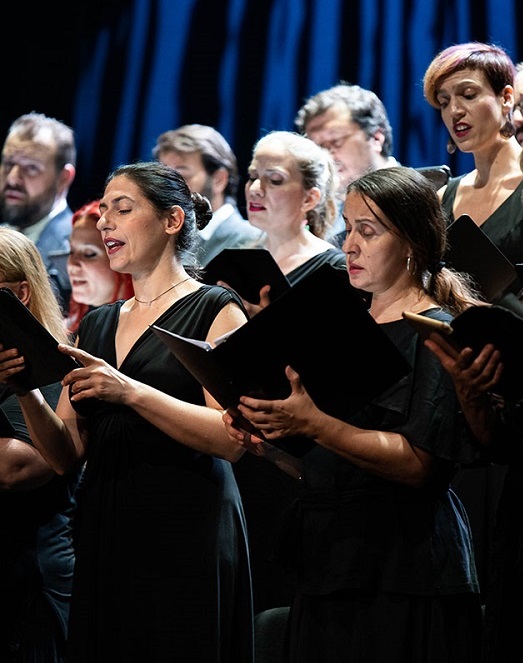
Two solemn Easter Concerts coming to the Olympia Municipal Theatre
"The Passion Week" by Maximilian Steinberg in First Panhellenic Performance Requiem in D minor and religious motets for choir by Anton Bruckner As part of the Easter celebrations, the Municipality of Athens presents at the Olympia Municipal Music Theatre "Maria Callas" on Tuesday 12th and Friday 12th Monday 18 April at 20:30 two solemn concerts with great works of religious music. The concerts, organised by Culture, Sports and Youth Organization of the Municipality of Athens (OPANDA), the audience will have the opportunity to attend the first national performance of Maximilian Steinberg's "The Passion Week", as ...More
MA in Southeast European Studies: Politics, History, Economics.
Title: MA in Southeast European Studies: Politics, History, Economics Scientific Disciplines: International Relations Political Science University: National and Kapodistrian University of Athens Language: English Duration: 2 semesters For more information you can visit the website: https://see.pspa.uoa.gr/ Description: The MA in Southeast European Studies: Politics, History, Economics offered by the National and Kapodistrian University of Athens is an international intense one-year graduate programme, taught in English. The programme aims at providing a multidisciplinary and thorough understanding of the key historical, political, economic and legal issues ...More
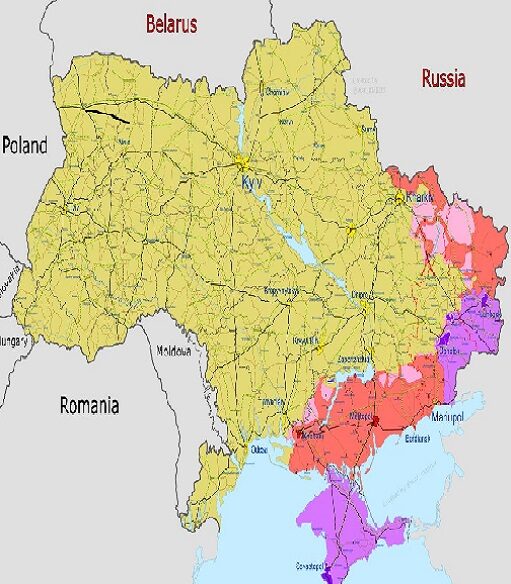
National Library of Greece: Regarding the war of Russia against Ukrain
The Russian invasion of Ukraine at 24th of February 2022, with thousands of people dead or injured, millions of refugees, and dozens of destroyed cities and villages, brings to mind the dark days of European history of the 20th century. The NLG organizes this discussion as an expression of solidarity towards our fellow people in Ukraine, discussing openly and with the proper words. This war, as well as any other, concerns us all. The National Library of Greece inaugurates the cycle of events "Logos 10", which is being organized by the President of the Board of Trustees ...More

CALL FOR PROPOSALS under Priority Axis 3 “RESEARCH AND IMPLEMENTATION” of the funding programme “NATURAL ENVIRONMENT & INNOVATIVE ACTIONS 2022” by University of Patras
We would like to inform you about the open call for proposals of the Green Fund, which aims to support the implementation of research projects and actions in the field of environment and in particular in the areas related to the Thematic Fields: 1: Natural environment and biodiversity 2: Circular economy and environmental pollution 3: Climate change mitigation and adaptation to climate change Climate Change, Climate Change and Adaptation to Climate Change with a deadline for submission of 20 May 2022. The Green Fund will finance per project expenditure up to the amount of €200,000, including VAT, ...More

16th Classical Music Festival in Xanthi. April 2022
As part of its cultural and educational activities, the Philoproodi Union of Xanthi in cooperation with the Department of Music Studies of the Ionian University and the Regional Unit of Xanthi, organizes the 16th Classical Music Festival in Xanthi from 1 to 17 April 2022. This year, FEX (PUX) celebrates 70 years of contribution to the wider region and thanks its members, partners, friends and supporters. But this year we also commemorate the arrival of the refugees from Asia Minor - Pontus and Eastern Thrace and in Xanthi the "non-exchangeable" and their contribution to our land. ...More
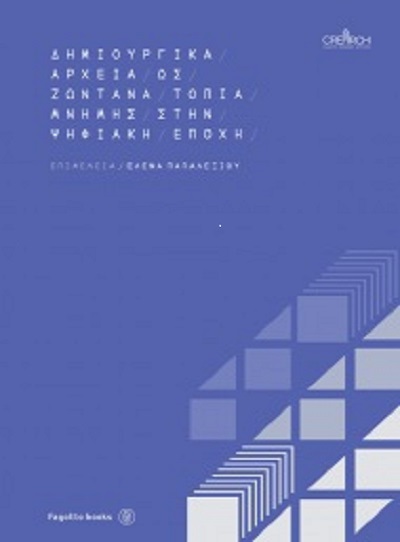
Creative archives as living memory landscapes in the digital age, highlights questions and concerns about the role of contemporary archives.
Title: Creative archives as living memory landscapes in the digital age, highlights questions and concerns about the role of contemporary archives. Editor: Elena Papalexiou Authors: Vlatka Lemic, Sergio Riolo, Tamara Stefanac, Ruud Straatman, Andrea Zappulli, Io Manolessou, Stefania Merakou, Valia Vraka Elena Papalexiou, Aura Xepapadakou, Filia Dendrinou, Stethis Athanasiou, Elpida Komianou, Dimitris H, Georgopoulos, Maria Velioti - Georgopoulou, Anna Mavroleon, Athanasios Kerasimos, Vera Kriezi Subject: Study Publication: Fagotto books Date of publication: 2022 Lajguage: Greek Pages: 430 The publication Creative archives as living memory landscapes in the digital age highlights questions and concerns about the ...More


Leave A Comment