
Omolio Folk-Agricultural Showroom Marinos Antipas
Omolio Folk-Agricultural Showroom Marinos Antipas
Omolio is a historical settlement of the Municipality of Agia surrounded by great natural beauty. Located in a central location, 40 km from the capital of the Larissa regional administration, just three kilometers from the Athens-Thessaloniki national road and at a minimum distance from the sea. According to Homer, the city participated in the Amphictyony of Delphi, while the mint of Ancient Omoli was one of the greatest in central Greece. The ruins of this ancient city and citadel still remain close to current Omolio.
Conditions brought the village back close to major historical events. This is the soil in which Marinos Antipas is buried, one of the most important figures of Greece in the fight to defend civil liberties. When Antipas came to Thessaly, where he took over as caretaker of the property of his uncle, he changed social conditions in the region. Although he was in a position of strength, he deleted agricultural debts, applied Sunday as a day off and set the remuneration of tenant farmers based on 75% of production (instead of 25% as was up to then in force). His murder was the natural consequence in a place dominated by lthe andowners of the time.
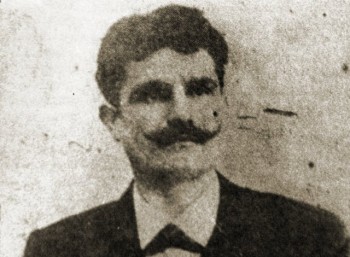
Μαρίνος Αντύπας / Marinos Antypas
Nowadays, the local community commemorates him, recognizing his contribution to changing social conditions, both in the region and across the country. It built a modest monument erected in Omolio where events are held every year in memory of the great fighter. At the same time, it gave his name to the small museum built in the village: Omolio Folk-Agricultural Showroom Marino Antipas, housed in the former Community chambers, located in the village square.
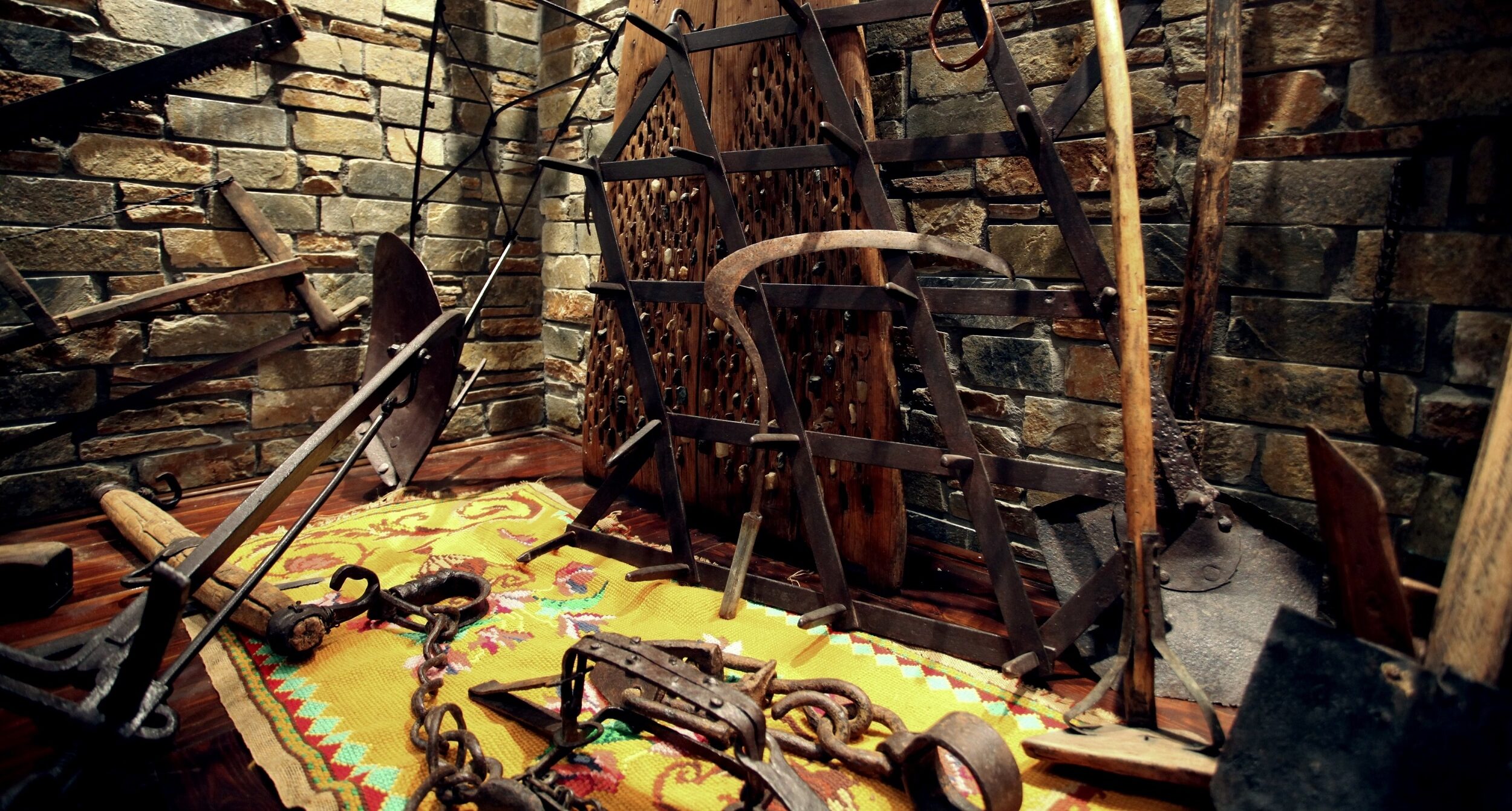
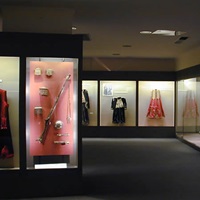
Today, the exhibition presents the tools used by the people for whom Antipas fought. Inaugurated on 18 March 2007 to mark the 100th anniversary of his death (murdered in 1907 in Pirgetos). Premechanical agricultural and foraging tools are hosted in the exhibition venue. Visitors can also admire tools of traditional occupations (fishermen, shoemakers, weavers, etc.) and objects from daily life of local people: handicrafts, embroidery and textiles, utilitarian household items (sofras (low tables), pots, pinakoti (bread levening boards)), local costumes, traditional clothing, woodwork items, postcards and engravings, coins, antique furniture, and a local bisiki (cot).
The collection includes artifacts that may be considered historical documents: a local’s military diary, which describes in detail the experience of the war in Asia Minor, but also photographs of social events and the occupations of the inhabitants. The showroom has a conference hall that holds 50-60 people.
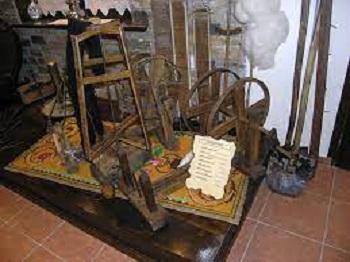
Λαογραφικό-Γεωργικό Εκθετήριο Ομολίου Μαρίνος Αντύπας
Places like the Omolio Folk-Agricultural Showroom Marinos Antipas, although exhibiting objects from earlier times, alsoshow that traditional culture is not a static body of evidence that survives only in a museum. Because on the one hand, tools and materials actually bear witness to the immutable characteristics of an era (available resources, raw materials), however, they also reveal the basic principles of human creativity that lead to evolution. The name of the exhibition reminds us, at the same time, that this creativity should always be developed with concepts such as respecting the principles of human law and social justice.
Diexodos Missolonghi| New Missolonghian School
Last Wednesday the operation of the "New Missolonghian School" in the premises of the Historical Museum "Diexodos" started with unbelievable participation of interested people. The turnout was overwhelming and for this reason it was repeated the next day. The subject of the first meeting was the lagoon and its destruction. The participants, with the founder of the "Diexodos Museum" as the moderator of the discussion, talked and discussed, as it had been announced, about the old Ivory Coast and the ways of fishing, about tadpoles, jenium, pryas, harpoons, longlines and half-rods, about the donkeys and donkey-birds, ...More
The Ministry of Culture bought the industrial complex at 260 Pireos Street
The purchase by the Ministry of Culture and the transfer by the National Bank of Greece of the industrial complex at 260 Piraeus 260 (former Tsaousoglou Factory) was completed. This is an agreement and an act of key importance for the promotion of the area of Eleonas as a cultural pole. The purchase of the property was financed by the Recovery and Resilience Fund. It is an area of 31,687 square metres, within which are 15 buildings, most of which have been designated as monuments. As the Minister of Culture Lina Mendoni said, "Since 2000, the ...More
Onassis AiR Open Call 2024/25
Grounding its mission in supporting artistic research while addressing the current urgencies of its artistic community, Onassis AiR announces its new Open Call. Onassis AiR invites artists, curators, designers, dance and theater makers, chefs, activists, writers, educators, performers, architects, creative coders, filmmakers, and other practitioners from any discipline, from anywhere in the world to apply for their selected program strand that will take place in Athens, Greece, between September 2024 to July 2025. Onassis AiR is dedicated to fostering artistic process by providing space and time to arts professionals from diverse backgrounds and disciplines, enabling them to ...More
Eleusis 2023| Mystery 112: Maria Papadimitriou, Dual Theatre, or on Friendship| 22 January-29 February 2024
Mystery 112: Dual Theatre, Or On Friendship, a work by the distinguished artist Maria Papadimitriou, which includes a series of open fiction art workshops for – and with – the residents of Elefsina, will be presented from 22 January to 29 February. A project by the distinguished artist Maria Papadimitriou that includes a series of open artistic workshops of fiction for - and with - the residents of Elefsina. At the ELAIOURGIKI space, participants young and old will have the opportunity to gain knowledge, experience, skills and awareness of the wide range of practices and techniques ...More
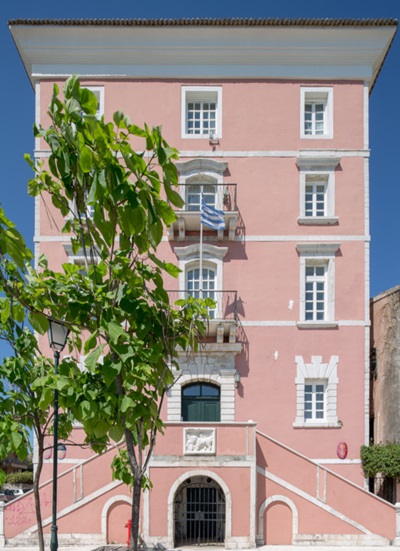
Ionian Academy| Celebration of the Three Hierarchs and concert of the Department of Music Studies of the Ionian University| 30 January 2024
As part of the events to celebrate the commemoration of the Three Hierarchs, the Dean of the Ionian University Professor Andreas Floros invites all interested parties to the lecture of the Associate Professor of the Department of Audio and Visual Arts of the Ionian University Renata Dalianoudi entitled: "The Contribution of the Three Hierarchs to Letters and Education. The relationship between scholarship and tradition" The lecture will take place in the ceremonial hall of the Ionian Academy on Tuesday 30 January 2024, at 19.00 A concert by the Department of Music Studies of the Ionian University ...More
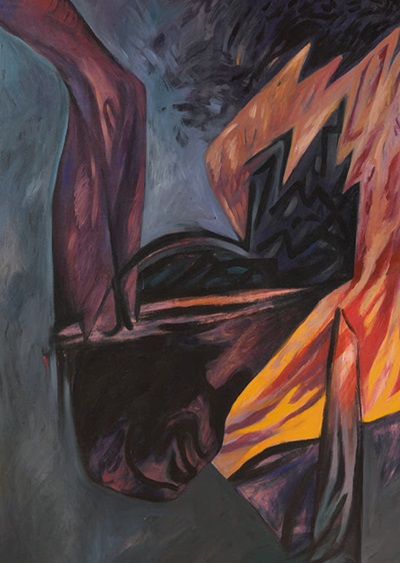
National Library of Greece| Iro Kanakaki: The coherence of the painting process| 23 January-22 March 2024
The President of the Electoral Council of the NLG Mr. Stavros Zoumboulakis noted during his opening speech that this is the first exhibition of a series of events with reference to the 50th anniversary of the fall of the junta. The exhibition was curated by Mr. Spyros Moschonas in collaboration with the technical support department of NLG, while the catalogue of the exhibition was edited by Mr. Stavros Zoumboulakis.The catalogue is also signed by Mr. Yannis Bolis. The first exhibition of Iro Kanakaki (1945-1997) was held in December 1972 in the exhibition space of Asadour Baharian's ...More


Leave A Comment