
Omolio Folk-Agricultural Showroom Marinos Antipas
Omolio Folk-Agricultural Showroom Marinos Antipas
Omolio is a historical settlement of the Municipality of Agia surrounded by great natural beauty. Located in a central location, 40 km from the capital of the Larissa regional administration, just three kilometers from the Athens-Thessaloniki national road and at a minimum distance from the sea. According to Homer, the city participated in the Amphictyony of Delphi, while the mint of Ancient Omoli was one of the greatest in central Greece. The ruins of this ancient city and citadel still remain close to current Omolio.
Conditions brought the village back close to major historical events. This is the soil in which Marinos Antipas is buried, one of the most important figures of Greece in the fight to defend civil liberties. When Antipas came to Thessaly, where he took over as caretaker of the property of his uncle, he changed social conditions in the region. Although he was in a position of strength, he deleted agricultural debts, applied Sunday as a day off and set the remuneration of tenant farmers based on 75% of production (instead of 25% as was up to then in force). His murder was the natural consequence in a place dominated by lthe andowners of the time.
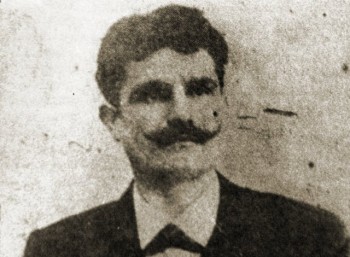
Μαρίνος Αντύπας / Marinos Antypas
Nowadays, the local community commemorates him, recognizing his contribution to changing social conditions, both in the region and across the country. It built a modest monument erected in Omolio where events are held every year in memory of the great fighter. At the same time, it gave his name to the small museum built in the village: Omolio Folk-Agricultural Showroom Marino Antipas, housed in the former Community chambers, located in the village square.
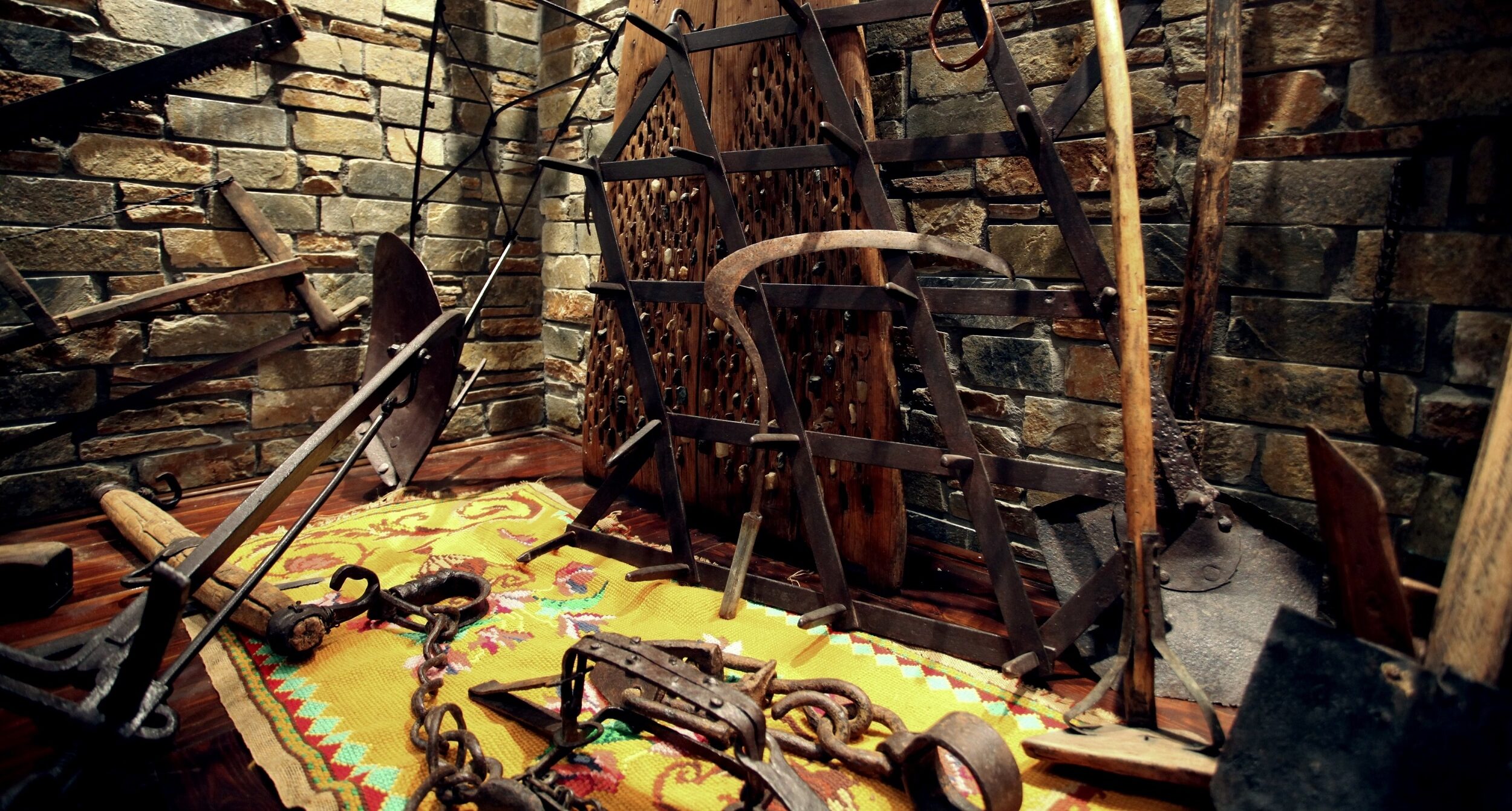
Today, the exhibition presents the tools used by the people for whom Antipas fought. Inaugurated on 18 March 2007 to mark the 100th anniversary of his death (murdered in 1907 in Pirgetos). Premechanical agricultural and foraging tools are hosted in the exhibition venue. Visitors can also admire tools of traditional occupations (fishermen, shoemakers, weavers, etc.) and objects from daily life of local people: handicrafts, embroidery and textiles, utilitarian household items (sofras (low tables), pots, pinakoti (bread levening boards)), local costumes, traditional clothing, woodwork items, postcards and engravings, coins, antique furniture, and a local bisiki (cot).
The collection includes artifacts that may be considered historical documents: a local’s military diary, which describes in detail the experience of the war in Asia Minor, but also photographs of social events and the occupations of the inhabitants. The showroom has a conference hall that holds 50-60 people.
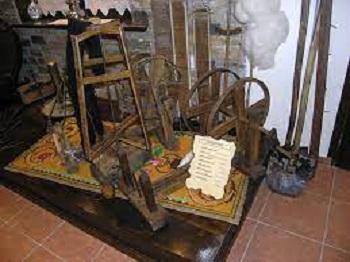
Λαογραφικό-Γεωργικό Εκθετήριο Ομολίου Μαρίνος Αντύπας
Places like the Omolio Folk-Agricultural Showroom Marinos Antipas, although exhibiting objects from earlier times, alsoshow that traditional culture is not a static body of evidence that survives only in a museum. Because on the one hand, tools and materials actually bear witness to the immutable characteristics of an era (available resources, raw materials), however, they also reveal the basic principles of human creativity that lead to evolution. The name of the exhibition reminds us, at the same time, that this creativity should always be developed with concepts such as respecting the principles of human law and social justice.
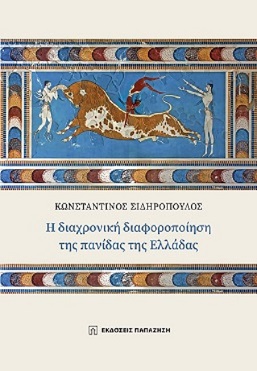
The temporal diversity of the fauna of Greece Papazisis Publications
Title :The temporal diversity of the fauna of Greece Author: Konstantinos Sidiropoulos Date: 2023 Papazisis Publications Subject: History / Biology Pages: 456 Although in modern times the study of the Greek fauna is a systematic process, the same was not the case in antiquity. Only in the 5th century BC the recording of information about the fauna begins timidly, emphasizing of course the relationship between animals and humans and mythological elements. Exceptions may be Aristotle and Plinius who approach the study of fauna in a more scientific way. Konstantinos Sidiropoulos studied the writings of ancient and ...More

Megaron, the Athens Concert Hall| Jordi Savall ‒ Le Concert des Nations| October 16
For more than 50 years, the leading meter of Early Music and Baroque, Jordi Savall, has been rescuing precious musical gems from oblivion, restoring them to their former luster and generously offering them to the public. A restless master musician and eminent soloist of the viola da gamba, he founded the orchestra Le Concert des Nations in 1989 to explore and create a world of emotion, full of beauty and to share it with listeners of all ages. Their productions, recordings and performances had and still have a huge impact around the world, and rightly the ...More
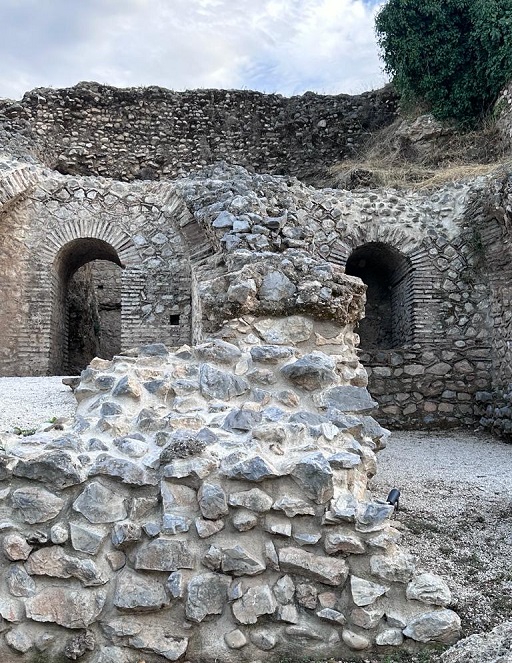
Patras| Unveiling of the restored section of the Roman Stadium
The Minister of Culture, Lina Mendoni, inaugurated the preserved and restored part of the Roman Stadium - a monument that illuminates the Roman period of Patras- attributing it to the citizens of the city and its visitors. The Roman stadium is a monument, perhaps the largest of that period in Greece. It was built in the last quarter of the 1st century. A.D. in the heart of the Roman city, which, as Lina Mendoni pointed out, "due to its geopolitical position, it was founded as a colonia Augusta, an imperial colony, as the emperor recognized its ...More
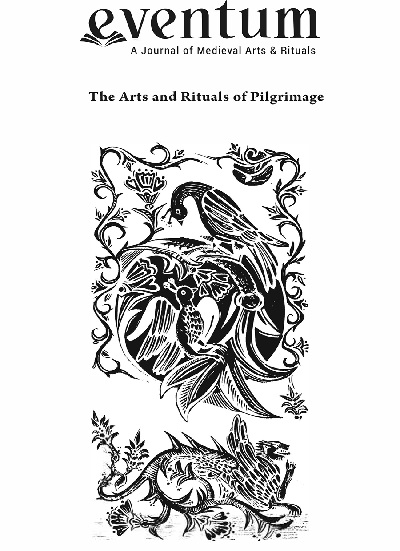
University of Cyprus| Open Access International Scientific Journal| EVENTUM: A JOURNAL OF MEDIEVAL ARTS & RITUALS
The Research Unit for Medieval Arts and Rituals of the University of Cyprus announces the publication of the first issue of the annual open access and double-blind refereed international interdisciplinary journal Eventum: A Journal of Medieval Arts and Rituals. The articles in the first issue revolve around the subject of the arts and rituals of pilgrimage (“The Arts and Rituals of Pilgrimage”) and are written both by internationally recognized scholars and by young researchers whose research focuses on the subject of medieval and later pilgrimage. The journal Eventum is the most important deliverable of the European ...More

Thessaloniki Municipal Art Gallery| “Yannis Gaitis – Retrospective exhibition: 100 years since his birth”
A landmark exhibition in the history of the Thessaloniki Municipal Gallery becomes a reality this year. Its aim is to honour the pioneering Greek artist Yannis Gaitis, who was born 100 years ago. It is a project that is carried out with the valuable contribution of institutions and private collectors and with the full support of his daughter Mrs. Loretta Gaitis. Yannis Gaitis was born in Athens in 1923, where he died very prematurely, leaving a huge body of work, an inexhaustible legacy. Studying at the Athens School of Fine Arts and then in Paris, he ...More
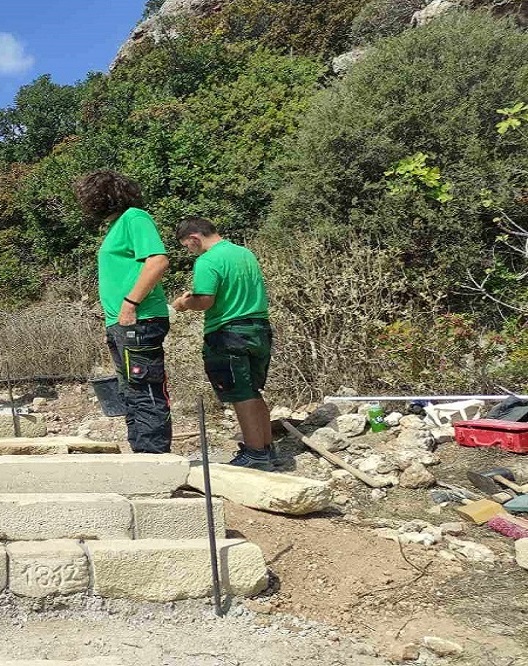
Orthodox Academy Crete (OAC) | Hosting a group of young people from New Zealand
The hospitality of a group of young people from New Zealand, accompanied by His Eminence Archbishop Myron of New Zealand, who were hosted at the Orthodox Academy Crete, in the framework of a special program organized by the General Secretariat of Hellenism Abroad, with the aim and purpose of strengthening relations and creating a bridge of culture with the land of their fathers, has been completed. The children were accompanied by their parents on their first trip to Crete, searching for their identity, which they find through the history, tradition and faith of this place. During ...More


Leave A Comment