
Omolio Folk-Agricultural Showroom Marinos Antipas
Omolio Folk-Agricultural Showroom Marinos Antipas
Omolio is a historical settlement of the Municipality of Agia surrounded by great natural beauty. Located in a central location, 40 km from the capital of the Larissa regional administration, just three kilometers from the Athens-Thessaloniki national road and at a minimum distance from the sea. According to Homer, the city participated in the Amphictyony of Delphi, while the mint of Ancient Omoli was one of the greatest in central Greece. The ruins of this ancient city and citadel still remain close to current Omolio.
Conditions brought the village back close to major historical events. This is the soil in which Marinos Antipas is buried, one of the most important figures of Greece in the fight to defend civil liberties. When Antipas came to Thessaly, where he took over as caretaker of the property of his uncle, he changed social conditions in the region. Although he was in a position of strength, he deleted agricultural debts, applied Sunday as a day off and set the remuneration of tenant farmers based on 75% of production (instead of 25% as was up to then in force). His murder was the natural consequence in a place dominated by lthe andowners of the time.
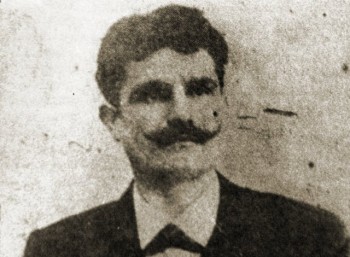
Μαρίνος Αντύπας / Marinos Antypas
Nowadays, the local community commemorates him, recognizing his contribution to changing social conditions, both in the region and across the country. It built a modest monument erected in Omolio where events are held every year in memory of the great fighter. At the same time, it gave his name to the small museum built in the village: Omolio Folk-Agricultural Showroom Marino Antipas, housed in the former Community chambers, located in the village square.
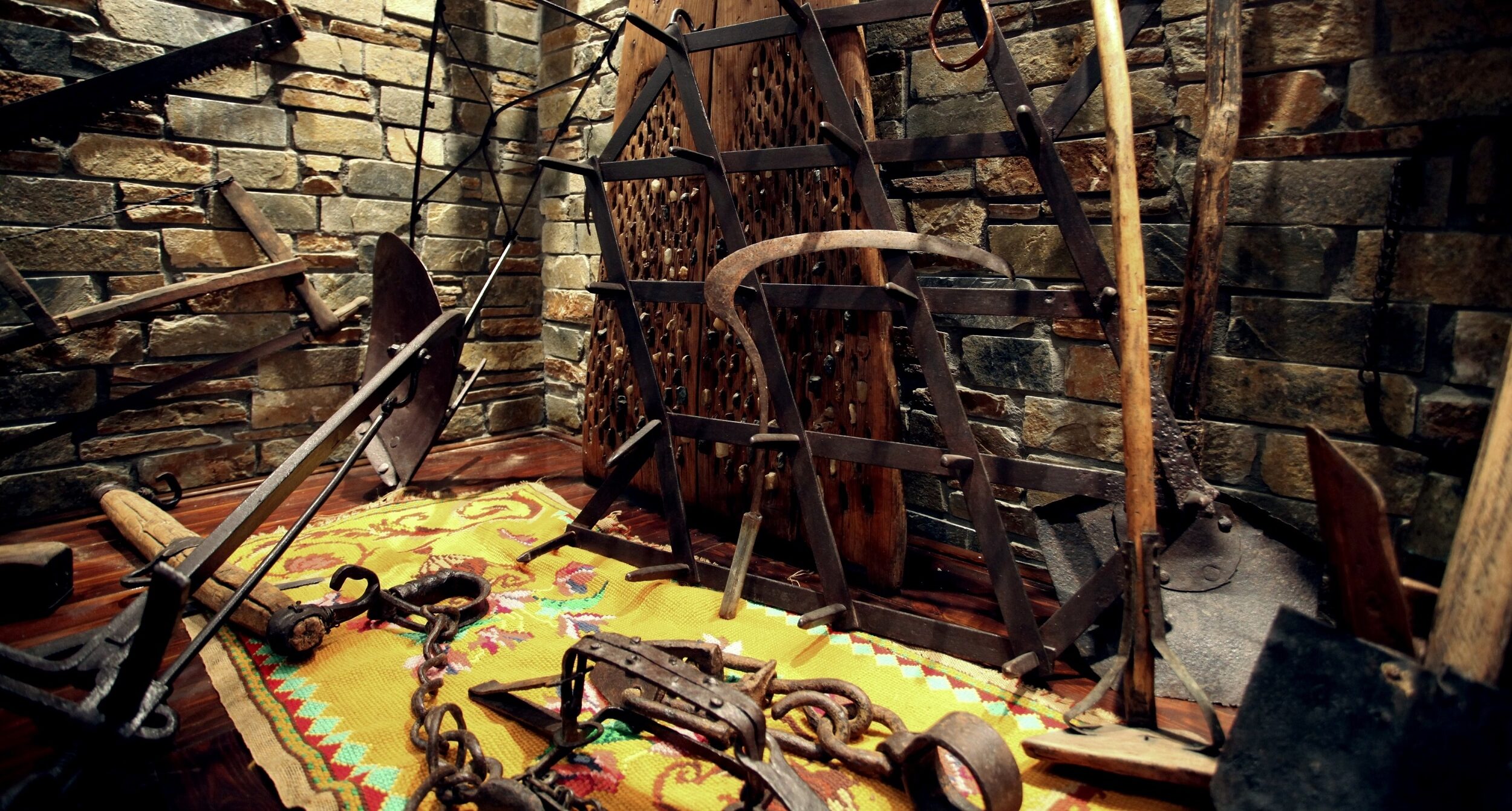
Today, the exhibition presents the tools used by the people for whom Antipas fought. Inaugurated on 18 March 2007 to mark the 100th anniversary of his death (murdered in 1907 in Pirgetos). Premechanical agricultural and foraging tools are hosted in the exhibition venue. Visitors can also admire tools of traditional occupations (fishermen, shoemakers, weavers, etc.) and objects from daily life of local people: handicrafts, embroidery and textiles, utilitarian household items (sofras (low tables), pots, pinakoti (bread levening boards)), local costumes, traditional clothing, woodwork items, postcards and engravings, coins, antique furniture, and a local bisiki (cot).
The collection includes artifacts that may be considered historical documents: a local’s military diary, which describes in detail the experience of the war in Asia Minor, but also photographs of social events and the occupations of the inhabitants. The showroom has a conference hall that holds 50-60 people.
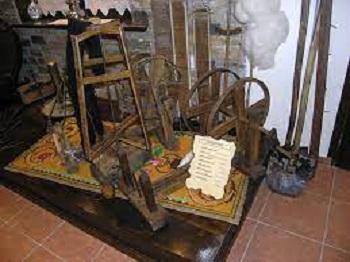
Λαογραφικό-Γεωργικό Εκθετήριο Ομολίου Μαρίνος Αντύπας
Places like the Omolio Folk-Agricultural Showroom Marinos Antipas, although exhibiting objects from earlier times, alsoshow that traditional culture is not a static body of evidence that survives only in a museum. Because on the one hand, tools and materials actually bear witness to the immutable characteristics of an era (available resources, raw materials), however, they also reveal the basic principles of human creativity that lead to evolution. The name of the exhibition reminds us, at the same time, that this creativity should always be developed with concepts such as respecting the principles of human law and social justice.
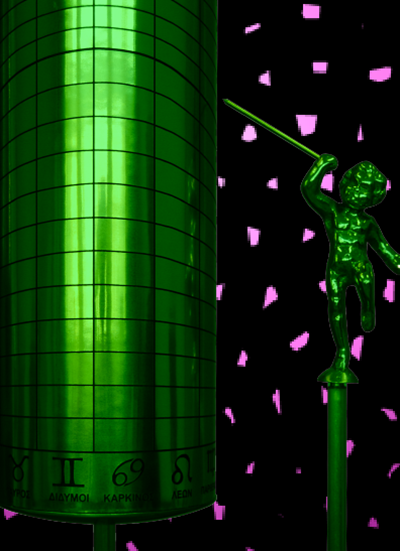
Kotsanas Museum of Ancient Greek Technology| New Educational Programmes and Workshops| Time in Motion: Transformations of Time| November 25 and 26, 2023
Transformations of Time Kotsanas Museum celebrates Time, the father of change and the mother of all nature. But what is Time? Is it one or many? Everyone has his or her own answer and together we know experientially the greatest scientific answers. Our motto is: "time in motion"! Really, what can the movement of time be and what might it look like? Again, if times are many then how exactly do they meet each other? Is there a beginning and an end? An experiential playful learning workshop comes to reveal all the scientific secrets of time ...More

Kotsanas Museum of Ancient Greek Technology| New Educational Programmes and Workshops| The Diary of Knowledge| 18 και 19 November 2023
How can I know something I can't measure? Kotsanas Museum of Ancient Greek Technology teaches us to measure life with joy and knowledge and introduces us to the ancient Greek secrets of the most important clocks and calendars with a special workshop of experiential learning and creative expression. How did the ancient Greeks measure time? The ways they invented and developed were many and they used both the lunar and solar calendars, thus linking East and West from the past. In order to historically trace the ancient connection between the solar and lunar calendars we travel ...More
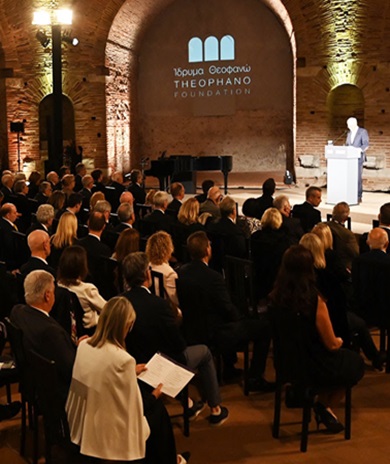
The Empress Theophano Prize 2023
The Theophano Foundation, of which Ktima Gerovassiliou is a founding member, honored the United Nations in the name of Mr. António Guterres, Secretary General of the United Nations, world leader of the world's largest international organization promoting multilateral cooperation. More relevant than ever, this year the Theophano Foundation focuses on the essential role of humanitarianism, especially in the light of multilateralism as a catalyst for addressing global challenges and crises. The awarding of the 2023 Empress Theophano Prize to the United Nations is in recognition of this organization's valuable contribution to building bridges between nations, its ...More
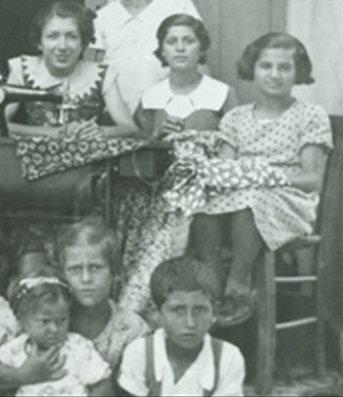
Estia Neas Smyrnis| Guided tour to the Museum collections and screening of the documentary “Twice a stranger”| Saturday 9 December 2023
On Saturday 9 December 2023 at 11:00 a guided tour to the Museum Collections of ESTIA Nea Smyrni will take place. As part of the tour, a documentary will be screened: -"Twice a Stranger", a historical documentary based on the award-winning book of the same name by journalist Bruce Clark, unfolds the story through rare archival material, interviews with historians and oral testimonies of refugees from Greece and Turkey, focusing on population movements in the Balkans with a focus on the compulsory population exchange dictated by the Treaty of Lausanne in 1923. Directed by: Andreas Apostolidis, ...More
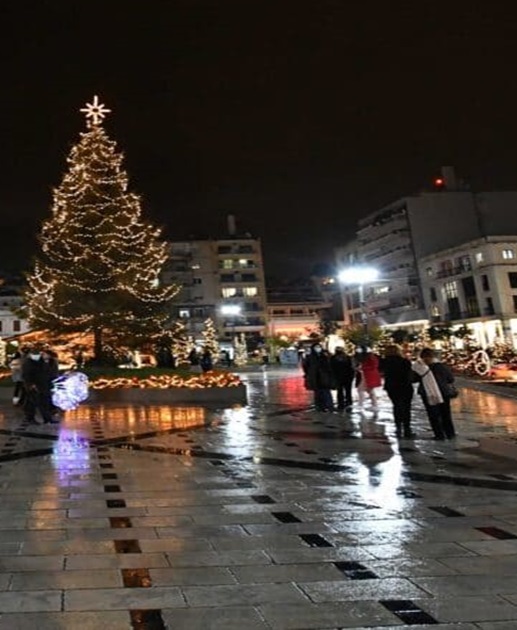
Patras| Christmas and New Year’s Eve with numerous events
Concerts, choirs, music, film screenings, artistic creations, bicycle rides, concerts and street performances are just a part of the Christmas and New Year's Eve events planned for this year by the Cultural Organization of the Municipality of Patras. The official opening of the events will be marked by the lighting of the lights that will take place on Tuesday 12 December in George Square, the appearance of stilt walkers, children's choirs and a concert. On Wednesday 13 December at the "Old Slaughterhouses" will be the opening of an exhibition of original posters of films directed by ...More
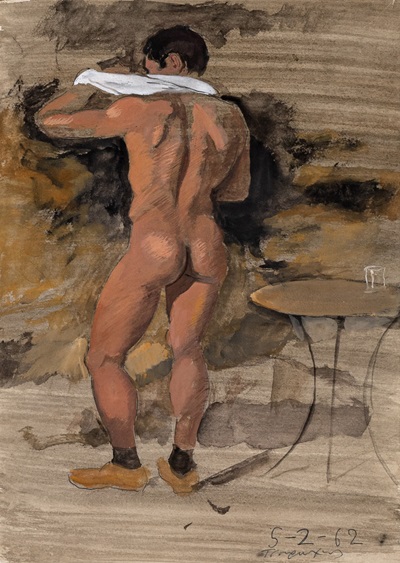
VERGOS Auctions| Auction of 19th and 20th century Modern Greek Paintings & Sculptures at Zappeion
VERGOS Auctions sets its festive appointment with collectors, the art lovers and art professionals, at the auction of 19th & 20th Century Modern Greek Paintings & Sculptures that will take place on Thursday, December 14th (6:00pm) at Zappeion. At the same time, the house's regular exhibition with all the works of the auction, which will run from 11-13 December, opens its doors with free admission to the public. With 129 important paintings and sculptures, whose initial estimate exceeds 2 million Euros, the upcoming auction is expected to attract the interest of Greek and foreign collectors. Among ...More


Leave A Comment