
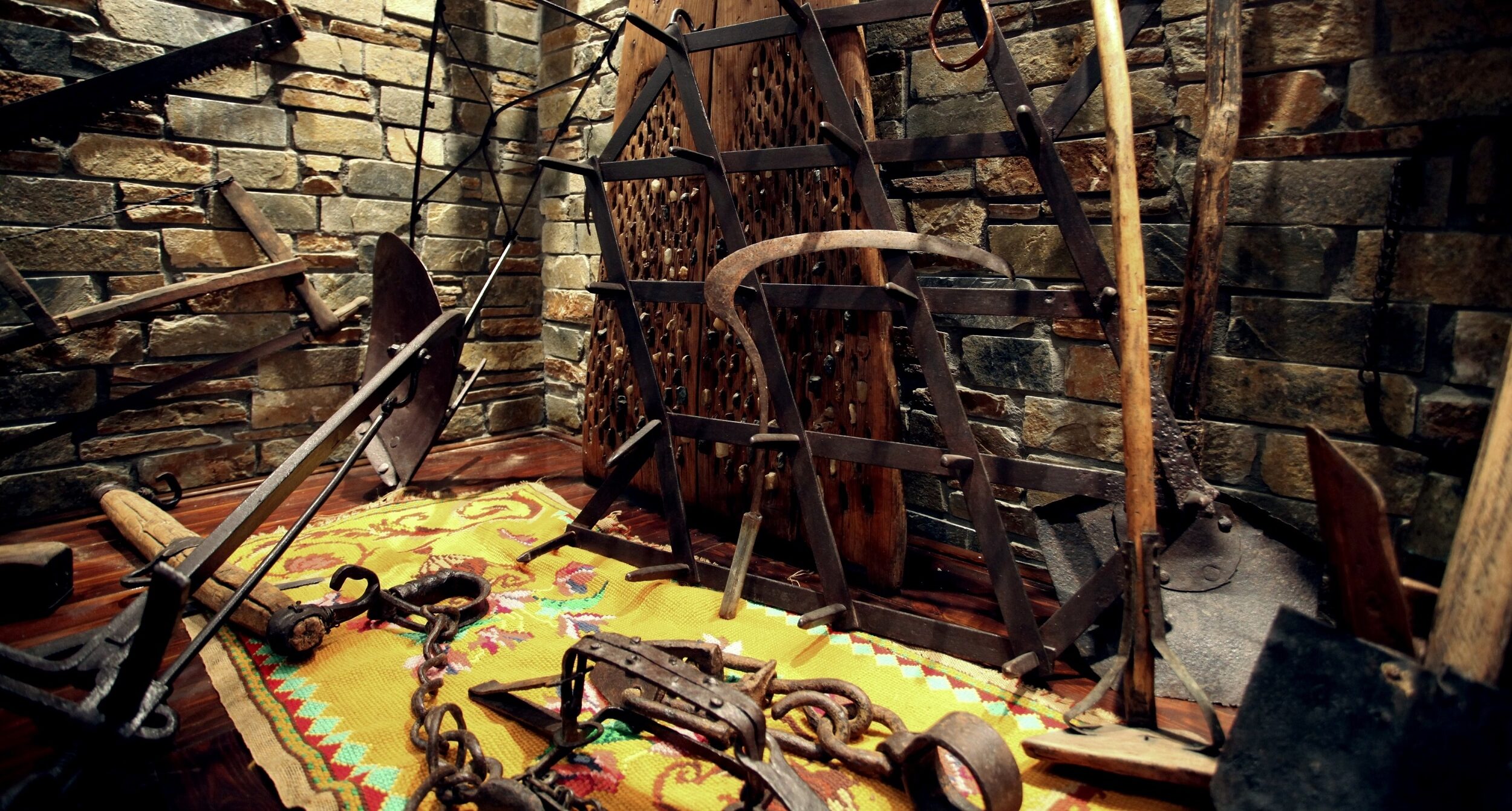

Omolio Folk-Agricultural Showroom Marinos Antipas
Omolio Folk-Agricultural Showroom Marinos Antipas
Omolio is a historical settlement of the Municipality of Agia surrounded by great natural beauty. Located in a central location, 40 km from the capital of the Larissa regional administration, just three kilometers from the Athens-Thessaloniki national road and at a minimum distance from the sea. According to Homer, the city participated in the Amphictyony of Delphi, while the mint of Ancient Omoli was one of the greatest in central Greece. The ruins of this ancient city and citadel still remain close to current Omolio.
Conditions brought the village back close to major historical events. This is the soil in which Marinos Antipas is buried, one of the most important figures of Greece in the fight to defend civil liberties. When Antipas came to Thessaly, where he took over as caretaker of the property of his uncle, he changed social conditions in the region. Although he was in a position of strength, he deleted agricultural debts, applied Sunday as a day off and set the remuneration of tenant farmers based on 75% of production (instead of 25% as was up to then in force). His murder was the natural consequence in a place dominated by lthe andowners of the time.
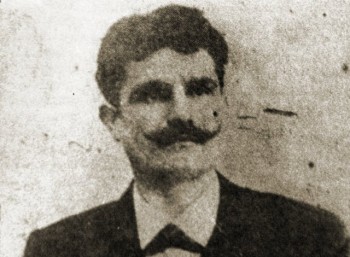
Μαρίνος Αντύπας / Marinos Antypas
Nowadays, the local community commemorates him, recognizing his contribution to changing social conditions, both in the region and across the country. It built a modest monument erected in Omolio where events are held every year in memory of the great fighter. At the same time, it gave his name to the small museum built in the village: Omolio Folk-Agricultural Showroom Marino Antipas, housed in the former Community chambers, located in the village square.
Today, the exhibition presents the tools used by the people for whom Antipas fought. Inaugurated on 18 March 2007 to mark the 100th anniversary of his death (murdered in 1907 in Pirgetos). Premechanical agricultural and foraging tools are hosted in the exhibition venue. Visitors can also admire tools of traditional occupations (fishermen, shoemakers, weavers, etc.) and objects from daily life of local people: handicrafts, embroidery and textiles, utilitarian household items (sofras (low tables), pots, pinakoti (bread levening boards)), local costumes, traditional clothing, woodwork items, postcards and engravings, coins, antique furniture, and a local bisiki (cot).
The collection includes artifacts that may be considered historical documents: a local’s military diary, which describes in detail the experience of the war in Asia Minor, but also photographs of social events and the occupations of the inhabitants. The showroom has a conference hall that holds 50-60 people.
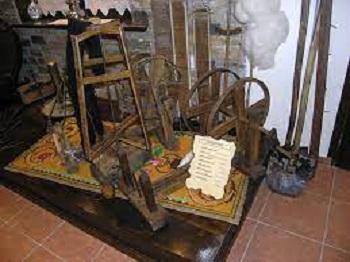
Λαογραφικό-Γεωργικό Εκθετήριο Ομολίου Μαρίνος Αντύπας
Places like the Omolio Folk-Agricultural Showroom Marinos Antipas, although exhibiting objects from earlier times, alsoshow that traditional culture is not a static body of evidence that survives only in a museum. Because on the one hand, tools and materials actually bear witness to the immutable characteristics of an era (available resources, raw materials), however, they also reveal the basic principles of human creativity that lead to evolution. The name of the exhibition reminds us, at the same time, that this creativity should always be developed with concepts such as respecting the principles of human law and social justice.

Olga Tokarczuk at the Onassis Stegi| 9 February 2024
The theatrical season of Onassis Stegi began with one of her works; the new year starts with the artist herself. Three months after the majestic performance of “Drive Your Plow Over the Bones of the Dead,” the Nobel Prize-winning author joins us at the Onassis Stegi Main Stage in a public discussion about literature, society, and the art of tenderness. The discussion is moderated by the journalist and editor Gregory Bekos. Can the world change if we continue to look at it in the same way? Author of novels such as “Primeval and Other Times,” “Flights,” ...More

Tatiana Dimou|Artists| Panos Kollias-Workshop| 20 January 2024
On Saturday 20 January at 11.00 a.m. at 24 Tsamadou Street, the cultural venue Tatiana Dimou|Artists is pleased to invite us to the first Workshop of the new year that will be held by the artist Panos Kollias in the context of his solo exhibition at the venue. In this workshop, the versatile artist will invite the audience to delve into the entirety of his artistic creation through the sounds of an improvised musical instrument made by him. Influenced by experimental music - electroacoustic and acoustic - the musicality and harmony of Panos Kollias' painting is ...More

Megaron Athens Concert Hall| Sir András Schiff| Cappella Andrea Barca| 25 January 2024
Great Orchestras - Great Performers. At the beginning of the new year, the Athens Concert Hall's beloved cycle of events offers its audience a concert dedicated exclusively to works by Wolfgang Amadeus Mozart, performed by the master of the genre Sir András Schiff, in the dual role of soloist and conductor, accompanied by the Cappella Andrea Barca Orchestra. The eminent pianist and conductor, world-renowned for his important reference performances of the Mozart repertoire, will lead the international ensemble he founded in 1999 in Mozart's legendary Symphony No.40 in G minor, one of the most famous and ...More

Art gallery ekfrasi – yianna grammatopoulou | Elli Koutsoukelli-Dream upon a tree| 18 January-17 February 2024
The art gallery ekfrasi - yianna grammatopoulou presents a group of new works by Elli Koutsoukelli under the title Dream upon a tree. Elli Koutsoukelli presents fifteen large works made with pastel and charcoal on paper, with the tree as their subject matter. The image of the tree has already preoccupied Elli Koutsoukelli’s painting, which, as in the past, moves between figurativeness and abstraction, the iconic and the an iconic, with a style that is especially gestural. But in these current works, description has given way to an abstractive approach to depiction, which vibrates with the ...More
AUTh| The culture of Mexico meets Modern Greece: Archaeology, History, Art and Food| 17 January 2024
The Department of History and Archaeology of the Aristotle University of Thessaloniki and the Embassy of Mexico in Athens co-organize the Workshop entitled "Mexican Culture meets Modern Greece: Archaeology, History, Art and Food", on Wednesday 17 January 2024, from 12.00 to 14.30, at the Museum of Byzantine Culture (Stefanos Dragoumis Hall), in Thessaloniki. According to the organisers, the event launches the programme of cultural activities to celebrate the 85th anniversary of the establishment of diplomatic relations between Greece and Mexico, which will be commemorated in 2024. "In the commemorative programme, the Embassy has dedicated a special ...More

Onassis Culture Open Call| Big Short Films 2024
For the second year, Onassis Culture invites Greek and international filmmakers and producers based in Greece to submit their proposals. Five short films will be funded to go into production. Onassis CULTURE supports independent Greek cinema and the short film format, embracing the processes of creation and artistic growth. For the second year, it addresses an open call to Greek and foreign filmmakers to submit their proposals for short fiction and documentary films, live-action, and animation he Onassis Culture team will assess their proposals and will concern co-productions with Greek production companies. Five of these will receive funding ...More


Leave A Comment