
Omolio Folk-Agricultural Showroom Marinos Antipas
Omolio Folk-Agricultural Showroom Marinos Antipas
Omolio is a historical settlement of the Municipality of Agia surrounded by great natural beauty. Located in a central location, 40 km from the capital of the Larissa regional administration, just three kilometers from the Athens-Thessaloniki national road and at a minimum distance from the sea. According to Homer, the city participated in the Amphictyony of Delphi, while the mint of Ancient Omoli was one of the greatest in central Greece. The ruins of this ancient city and citadel still remain close to current Omolio.
Conditions brought the village back close to major historical events. This is the soil in which Marinos Antipas is buried, one of the most important figures of Greece in the fight to defend civil liberties. When Antipas came to Thessaly, where he took over as caretaker of the property of his uncle, he changed social conditions in the region. Although he was in a position of strength, he deleted agricultural debts, applied Sunday as a day off and set the remuneration of tenant farmers based on 75% of production (instead of 25% as was up to then in force). His murder was the natural consequence in a place dominated by lthe andowners of the time.
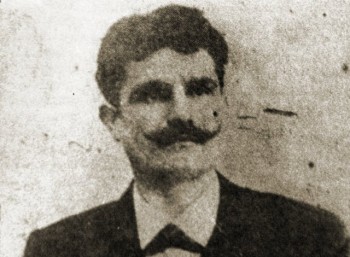
Μαρίνος Αντύπας / Marinos Antypas
Nowadays, the local community commemorates him, recognizing his contribution to changing social conditions, both in the region and across the country. It built a modest monument erected in Omolio where events are held every year in memory of the great fighter. At the same time, it gave his name to the small museum built in the village: Omolio Folk-Agricultural Showroom Marino Antipas, housed in the former Community chambers, located in the village square.
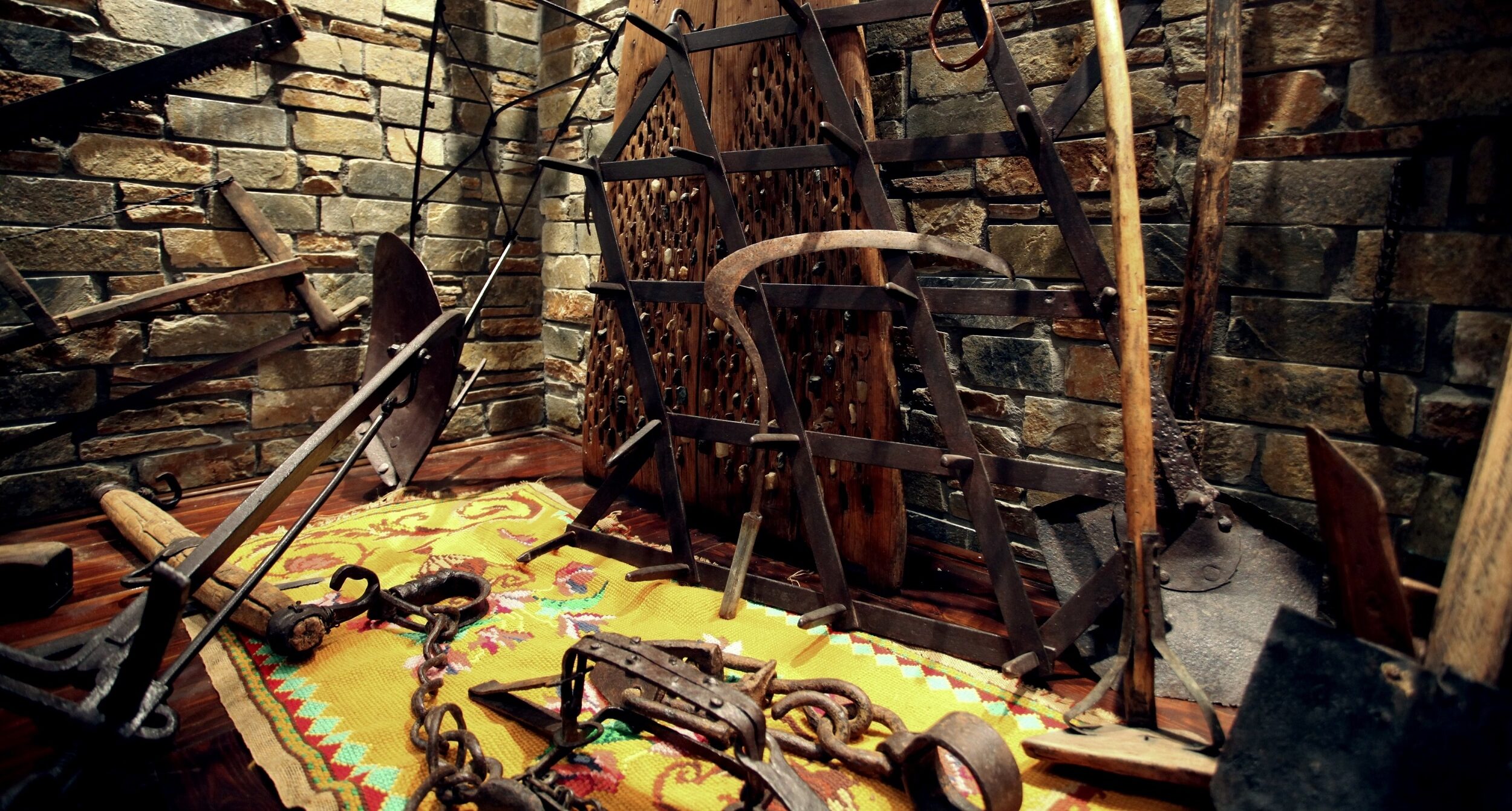
Today, the exhibition presents the tools used by the people for whom Antipas fought. Inaugurated on 18 March 2007 to mark the 100th anniversary of his death (murdered in 1907 in Pirgetos). Premechanical agricultural and foraging tools are hosted in the exhibition venue. Visitors can also admire tools of traditional occupations (fishermen, shoemakers, weavers, etc.) and objects from daily life of local people: handicrafts, embroidery and textiles, utilitarian household items (sofras (low tables), pots, pinakoti (bread levening boards)), local costumes, traditional clothing, woodwork items, postcards and engravings, coins, antique furniture, and a local bisiki (cot).
The collection includes artifacts that may be considered historical documents: a local’s military diary, which describes in detail the experience of the war in Asia Minor, but also photographs of social events and the occupations of the inhabitants. The showroom has a conference hall that holds 50-60 people.
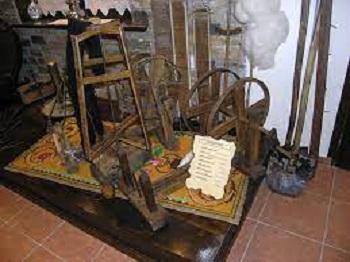
Λαογραφικό-Γεωργικό Εκθετήριο Ομολίου Μαρίνος Αντύπας
Places like the Omolio Folk-Agricultural Showroom Marinos Antipas, although exhibiting objects from earlier times, alsoshow that traditional culture is not a static body of evidence that survives only in a museum. Because on the one hand, tools and materials actually bear witness to the immutable characteristics of an era (available resources, raw materials), however, they also reveal the basic principles of human creativity that lead to evolution. The name of the exhibition reminds us, at the same time, that this creativity should always be developed with concepts such as respecting the principles of human law and social justice.

2023 ELEUSIS| Mystery 59| U(R)TOPIAS Academy of Choreography| 07 and 08 June 2024
On Friday 7 and Saturday 8 June, at 20:30 at the X-Bowling Art Center, the Open Sharing will be presented, as part of the project Mystery 59 U(R)TOPIAS Academy of Choreography, under the artistic direction of Patricia Apergi, in collaboration with Aerites Dance Company. The 12 emerging choreographers selected this year to participate in the program draw inspiration from the history, mythology, heritage, and memory of the city of Elefsina, its industrial past, its architectural wealth, its environment and present their works in progress in a two-day studio presentation open to the public, artists, and professionals in the field. The presentation will be followed by a discussion with the ...More
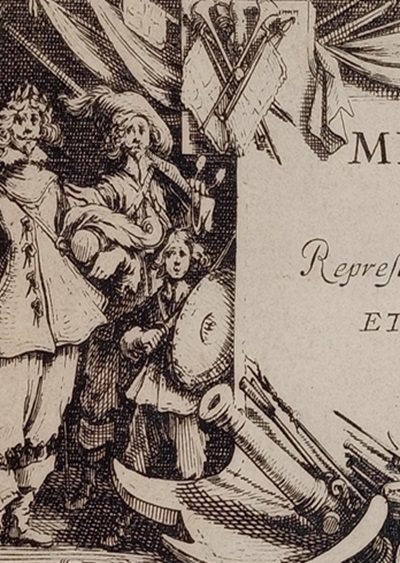
Donation to the National Library of Greece by the Stavros Niarchos Foundation (SNF), in memory of Filippos Tsiboglou
The National Library of Greece (NBG) announces the donation of 100,000 euros from the Stavros Niarchos Foundation (SNF) in memory of Filippos Tsiboglou, Director General of the National Library of Greece (2014 -2023). The donation was approved to support the overall identification, recording, documentation, cataloguing, preservation and presentation of the NLG's art collection. This is an extremely rich and interesting collection of prints and paintings with works by important artists, mainly of European Schools, styles and periods from the late 15th century to the 20th century. The works come both from donations made to the NLG, such ...More
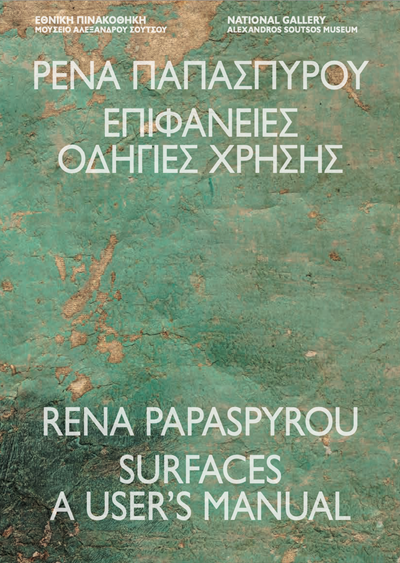
The National Gallery-Alexandros Soutsos Museum| Presentation of the catalogue of the Rena Papaspyrou exhibition, “Surfaces: A User’s Manual”| 12 June 2024
On Wednesday 12 June at 20.00 the catalogue of Rena Papaspyrou's exhibition "SURFACES, A USER'S MANUAL" will be presented in the garden of the museum. Rena Papaspyrou will be in conversation with Syrago Tsiara, Director of the National Gallery-Alexandros Soutsos Museum, Sophia Elise Bouratsis, art theorist and curator of the exhibition (The National Gallery-Alexandros Soutsos Museum) and Christoforos Marinos, art historian and curator. On the same day at 19.00 there will be a guided tour of the exhibition with Rena Papaspyrou, Syrago Tsiara and Sophia Eliza Bouratsis. Exclusively for this particular evening, works by Rena Papaspyrou ...More
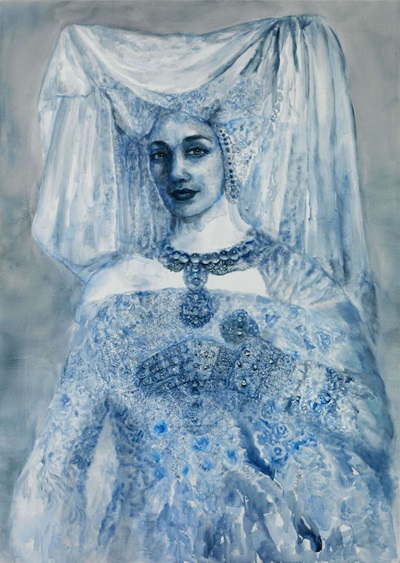
Platforms Project 2024| 10-13 October 2024 at the Greek Public Tobacco Factory
Platforms Project is an international exhibition of the independent art scene without commercial or profit-making character and is organized by the urban non-profit company "line culture". It has been presented every year since 2013 and is an annual international meeting of platform art groups that aims to document the way art groups operate. This year marks the 12th anniversary of its presentation and will hold a series of events such as parallel exhibitions, conferences, workshops, etc. Platforms Project 2024 will involve 60 platforms from 29 countries. At the same time, the Open Studios of ASFA's laboratories ...More
Distinction and honorary invitation for the Helmi’s Natural History Museum by the European Museum Network NEMO
"Training for building strong links between museum professionals and the local community", is the title of the training action organised and hosted recently by the European Network of Museums NEMO-Network in Sibiu, Romania, with the Helmi Museum of Natural History in Zakynthos as an honorary member. As an echo of the action, the NEMO member museums partnered with local communities (moving towards a unified cultural management, leadership and diplomacy by museums dealing with biodiversity and traditional art forms for the benefit of society). In particular, from 23 to 25 May 2024, 10 museum professionals from the ...More
QS World University Rankings 2025: University of Cyprus in 389th place
University of Cyprus is included for the fifth consecutive year among the world's top universities in the QS World University Rankings, ranking 389th. It is the only university in Cyprus to be included in this list. The QS World Rankings / Top Universities Organization (https://www.topuniversities.com/world-university-rankings?tab=indicators) is one of the most respected global providers of information on higher education. The QS World University Rankings is published annually and is considered one of the 3 most recognised university ranking lists, along with the Academic Ranking of World Universities and the Times Higher Education World University Rankings, which also ...More


Leave A Comment