
Omolio Folk-Agricultural Showroom Marinos Antipas
Omolio Folk-Agricultural Showroom Marinos Antipas
Omolio is a historical settlement of the Municipality of Agia surrounded by great natural beauty. Located in a central location, 40 km from the capital of the Larissa regional administration, just three kilometers from the Athens-Thessaloniki national road and at a minimum distance from the sea. According to Homer, the city participated in the Amphictyony of Delphi, while the mint of Ancient Omoli was one of the greatest in central Greece. The ruins of this ancient city and citadel still remain close to current Omolio.
Conditions brought the village back close to major historical events. This is the soil in which Marinos Antipas is buried, one of the most important figures of Greece in the fight to defend civil liberties. When Antipas came to Thessaly, where he took over as caretaker of the property of his uncle, he changed social conditions in the region. Although he was in a position of strength, he deleted agricultural debts, applied Sunday as a day off and set the remuneration of tenant farmers based on 75% of production (instead of 25% as was up to then in force). His murder was the natural consequence in a place dominated by lthe andowners of the time.
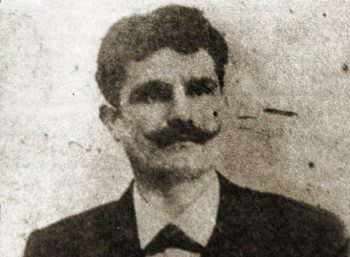
Μαρίνος Αντύπας / Marinos Antypas
Nowadays, the local community commemorates him, recognizing his contribution to changing social conditions, both in the region and across the country. It built a modest monument erected in Omolio where events are held every year in memory of the great fighter. At the same time, it gave his name to the small museum built in the village: Omolio Folk-Agricultural Showroom Marino Antipas, housed in the former Community chambers, located in the village square.
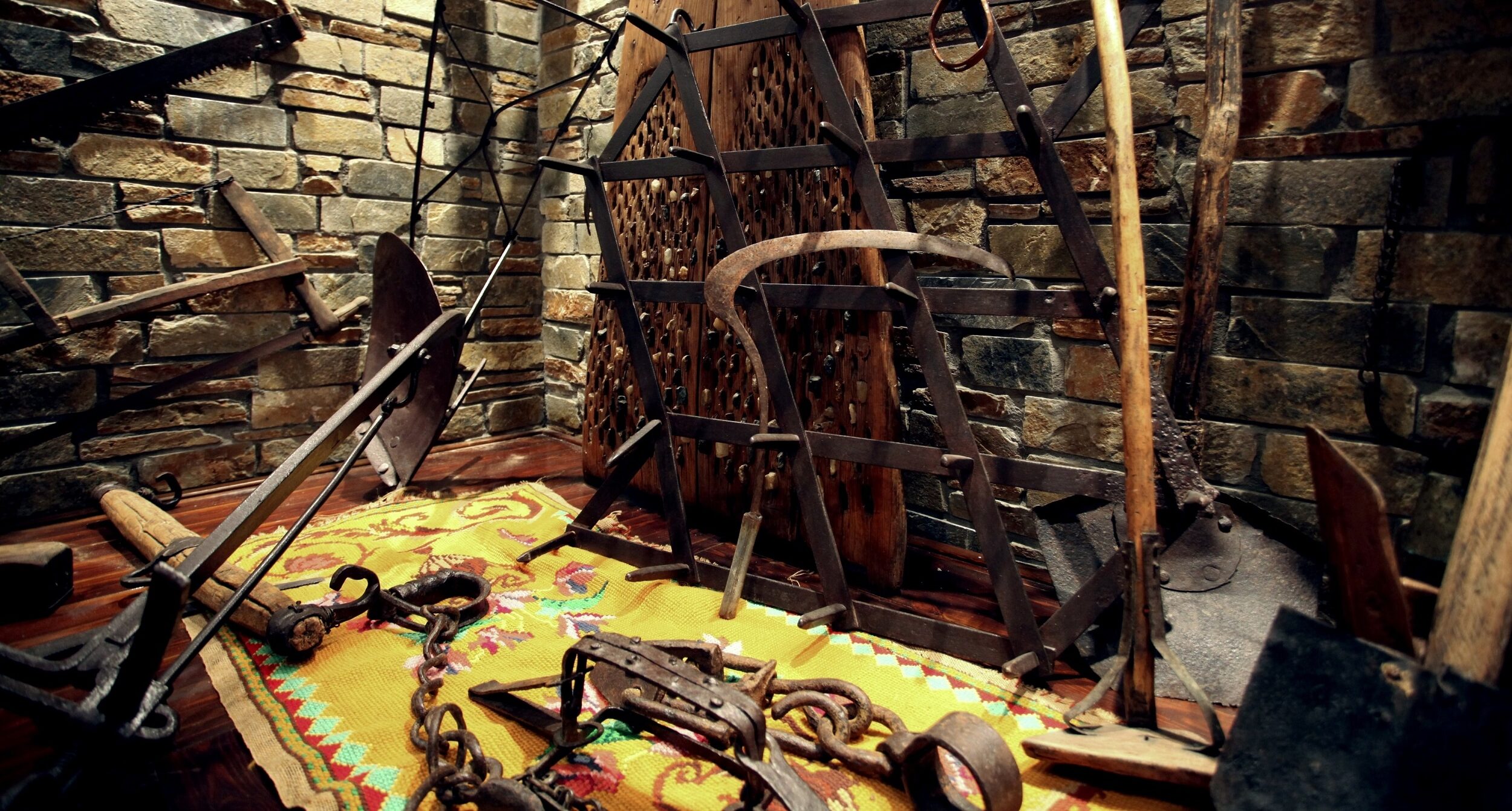
Today, the exhibition presents the tools used by the people for whom Antipas fought. Inaugurated on 18 March 2007 to mark the 100th anniversary of his death (murdered in 1907 in Pirgetos). Premechanical agricultural and foraging tools are hosted in the exhibition venue. Visitors can also admire tools of traditional occupations (fishermen, shoemakers, weavers, etc.) and objects from daily life of local people: handicrafts, embroidery and textiles, utilitarian household items (sofras (low tables), pots, pinakoti (bread levening boards)), local costumes, traditional clothing, woodwork items, postcards and engravings, coins, antique furniture, and a local bisiki (cot).
The collection includes artifacts that may be considered historical documents: a local’s military diary, which describes in detail the experience of the war in Asia Minor, but also photographs of social events and the occupations of the inhabitants. The showroom has a conference hall that holds 50-60 people.
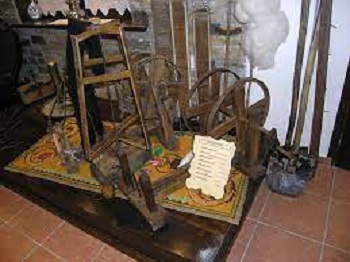
Λαογραφικό-Γεωργικό Εκθετήριο Ομολίου Μαρίνος Αντύπας
Places like the Omolio Folk-Agricultural Showroom Marinos Antipas, although exhibiting objects from earlier times, alsoshow that traditional culture is not a static body of evidence that survives only in a museum. Because on the one hand, tools and materials actually bear witness to the immutable characteristics of an era (available resources, raw materials), however, they also reveal the basic principles of human creativity that lead to evolution. The name of the exhibition reminds us, at the same time, that this creativity should always be developed with concepts such as respecting the principles of human law and social justice.

Outdoor exhibition on the beach of Agyia in Patras with works by Greek and philhellenic painters
An action of the Municipality of Patras and the Cultural Organization, part of an art route designed with the aim of spreading art throughout the city. The actions planned and implemented by the Municipality of Patras and the Cultural Organization, in celebration of the 200th anniversary of the Greek Revolution, continue with an exhibition of digitally reprinted works of art of important Greek and Philhellenic painters, on the beach of Agyia. The presentation of the artworks on the beach is part of an art route designed with the aim of spreading art throughout the city and highlighting ...More

“Clothing of the Soul” – an exhibition at the Lazaros Koundouriotis Historical Mansion of the NHM in Hydra
Island costumes of the 18th and 19th centuries were photographed worn by today’s people. The Historical and Ethnological Society of Greece presents the exhibition titled Clothing of the Soul, with creations by the photographer Vangelis Kyris and embroidery artist Anatoli Georgiev, at the Lazaros Koundouriotis Historical Mansion, a branch of the National Historical Museum in Hydra. Island costumes of the 18th and 19th centuries, the most representative out of the costume collections of the National History Museum, were photographed worn by today’s people. The works of the artists are printed on canvas and embroidered with gold thread, ...More

Faces of the Hero: a transatlantic art exhibition in Athens and New York by the Stavros Niarchos Foundation Cultural Center SNFCC and the Lincoln Center for the Performing Arts
Artworks by students of the School of Fine Arts and the Parsons School of Design are presented at the SNFCC and the Lincoln Center. The Stavros Niarchos Foundation Cultural Center (SNFCC) and the Lincoln Center for the Performing Arts organize an exhibition titled Faces of the Hero, which is presented at the same time in Athens and New York and is the inaugural event of the Stavros Niarchos Foundation-Lincoln Center Agora initiative. Works by students from the Athens School of Fine Arts and the Parsons School of Design in New York, exploring the meaning of concepts of ...More

ΜΑ in Cultural Analysis and Education – University of Crete
University of Crete - Department of Philosophy and Social Studies Title: CULTURAL ANALYSIS AND EDUCATION Scientific disciplines: Sociology Anthropology Philosophy University: University of Crete Language: Greek Duration: 4 semesters Application deadline: August 30, 2021 For more information on the program and the application procedure, you may visit the website: www.fks.uoc.gr Description The Postgraduate Program Cultural Analysis and Education of the Department of Philosophy and Social Studies aims to provide qualified human resources for the growing interdisciplinary field of Cultural Analysis, with excellent prospects towards ...More

Two rare local women’s costumes at the Peloponnesian Folklore Foundation PFF
A donation from the "Plomari Ouzo Distillery Isidoros Arvanitis SA" The Peloponnesian Folklore Foundation, thanks to a donation by the Plomari Ouzo Distillery Isidoros Arvanitis S.A. company, has acquired two rare local women’s folk costumes, one from Giromeri in Thesprotia and the excellent "costume in white", a Pomak wedding dress from Livadi, Xanthi; while at the same time the Foundation will be able to preserve two other costumes from Lesvos, the sponsor's homeland. The costumes will be on display on the 1st floor of the Museum until July 25. The collectible packaging for Ouzo Plomari was also ...More

Xenocracy: State, Class, and Colonialism in the Ionian Islands – HOU Publications
Title: Xenocracy: State, Class, and Colonialism in the Ionian Islands Author: Sakis Gkekas Genre: History, Anthropology Publisher: HOU (Hellenic Open University) Year: 2021 Pages: 448 Dimensions: 24 x 17 cm In the 1840s, some Ionians coined the term "xenocracy", a word that sums up the last period of British rule and the Ionian State. This book shows how the relations of sovereignty in the Ionian State were determined not only by the colonial power of the foreigners ("xenoi") but also by the Ionian middle class. It also analyses the real dimensions of the colonial regime, the ...More


Leave A Comment