
Omolio Folk-Agricultural Showroom Marinos Antipas
Omolio Folk-Agricultural Showroom Marinos Antipas
Omolio is a historical settlement of the Municipality of Agia surrounded by great natural beauty. Located in a central location, 40 km from the capital of the Larissa regional administration, just three kilometers from the Athens-Thessaloniki national road and at a minimum distance from the sea. According to Homer, the city participated in the Amphictyony of Delphi, while the mint of Ancient Omoli was one of the greatest in central Greece. The ruins of this ancient city and citadel still remain close to current Omolio.
Conditions brought the village back close to major historical events. This is the soil in which Marinos Antipas is buried, one of the most important figures of Greece in the fight to defend civil liberties. When Antipas came to Thessaly, where he took over as caretaker of the property of his uncle, he changed social conditions in the region. Although he was in a position of strength, he deleted agricultural debts, applied Sunday as a day off and set the remuneration of tenant farmers based on 75% of production (instead of 25% as was up to then in force). His murder was the natural consequence in a place dominated by lthe andowners of the time.
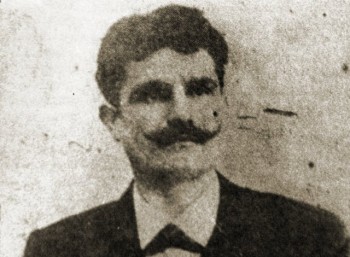
Μαρίνος Αντύπας / Marinos Antypas
Nowadays, the local community commemorates him, recognizing his contribution to changing social conditions, both in the region and across the country. It built a modest monument erected in Omolio where events are held every year in memory of the great fighter. At the same time, it gave his name to the small museum built in the village: Omolio Folk-Agricultural Showroom Marino Antipas, housed in the former Community chambers, located in the village square.
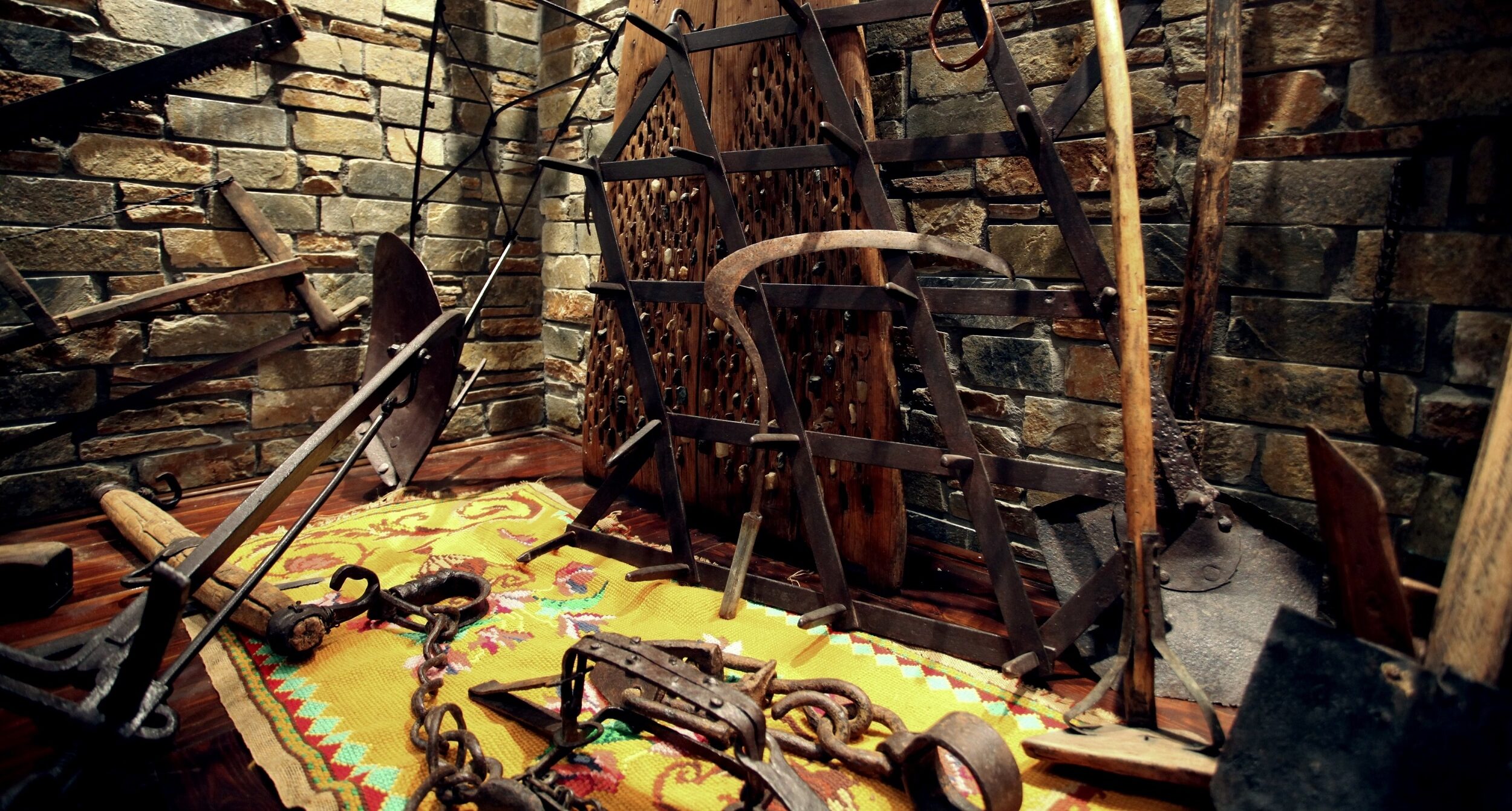
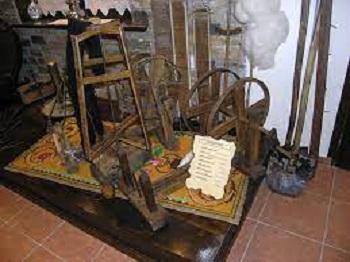
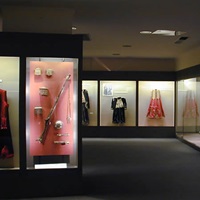
Today, the exhibition presents the tools used by the people for whom Antipas fought. Inaugurated on 18 March 2007 to mark the 100th anniversary of his death (murdered in 1907 in Pirgetos). Premechanical agricultural and foraging tools are hosted in the exhibition venue. Visitors can also admire tools of traditional occupations (fishermen, shoemakers, weavers, etc.) and objects from daily life of local people: handicrafts, embroidery and textiles, utilitarian household items (sofras (low tables), pots, pinakoti (bread levening boards)), local costumes, traditional clothing, woodwork items, postcards and engravings, coins, antique furniture, and a local bisiki (cot).
The collection includes artifacts that may be considered historical documents: a local’s military diary, which describes in detail the experience of the war in Asia Minor, but also photographs of social events and the occupations of the inhabitants. The showroom has a conference hall that holds 50-60 people.
Λαογραφικό-Γεωργικό Εκθετήριο Ομολίου Μαρίνος Αντύπας
Places like the Omolio Folk-Agricultural Showroom Marinos Antipas, although exhibiting objects from earlier times, alsoshow that traditional culture is not a static body of evidence that survives only in a museum. Because on the one hand, tools and materials actually bear witness to the immutable characteristics of an era (available resources, raw materials), however, they also reveal the basic principles of human creativity that lead to evolution. The name of the exhibition reminds us, at the same time, that this creativity should always be developed with concepts such as respecting the principles of human law and social justice.
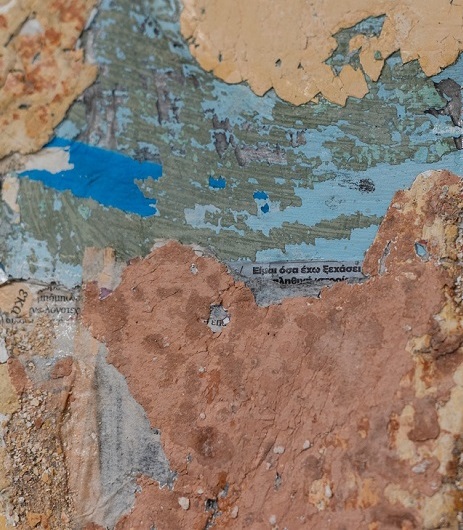
RENA PAPASPYROU 11 Vryaxidos & Aspasias: The unknown face
18 December 2021 - 27 February 2022| Ground Floor Foyer |19: 00-23: 30 On view on the Ground Floor of the Onassis Stegi is an installation consisting of a number of panels attached to a corner wall of Rena Papaspyrou’s (b. 1938) own design. These panels are wall sections detached by Papaspyrou from an abandoned house, now demolished, formerly located on the corner of 11 Vryaxidos Street and Aspasias Street in Pangrati, Athens. Ranging in scale, these fragments reveal the unseen side of the exterior walls of the building; several show traces of graffiti, stratification, and ...More
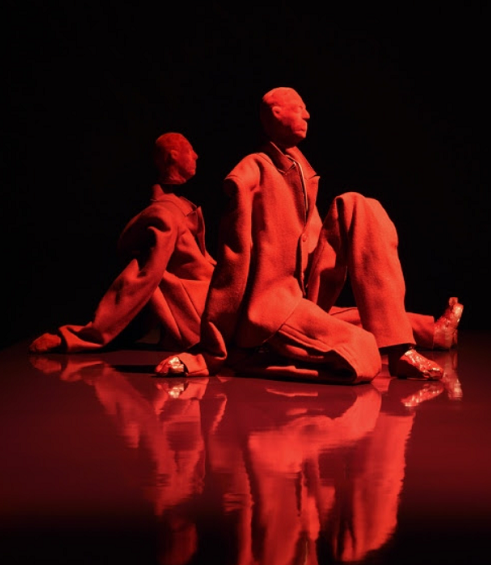
REDS: a large exhibition / installation was inaugurated in Fougaro
FOUGARO hosts a multifarious project by artist Florica Kyriacopoulos in the indoor and outdoor areas of the ARTCENTER. The exhibition-installation titled REDS is a work in progress that began in October 2021. Inspired by works in the FKPCOLLECTION, F. Kyriacopoulos explore the dynamics of the red colour through paintings, objects, photographs and sculptures conversing with each other in a venue filled with colour and light. Visitors can see works by Stephen Antonakos, Giorgos Lappas and Ona B., and continue the experience in the LIBRARY, following a course of artistic creation with works by Antoni Tàpies, Imran ...More
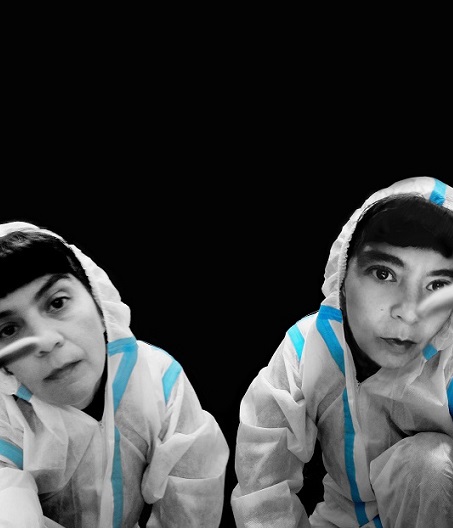
“The Unknown Masterpiece”, art installation by Gioula & Olga Papadopoulou at Bandapart Studio, Kalamata
Artists Gioula and Olga Papadopoulou present an interactive installation at Bandapart Studio in Kalamata, titled “The Unknown Masterpiece”. At the studio’s recording room, an acoustic experience featuring video, sound and performance is designed for each individual visitor who will enter and experience it alone, as a personal “therapy session” of specific duration. Event: Wednesday 5 January 2022, 14:00-23:00 (each “session” lasts about 15 minutes) Bandapart Recording Studio, 20 Anagnostara St. Kalamata Participating artists: Giorgos Dimitrakopoulos and Maria Bourika Gioula Papadopoulou was born in 1974. She studied Painting in the Athens School of Fine Arts, has a ...More

A research study of the COVID-19 pandemic in Cyprus
The Centre of Excellence in Biobanking and Biomedical Research biobank.cy of the University of Cyprus is carrying out a research study in cooperation with the Medical School at the University of Cyprus, the Medical School at the University of Nicosia and the School of Sciences at the European University of Cyprus, aiming to track and evaluate the presence of antibodies against COVID-19 in the population of Cyprus. Volunteers who have been diagnosed with COVID-19, health professionals from the Nicosia General Hospital, the Makareio Hospital of Nicosia and the Pafos General Hospital, as well as individuals from the ...More

With all Good Wishes for 2022!
"....blossoms, bears fruit, cultivates, grows and smells the twelve-month year turns like a wheel..." Apokopos by Bergadis (Stefanos Kaklamanis, Cretan Poetry in the Renaissance, vol. II, MIET Publications) *photos: Municipality of Agia, Larissa
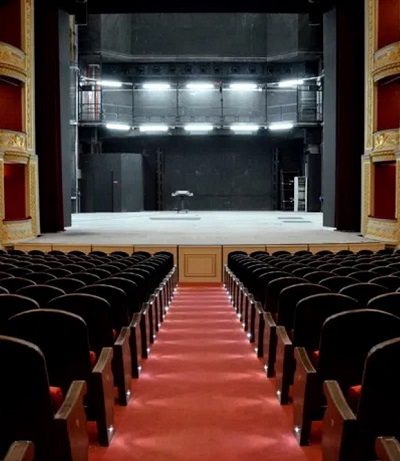
State Theatrical Writing Awards 2020
The Ministry of Culture and Sports announces the State Playwriting Awards 2020 after the completion of the work of the three competent Committees (Playwriting, Playwriting for Children and “Chrysa Spilioti” state award for Young Playwrights). State Playwriting Award Α) “The Needles of the Citrus Tree” by Panagiotis Kalyvitis Β) “HAPPY PLACE” by Eleni Kostopoulou, penname “Nick-Back”. C) “Thirteen stories the water took away” by Eleftheria Michailidi, penname “Aggela Gavriilidi” State Playwriting for Children Award: “Merry Christmas, Dear Charlie” by Sofia-Anna Theofanous, penname “Lotte Ingersol” Also, commendations to the following: “Cinnamon root” by Vasiliki Konstantopoulou, penname “Pinelopi Zervakou” ...More


Leave A Comment