
Omolio Folk-Agricultural Showroom Marinos Antipas
Omolio Folk-Agricultural Showroom Marinos Antipas
Omolio is a historical settlement of the Municipality of Agia surrounded by great natural beauty. Located in a central location, 40 km from the capital of the Larissa regional administration, just three kilometers from the Athens-Thessaloniki national road and at a minimum distance from the sea. According to Homer, the city participated in the Amphictyony of Delphi, while the mint of Ancient Omoli was one of the greatest in central Greece. The ruins of this ancient city and citadel still remain close to current Omolio.
Conditions brought the village back close to major historical events. This is the soil in which Marinos Antipas is buried, one of the most important figures of Greece in the fight to defend civil liberties. When Antipas came to Thessaly, where he took over as caretaker of the property of his uncle, he changed social conditions in the region. Although he was in a position of strength, he deleted agricultural debts, applied Sunday as a day off and set the remuneration of tenant farmers based on 75% of production (instead of 25% as was up to then in force). His murder was the natural consequence in a place dominated by lthe andowners of the time.
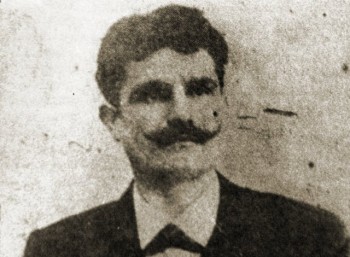
Μαρίνος Αντύπας / Marinos Antypas
Nowadays, the local community commemorates him, recognizing his contribution to changing social conditions, both in the region and across the country. It built a modest monument erected in Omolio where events are held every year in memory of the great fighter. At the same time, it gave his name to the small museum built in the village: Omolio Folk-Agricultural Showroom Marino Antipas, housed in the former Community chambers, located in the village square.
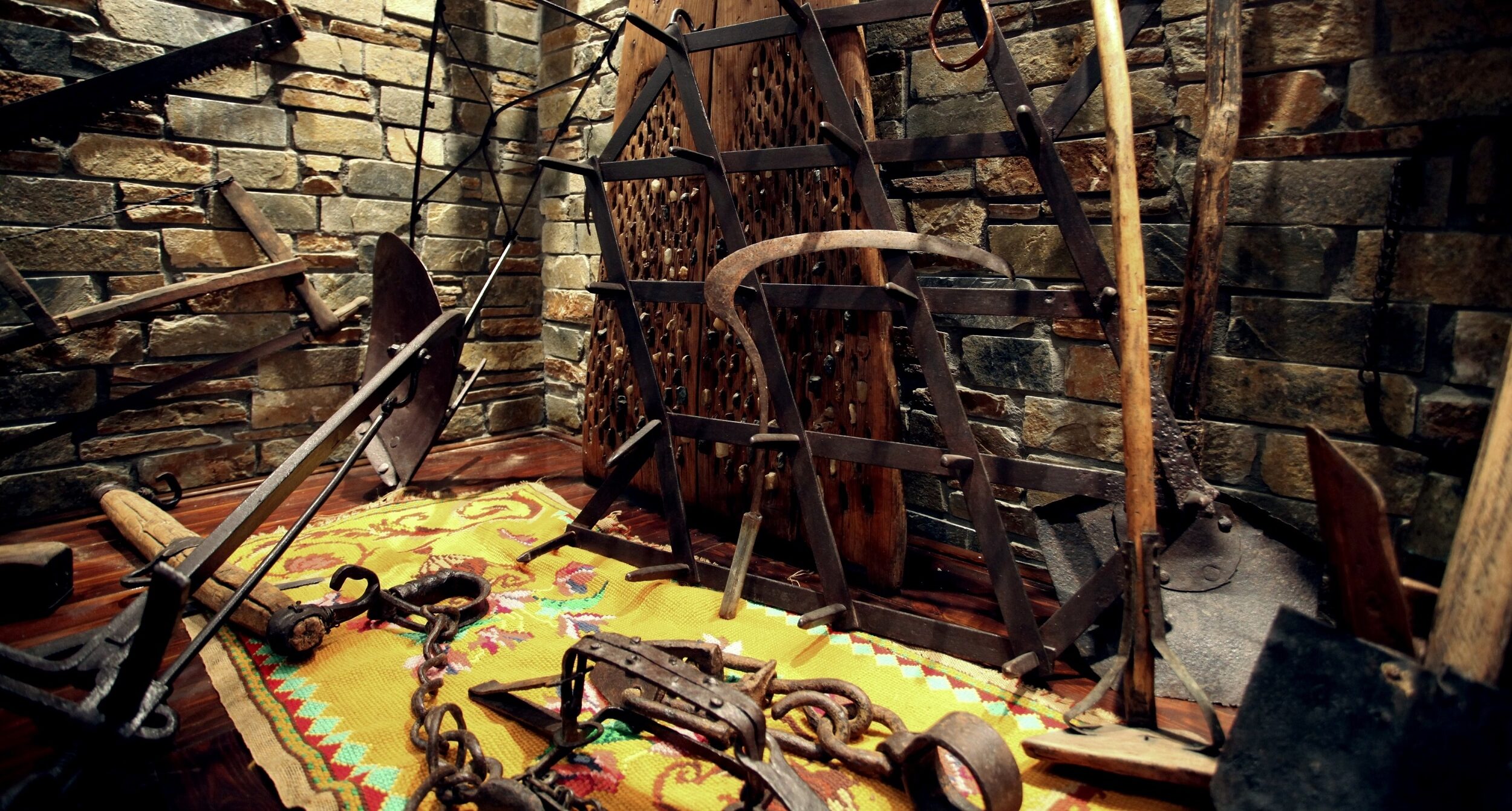
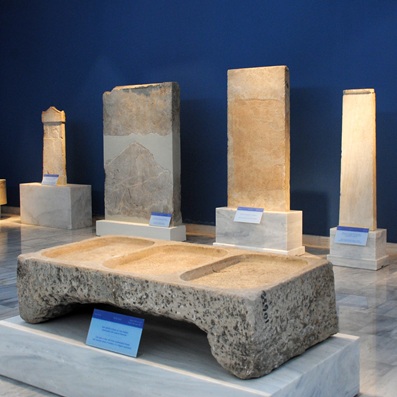
Today, the exhibition presents the tools used by the people for whom Antipas fought. Inaugurated on 18 March 2007 to mark the 100th anniversary of his death (murdered in 1907 in Pirgetos). Premechanical agricultural and foraging tools are hosted in the exhibition venue. Visitors can also admire tools of traditional occupations (fishermen, shoemakers, weavers, etc.) and objects from daily life of local people: handicrafts, embroidery and textiles, utilitarian household items (sofras (low tables), pots, pinakoti (bread levening boards)), local costumes, traditional clothing, woodwork items, postcards and engravings, coins, antique furniture, and a local bisiki (cot).
The collection includes artifacts that may be considered historical documents: a local’s military diary, which describes in detail the experience of the war in Asia Minor, but also photographs of social events and the occupations of the inhabitants. The showroom has a conference hall that holds 50-60 people.
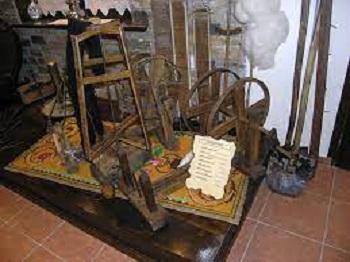
Λαογραφικό-Γεωργικό Εκθετήριο Ομολίου Μαρίνος Αντύπας
Places like the Omolio Folk-Agricultural Showroom Marinos Antipas, although exhibiting objects from earlier times, alsoshow that traditional culture is not a static body of evidence that survives only in a museum. Because on the one hand, tools and materials actually bear witness to the immutable characteristics of an era (available resources, raw materials), however, they also reveal the basic principles of human creativity that lead to evolution. The name of the exhibition reminds us, at the same time, that this creativity should always be developed with concepts such as respecting the principles of human law and social justice.

Award Ceremony of the 2nd “MARILENA LASKARIDI” Literary Competition for Greek schools abroad.
Awards Ceremony of the 2nd Literary Contest "MARILENA LASKARIDI" for Greek schools abroad (ca.2020 - 2021) On Friday 18 March 2022, at 13.00 (local time), the award ceremony of the 2nd Literary Competition "MARILENA LASKARIDI" for Greek schools abroad, period 2020 - 2021, will take place online. The competition is approved by the Ministry of Education & Religious Affairs and is sponsored by the Aikaterini Laskaridis Foundation, with the aim of encouraging expression, cultivating the writing skills of adolescents, but above all to create a bridge of communication with the students of Greek schools abroad. Secondary school ...More
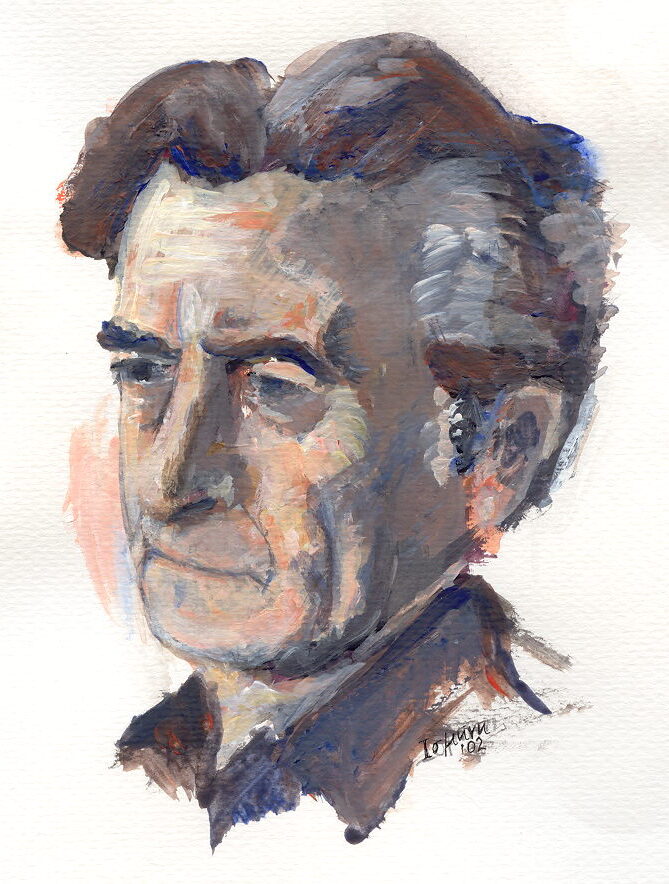
Book presentation: Dimitris Dragatakis, official recordings and archival recordings
An important Greek composer, Dimitris Dragatakis (1914-2001), will be honoured on Friday 11 March at the Music Library of the Friends of Music Association at the Athens Concert Hall, where his archive is also kept. The book by Thomas Tamvakos Dimitris Dragatakis, Official Discography and Archival Recordings (published by the Alexandroupolis Music Society, 2021) is commented on by distinguished scientists and artists who shed light on the composer's unique musical personality, each in his own light. The evening is accompanied by a short musical programme with songs for voice and piano and piano works by the composer, ...More
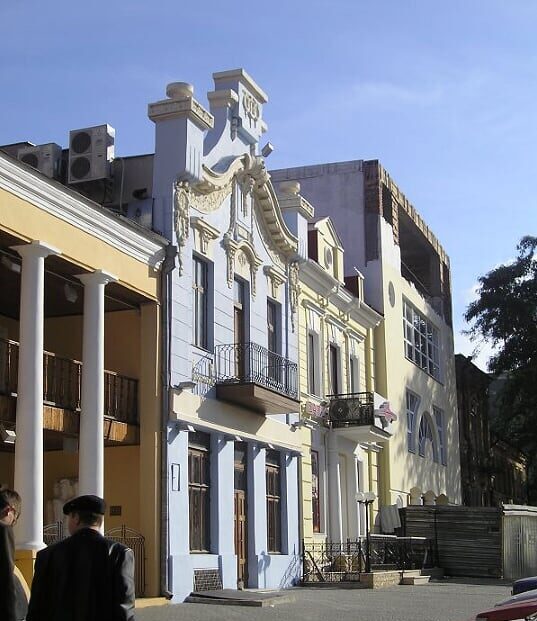
Museum of the Society of Friendship in Odessa. Greek history at the heart of the war.
The recent war in Ukraine brings into focus the discussion of the Greek inhabitants of the country who are facing destruction, migration and death. Now the city of Odessa is also under siege. Roadblocks and barricades have been set up in the streets in anticipation of the Russian attack. Odessa is a place of particular importance for Greek history. In 1816, three Greek merchants, Emmanuel Xanthos, Nikolaos Skoufas and Athanasios Tsakalov, members of the numerous, prosperous and active Greek diaspora, founded the Society of Friends, which took on the role of preparing the Greek Revolution. The city ...More
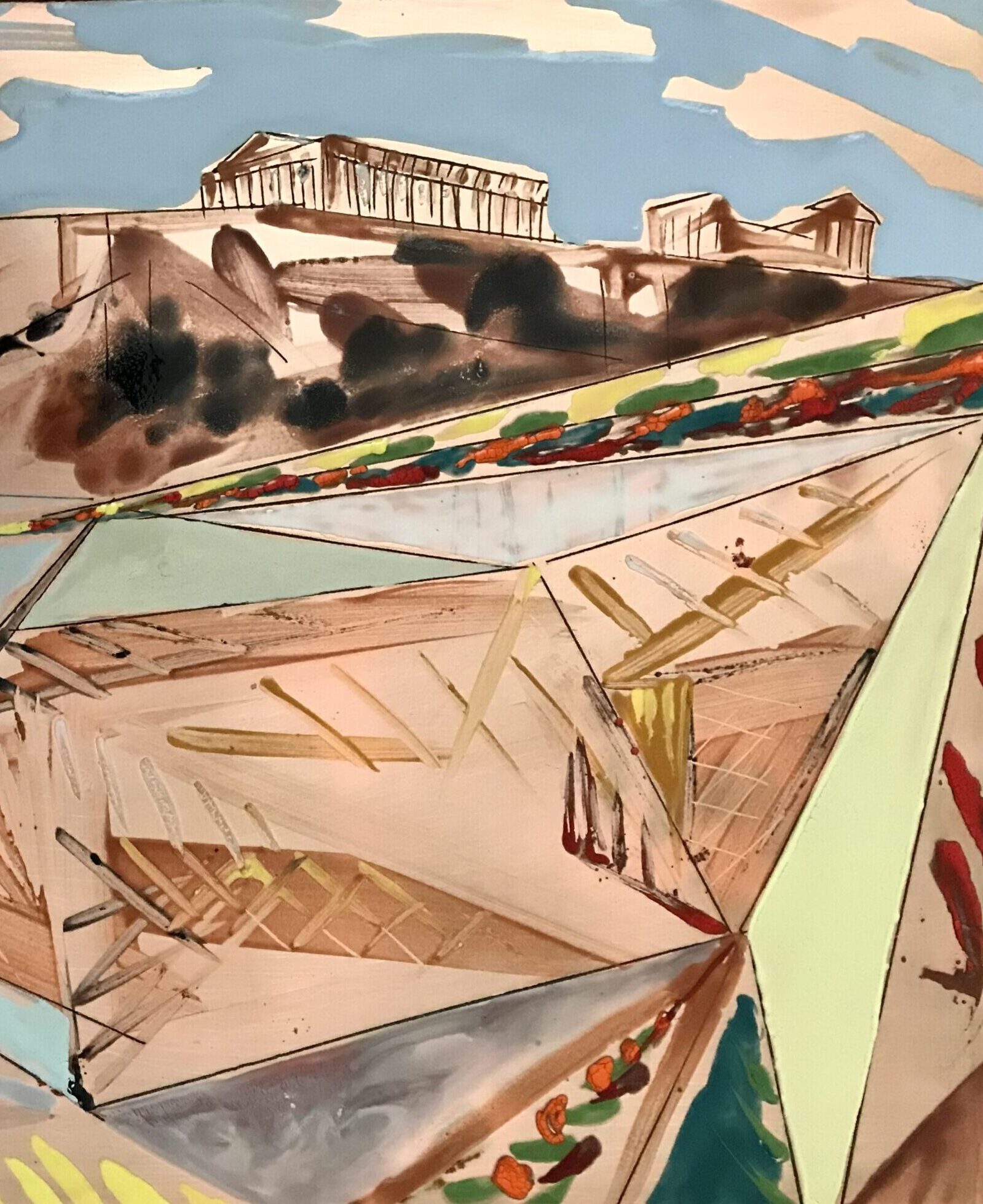
“Ι. Masteropoulos: Paintings and Enamels” at the National Insurance Company’s Art Space “STOART KORAI”
"I. Mastroopoulos: Paintings and enamels" at the Art Space of National Insurance Company "STOART KORAI" "Ι. I. Mastroopoulos. Paintings and Enamels" is the title of the exhibition, which will be presented at the hospitable Art Space "STOART KORAI" and will last from 11 March to 27 April 2022. Ioannis (Ivan) Mastroopoulos is primarily an expressionist painter, a true master of mosaics in large public and private buildings. commissions he undertakes for monumental works in Greece and abroad, demonstrating a unique dexterity in his means of visual expression."The artist has developed a now recognizable pictorial style, which with ...More
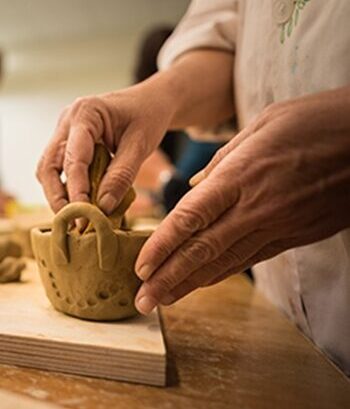
Cultural Organization of Patras, Ceramics lessons at the second chance school in Agios Stefanos prison.
CULTURAL ORGANIZATION OF PATRA CERAMICS LESSONS AT THE SECOND CHANCE SCHOOL AT THE ST. STEPHEN PRISON The Cultural Organization of the Municipality of Patra for one more year, responding to the call of the 2nd chance school, participates with the art workshop of ceramics lessons that will be held at the penitentiary of "Agios Stefanos". The teachers of the art workshop Panagiota Kontogeorga, Maria Kanellopoulou and Spyros Methenitis will teach ceramics making to trainee prisoners. At the same time, the Cultural Organisation will contribute to the implementation of the programme by providing the clay needed for the ...More
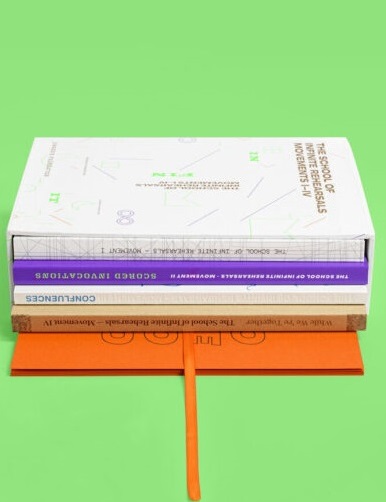
School of Infinite Rehearsals. Four-volume edition of Onassis AiR. A collective project of researchers and people of the arts
An important four-volume edition of Onassis AiR, a collective project of researchers and arts people towards their peers and those looking to tomorrow. The School of Infinite Rehearsals Movements ONASSIS AIR HYPERHYPO (Pinelopi Gerasimou) The School of Infinite Rehearsals is a collaborative research project of Onassis AiR, inviting participants from different disciplines to exchange knowledge and practices around research questions that we consider urgent to raise and further explore together. The four-volume publication The School of Infinite Rehearsals | Movements I-IV summarizes the ideas and questions that emerged through the participants' collective research in 2020-21. ...More



Leave A Comment