
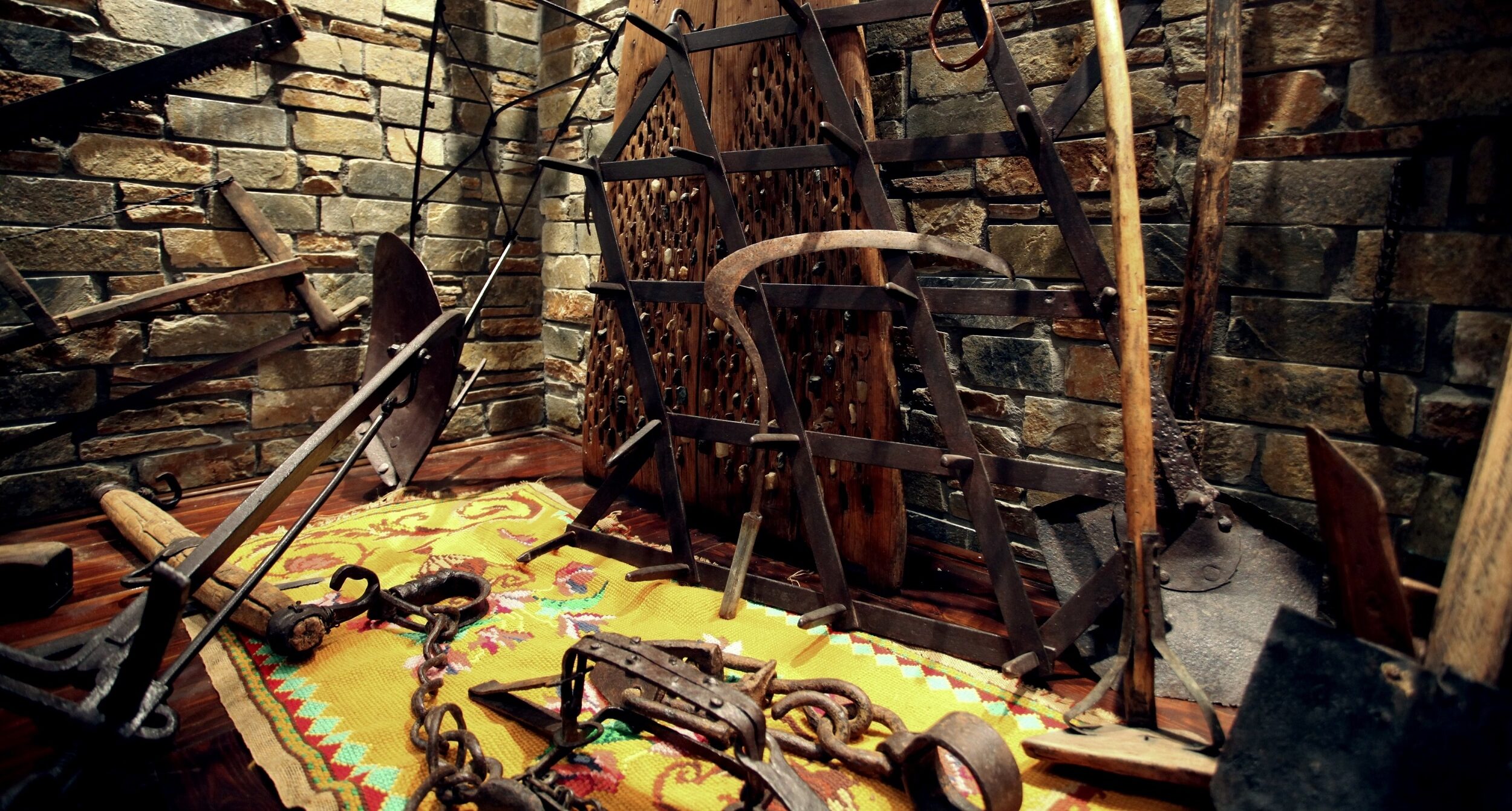

Omolio Folk-Agricultural Showroom Marinos Antipas
Omolio Folk-Agricultural Showroom Marinos Antipas
Omolio is a historical settlement of the Municipality of Agia surrounded by great natural beauty. Located in a central location, 40 km from the capital of the Larissa regional administration, just three kilometers from the Athens-Thessaloniki national road and at a minimum distance from the sea. According to Homer, the city participated in the Amphictyony of Delphi, while the mint of Ancient Omoli was one of the greatest in central Greece. The ruins of this ancient city and citadel still remain close to current Omolio.
Conditions brought the village back close to major historical events. This is the soil in which Marinos Antipas is buried, one of the most important figures of Greece in the fight to defend civil liberties. When Antipas came to Thessaly, where he took over as caretaker of the property of his uncle, he changed social conditions in the region. Although he was in a position of strength, he deleted agricultural debts, applied Sunday as a day off and set the remuneration of tenant farmers based on 75% of production (instead of 25% as was up to then in force). His murder was the natural consequence in a place dominated by lthe andowners of the time.
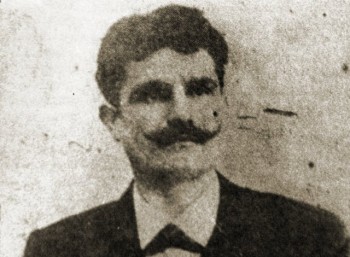
Μαρίνος Αντύπας / Marinos Antypas
Nowadays, the local community commemorates him, recognizing his contribution to changing social conditions, both in the region and across the country. It built a modest monument erected in Omolio where events are held every year in memory of the great fighter. At the same time, it gave his name to the small museum built in the village: Omolio Folk-Agricultural Showroom Marino Antipas, housed in the former Community chambers, located in the village square.
Today, the exhibition presents the tools used by the people for whom Antipas fought. Inaugurated on 18 March 2007 to mark the 100th anniversary of his death (murdered in 1907 in Pirgetos). Premechanical agricultural and foraging tools are hosted in the exhibition venue. Visitors can also admire tools of traditional occupations (fishermen, shoemakers, weavers, etc.) and objects from daily life of local people: handicrafts, embroidery and textiles, utilitarian household items (sofras (low tables), pots, pinakoti (bread levening boards)), local costumes, traditional clothing, woodwork items, postcards and engravings, coins, antique furniture, and a local bisiki (cot).
The collection includes artifacts that may be considered historical documents: a local’s military diary, which describes in detail the experience of the war in Asia Minor, but also photographs of social events and the occupations of the inhabitants. The showroom has a conference hall that holds 50-60 people.
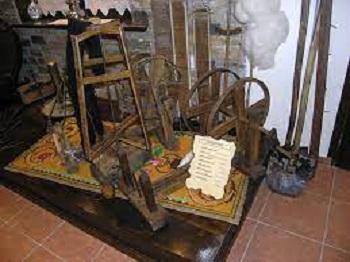
Λαογραφικό-Γεωργικό Εκθετήριο Ομολίου Μαρίνος Αντύπας
Places like the Omolio Folk-Agricultural Showroom Marinos Antipas, although exhibiting objects from earlier times, alsoshow that traditional culture is not a static body of evidence that survives only in a museum. Because on the one hand, tools and materials actually bear witness to the immutable characteristics of an era (available resources, raw materials), however, they also reveal the basic principles of human creativity that lead to evolution. The name of the exhibition reminds us, at the same time, that this creativity should always be developed with concepts such as respecting the principles of human law and social justice.
World Autism Awareness Day: EMST becomes the first EU sensory-friendly museum on Autism in collaboration with The Happy Act group
World Autism Awareness Day: EMST first EU sensory-friendly museum in Autism On the occasion of World Autism Awareness Day, the National Museum of Contemporary Art unveiled the design of the museum to make it fully accessible to people on the autism spectrum. The National Museum of Contemporary Art is the first and only museum in the European Union that has made appropriate interventions to make it sensory-friendly for autism. Sensory accessibility consists of adapting conditions to create an optimal experience for people on the spectrum. It includes signage, support provision, sensory maps, staff training and other ...More
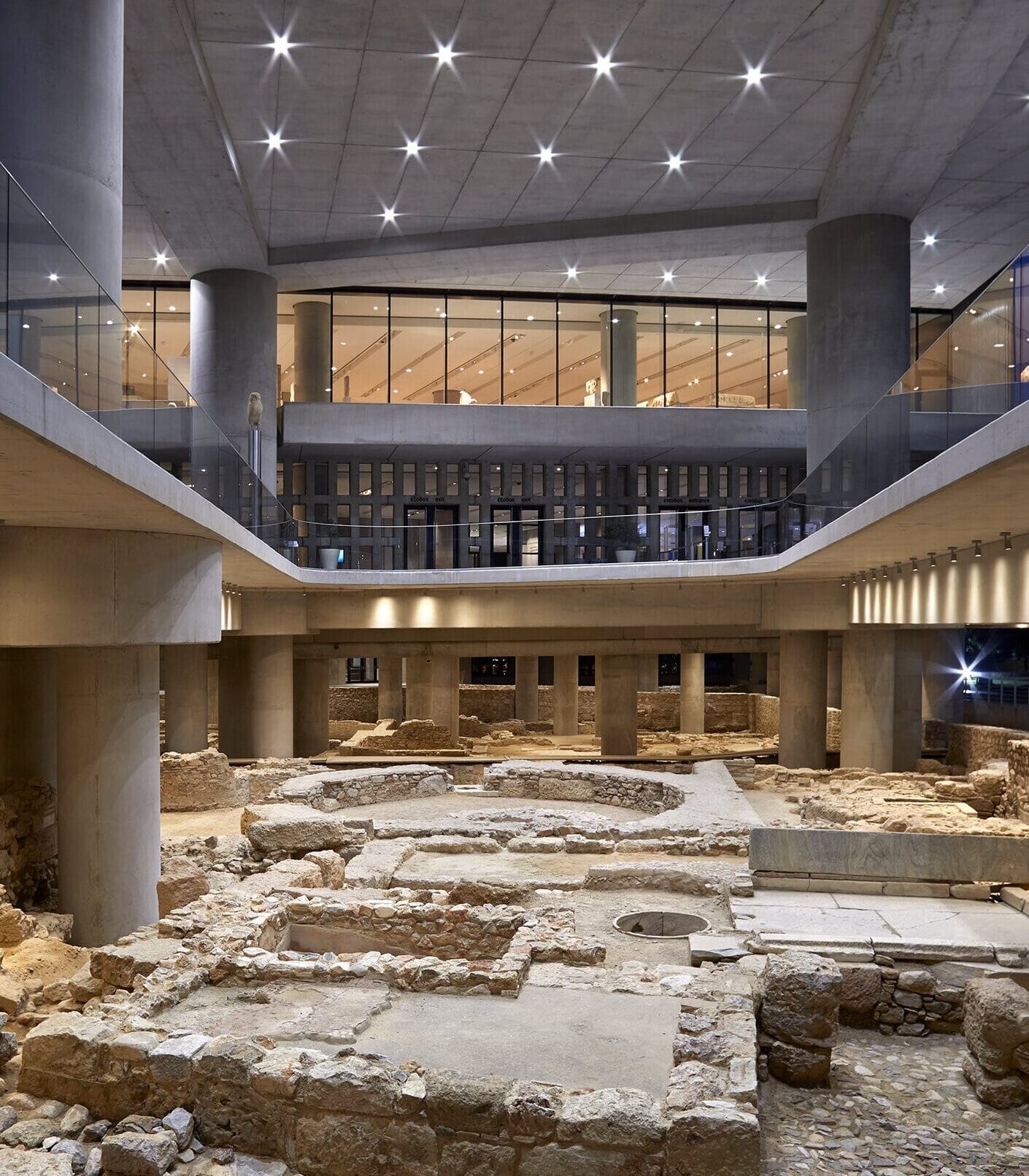
The Acropolis Museum welcomes spring
The Acropolis Museum welcomes spring The Acropolis Museum welcomes its visitors to the summer season with extended opening hours of the exhibition areas from April to October (Monday 8am-4pm, Tuesday to Sunday 8am-8pm, Friday 8am-10pm), evenings on the terrace of the restaurant overlooking the illuminated Acropolis every Friday and Saturday until midnight and a new series of presentations on the archaeological excavation. "Walking in the ancient neighbourhood of the Acropolis Museum" Guided by the Museum's archaeologists, visitors have the opportunity to tour the archaeological excavation that, like a huge exhibit, spreads out at the base of ...More
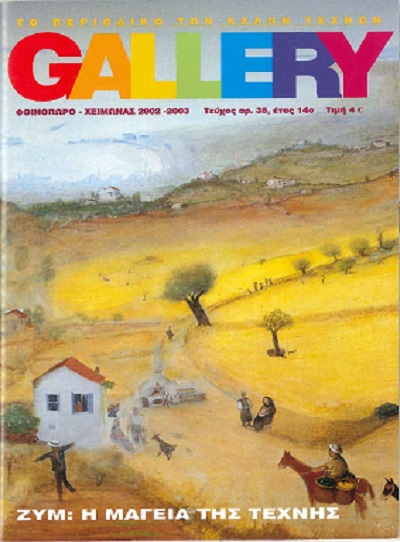
The presentation of contemporary art through a historical guide: The GALLERY GUIDE magazine. By Margarita Kataga
One of the first important magazines on the visual arts created in Greece was the pocketsize bi-monthly Gallery Guide. The modern, illustrated guide had as its primary purpose - and as an important feature of its identity - the multifaceted, thorough presentation of art activities and events on a nationwide scale. From its very first issues, the magazine's initiator and editor, George Zimarakis, wrote in its pages "Among the three papers, namely paper money, banknotes, and works of art, the last ones are to be taken for certain. In the difficult period we are going through, ...More
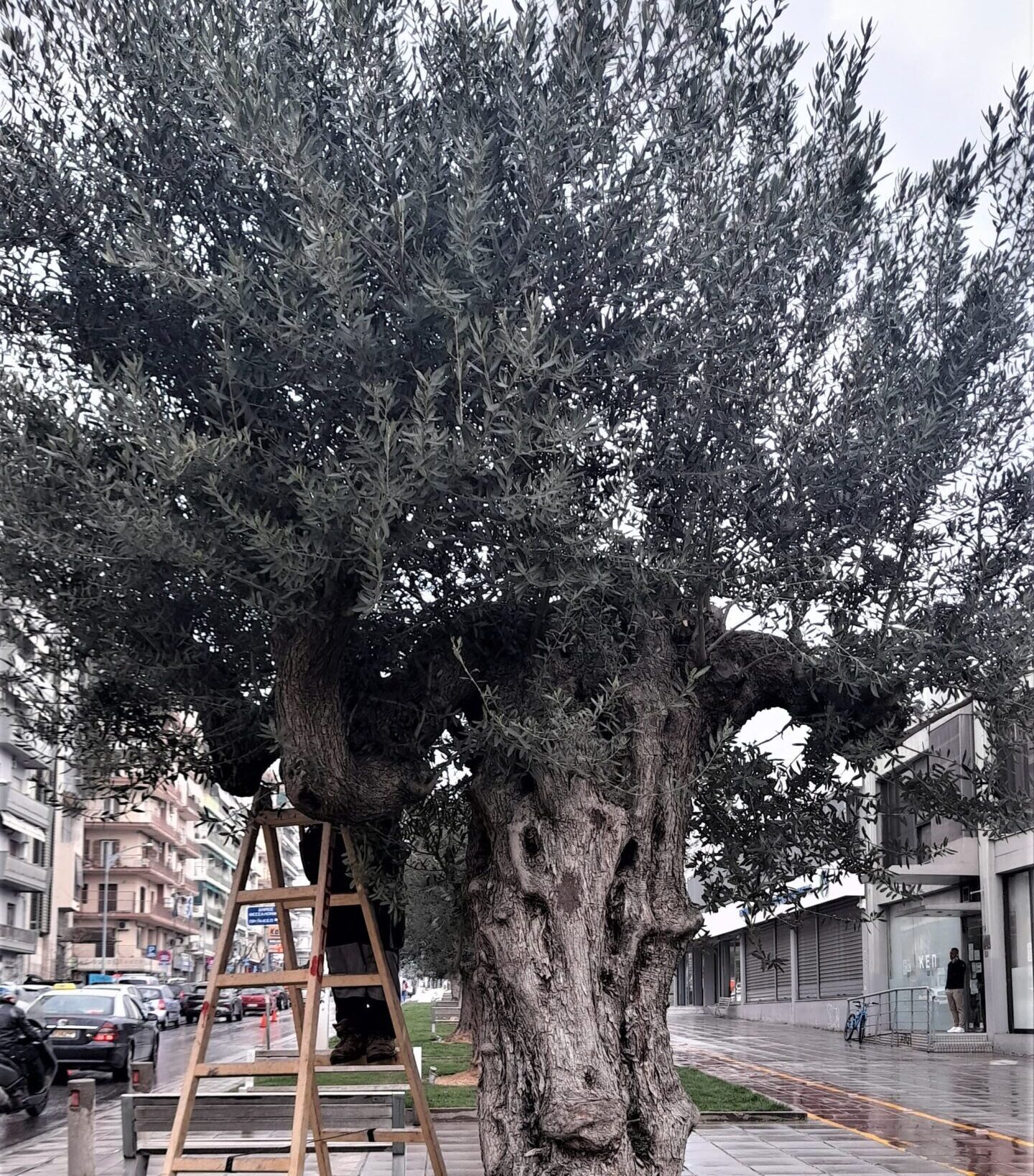
Thessaloniki, in Aggelaki Street the two new olive trees were placed, in the presence of Zervas and Andreadis
MUNICIPALITY OF THESSALONIKI The two new olive trees were placed on Aggelaki Street in the presence of Zervas and Andreadis. About two years ago, Aggelaki Street, in the heart of Thessaloniki, was given a new look with the planting of thirty over-aged olive trees, described as an urban work of art. On the morning of 31/03, Aggelaki Street welcomed two new olive trees from Halkidiki, which came to replace two of the thirty olive trees that failed to acclimatize. The replacement of the olive trees took place in the presence of the Mayor of Thessaloniki, Konstantinos ...More

First prize for a thesis from AUTH, in the “RMEIM Student Prize 2022” competition, on sustainable development
First Prize for a thesis prepared at the Department of Civil Engineering, Aristotle University of Thessaloniki Save The first prize in the international competition "RMEIM StudentPrize 2022" was awarded to the thesis of Marios Karambasis, now a graduate of the Department of Civil Engineering of the Faculty of Engineering of the Aristotle University of Thessaloniki, Greece. The competition, on the topic of sustainable development, was organised by the international organisation "RMEIM - MediterraneanNetwork of Engineering and ManagementSchools", which includes members from 59 schools from 15 Mediterranean countries, such as Spain, France, Italy, Portugal, Tunisia, Jordan, Libya, ...More

National Literary Awards 2021, by the Ministry of Culture
State Literary Awards 2021 The Ministry of Culture and Sports announces the 2021 State Literary Awards (for the 2020 editions), the 2021 State Literary Translation Awards (2020 editions) and the 2021 State Children's Book Awards (2020 editions). Specifically, the 2021 Grand Prize for Literature, the 2021 State Literature Prizes (Novel, Short Story-Novel, and Poetry Prizes), the 2021 State Essay-Testimony Prizes (Essay-Criticism and Testimony-Biography-Chronicle-Travel Literature Prizes) are announced today, the Emerging Author Award 2021, the Special Thematic Award 2021 (for a book that significantly promotes dialogue on sensitive social issues), and the awarding of an honorary distinction ...More


Leave A Comment