
Omolio Folk-Agricultural Showroom Marinos Antipas
Omolio Folk-Agricultural Showroom Marinos Antipas
Omolio is a historical settlement of the Municipality of Agia surrounded by great natural beauty. Located in a central location, 40 km from the capital of the Larissa regional administration, just three kilometers from the Athens-Thessaloniki national road and at a minimum distance from the sea. According to Homer, the city participated in the Amphictyony of Delphi, while the mint of Ancient Omoli was one of the greatest in central Greece. The ruins of this ancient city and citadel still remain close to current Omolio.
Conditions brought the village back close to major historical events. This is the soil in which Marinos Antipas is buried, one of the most important figures of Greece in the fight to defend civil liberties. When Antipas came to Thessaly, where he took over as caretaker of the property of his uncle, he changed social conditions in the region. Although he was in a position of strength, he deleted agricultural debts, applied Sunday as a day off and set the remuneration of tenant farmers based on 75% of production (instead of 25% as was up to then in force). His murder was the natural consequence in a place dominated by lthe andowners of the time.
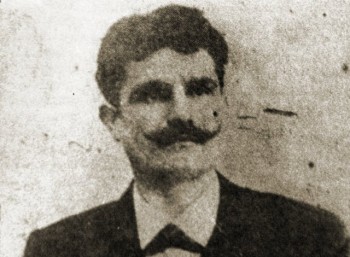
Μαρίνος Αντύπας / Marinos Antypas
Nowadays, the local community commemorates him, recognizing his contribution to changing social conditions, both in the region and across the country. It built a modest monument erected in Omolio where events are held every year in memory of the great fighter. At the same time, it gave his name to the small museum built in the village: Omolio Folk-Agricultural Showroom Marino Antipas, housed in the former Community chambers, located in the village square.
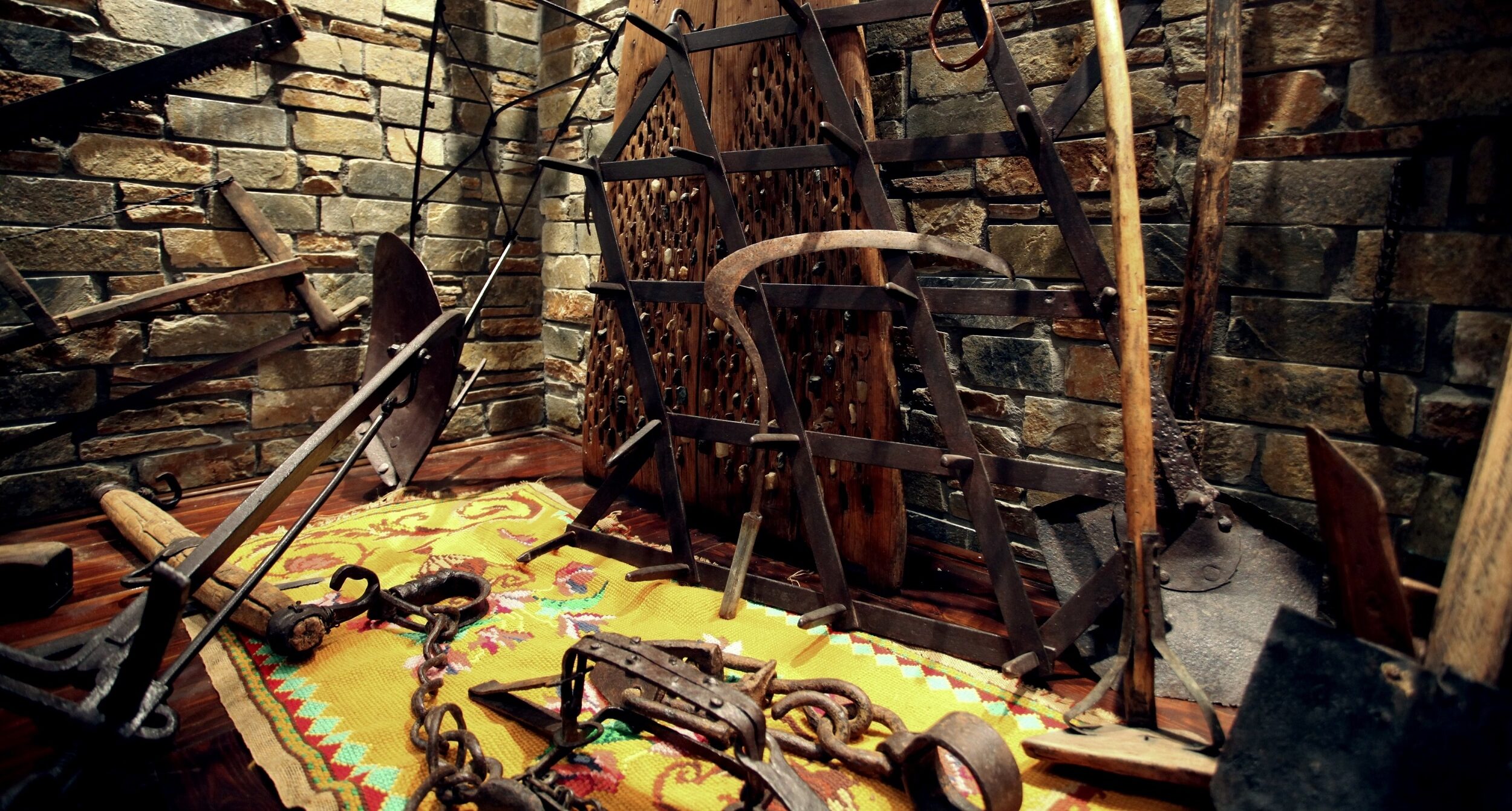
Today, the exhibition presents the tools used by the people for whom Antipas fought. Inaugurated on 18 March 2007 to mark the 100th anniversary of his death (murdered in 1907 in Pirgetos). Premechanical agricultural and foraging tools are hosted in the exhibition venue. Visitors can also admire tools of traditional occupations (fishermen, shoemakers, weavers, etc.) and objects from daily life of local people: handicrafts, embroidery and textiles, utilitarian household items (sofras (low tables), pots, pinakoti (bread levening boards)), local costumes, traditional clothing, woodwork items, postcards and engravings, coins, antique furniture, and a local bisiki (cot).
The collection includes artifacts that may be considered historical documents: a local’s military diary, which describes in detail the experience of the war in Asia Minor, but also photographs of social events and the occupations of the inhabitants. The showroom has a conference hall that holds 50-60 people.
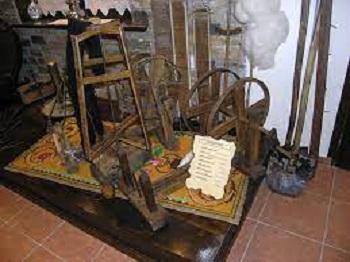
Λαογραφικό-Γεωργικό Εκθετήριο Ομολίου Μαρίνος Αντύπας
Places like the Omolio Folk-Agricultural Showroom Marinos Antipas, although exhibiting objects from earlier times, alsoshow that traditional culture is not a static body of evidence that survives only in a museum. Because on the one hand, tools and materials actually bear witness to the immutable characteristics of an era (available resources, raw materials), however, they also reveal the basic principles of human creativity that lead to evolution. The name of the exhibition reminds us, at the same time, that this creativity should always be developed with concepts such as respecting the principles of human law and social justice.

Distance Learning MSc Program “Technological & Management Advances in Intelligent Transportation Electrification Systems” from DUTH & NTUA
Title: Distance Learning MSc Program "Technological & Management Advances in Intelligent Transportation Electrification Systems" Scientific Field: Transportation electrification systems Universities: Democritus University of Thrace (DUTH) National Technical University of Athens (NTUA) Language of instruction: English Διάρκεια: 3 semesters (full-time) 6 semesters (part-time) For more information, please visit the website: https://tmaites.ee.duth.gr Description The Inter-Institutional Master of Science (M.Sc.) Program in Technological & Management Advances on Intelligent Transportation Electrification Systems, jointly offered by Democritus University of Thrace ...More
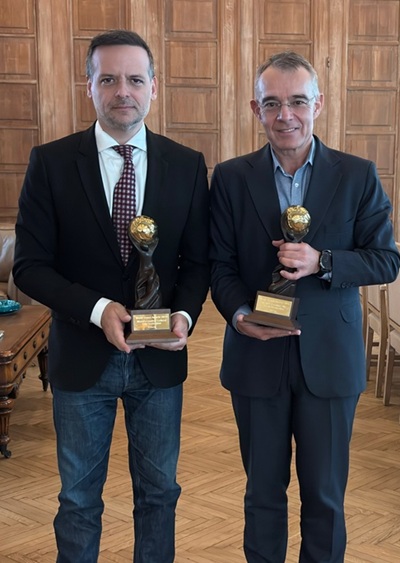
Two global distinctions for Athens at the World Travel Awards
Athens continues its dynamic progress on the global tourism map, winning two more important distinctions at the World Travel Awards 2025, one of the most recognized institutions in the international tourism industry. The Greek capital was named World's Leading Cultural City Destination and, for the first time globally, World's Leading City Break Destination for 2025. The two awards were presented at a special ceremony held last Saturday (December 6) in the capital of Bahrain, Manama, where Athens was represented by the CEO of the Athens Development Agency, Ioannis Georgizas, and executives of the organization. On the ...More

Distance Learning MSc Program “Technological & Management Advances in Intelligent Transportation Electrification Systems”
Title: Distance Learning MSc Program "Technological & Management Advances in Intelligent Transportation Electrification Systems" Scientific Field: Transportation electrification systems Universities: Democritus University of Thrace (DUTH) National Technical University of Athens (NTUA) Language of instruction: English Διάρκεια: 3 semesters (full-time) 6 semesters (part-time) For more information, please visit the website: https://tmaites.ee.duth.gr Description The Inter-Institutional Master of Science (M.Sc.) Program in Technological & Management Advances on Intelligent Transportation Electrification Systems, jointly offered by Democritus University of Thrace ...More
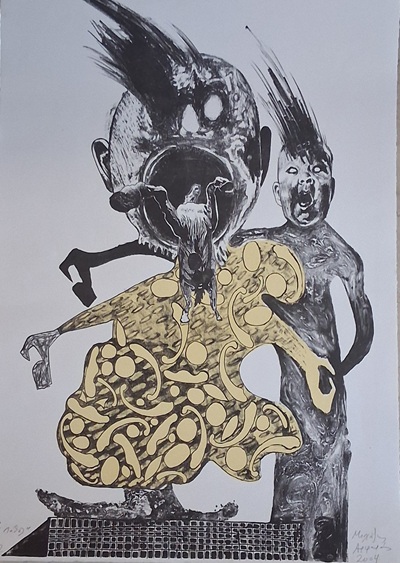
Ersi Gallery | The Paradoxes | December 17, 2025-January 31, 2026
On Wednesday, December 17, 2025, Ersi Gallery presents a group exhibition entitled "The Paradoxes." As an ideal field of free expression, art has always included paradoxical forms of representation that subvert logic and all kinds of conventions in personal and collective consciousness. Depictions of the bizarre and inexplicable have, over the centuries, validated the artist's non-negotiable right to exercise their visual imagination without any constraints. The uncertainty of the existence of 'potential' worlds, where the absurd has flesh and bones, provokes feelings of anxiety and fear. Throughout history, the revelation of the paradoxical through the work ...More
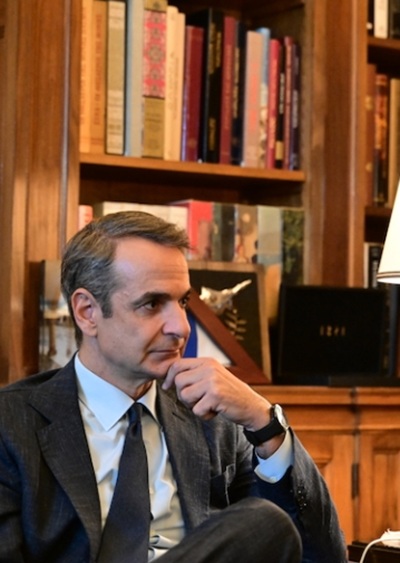
The conversation between Kyriakos Mitsotakis and Elias Kanellis at the Athens Conservatory has been postponed.
The discussion between Greek Prime Minister Kyriakos Mitsotakis and Elias Kanellis at the Athens Conservatory, scheduled for tomorrow, Thursday, December 11, at 6 p.m., has been postponed. At 5:45 p.m. on the same day, the Prime Minister will participate in a teleconference of leaders of the Alliance of the Willing, organized by UK Prime Minister Keir Starmer, French President Emmanuel Macron, and German Chancellor Friedrich Merz. The new date for the discussion will be announced shortly.

Rhizomatic Sound Design Workshop with D. Menexopoulos & Opening Party by InnerLand Project | December 19, 2025
The InnerLand Project presents the “Rhizomatic Sound Design Workshop” with Dimitris Menexopoulos (Menex) on Friday, 19 December, in Thiseio, Athens. In this sound design workshop, participants will explore experimental approaches to creating electronic music through the philosophical lens of Gilles Deleuze and Félix Guattari’s concepts of rhizomatic and arborescent thinking. Beginning with a brief introduction to these ideas, participants will examine what it means to “create the new” in sound synthesis and musical composition. Through listening to selected examples of electronic music that incorporate either hierarchical (arborescent) or non-linear (rhizomatic) approaches, and by tracing the historical ...More


Leave A Comment