
Omolio Folk-Agricultural Showroom Marinos Antipas
Omolio Folk-Agricultural Showroom Marinos Antipas
Omolio is a historical settlement of the Municipality of Agia surrounded by great natural beauty. Located in a central location, 40 km from the capital of the Larissa regional administration, just three kilometers from the Athens-Thessaloniki national road and at a minimum distance from the sea. According to Homer, the city participated in the Amphictyony of Delphi, while the mint of Ancient Omoli was one of the greatest in central Greece. The ruins of this ancient city and citadel still remain close to current Omolio.
Conditions brought the village back close to major historical events. This is the soil in which Marinos Antipas is buried, one of the most important figures of Greece in the fight to defend civil liberties. When Antipas came to Thessaly, where he took over as caretaker of the property of his uncle, he changed social conditions in the region. Although he was in a position of strength, he deleted agricultural debts, applied Sunday as a day off and set the remuneration of tenant farmers based on 75% of production (instead of 25% as was up to then in force). His murder was the natural consequence in a place dominated by lthe andowners of the time.
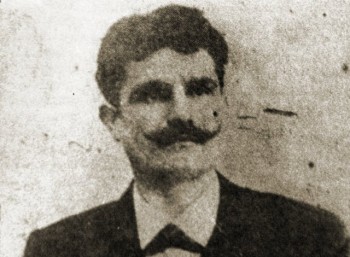
Μαρίνος Αντύπας / Marinos Antypas
Nowadays, the local community commemorates him, recognizing his contribution to changing social conditions, both in the region and across the country. It built a modest monument erected in Omolio where events are held every year in memory of the great fighter. At the same time, it gave his name to the small museum built in the village: Omolio Folk-Agricultural Showroom Marino Antipas, housed in the former Community chambers, located in the village square.
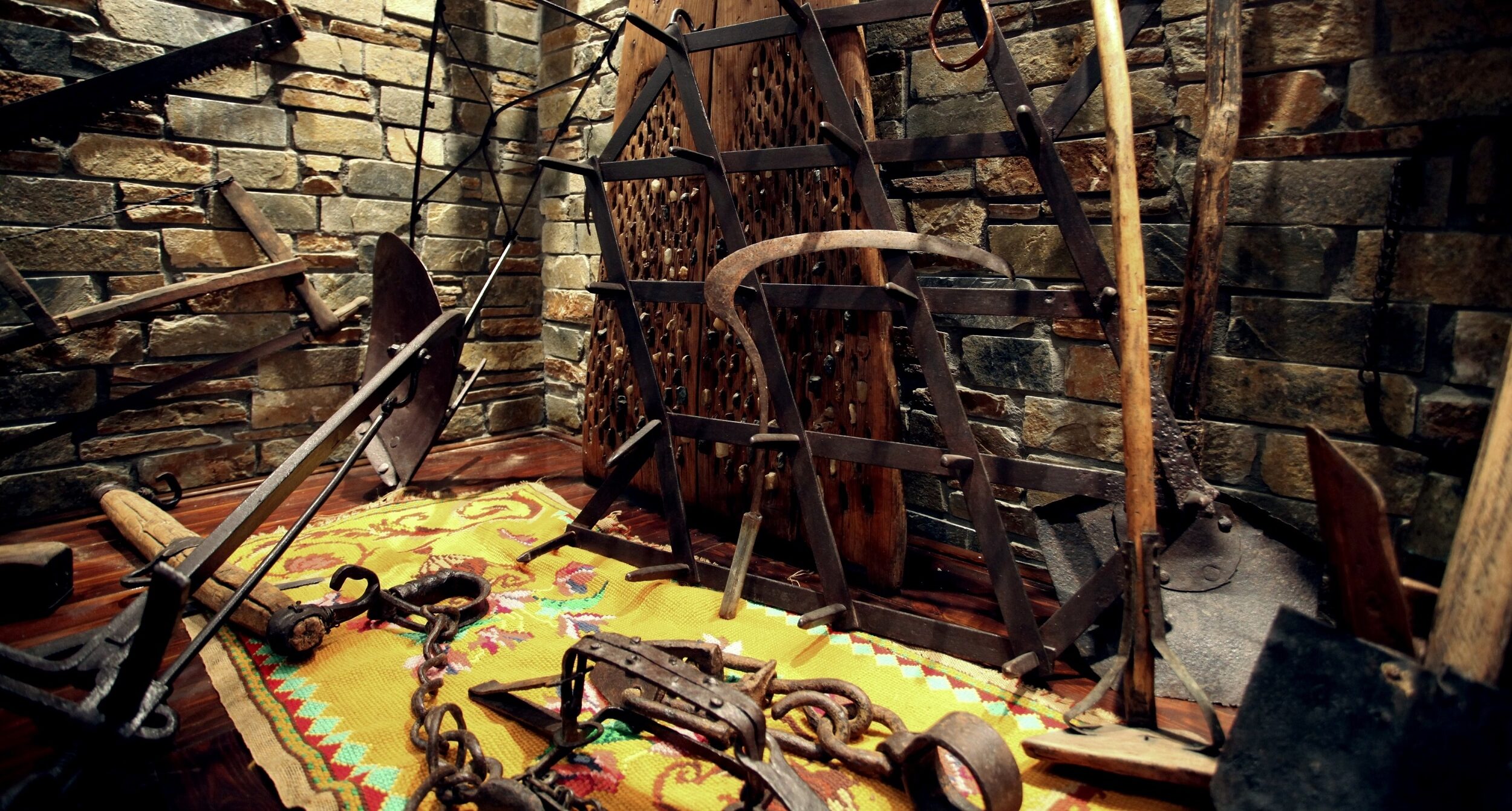
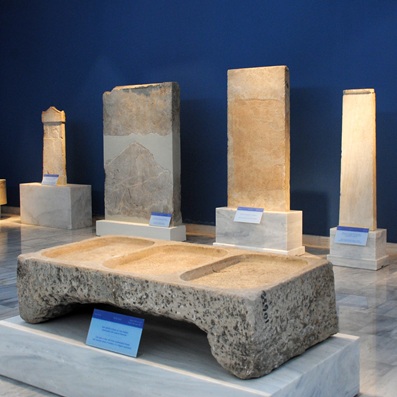
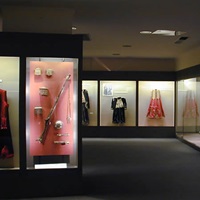
Today, the exhibition presents the tools used by the people for whom Antipas fought. Inaugurated on 18 March 2007 to mark the 100th anniversary of his death (murdered in 1907 in Pirgetos). Premechanical agricultural and foraging tools are hosted in the exhibition venue. Visitors can also admire tools of traditional occupations (fishermen, shoemakers, weavers, etc.) and objects from daily life of local people: handicrafts, embroidery and textiles, utilitarian household items (sofras (low tables), pots, pinakoti (bread levening boards)), local costumes, traditional clothing, woodwork items, postcards and engravings, coins, antique furniture, and a local bisiki (cot).
The collection includes artifacts that may be considered historical documents: a local’s military diary, which describes in detail the experience of the war in Asia Minor, but also photographs of social events and the occupations of the inhabitants. The showroom has a conference hall that holds 50-60 people.
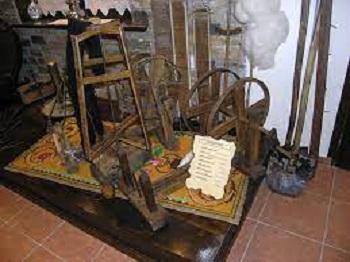
Λαογραφικό-Γεωργικό Εκθετήριο Ομολίου Μαρίνος Αντύπας
Places like the Omolio Folk-Agricultural Showroom Marinos Antipas, although exhibiting objects from earlier times, alsoshow that traditional culture is not a static body of evidence that survives only in a museum. Because on the one hand, tools and materials actually bear witness to the immutable characteristics of an era (available resources, raw materials), however, they also reveal the basic principles of human creativity that lead to evolution. The name of the exhibition reminds us, at the same time, that this creativity should always be developed with concepts such as respecting the principles of human law and social justice.
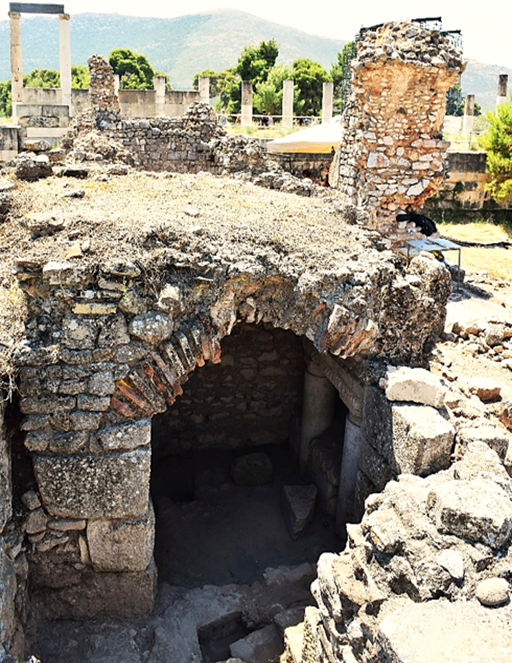
Epidaurus| Important buildings and their uses in the surrounding area of the Asclepieion are revealed
The work carried out at Epidaurus by the research team of the University of Athens under the direction of the emeritus professor of archaeology of the University of Athens, Vassilis Lambrinoudakis, in collaboration with the Ephorate of Antiquities of Argolida, had important results this year. In Asclepieion the large square in the centre of the sanctuary was freed from the stones of buildings and votive offerings, which had been deposited there since the years of the great excavation, 19th and early 20th century. This free space in front of the temple, about 1500 square metres, was ...More
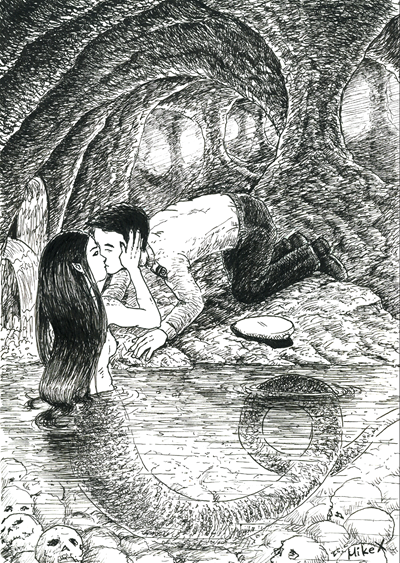
Delirium Athens Gallery| Greek Cartoons, Comics & illustrations| 19 January-10 February 2024
Delirium Athens is the only Urban Art Gallery that directly approaches and exhibits the Greek street art, pop-surreal, dark art and urban scene in general. The art world moves from darkness to light. A world full of comics, illustrations and cartoons. The tradition and the connection between painting inspired by popular subcultures and imagination through lines on paper, on canvas and in 3D, is explored this time by Delirium Athens with the exhibition Cartoons, Comics & illustrations. The opening of 'Cartoons, Comics & Illustrations' will take place on Friday, January 19, from 8am to midnight next ...More
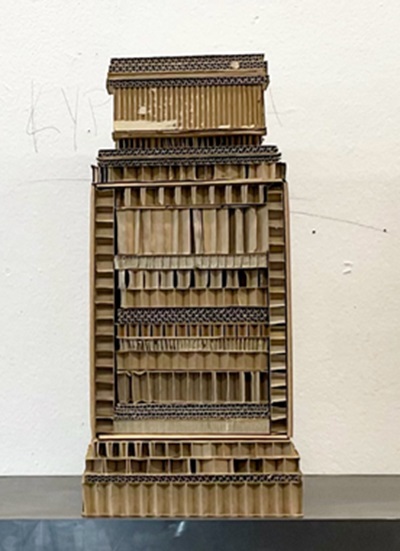
Degree Show Exhibition of the Athens School of Fine Arts| January-February 2024
The degree examinations of the School of Fine Arts open their doors to the public. The graduates of the Fine Arts Department of the School of Fine Arts will present their diploma theses in 2 consecutive weeks at the exhibition space of the school, 256 Pireos Street. Tasos DareiotisUntitled (diptych), 2024, ink on wood, 26x19 and 26x19 1st Week| 24 Jan. - 27 Jan. 2nd Week| 31 jan. - 3 Febr. Monday- Wednesday: 15:00 - 21:00 | Sunday: 12:00 - 21:00 Athens School of Fine Arts | 256, Pireos Street Participants: Eva Angelaka Dimitris ...More
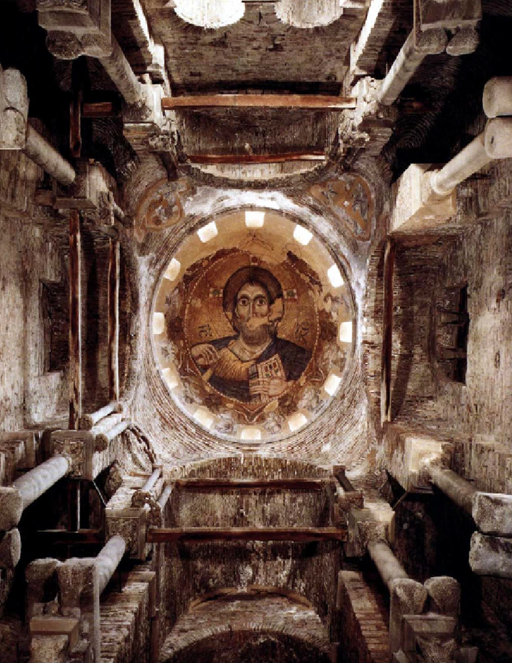
Arta| The major Byzantine monument of Parigoritissa is restored
The Ministry of Culture launches the procedures for the execution of the restoration and enhancement works of the Church of the Parigoritissa, in Arta, after the completion of all the studies (topographical, structural, architectural, electromechanical, landscaping) that were prepared in the framework of the Programmatic Agreement for Cultural Development between the Ministry of Culture and the Region of Epirus and the positive opinion of the Central Archaeological Council on them. The Minister of Culture, Lina Mendoni, said: "Arta, from the 13th century, became an important centre of the Byzantine world, as the capital of the Despotate ...More
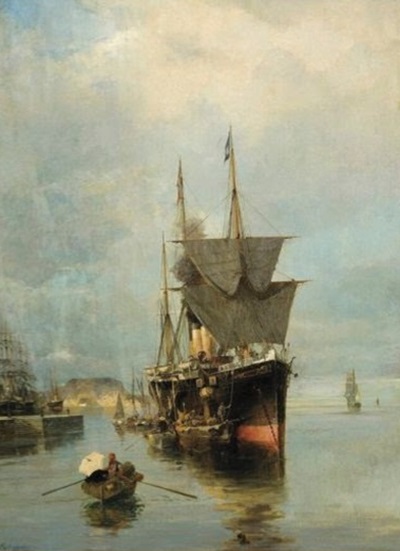
Aikaterini Laskaridis Foundation| 4 Online Lectures by Venia Pastaka| Discovering Konstantinos Volanakis: Depictions and Reflections| January-April 2024
Konstantinos Volanakis (1835-1907) is considered the father of Greek seascape. But how did he get involved with the sea and its imprints? What are his influences? Where did he get inspiration from? Through the Aikaterini Laskaridis Foundation’s collection of works by K. Volanakis , we will discover the “departures” and “arrivals” of the painter: colors, landscapes, human types, light and darkness. Guided by art historian Venia Pastaka, we will discuss details of life and work of the great Greek painter, in order to highlight the complexity of his landscapes. Participation is free of charge. Online meetings programme: January ...More
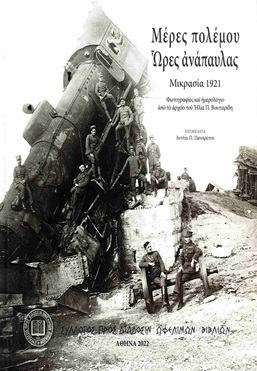
Association for the Diffusion of Useful Books| Days of War, Hours of Rest-Asia Minor 1921-Photographs and diary from the archive of Ilias P.Voutieridis
Title:Days of War, Hours of Rest-Asia Minor 1921-Photographs and diary from the archive of Ilias P.Voutieridis Author: Ilias P.Voutieridis (edited by Annita P. Panaretou) Year: 2022 Publishing House: Association for the Diffusion of Useful Books Subject: History/ Album Pages: 242 Technical Features: 28x 25 εκ. Ilias P. Voutieridis, multifaceted and charismatic, widely known as the first historian of Modern Greek Literature, but well-tried in all kinds of discourse (journalist - war correspondent, columnist, columnist, chronicler, poet, prose writer, playwright, essayist, critic, translator), he left an extensive and important work in its diversity. His inexhaustible remains were ...More


Leave A Comment