
Omolio Folk-Agricultural Showroom Marinos Antipas
Omolio Folk-Agricultural Showroom Marinos Antipas
Omolio is a historical settlement of the Municipality of Agia surrounded by great natural beauty. Located in a central location, 40 km from the capital of the Larissa regional administration, just three kilometers from the Athens-Thessaloniki national road and at a minimum distance from the sea. According to Homer, the city participated in the Amphictyony of Delphi, while the mint of Ancient Omoli was one of the greatest in central Greece. The ruins of this ancient city and citadel still remain close to current Omolio.
Conditions brought the village back close to major historical events. This is the soil in which Marinos Antipas is buried, one of the most important figures of Greece in the fight to defend civil liberties. When Antipas came to Thessaly, where he took over as caretaker of the property of his uncle, he changed social conditions in the region. Although he was in a position of strength, he deleted agricultural debts, applied Sunday as a day off and set the remuneration of tenant farmers based on 75% of production (instead of 25% as was up to then in force). His murder was the natural consequence in a place dominated by lthe andowners of the time.
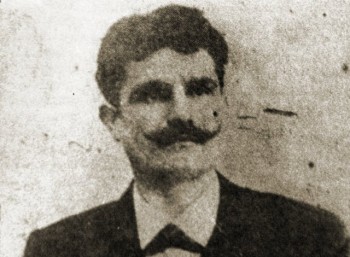
Μαρίνος Αντύπας / Marinos Antypas
Nowadays, the local community commemorates him, recognizing his contribution to changing social conditions, both in the region and across the country. It built a modest monument erected in Omolio where events are held every year in memory of the great fighter. At the same time, it gave his name to the small museum built in the village: Omolio Folk-Agricultural Showroom Marino Antipas, housed in the former Community chambers, located in the village square.
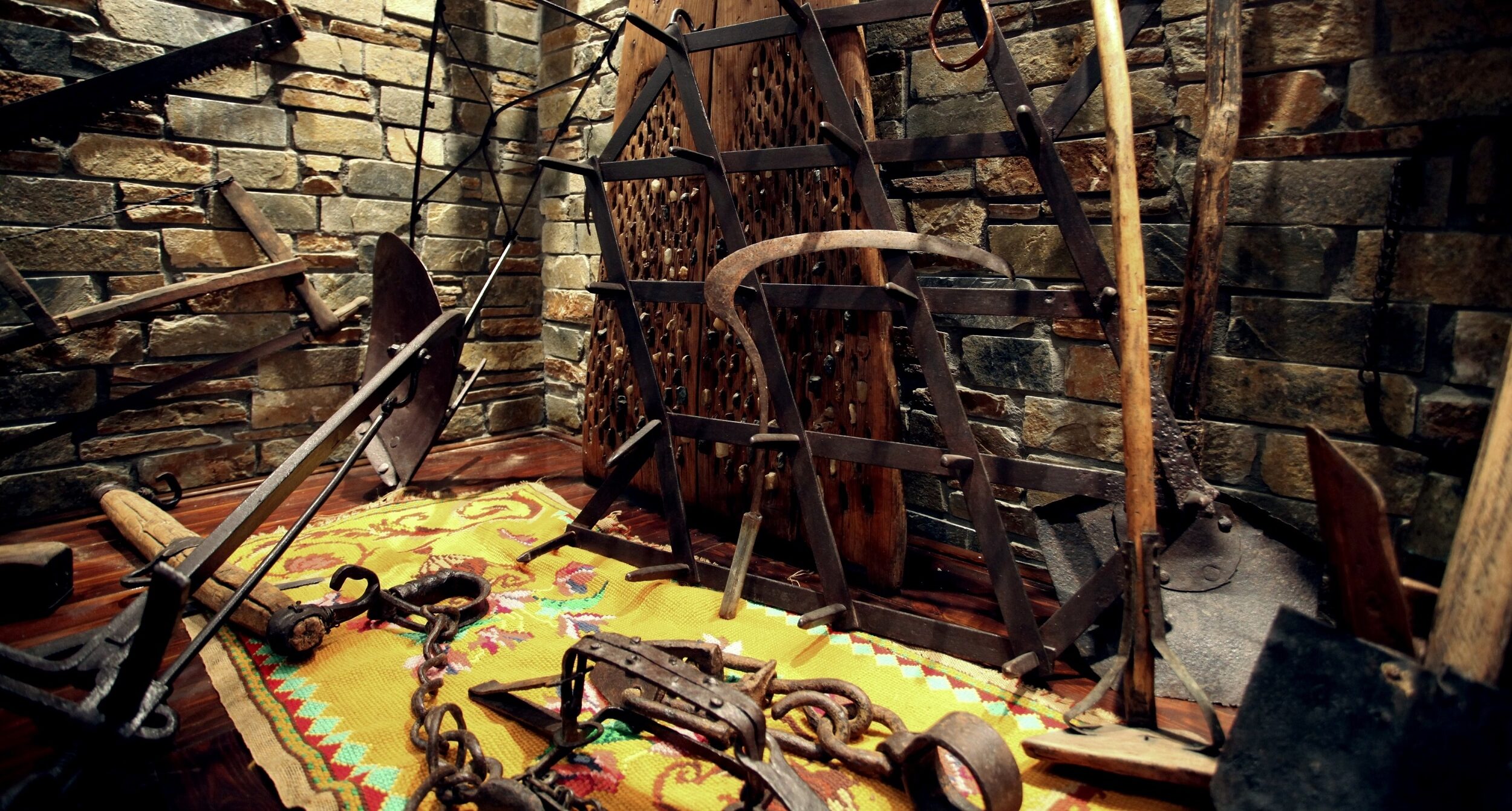
Today, the exhibition presents the tools used by the people for whom Antipas fought. Inaugurated on 18 March 2007 to mark the 100th anniversary of his death (murdered in 1907 in Pirgetos). Premechanical agricultural and foraging tools are hosted in the exhibition venue. Visitors can also admire tools of traditional occupations (fishermen, shoemakers, weavers, etc.) and objects from daily life of local people: handicrafts, embroidery and textiles, utilitarian household items (sofras (low tables), pots, pinakoti (bread levening boards)), local costumes, traditional clothing, woodwork items, postcards and engravings, coins, antique furniture, and a local bisiki (cot).
The collection includes artifacts that may be considered historical documents: a local’s military diary, which describes in detail the experience of the war in Asia Minor, but also photographs of social events and the occupations of the inhabitants. The showroom has a conference hall that holds 50-60 people.
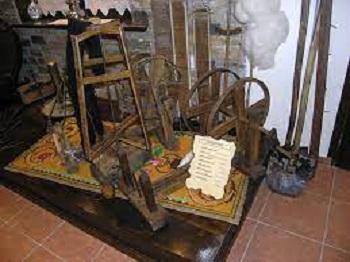
Λαογραφικό-Γεωργικό Εκθετήριο Ομολίου Μαρίνος Αντύπας
Places like the Omolio Folk-Agricultural Showroom Marinos Antipas, although exhibiting objects from earlier times, alsoshow that traditional culture is not a static body of evidence that survives only in a museum. Because on the one hand, tools and materials actually bear witness to the immutable characteristics of an era (available resources, raw materials), however, they also reveal the basic principles of human creativity that lead to evolution. The name of the exhibition reminds us, at the same time, that this creativity should always be developed with concepts such as respecting the principles of human law and social justice.

Postgraduate Programs in Greece with applications in September
MSc Didactics of Biosciences - Democritus University of Thrace MSc Artificial Intelligence and Deep Learning - University of West Attica MSc in Translational Research in Biomedicine: Molecular Diagnostics, Biomarkers and targeted Therapies - Democritus University of Thrace MSc Water, Biosphere and Climate Change - National Kapodistrian University of Athens & International Hellenic University MSc in Farm Business Management & Consulting in rural Development - Agricultural University of Athens MSc Renewable Energy Systems: Design Development and Optimization - International Hellenic University MSc in Analysis and Management of Man-made and Natural Disasters - International Hellenic University MSc Modern Information Technologies ...More

Music Escapades: In Orbit v.3 SNFCC Vault Friday 7, Saturday 8 and Sunday 9 October
On Friday 7, Saturday 8 and Sunday 9 October, the contemporary Athenian music scene will meet for the third consecutive year at the Stavros Niarchos Foundation Cultural Centre's (SNFCC) Dome for Music Escapades: In Orbit v.3, a three-day festival that answers the question "what music is currently coming out of Athens?". Greek and English lyrics, guitars, rhymes and samples, the sound of the western metropolises and the wink to the East - all this in a three-day event that maps the city's music, satisfies all tastes and invites the Athenian audience to either reconnect with acts ...More
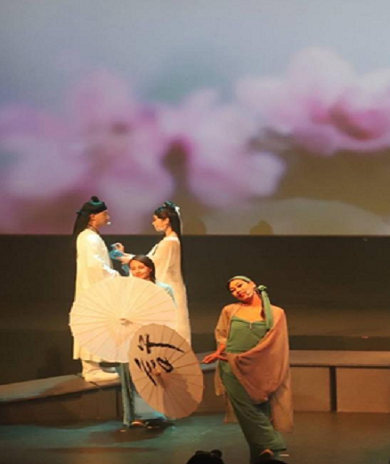
«The Myth of the White Snake •REMIX», 50years from the establishment of diplomatic relations among Greece – China
Chinese Musical Drama "The Myth of the White Snake • REMIX" will be performed on the stage of PALLAS Theater in Greece, as a tribute to the 50th Anniversary of the establishment of diplomatic relations between Greece and China As the cool breeze drives away the summer heat, Athens ushered in a comfortable autumn. To celebrate the 50th Anniversary of the establishment of diplomatic relations between China and Greece, the "Sino-Hellenic Performing Arts Alliance" initiated by overseas Chinese in Greece, with the support of the Chinese Embassy in Greece, will present a Chinese style musical drama ...More
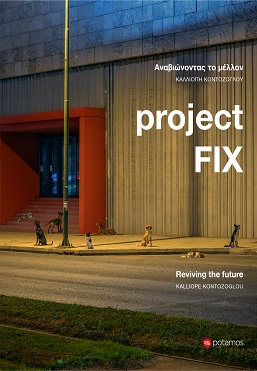
PROJECT FIX: Reviving the Future, Thursday 29.09.2022 at 18.30
The National Museum of Contemporary Art (EMST) has the pleasure to host, on Thursday 29.09 at 18.30, the presentation of the book by Kalliopi Kontozoglou, Project FIX: Reviving the Future. The publication, which is published by Potamos, is introduced by the architect and teacher Elias Zeggelis, while the epilogue is written by the British architect Tim Ronalds. During the event, the author, architect Kalliopi Kontozoglou (project manager, as a partner of 3SK Stylianidis SA, 2003-2010, the team that won the competition for the conversion of the abandoned building of the Fix Brewery into a National Museum of ...More
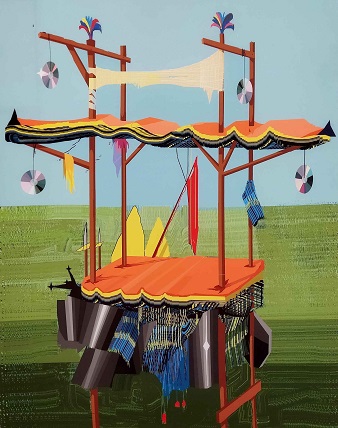
6th Art-Thessaloniki International Fair 3-6.11.2022 Art-Thessaloniki Fair invites you to become a member of its team
Art Thessaloniki is ready to open its gates for the 6th year, continuing its upward trend and will take place from 3 to 6 November 2022 at pavilions 10,9,8 at TIF-HELEXPO. In addition to the participating art galleries and the well-established institution of the honoured visual artist, we will have important parallel activities. Volunteers are an integral part of Art-Thessaloniki. Every year, people with a common interest in art dynamically join the Art-Thessaloniki team, developing their abilities and contributing in many areas of the event, such as guided tours, reception areas, exhibition set-up, etc. Attach to ...More
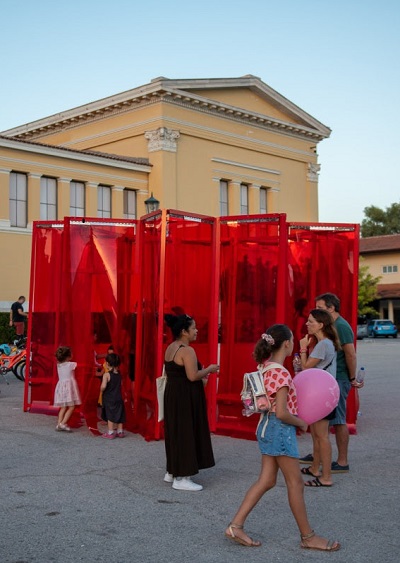
Αrt Athina 2022
With a record number of participants, an enriched program and the physical presence of art galleries from Greece and abroad, artists and visitors, Art Athina returns with momentum. The largest annual art event in Greece, which celebrates its 25th anniversary this year, will take place from Friday, September 16, to Monday, September 19, 2022, Under The Patronage Of H.E. The President Of The Hellenic Republic Ms. Katerina Sakellaropoulou at the Zappeion Mansion. This year's exhibition, organized by the Hellenic Art Galleries Association, will be attended by 80 art galleries from Greece and abroad. The rich artistic ...More


Leave A Comment