
Omolio Folk-Agricultural Showroom Marinos Antipas
Omolio Folk-Agricultural Showroom Marinos Antipas
Omolio is a historical settlement of the Municipality of Agia surrounded by great natural beauty. Located in a central location, 40 km from the capital of the Larissa regional administration, just three kilometers from the Athens-Thessaloniki national road and at a minimum distance from the sea. According to Homer, the city participated in the Amphictyony of Delphi, while the mint of Ancient Omoli was one of the greatest in central Greece. The ruins of this ancient city and citadel still remain close to current Omolio.
Conditions brought the village back close to major historical events. This is the soil in which Marinos Antipas is buried, one of the most important figures of Greece in the fight to defend civil liberties. When Antipas came to Thessaly, where he took over as caretaker of the property of his uncle, he changed social conditions in the region. Although he was in a position of strength, he deleted agricultural debts, applied Sunday as a day off and set the remuneration of tenant farmers based on 75% of production (instead of 25% as was up to then in force). His murder was the natural consequence in a place dominated by lthe andowners of the time.
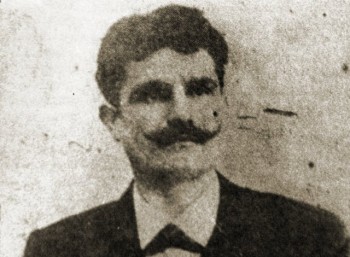
Μαρίνος Αντύπας / Marinos Antypas
Nowadays, the local community commemorates him, recognizing his contribution to changing social conditions, both in the region and across the country. It built a modest monument erected in Omolio where events are held every year in memory of the great fighter. At the same time, it gave his name to the small museum built in the village: Omolio Folk-Agricultural Showroom Marino Antipas, housed in the former Community chambers, located in the village square.
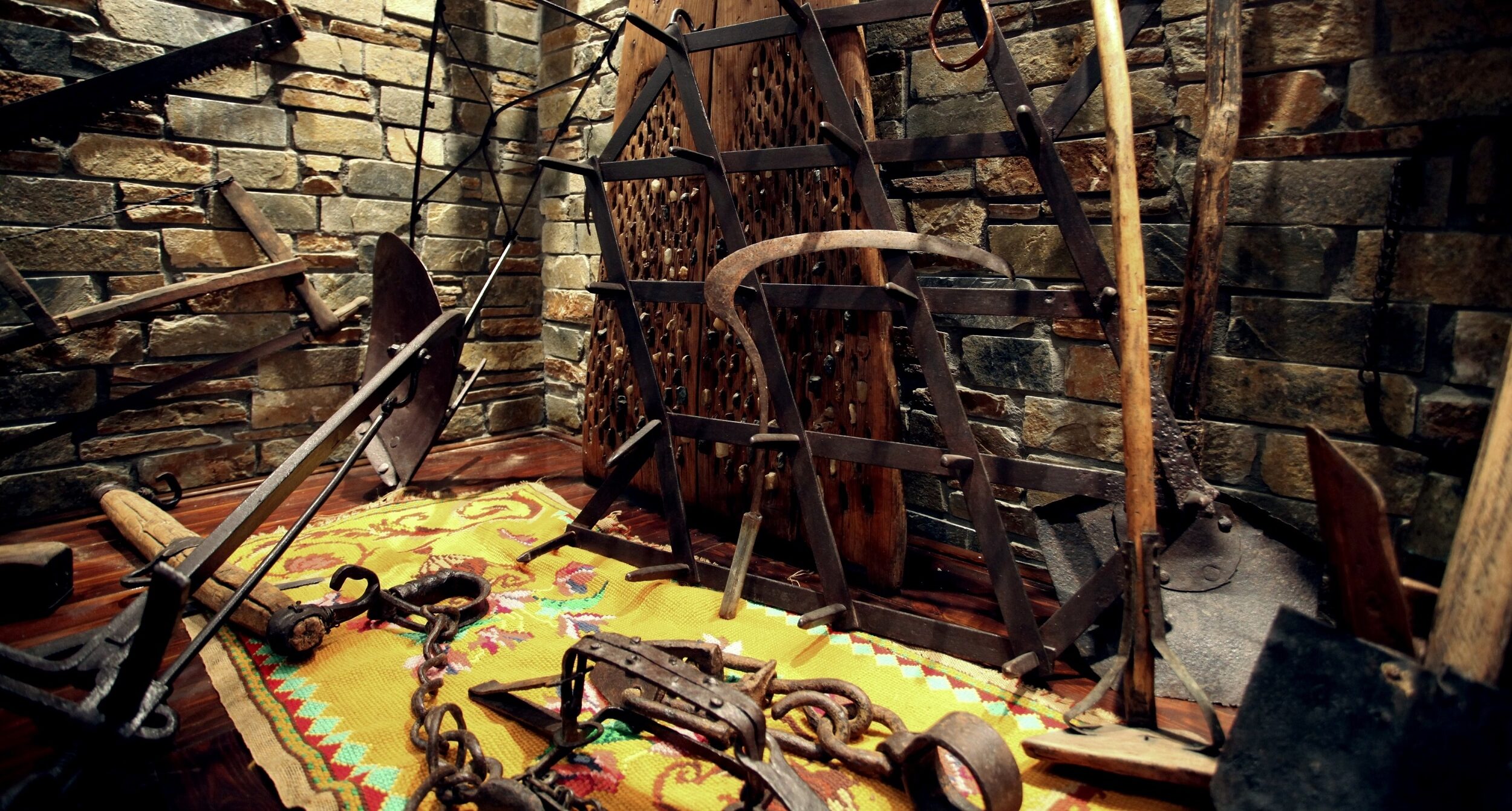
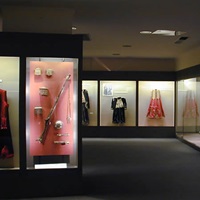
Today, the exhibition presents the tools used by the people for whom Antipas fought. Inaugurated on 18 March 2007 to mark the 100th anniversary of his death (murdered in 1907 in Pirgetos). Premechanical agricultural and foraging tools are hosted in the exhibition venue. Visitors can also admire tools of traditional occupations (fishermen, shoemakers, weavers, etc.) and objects from daily life of local people: handicrafts, embroidery and textiles, utilitarian household items (sofras (low tables), pots, pinakoti (bread levening boards)), local costumes, traditional clothing, woodwork items, postcards and engravings, coins, antique furniture, and a local bisiki (cot).
The collection includes artifacts that may be considered historical documents: a local’s military diary, which describes in detail the experience of the war in Asia Minor, but also photographs of social events and the occupations of the inhabitants. The showroom has a conference hall that holds 50-60 people.
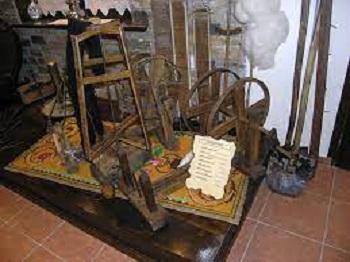
Λαογραφικό-Γεωργικό Εκθετήριο Ομολίου Μαρίνος Αντύπας
Places like the Omolio Folk-Agricultural Showroom Marinos Antipas, although exhibiting objects from earlier times, alsoshow that traditional culture is not a static body of evidence that survives only in a museum. Because on the one hand, tools and materials actually bear witness to the immutable characteristics of an era (available resources, raw materials), however, they also reveal the basic principles of human creativity that lead to evolution. The name of the exhibition reminds us, at the same time, that this creativity should always be developed with concepts such as respecting the principles of human law and social justice.

X-ACT ART| Henrik Ibsen-Little Eyolf| From 21 January 2024 at “Ex Machina” Theatre
The X-ACT ART Theatre Group presents the performance "Little Eyolf" by Henrik Ibsen. Focusing on the relationship between a writer and his wife and half-sister, "Little Eyolf" paints a heartbreaking portrait of a family facing the shattering of all their illusions. It is a profound exploration of possessive, monomaniacal love and blind self-centered devotion to an ultimate goal, an essay on the concepts of duty and guilt, punishment and mercy. The collapse of the delusion that embraces their entire world leads the characters in the play to realize that the abandonment of dreams and the admission ...More
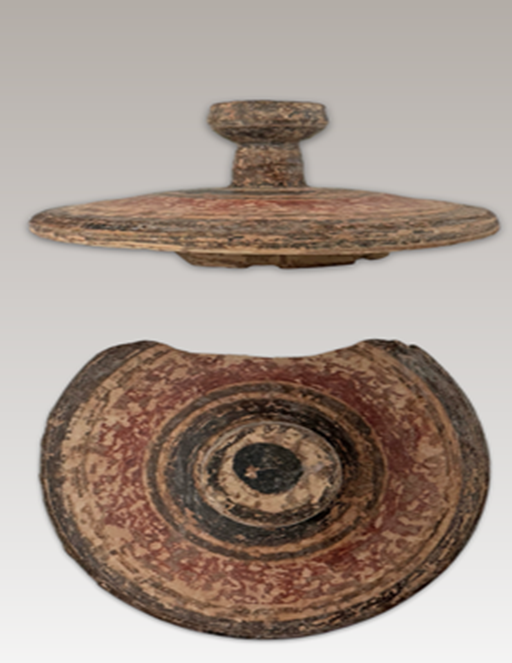
Chiliomodi Corinth | Results of the Systematic Archaeological Survey “Ancient Tenea”
In October 2023, the systematic archaeological research in Chiliomodi, Corinthia, was completed within the framework of the research project "Ancient Teneas", under the direction of the archaeologist Dr. Elena Korka and implemented by the Directorate of Prehistoric and Classical Antiquities of the Ministry of Culture. The excavation, among other things, revealed for the first time this year, part of the Hadrianic aqueduct in the area of ancient Tenea, determining precisely the course of one of the largest hydraulic works of the 2nd century AD in Greece, which was intended to supply water to Ancient Corinth from ...More

Nikolaos Grigoriadis | Honorary distinction to the Director of the 2nd Neurology Clinic of the AUTh
The Academy of Athens has awarded for the year 2023, the "Elizabeth F. Fotinelli - Ioannou D. Critikos Prize". Thematic: Multiple Sclerosis" of the First Class of Sciences, to the Director of the 2nd Neurological Clinic of the Aristotle University of Thessaloniki, Professor Nikolaos Grigoriadis, for his research and general work in the treatment of Multiple Sclerosis. Professor Nikolaos Grigoriadis graduated from the Department of Medicine of the Aristotle University of Thessaloniki . He completed his PhD thesis and completed his specialization in Neurology at the same University. He specialized in Neuroimmunology and Central Nervous System ...More
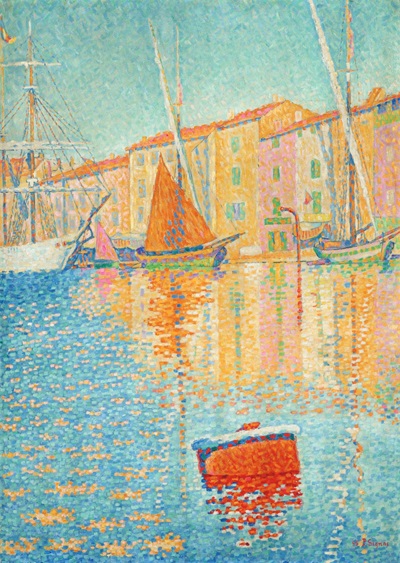
Basil & Elise Goulandris Foundation| The revolution in the conception of colour and light in the exhibition “Neo-Impressionism in the Colours of the Mediterranean” | By Margarita Kataga
In the second part of the 19th century, Neo-Impressionism brought to the fore the science of optics and colour to forge a new and methodical painting technique that avoided the spontaneity and romanticism of the Impressionists. Relying on the viewer's ability to visually combine dots of color on the canvas, the Neo-Impressionists sought to create brighter paintings that depicted contemporary life. Many artists in later years adopted the neo-Impressionist technique of Pointillism, the application of tiny dots of pigment, which opened the door to further explorations of color and ultimately abstract art. The Basil & Elise ...More
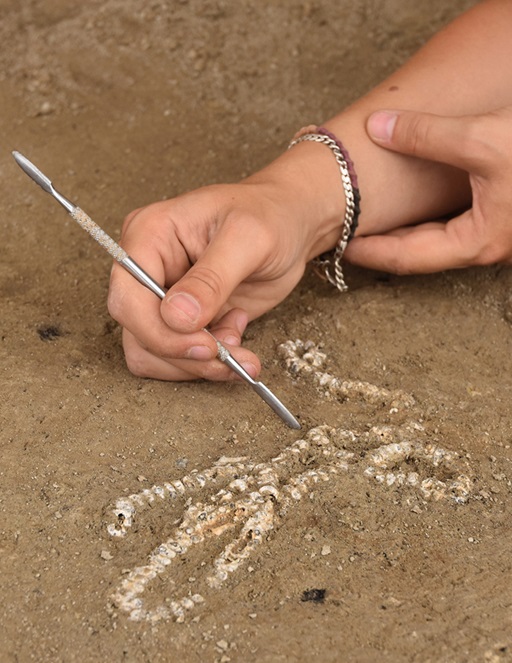
The excavations at the sanctuary of Amarysia Artemis in Amarynthos, Evia
Every summer, a team of Swiss and Greek archaeologists investigate the remains of the sanctuary of Amarysia Artemis near Amarinthos in Evia. The excavation period just completed marked a new phase in this research project, which began some fifteen years ago. Under the foundations of the temple of the goddess, structures were uncovered that testify to the antiquity of her worship. The first archaic temple Already in 2017, archaeologists unearthed the foundations of a monumental building in the heart of the sanctuary. The excavations that followed proved that this was the temple of the goddess Artemis, ...More

PCAI x The Ellinikon| I’d rather be a Cyborg than a Goddess| 11 January-22 February 2024
From January 11 to February 22, 2024, PCAI presents I’d rather be a Cyborg than a Goddess, a video art programme with works from the PCAI Art Collection, curated by Kika Kyriakakou, PCAI Artistic Director. The programme will be hosted at The Ellinikon Experience Centre, one of the largest and most technologically advanced visitor centres in the world. A preamble of the tribute took place, recently, during the second assembly of the International Association of Corporate Collections of Contemporary Art (IACCCA) in Athens. The programme brings together video works of women artists reflecting on the notions of ...More


Leave A Comment