
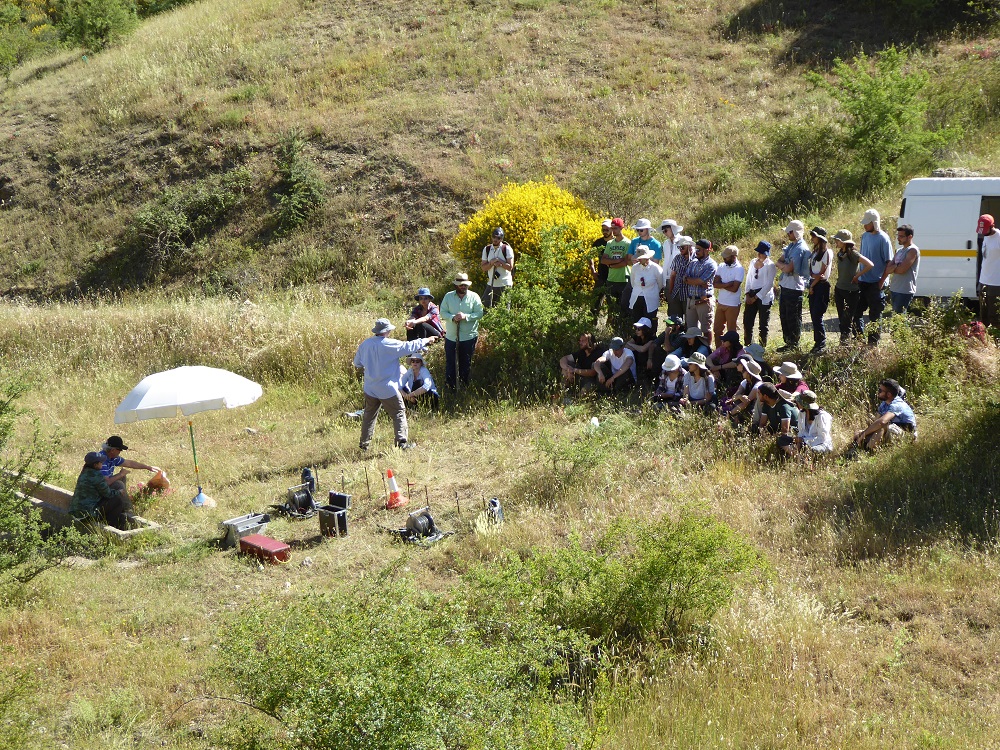
In observance of Earth Day, the MSc “Earth Sciences and the Environment” at the Department of Geology and Geoenvironment of the National and Kapodistrian University of Athens highlights the role of Earth Sciences in understanding natural processes, protecting the environment, and shaping a sustainable future.
Today’s environmental challenges—climate change, the degradation of natural resources, natural disasters, and the need for sustainable development—make the Earth Sciences more relevant than ever. Through interdisciplinary knowledge and applied research, geoscientists make a substantial contribution to natural resource management, ecosystem protection, and strengthening the resilience of societies.
The MSc in “Earth Sciences and the Environment” addresses these needs through three complementary specializations. The specialization in Geoconservation and Climatic Variability focuses on the identification, documentation, and promotion of the country’s geological heritage, supporting sustainable development and environmental education through initiatives such as UNESCO Geoparks and geotourism projects. The Geophysics & Seismology specialization contributes to understanding the Earth’s dynamics, monitoring seismic activity, and assessing natural hazards—a critical field for a country with high seismic activity. The Environmental Monitoring & Sustainability specialization focuses on monitoring environmental parameters, managing natural resources, and developing environmental resilience strategies at the local and global levels.
A common principle runs through all three specializations: the geoethical dimension of science—the geoscientist’s conscious responsibility toward nature, society, and future generations. The MSc program promotes interdisciplinary collaboration, field research, the use of modern technologies, and the integration of scientific knowledge with the needs of society.
The MSc in “Earth Scienced and the Environment” contributes to the protection of the planet—both today and for future generations—by training young geoscientists with scientific expertise, a sense of geoethics, and a commitment to sustainability.
The program director notes: “Earth Day reminds us that protecting the planet is a collective responsibility. The geoscientists we train are not just scientists—they are agents of change, equipped with the tools and awareness to address the greatest challenges of our century.”




Leave A Comment