
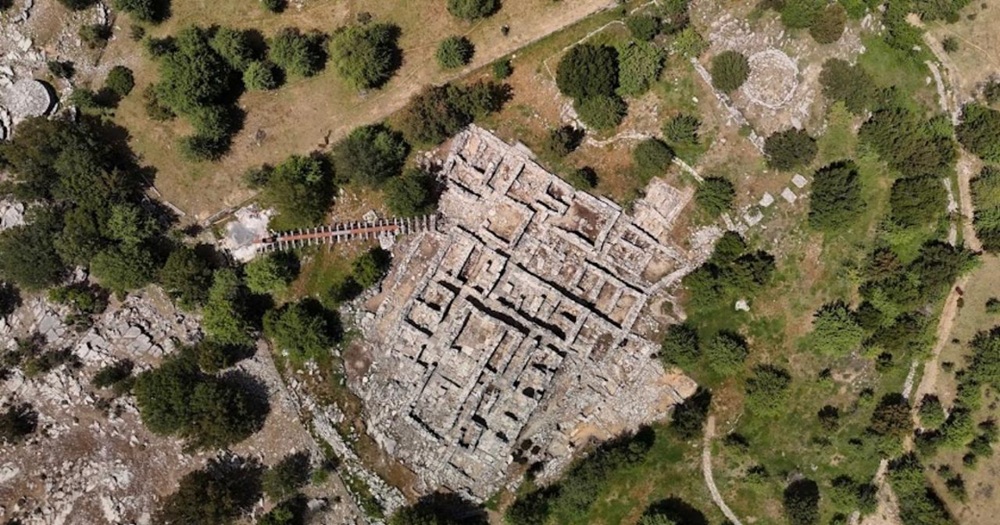
In Zominthos, at the iconic archaeological site of Psiloritis, the celebratory events marking the inscription of the six Minoan Palace Centres of Crete on the UNESCO World Heritage List have come to a close.
In the presence of Minister of Culture Lina Mendoni, representatives of UNESCO, local government, the scientific community, officials from the Ministry of Culture, and a large crowd, Crete sent a powerful message of cultural continuity and international recognition.
In her opening remarks, Lina Mendoni emphasized: “Today’s event here in Zominthos, this iconic site at the foot of Mount Psiloritis, is not merely a celebration of a major international distinction for Greece and Crete. It is a moment of self-awareness, historical consciousness, collective responsibility, and deep emotion for all of us who worked methodically and systematically to ensure that the Minoan Palace Centres were inscribed on the UNESCO World Heritage List. Zominthos holds special symbolic significance. It is the only Minoan palace center known to date in a mountainous setting, situated on the ancient road that connected Knossos with the Idaion Andron, revealing the geographical scope, administrative organization, and complex identity of the Minoan world. A site that continues to enrich our knowledge of the Minoan presence in the Cretan hinterland and to highlight the timeless relationship between humans, nature, and culture. When you find yourself in this landscape, in this light, and in this setting, you feel not only joy and pride, but also a deep sense of historical responsibility. A responsibility toward a civilization that was outward-looking, creative, and deeply human-centered. A civilization that transformed Crete’s geographical location into a bridge connecting peoples and cultures, and which continues to this day to inspire through art, innovation, architecture, and its relationship with nature and light. The Minoan Palace Complexes were hubs of political power, economic activity, religious life, and artistic creation. Their architecture, sophisticated water management systems, urban planning, and the development of early forms of writing reflect an exceptionally advanced level of technical expertise and social organization for their time. It is no coincidence that UNESCO recognized their outstanding universal value, authenticity, and integrity based on four of the six cultural criteria of the World Heritage Convention. This entry, however, is not merely an honorary distinction. It represents an ongoing commitment to the protection, preservation, and promotion of these monuments. It requires planning, cooperation, perseverance, and a collective effort from the Ministry of Culture, the Region of Crete, local government, the scientific community, and the local communities themselves, who embraced this effort from the very beginning. In Zominthos, extremely important excavation and research activities continue today, alongside projects to protect and highlight the monumental complex in the Psiloritis mountain range. Through the Minoan Cultural Route and the Integrated Territorial Investment in Crete’s iconic routes, the conditions are being created for Minoan monuments to function not only as internationally recognized cultural assets, but also as cultural products, as a lever for high-quality sustainable development for the island. Crete is now elevating its position on the global cultural map. It is strengthening its international cultural footprint and gaining new opportunities for forms of tourism that respect the identity, environment, and history of the region. Today we are not merely celebrating an international recognition. We are affirming the living legacy of a civilization that continues to inspire humanity. The Minoan civilization does not belong solely to Greece; it belongs to the global community. And that is why its protection and promotion are a shared responsibility of us all, so that this unique legacy may be passed on to future generations as a source of knowledge, education, creativity, and collective self-awareness.”
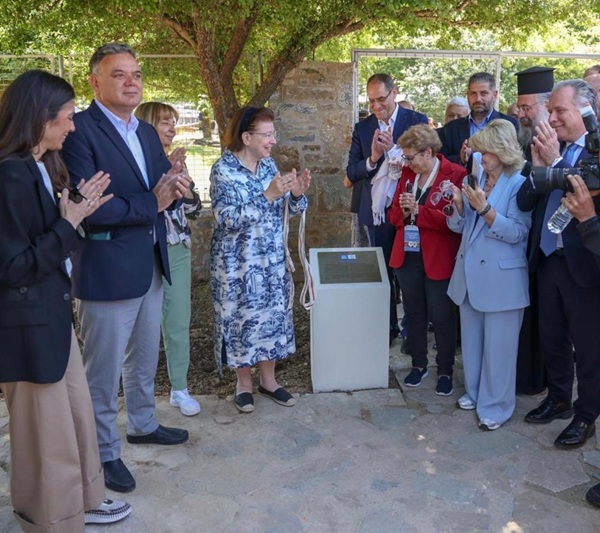
Among those present at the event were the Metropolitan of Rethymno and Avlopotamos, His Eminence Prodromos; Greece’s Permanent Delegate to UNESCO, George Koumoutsakos; UNESCO Goodwill Ambassador Kostantza Smpoku-Konstantakopoulou, the Secretary General for Culture, George Didaskalou, the Deputy Regional Governor of Rethymno, Maria Lionis, the Deputy Regional Governor for Culture, Georgia Milaki, the Mayor of Rethymno, Giorgos Marinakis, the Mayor of Anogia, Socrates Kefalogiannis, the Mayor of Mylopotamos, George Klados, the Head of the Rethymno Archaeological Service, Eleni Papadopoulou, representatives of various organizations, and a large crowd.
The event was followed by a traditional Cretan feast in Anogia, where music, dancing, and Cretan hospitality provided the lively finale to a day that united the past, present, and future in a shared cultural journey.



Leave A Comment