
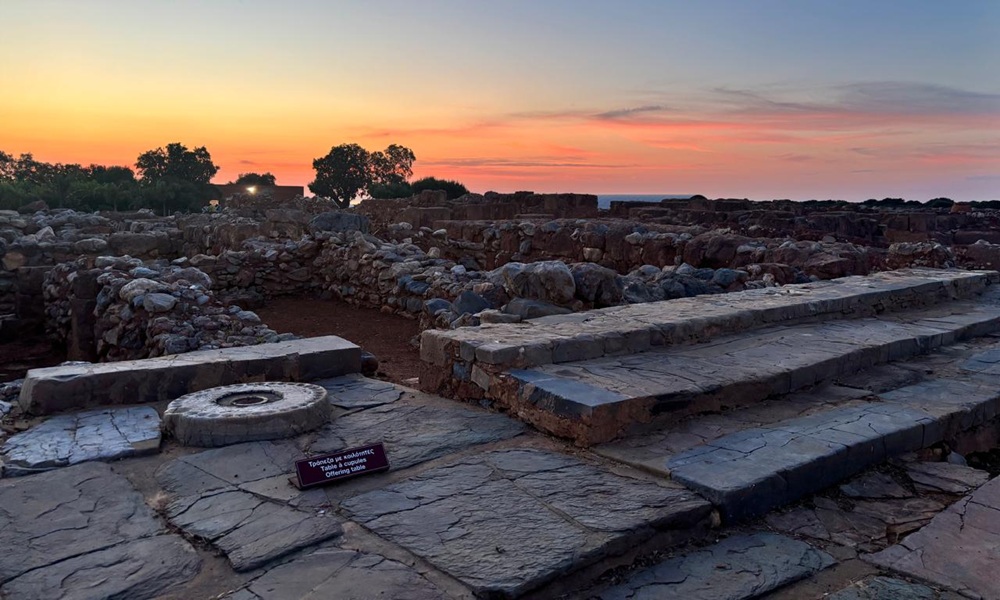
The celebrations in Crete marking the inscription of the Minoan Palace Complexes on the UNESCO World Heritage List began at the Minoan Palace Complex in Malia.
The Minister of Culture, Lina Mendoni, unveiled the first commemorative plaque from the international organization, in the presence of representatives from the Region of Crete, local government, officials from the Ministry of Culture, and a large crowd.
The event coincided with the official handover of a project of crucial importance for the archaeological site: the flood protection, protection, and overall upgrading of the palace, featuring interventions that shield it from severe weather events and the impacts of the climate crisis, thereby substantially enhancing the visitor experience.
In her remarks, Lina Mendoni described July 2025 “a landmark date for our homeland, Crete, and Greek culture,” emphasizing that with the inscription of the Minoan Palace Complexes on the UNESCO World Heritage List, Minoan civilization, one of the most brilliant civilizations of the prehistoric Aegean, has been recognized and established worldwide. The Minoan palaces were not only administrative and economic centers, but also hubs of culture, art, and technological innovation, with developed writing and administrative systems and strong ties to the peoples of the Eastern Mediterranean. The emergence of Minoan civilization allows us to better understand the origins of European cultural development, establishing Crete as a cradle of civilization of global significance. According to archaeological data, the palace at Malia dates from between 1900 and 1700 B.C., and is believed to have predated the palaces of Knossos and Phaistos. The unveiling of the UNESCO plaque in Malia marks the beginning of a series of events that will continue in Knossos and Zominthos, highlighting the unified character of the serial inscription of the six Minoan palace centers. The Minister made special mention of “the need to protect cultural heritage from the consequences of the climate crisis.” The Ministry of Culture has been working systematically on this issue since 2019. The Prime Minister, who is highly sensitive to environmental issues, was the one who gave the instructions for drafting the national policy on climate change. Today, Greece is among the very few countries that have a national strategy for protecting cultural heritage from the impacts of the climate crisis.”
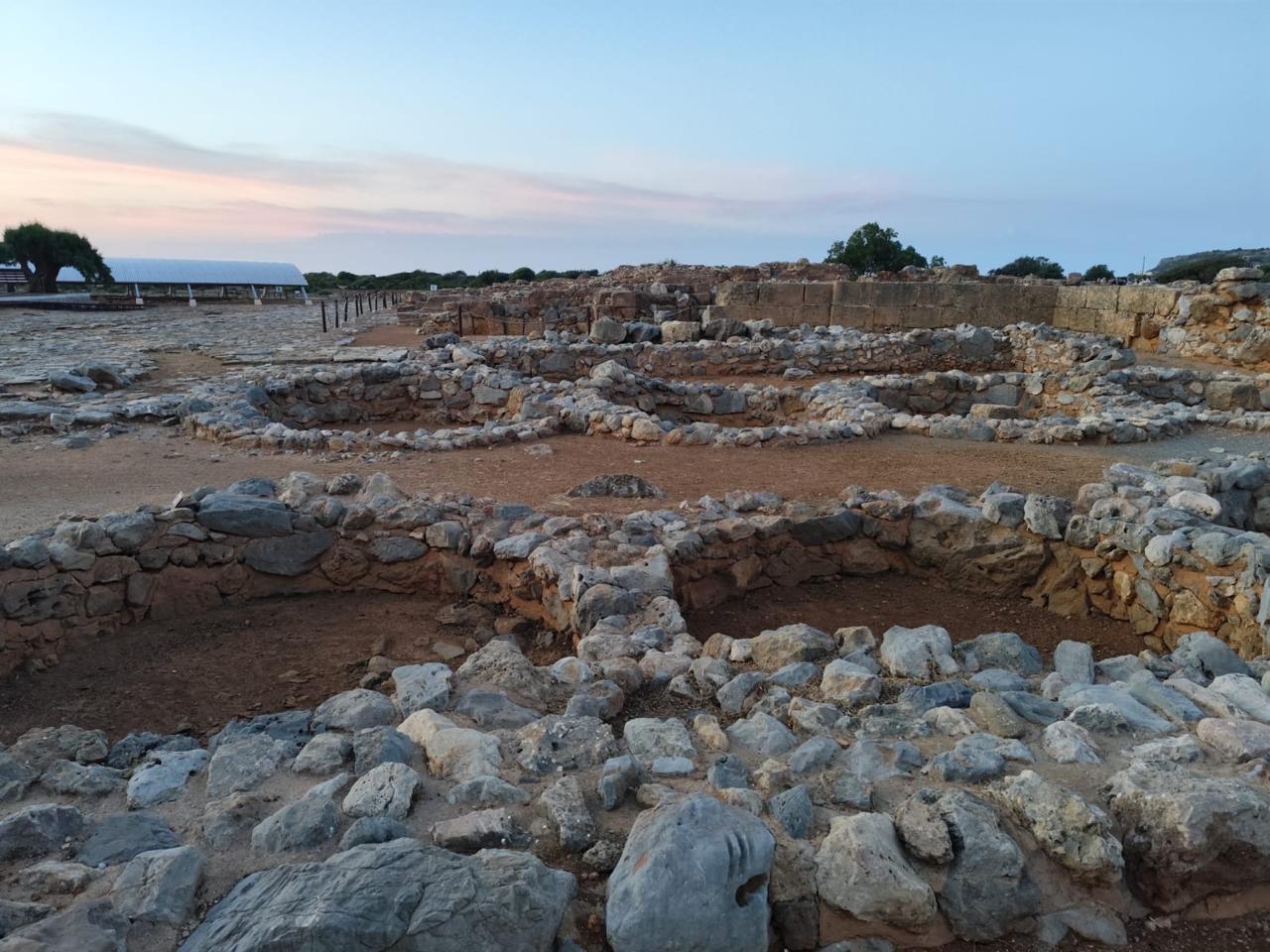
Referring specifically to Malia, Lina Mendoni noted that “the archaeological site had suffered serious damage from extreme weather events and the floods of 2019, a fact that made it necessary to implement a comprehensive flood protection and restoration project.” He thanked the head of the Directorate for the Restoration of Ancient Monuments, Themis Vlachoulis, and his colleagues for the project’s development and completion, as well as the Regional Governor of Crete, Stavros Arnaoutakis, for his consistent cooperation with the Ministry of Culture. As he noted, “cultural projects totaling approximately 100 million euros are currently being implemented in Crete.”
He made special mention of the Director of Prehistoric and Classical Antiquities, Elena Kountouri, and her team for preparing and successfully completing the UNESCO nomination dossier, an effort that, as she said, “has been a national goal” for Crete and the Ministry of Culture for decades. Concluding her remarks, the Minister emphasized that “Crete first and foremost, the Region, and the Ministry of Culture can take pride in a tremendous national success.”
The flood protection project completed in Malia is a comprehensive initiative with a total budget of 3.5 million euros, funded by the Recovery and Resilience Facility. It was implemented by the Directorate for the Restoration of Ancient Monuments and the Heraklion Ephorate of Antiquities. The work included the construction of a modern drainage network and stormwater management systems to prevent landslides and flooding, as well as the replacement of the old protective canopies with new, highly durable structures. At the same time, work was carried out to reinforce and maintain the ancient structures of the palace. The project was accompanied by significant improvements to the site’s visitor experience, including new safe walking paths, organized rest areas, and modern informational materials. Special attention was given to accessibility, with the construction of a special ramp to accommodate people with disabilities.
The Palace of Malia is one of the most important centers of Minoan civilization and the prehistoric Aegean. Systematic archaeological research, which began in 1915 in collaboration with the French School of Archaeology, has brought to light significant findings that attest to the site’s enduring importance.


Leave A Comment