
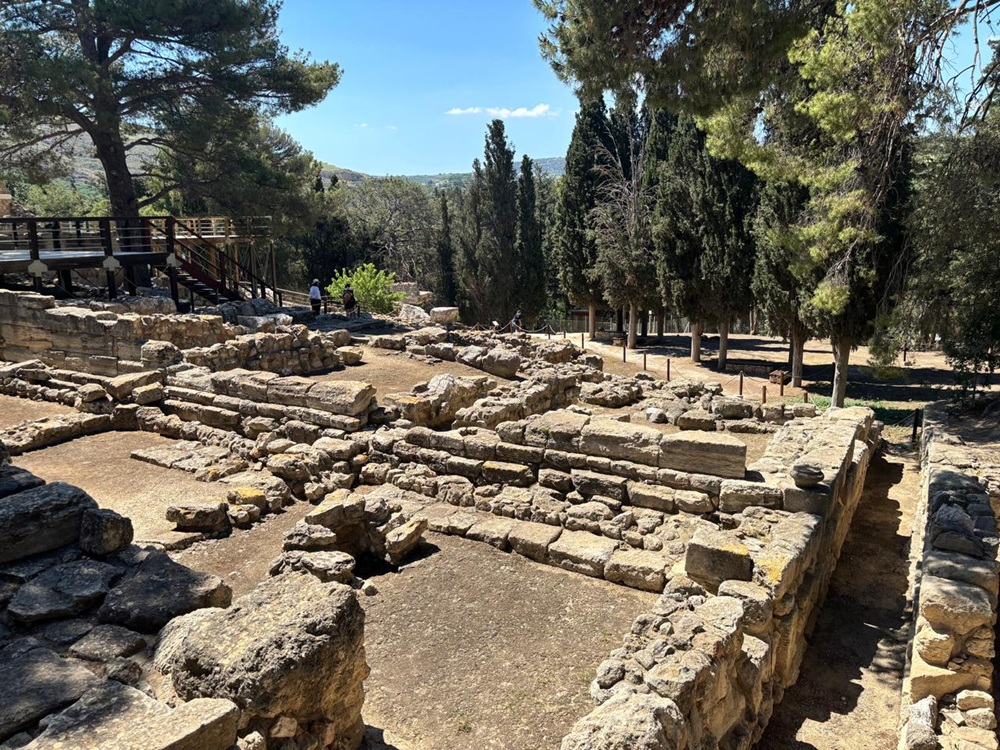
In Knossos, the most important and iconic center of Minoan civilization, celebrations continued to mark the inscription of the Minoan Palace Centers on the UNESCO World Heritage List.
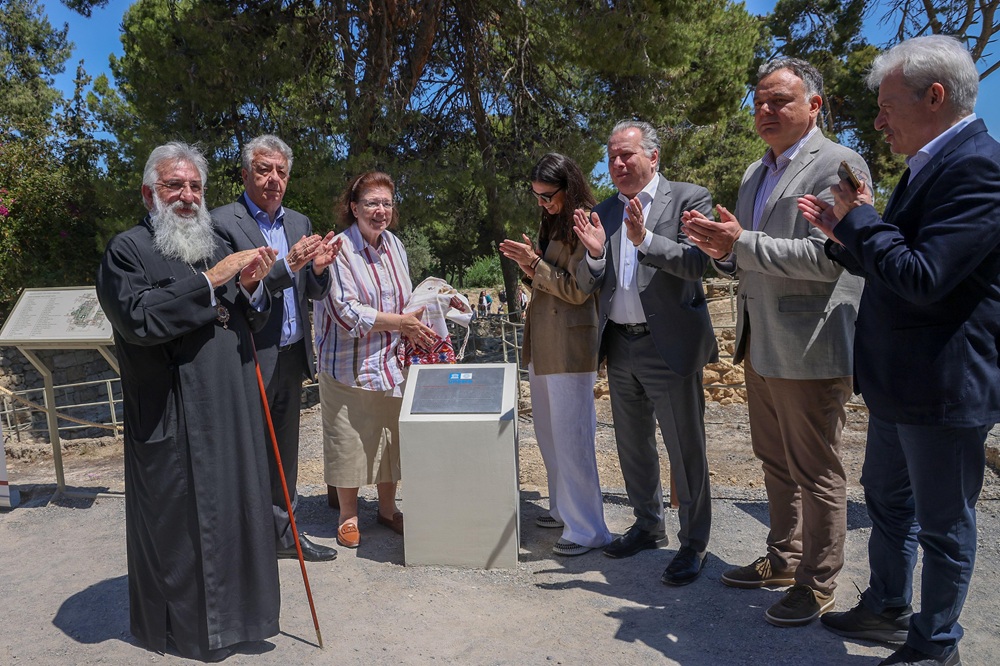
The Minister of Culture, Lina Mendoni, unveiled the commemorative plaque in the presence of representatives from UNESCO, the Region of Crete, local government, the scientific community, officials from the Ministry of Culture, and a large crowd. Knossos, the largest and most magnificent Minoan palace, is a timeless symbol of Minoan civilization and a landmark for the history and archaeology of the Mediterranean. Linked to the myth of the Labyrinth and King Minos, it served as an administrative, economic, and religious center, as well as a hub for artistic creation, technological innovation, and the development of complex social structures.
Lina Mendoni, referring to Minoan art, pointed out that “Minoan art, with its unique naturalistic character, its freedom of movement, and its connection to nature, the sea, and light, continues to captivate and inspire. The frescoes, vases, seals, and miniature art reflect a culture that was extroverted, creative, yet deeply human-centered. A culture that succeeded in transforming Crete’s geographical location into a bridge of communication between peoples and civilizations. It is no coincidence, then, that in its historic decision, UNESCO recognized the authenticity, integrity, and outstanding universal value of the Minoan Palace Complexes based on four of the six cultural criteria of the World Heritage Convention. The Minoan Palace Complexes constitute the most authentic and representative expression of the flourishing Minoan society, offering evidence of early urban development and revealing complex sociopolitical structures, functionally organized around a hierarchical administrative system. They were administrative, economic, and religious centers, whose complex architectural forms—influenced by Egypt and the Near East—were designed to serve the diverse needs and functions of a hierarchical society. We must remember this today as well. For a society to thrive and function effectively, it must be hierarchical. These monuments serve as timeless landmarks in the history of humanity, as they provide tangible evidence of the development of early economic systems, such as agriculture, livestock farming, and maritime trade. They also constitute a valuable source of documentation for Europe’s two oldest writing systems, Cretan hieroglyphs and Linear A, which were invented in Crete as early as the beginning of the second millennium.”
Lina Mendoni also referred to the parallel implementation of a broad program of major projects aimed at the protection, stabilization, and restoration of monumental remains, as well as environmental protection of archaeological sites against the impacts of the climate crisis, combined with measures to improve accessibility, upgrading infrastructure, and managing visitor numbers. “At Knossos,” he said, “the most iconic Minoan site, projects are underway to protect and stabilize the monuments, modernize visitor reception infrastructure, improving accessibility, and upgrading visitor management systems, with the aim of ensuring the authenticity and functionality of the site under conditions of increased visitor numbers. Directly related to these projects is the comprehensive spatial investment in Crete’s iconic routes, environment and culture, which constitutes one of the most significant strategic interventions currently being implemented in Greece in the field of cultural management and sustainable regional development. At its core lies the establishment of the Minoan Cultural Route. The OXE is an initiative of the Region of Crete, which was established in close collaboration—as is the case with almost everything undertaken in Crete—with the Ministry of Culture. Funding for the OCE comes from a combination of national and European resources. Specifically for the Minoan Cultural Route, funds totaling approximately 15 million euros have already been secured, primarily from the NSRF, a fact that demonstrates the strategic importance attributed to the protection and promotion of Minoan monuments as a key pillar of cultural and development policy for Crete. With the inscription of the Minoan Palace Complexes, Crete is now established as a place of unique coexistence of natural and cultural heritage of global significance.”



Leave A Comment