The Athens Epidaurus Festival invites the public to a uniquely visual tour of the Peiraios 260 venue.

• In an in situ installation in Space Z—which in recent years has served as a workshop for the construction of set design materials as well as a storage space for them — visitors can watch the five episodes of the project THEATER by American artists Calla Henkel and Max Pitegoff, who live and work in Berlin and Los Angeles.

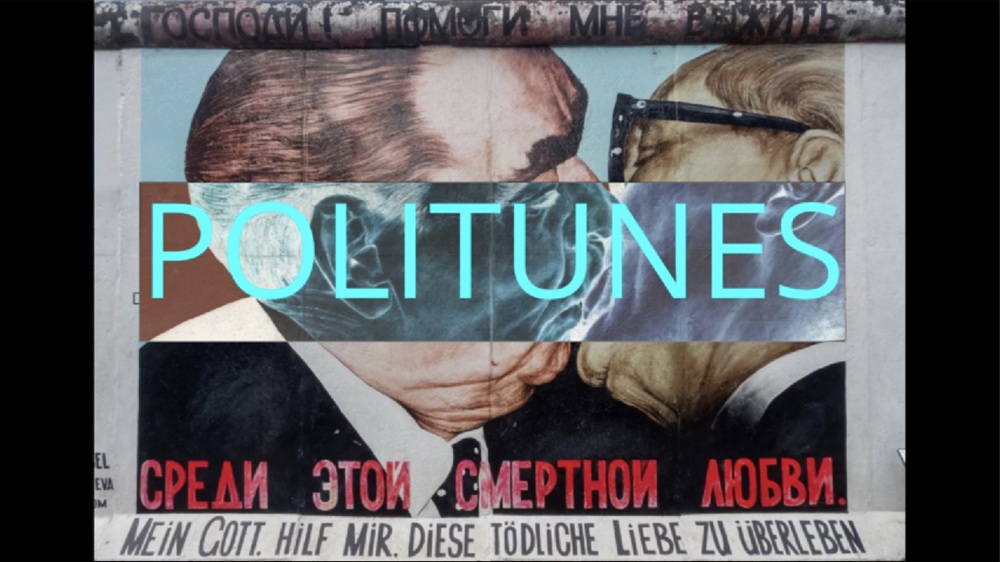
• In the Foyer of Space E, as part of C_Music NOW, Russian composer Sergey Khismatov’s audiovisual installation VIDEO ENSEMBLES will be on view from June 13 to 30. The installation includes the works: POLITUNES, which captures moments of awkwardness from speeches by political figures, SUONO POVERO, a “choir” of trash and worn-out materials with intermittent references to sustainability and ecological destruction, and ROTONDA, where the sounds of creaking doors opening and closing are transformed into a poignant commentary on migration, acceptance, and exclusion.

• In the Square, Bojan Stojcic’s visual art installation *SEEKING FOR A PERSON*, a collaboration between the Athens Epidaurus Festival and the Goethe-Institut Athen as part of *ANTIFASCISM: NOW, functions as a substantive act of political intervention aimed at highlighting anti-fascism as a central pillar of cultural practices in democratic societies.

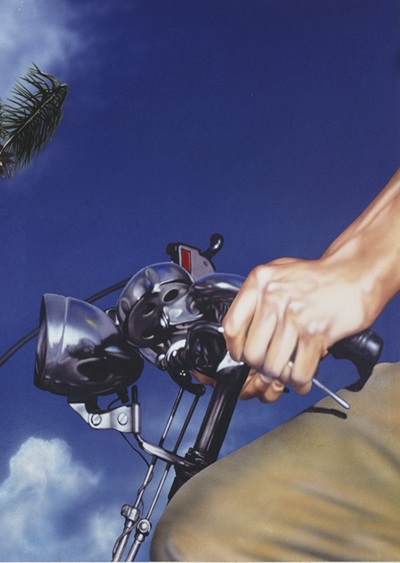
• Two light sculptures set the mood of the garden at night: the work by the design studio Objects of Common Interest, installed in 2025 and now an integral part of the space’s visual identity, and CAMPER VAN, a work by artist Socrates Socratous, which returned this year following a complete reconstruction by the Festival.

The Attractions in detail
Calla Henkel – Max Pitegoff
THEATER


SPACE Z (WORKSHOPS)

Video installation

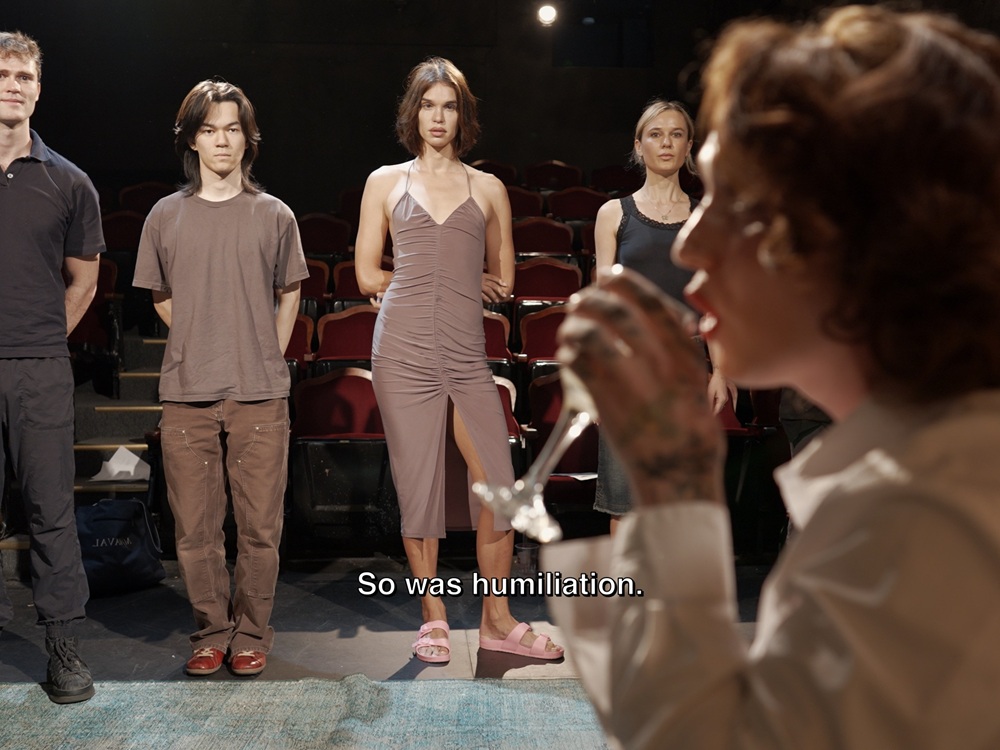
On the vast Santa Monica Boulevard in Los Angeles, with its bright marquees, a woman attempts to put together a theater troupe. With the money she receives as compensation following an accident, she buys a fifty-seat theater and moves there. She is the central figure of Kala Henkel and Max Pitegov’s in situ video installation THEATER, portrayed by director and visual artist Leila Weinraub, who delivers a performance that vividly echoes the lives of the creators themselves —the artistic duo who renovated a small theater in Santa Monica in real life and began operating it as the New Theater Hollywood in 2024.

Driven by a desire to connect with a community of like-minded people and the hope for a different life that might come through recognition, the heroine of THEATER wanders through the enigmatic world of the theater—the rehearsals, backstage, the stage, and the dressing rooms. Around her unfold dynamics of power and exploitation, clashing dreams, ghosts of the past, as well as the faint promise of transformation through fame.

Outside the microcosm of the theater, reality seems to herald the end of the Los Angeles theater scene and the American dream more broadly. As she is swept away by love and consumed by the ambitions of those around her, the heroine confronts her deepest desires as well as the difficulties of coexisting within a group or trying to keep it together.

Shot on 16mm film and with a narrative that unfolds through subtitled text and music by MK Velsorf, THEATER balances between reality and fiction, following its own rhythm. To tell the story of this space, it draws on poetic writing, photography, and documentary elements across five episodes totaling 95 minutes, portraying the theatrical stage as a microcosm that ‘distorts’ human relationships both within and beyond the theater’s imaginary realm.

Showtimes: 7:10 PM, 8:50 PM, 10:30 PM3

Sergey Khismatov
Video Ensembles


Foyer of Hall E
June 13–30, 9:00 p.m.

C_Music NOW

Audio-visual installation

Laughter is the most important weapon we have as human beings

and the one we use the least
Mark Twain

About six years ago—when the world had retreated into a peculiar hibernation due to the Covid-19 pandemic—Russian composer and artist Sergei Kishmatov devised a new audiovisual format, which he named ‘Video Ensembles’. In this medium, he combined his love for the spatial diffusion of sound with the moving image, creating short or longer audiovisual bursts that captivate the senses and generate fleeting meanings. Despite the laborious nature of the process—as it involves surgical interventions on essentially unedited material—what primarily characterizes the video ensembles is a witty and ‘cheeky’ verve, which recalls the aphorism of his beloved Mark Twain: ‘Laughter is the most important weapon we have as human beings, and the one we use the least.’

At his exhibition at 260 Piraeus Street, Kismatov presents three examples of this art form. In POLITUNES, he isolates vocal stumbles or verbal gaffes by politicians, dictators, and populists in their live speeches, creating a micro-composition where the hilarious embraces the chilling. SUONO POVERO’s material is a ‘choir of refuse’—sounds produced by crushed packaging, trash in bags, and, generally, objects on the verge of being permanently removed from the cycle of life and consumption—in a condensed commentary on sustainability and ecological destruction, which further reveals the influence of Arte Povera on his artistic practice. In the work ROTONDA, Kismatov asked friends from all over the world to send him recordings of creaking doors. The ‘chirping’ produced by their opening and closing evokes the very gesture of acceptance or exclusion, a painful nod to global migration flows and the culture of tolerance and empathy.

All these videos are not mere sonic whims or navel-gazing, but self-contained and substantial works crafted and born from the restless creative process of a composer who harnesses the full spectrum and dynamics of composition: the crescendo, the dynamics, the articulation, the kinematics of an orchestra, a broad percussive vocabulary, and, above all, the vocabulary of noise. If all this seems dizzying, don’t worry: this is the flavor of the twenty-first century.

Duration: 60’

-/-

Bojan Stojcic
Seeking for a Person


Square

Digital print on PVC, 1,500 x 150 cm
Adaptation of a project for Piraeus 260
2015 –

Over ten years ago, I published my first ad

in local newspapers,
which read: ‘Young man, 26 years old, seeks someone to discuss
art with,’
accompanied by my phone number.
Indeed, many people responded to the ad,
but in reality we never discussed art—
what always came to the surface
was the position of the Other.
-Bojan Stojcic

In a climate of growing authoritarian and fascist tendencies that are increasingly entrenching and normalizing racism, sexism, anti-Semitism, colonial legacies, and historical revisionism, anti-fascism is conceived as a living, polyphonic, and proactive force of resistance that must be constantly redefined across generations and national borders.

The project Seeking for a Person functions as a substantive act of political intervention, which evolves over time and adapts to different geographical and social contexts.

Today, the public can interact with the phone number included in the ad by sending text messages via various communication platforms, such as WhatsApp, Signal, Telegram, and Viber.

“Seeking for a Person” highlights anti-fascism as a democratic act in today’s world and is presented in collaboration with the Goethe-Institut Athens as part of the international art project “Antifascism: Now,” conceived and curated by Kalas Liebfried, Artistic Director of the Lothringer 13 Halle cultural space in Munich.

This multi-year project focuses on anti-fascist culture and its artistic manifestations and aims to highlight anti-fascism as a central pillar of cultural practices in democratic societies. By bringing together works and artistic positions from various countries in Southeast and Eastern Europe, Antifascism: Now. demonstrates how art combats authoritarian, racist, and anti-Semitic structures.

Antifascism: Now. opened as an exhibition in January 2026 at Lothringer 13 Halle and will continue in various artistic formats over the coming years in Athens, Thessaloniki, and several cities in the Balkans and Eastern Europe, culminating at the end of 2028 in a major retrospective exhibition at the Ludwig Forum in Aachen.

-/-

Sokratis Sokratous
CAMPER VAN

A night with you
Curated by Olia Lazaridou 

13 June 2026, 22.00
Garden

Hommage

The moving solace of art.
For underserved communities.
Or, in other words, “Don’t be sad.”

The Camper Van began as an idea by Olia Lazaridou and was designed by the artist Socrates Socratous. It was a bright, self-propelled plexiglass tent that initially hosted the 2008 production of *Gelsomina*, a play based on Federico Fellini’s film *La Strada*.

The following year, it traveled to neighborhoods in Athens, such as Pedion tou Areos, Kolonos, and the Korean Market, as well as Ancient Olympia, presenting a variety show featuring numerous artists titled “A Night of Your Gift.”

It was an idea warmly embraced by Giorgos Loukos, Artistic Director of the Athens & Epidaurus Festival. In other words, to take the Festival outside its usual confines and bring it to the neighborhoods, to an audience beyond those who typically attend its performances. The response was exceptionally generous everywhere.

With the departure of Giorgos Loukos, the Trochospito, that wonderful little “gadget” of the Festival, fell into disuse. Just before it was completely consigned to oblivion, it has been brought back to light up the summer evenings at 260 Piraeus Street again this year, with the ambition of opening up beyond its borders again next year.

Objects of Common Interest


Garden

Art Installation

The original art lighting installation by the award-winning design studio Objects of Common Interest remains at 260 Piraeus Street this year as well, having become an integral part of the space’s visual identity.

The studio’s founders, architects and designers Eleni Petaloti and Leonidas Tramboukis, who work between Athens and New York, focus on creating sculptural objects and experiential environments that highlight the relationship between materiality and space. With international accolades, such as the Designer of the Year awards from Wallpaper (2022) and the Elle Deco International Design Awards (2024), as well as a presence in leading institutions such as the Noguchi Museum and the Vitra Design Museum, the creators (professors of Architecture at Columbia and members of the AD100 list) continue to experiment with the boundaries of art and design.

The installation dominates the courtyard of 260 Piraeus Street and consists of light tubes in various shapes and curves that “embrace” the building of Space D. Through a dynamic interplay of height and form, the work creates a new, luminous landscape, inviting viewers to a unique experiential journey before and after the performances, animating the industrial environment in an almost organic way.

Share This Story, Choose Your Platform!