In Greece, we have learned to love the olive tree for its fruit—for its oil, its wood, its long history, and its symbolism. Its leaves, however, we rarely pay attention to. Every year, after pruning, they fall to the ground and disappear almost silently, as if they’ve fulfilled their purpose.
Perhaps, in the end, the greatest value lies precisely in the things we take for granted.
That was the thought that led Alexandra Makrygeorgou to embark on a path that had not existed until then. Not to design yet another series of objects, but to challenge the very concept of raw material. To ask herself whether an olive leaf—which until yesterday was considered agricultural waste—could be given a second life.
The answer did not come quickly.
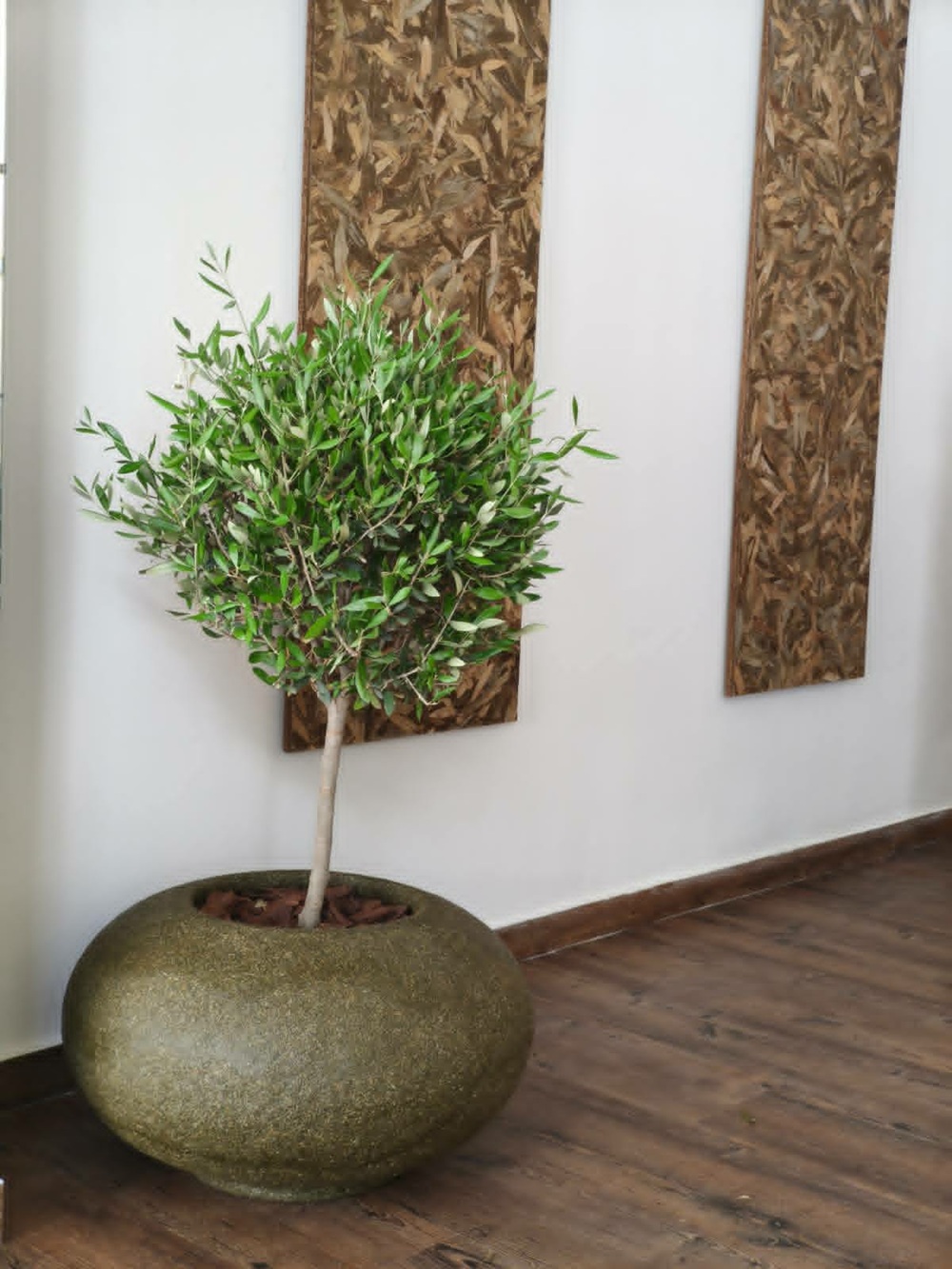
It took years of research, experimentation, countless trials, and perseverance before the biomass from olive leaves could be transformed into an innovative building material. A material that today gives shape to everyday objects, decorative creations, corporate gifts, awards, and souvenirs, preserving within them a piece of the memory of the place where they were born.
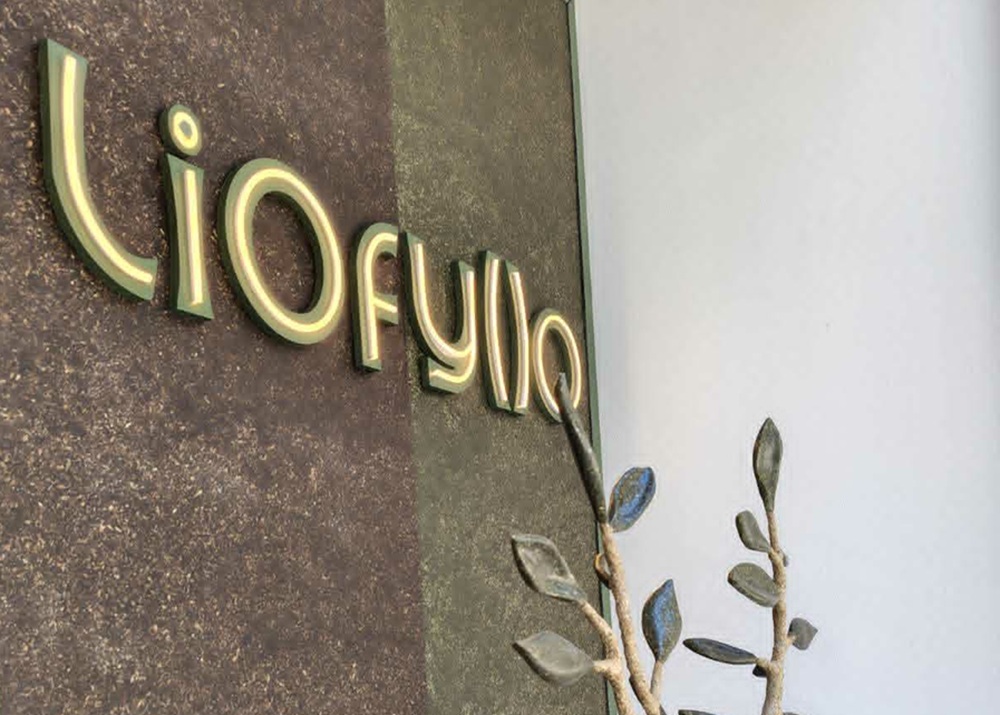
This is how Liofyllo was born.
Not as just another business idea, but as a different perspective on what creation means. On how aesthetics can coexist with conscience, how innovation can spring from tradition, and how a business can leave behind more than just products. Less waste. More collaborations. More knowledge. A different way of understanding value.
Eight years later, this journey has found its natural home.
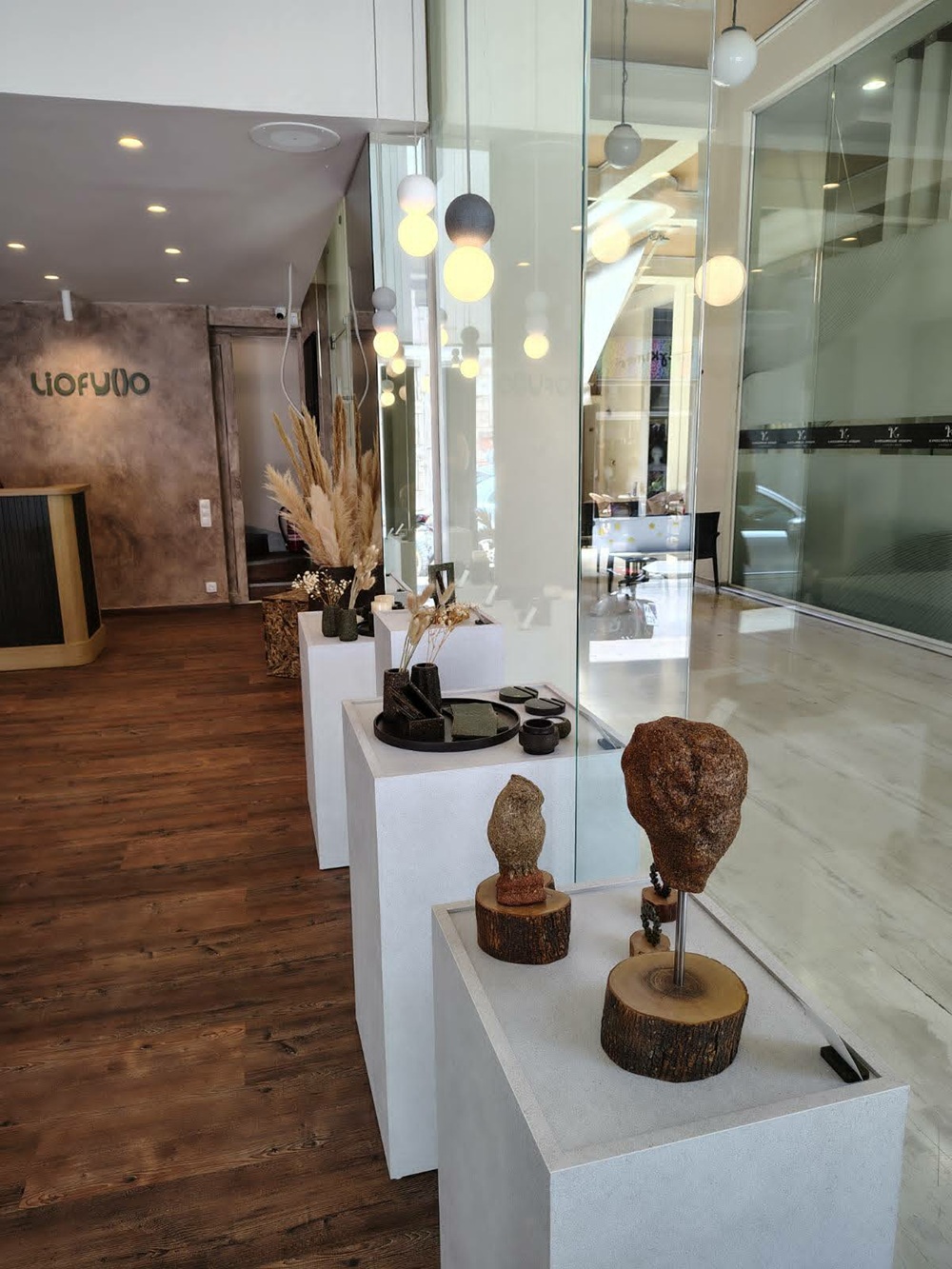
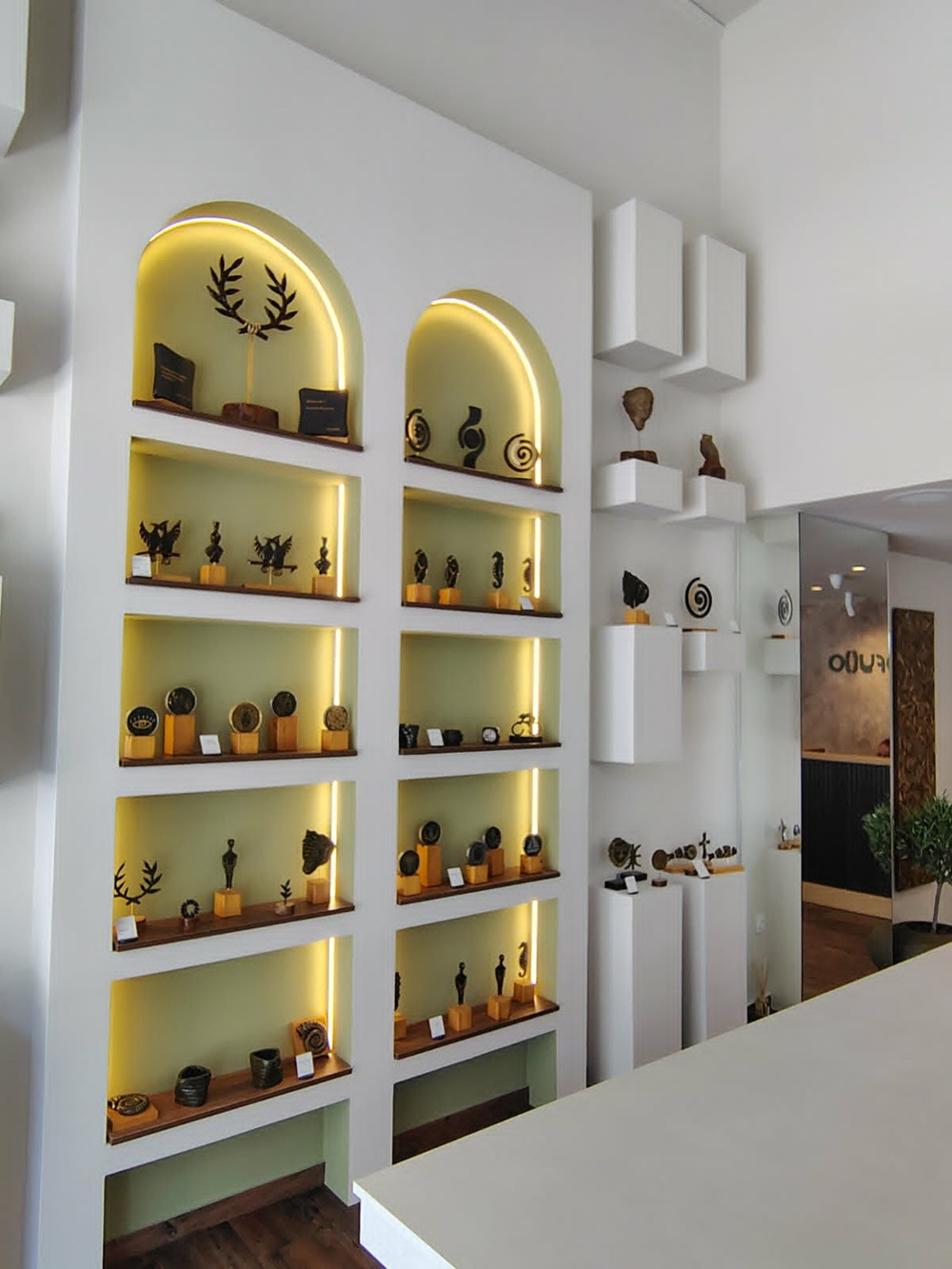
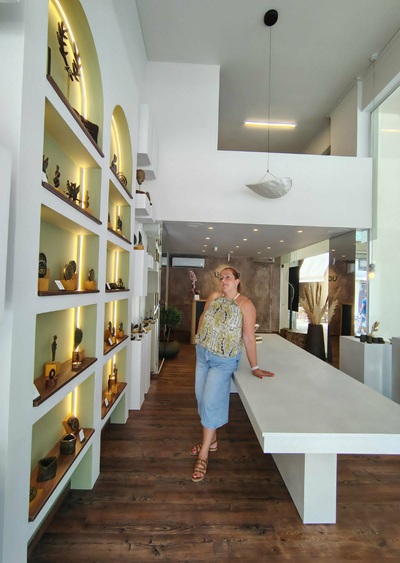
At 36 Filopimenos Street, downtown Patras, Liofyllo opened its first concept store. Although the word “store” seems a bit too limited to describe what goes on inside.
There are places you visit to buy something. And there are places that, almost imperceptibly, make you slow down. You walk in and start noticing things differently. The light that changes throughout the day. The textures of the objects. The subtle scent of olive leaves lingering in the air. The silence that allows the objects themselves to tell their story.
The space is simple, almost austere. White does not dominate; it serves as a backdrop that allows the objects to take center stage. Nothing is superfluous, because nothing needs to distract from what is essential. Every object is there for a reason. It carries a journey, a process, a philosophy. It was not designed merely to be beautiful, but to remind us that beauty takes on greater significance when accompanied by meaning.
A visit to Liofyllo is not like an ordinary shopping experience. It’s more of an invitation to discover what lies behind the objects you choose to bring into your life. To touch a material that was once olive leaves. To realize that innovation isn’t always about discovering a new material, but often about deciding to take a fresh look at a material that everyone else had overlooked.
Perhaps this is the most interesting aspect of Liofyllo.
It doesn’t seek to make a loud statement about sustainability, responsible design, or entrepreneurship with a social impact. It lets these things become an experience. In the way each object is created. In the people involved in its journey. In the decision to create value from something that, until yesterday, was considered useless.
In an era where everything seems to be consumed quickly—images, products, even ideas—Liofyllo proposes something almost unconventional: to take a little more time. To touch. To observe. To ask ourselves what the object we’re holding in our hands is made of and why it was created.
Perhaps because, after all, the most interesting stories aren’t the ones that invent something from scratch.
They’re the ones that make us see things differently—things that have always been right before our eyes.
Perhaps that is, after all, what Liofyllo is.
Not a place where olive leaves are transformed into objects.
A place where the way we perceive value is transformed.





Leave A Comment