
Omolio Folk-Agricultural Showroom Marinos Antipas
Omolio Folk-Agricultural Showroom Marinos Antipas
Omolio is a historical settlement of the Municipality of Agia surrounded by great natural beauty. Located in a central location, 40 km from the capital of the Larissa regional administration, just three kilometers from the Athens-Thessaloniki national road and at a minimum distance from the sea. According to Homer, the city participated in the Amphictyony of Delphi, while the mint of Ancient Omoli was one of the greatest in central Greece. The ruins of this ancient city and citadel still remain close to current Omolio.
Conditions brought the village back close to major historical events. This is the soil in which Marinos Antipas is buried, one of the most important figures of Greece in the fight to defend civil liberties. When Antipas came to Thessaly, where he took over as caretaker of the property of his uncle, he changed social conditions in the region. Although he was in a position of strength, he deleted agricultural debts, applied Sunday as a day off and set the remuneration of tenant farmers based on 75% of production (instead of 25% as was up to then in force). His murder was the natural consequence in a place dominated by lthe andowners of the time.
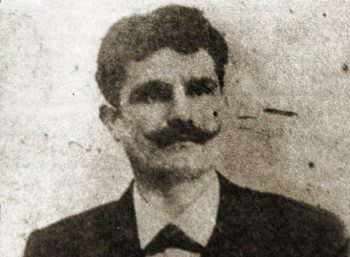
Μαρίνος Αντύπας / Marinos Antypas
Nowadays, the local community commemorates him, recognizing his contribution to changing social conditions, both in the region and across the country. It built a modest monument erected in Omolio where events are held every year in memory of the great fighter. At the same time, it gave his name to the small museum built in the village: Omolio Folk-Agricultural Showroom Marino Antipas, housed in the former Community chambers, located in the village square.
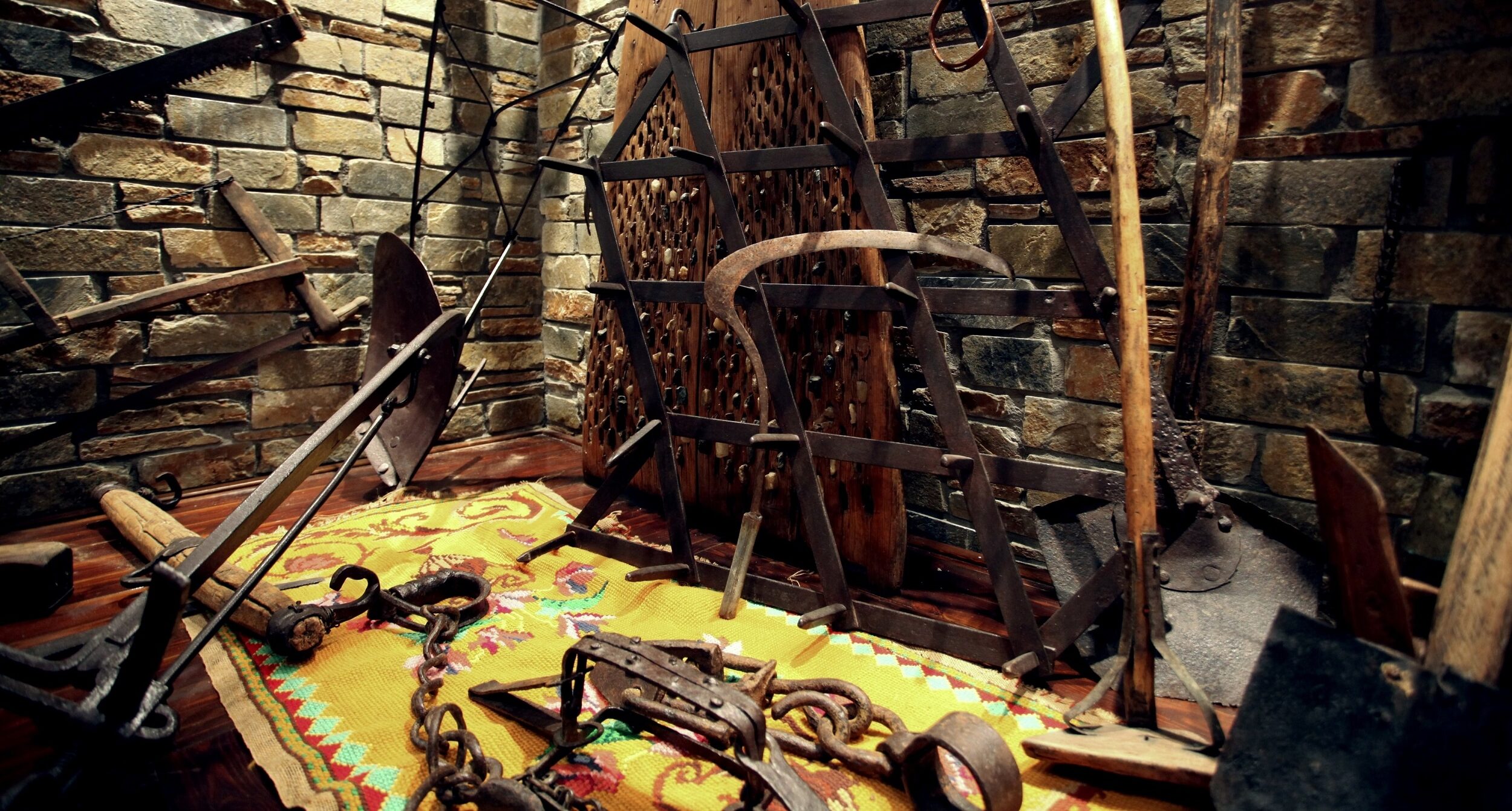
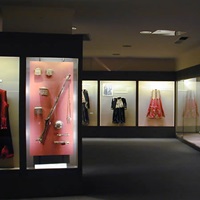
Today, the exhibition presents the tools used by the people for whom Antipas fought. Inaugurated on 18 March 2007 to mark the 100th anniversary of his death (murdered in 1907 in Pirgetos). Premechanical agricultural and foraging tools are hosted in the exhibition venue. Visitors can also admire tools of traditional occupations (fishermen, shoemakers, weavers, etc.) and objects from daily life of local people: handicrafts, embroidery and textiles, utilitarian household items (sofras (low tables), pots, pinakoti (bread levening boards)), local costumes, traditional clothing, woodwork items, postcards and engravings, coins, antique furniture, and a local bisiki (cot).
The collection includes artifacts that may be considered historical documents: a local’s military diary, which describes in detail the experience of the war in Asia Minor, but also photographs of social events and the occupations of the inhabitants. The showroom has a conference hall that holds 50-60 people.
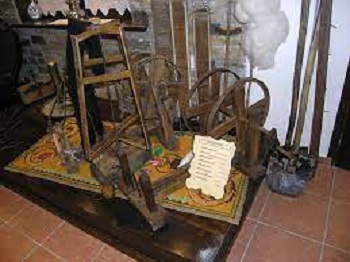
Λαογραφικό-Γεωργικό Εκθετήριο Ομολίου Μαρίνος Αντύπας
Places like the Omolio Folk-Agricultural Showroom Marinos Antipas, although exhibiting objects from earlier times, alsoshow that traditional culture is not a static body of evidence that survives only in a museum. Because on the one hand, tools and materials actually bear witness to the immutable characteristics of an era (available resources, raw materials), however, they also reveal the basic principles of human creativity that lead to evolution. The name of the exhibition reminds us, at the same time, that this creativity should always be developed with concepts such as respecting the principles of human law and social justice.

Takis’ Solar Yoga at the SNFCC
Inspired by Ancient Egypt in the reign of Akhenaton, Takis conceived it as a way to link the human body with the sun and its energy A series of meetings titled “An Introduction to Takis’ Solar Yoga”, an exercise invented by the artist and sculptor Takis, will be taking place this summer in the Stavros Niarchos Park in parallel with the Takis exhibition at the Stavros Niarchos Foundation Cultural Center. “Takis’ Solar Yoga” is a meditation system and breathing exercise in which solar energy is inhaled and then diffused through the body. Inspired by Ancient Egypt in ...More

VERGOS Auctions achieves the highest selling price worldwide by the pioneering sculptor Takis
The sculpture was initially appraised for €100,000 - 150,000, but ended up selling for €190,300 The highest selling price worldwide for a sculpture by the pioneering Greek artist Takis (Panagiotis Vasilakis, 1925 - 2019) was achieved by VERGOS Auctions, the largest Greek auction house, in the recent auction of Modern Greek Painting and Sculpture, with Historical, Philhellenic and Folklore Items, held on June 17 at the Athinais Cultural Center. The sculpture was initially appraised at €100,000 - 150,000, but after keen interest was expressed by buyers both from Greece and abroad, it sold for €190,300 to a ...More

MATAROA Awards 2021
5th Art-Thessaloniki International Contemporary Art Fair November 25-28, 2021 For a second time, Art-Thessaloniki International Contemporary Art Fair and the Cultural Society of Entrepreneurs of Northern Greece organize the MATAROA AWARDS, with an open invitation process and portfolio submission, for young artists up to 33 years old. Candidates will be assessed by the 5-member committee: Thouli Misirloglou, Acting Director of MOMus, Experimental Center for the Arts Dimitris Xonoglou, Artist. Sania Papa, Art History PhD, Lecturer at the School of Visual and Applied Arts, AUTH Xenis Sachinis, Professor, School of Visual and Applied Arts, AUTH George Skabardonis, MATAROA ...More

do good or do no harm – Timeless values of ethics and deontology in the works of Hippocrates
Τitle: do good or do no harm – Timeless values of ethics and deontology in the works of Hippocrates Authors: Eleni Askitopoulou, Antonis N. Vgotzas Genre: Bioethics Publisher: Hellenic Open University Year: 2021 Pages: 319 Dimensions: 20 x 14 cm. In the 5th and 4th centuries BC, Hippocrates and the Medical School of Kos distinguished the etiology of diseases from superstition, divine origin and philosophical assumptions, and proposed new values of ethics and deontology for medical practice, introducing the principles of beneficence, non-maleficence, confidentiality and justice. This book examines the timelessness of these values and ...More

Autonomy and Bioethical Coercion: A critical casuistry, from abortion and euthanasia to medicine as a vocation and biotechnology
Title: Autonomy and Bioethical Coercion: A critical casuistry, from abortion and euthanasia to medicine as a vocation and biotechnology Author: Philippos K. Vasilogiannis Genre: Bioethics Publisher: Crete University Press Year: 2020 Pages: 207 Dimensions: 21 x 14 cm Is state coercion in matters of bioethics morally justified, in a liberal democracy? The author explores relevant philosophical arguments from within the fundamental moral and political values and principles that allow for our coexistence in institutional conditions of freedom and equality, but in view of the cases most difficult to resolve in terms of interpretation and application ...More

Regulating matters of life: The legislator and bioethics
Title: Regulating matters of life: The legislator and bioethics Author: Pavlos Sourlas Genre: Bioethics Publisher: Crete University Press Year: 2020 Pages: 207 Dimensions: 21 x 14 cm Due to the rapid development of life sciences and their technological applications, the focus of philosophical debate has shifted toward long-standing questions about the value of human life. The book presents and systematically examines the ethical questions relating to legislative interference in matters of biological, biotechnological and biomedical research, the types of arguments to be considered and the -often conflicting- moral principles to be met. ...More


Leave A Comment