
Omolio Folk-Agricultural Showroom Marinos Antipas
Omolio Folk-Agricultural Showroom Marinos Antipas
Omolio is a historical settlement of the Municipality of Agia surrounded by great natural beauty. Located in a central location, 40 km from the capital of the Larissa regional administration, just three kilometers from the Athens-Thessaloniki national road and at a minimum distance from the sea. According to Homer, the city participated in the Amphictyony of Delphi, while the mint of Ancient Omoli was one of the greatest in central Greece. The ruins of this ancient city and citadel still remain close to current Omolio.
Conditions brought the village back close to major historical events. This is the soil in which Marinos Antipas is buried, one of the most important figures of Greece in the fight to defend civil liberties. When Antipas came to Thessaly, where he took over as caretaker of the property of his uncle, he changed social conditions in the region. Although he was in a position of strength, he deleted agricultural debts, applied Sunday as a day off and set the remuneration of tenant farmers based on 75% of production (instead of 25% as was up to then in force). His murder was the natural consequence in a place dominated by lthe andowners of the time.
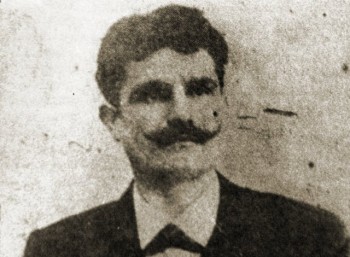
Μαρίνος Αντύπας / Marinos Antypas
Nowadays, the local community commemorates him, recognizing his contribution to changing social conditions, both in the region and across the country. It built a modest monument erected in Omolio where events are held every year in memory of the great fighter. At the same time, it gave his name to the small museum built in the village: Omolio Folk-Agricultural Showroom Marino Antipas, housed in the former Community chambers, located in the village square.
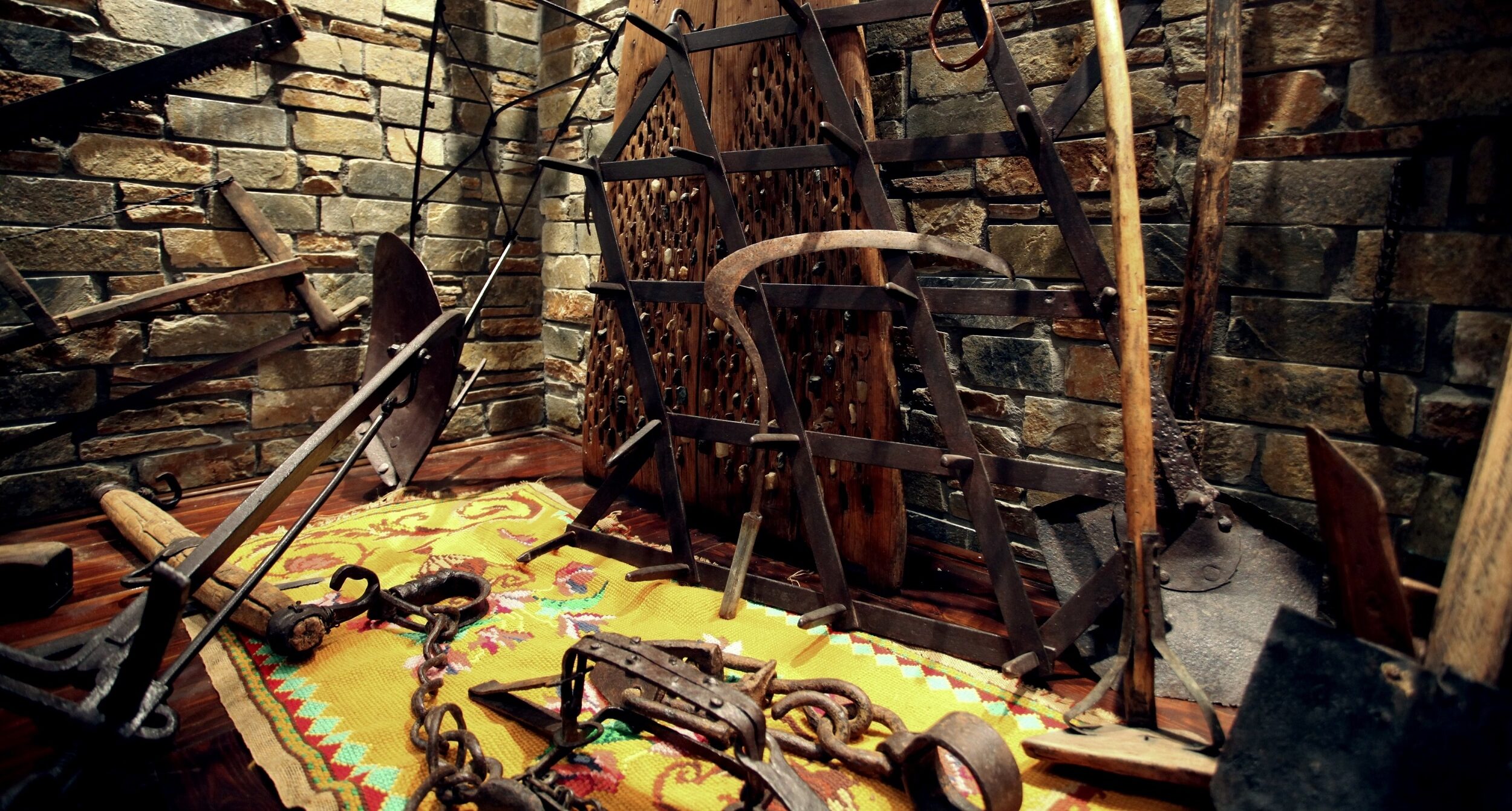
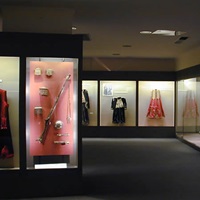
Today, the exhibition presents the tools used by the people for whom Antipas fought. Inaugurated on 18 March 2007 to mark the 100th anniversary of his death (murdered in 1907 in Pirgetos). Premechanical agricultural and foraging tools are hosted in the exhibition venue. Visitors can also admire tools of traditional occupations (fishermen, shoemakers, weavers, etc.) and objects from daily life of local people: handicrafts, embroidery and textiles, utilitarian household items (sofras (low tables), pots, pinakoti (bread levening boards)), local costumes, traditional clothing, woodwork items, postcards and engravings, coins, antique furniture, and a local bisiki (cot).
The collection includes artifacts that may be considered historical documents: a local’s military diary, which describes in detail the experience of the war in Asia Minor, but also photographs of social events and the occupations of the inhabitants. The showroom has a conference hall that holds 50-60 people.
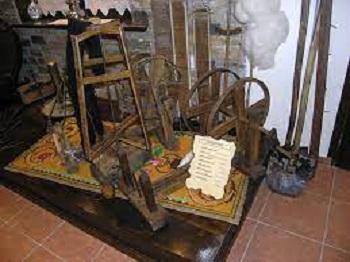
Λαογραφικό-Γεωργικό Εκθετήριο Ομολίου Μαρίνος Αντύπας
Places like the Omolio Folk-Agricultural Showroom Marinos Antipas, although exhibiting objects from earlier times, alsoshow that traditional culture is not a static body of evidence that survives only in a museum. Because on the one hand, tools and materials actually bear witness to the immutable characteristics of an era (available resources, raw materials), however, they also reveal the basic principles of human creativity that lead to evolution. The name of the exhibition reminds us, at the same time, that this creativity should always be developed with concepts such as respecting the principles of human law and social justice.
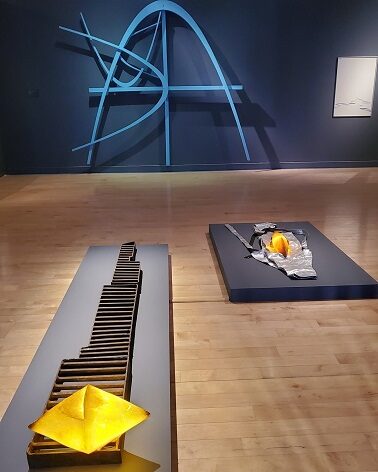
“Medusa Art Gallery (1979-2017)”. Exhibition at Benaki Museum
"Medusa Art Gallery (1979-2017)" An exhibition dedicated to almost forty years of operation of the historic gallery and its founder Maria Dimitriadis. The exhibition complements the idea of Maria Dimitriadis to publish a full volume to mark the anniversary of the gallery's almost 40 years of operation, which was interrupted by the untimely loss of its creator in 2017. However, she was able to arrange for the realization of this double publishing and exhibition project and entrusted it to close friends and associates her close friends and associates. Μαρία Δημητριάδη / Maria Dimitradi The ...More

Kissavos Marathon Race , with the support of the Regional Thessaly, the Municipality of Agia and the Health Runners Association
KISSAVOS MARATHON RACE With the support of the Region of Thessaly, the Association of runners Health Agia and the Municipality of Agia organize on Sunday 1 May 2022 the 4th Mountain Race KISSAVOS MARATHON RACE" Evangelos Koumbaros 2022. The 4th Kissavos Mountain Race includes the following three routes: 1. route KISSAVOS MARATHON RACE-green way 40 km ROUTE : The route follows marked traditional paths. From the starting point at Agia Square (185m), it passes Megalovriso (600m) and follows a north-western course in the mountainous area of Kissavos and reaches the peak of Ailias (1978m). From the ...More

Piano and other family drawings
Title: Piano and other family drawings Author; Elli Droulia Subject: Story Εκδόσεις: IDIFONO Date of publication: 2022 Language: Greek Pages: 124 The process of creating the history of each family is based on verbal accounts, discussions, critical commentary and, of course, evidence such as photographs. It was from these elements that Ellie Drulia began,in order to record and highlight her own family history, that of the Drulias, in Piano and other family sketches. Within the "family myths" answers are being sought to questions such as: what kind of people were our ancestors, are we worthy ...More
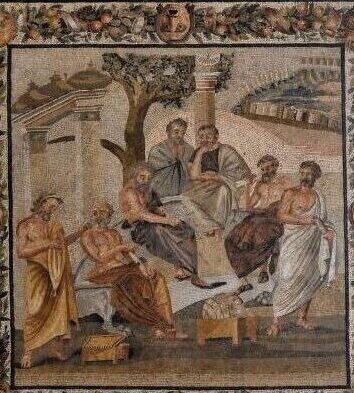
Strategic planning: The counterexample of the implementation project of the Platonic State. By Dimitrios Dakrotsi, PhD in Philosophy, University of Athens.
Studying the world around us, we observe that all our activities, from the simplest to the most complex, are the results of two combined processes of our logical and deliberative mind: planning and doing. Every purpose is justified as right, and therefore practical, if the conditions for which it is designed are deemed ideal. This is of course true when there is no special obstacle capable of altering, suspending or rejecting the planned design. Such obstacles may be moral, emotional, practical, or a combination, usually posed by ourselves, when we calculate that the weight of the ...More

Book presentation “Unknown aspects of ’21” by the Aristotle University of Thessaloniki and University Studio Press
The Aristotle University of Thessaloniki and the publishing house University Studio Press at the presentation of the book "Unknown aspects of '21" edited by V. Gounaris and D. Lyvanios The event will take place at the Amphitheatre of the Central Library of the Aristotle University of Thessaloniki on Wednesday 30/3/2022, at 19:30 SPEAKERS: Nikolaos Papaioannou, Rector of the Aristotle University of Thessaloniki Panagiotis Glavinis, Dean of the Faculty of Law of the Aristotle University of Thessaloniki, Secretary of the Aristotle University of Thessaloniki 2021 Committee. Vassilis K. Gounaris, Professor of Modern History, Department of History and ...More

Online Event “Greek writers from the 19th to the 21st century – The CENSUS platform”, by the Aikaterini Laskaridis Foundation
Online Event "Greek writers from the 19th to the 21st century - The CENSUS platform", by the Aikaterini Laskaridis Foundation A first presentation of the website “The CENSUS of Modern Greek Literature: a bibliography for the English-speaking world” will be held on Tuesday, April 5, 2022 at 19:00 (Greece). The CENSUS is a significant international project that facilitates access to Greek literature for speakers of English by providing references to all English-language translations of modern Greek literature and to all studies in English that relate to modern Greek literature from the twelfth century AD to the present. The event features the presentation of the CENSUS’s “Greek Authors 19th-21st centuries” section — the first ...More


Leave A Comment