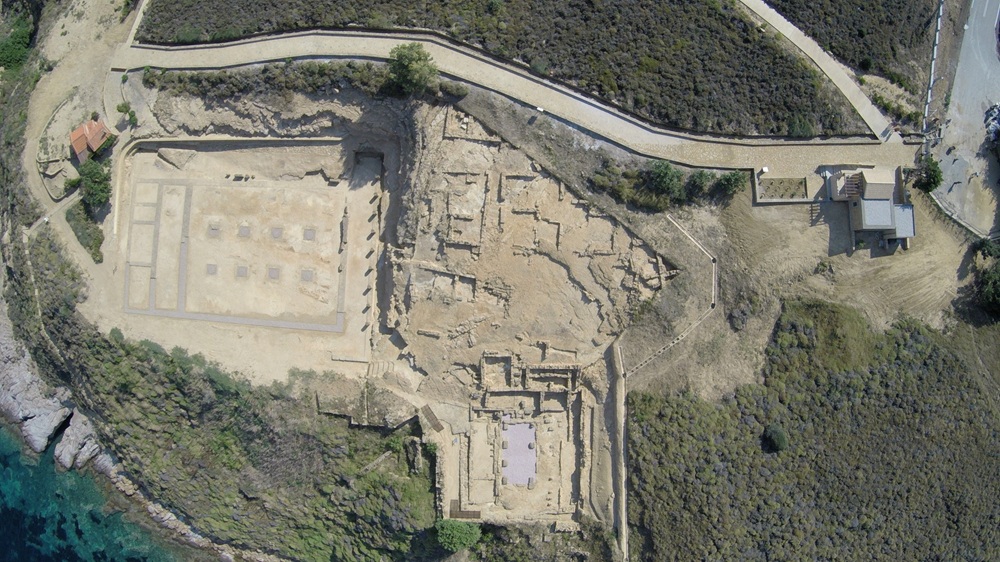
The Ministry of Culture is moving forward with the comprehensive protection and promotion of the Sanctuary of the Kabeiroi on Lemnos, the island’s most important mystery sanctuary. The relevant study draws on the findings of recent archaeological research, aiming to uncover, preserve, and showcase the ancient Peribolos, incorporating the southern section of the archaeological site into the tour route for the first time. This project completes the Ministry of Culture’s plan to establish Kaveirio as a modern, fully accessible, and recognizable archaeological destination, thereby strengthening Lemnos’s cultural identity and development potential.
The central concept of the project is the preservation, conservation, and enhancement of the original material to its highest extant level, as well as the improvement of the visibility of the Peribolos’s historical, structural, and typological characteristics. Within this framework, the project calls for the systematic archaeological investigation and excavation of the Peribolos, the conservation and stabilization of its surviving sections, as well as limited, documented restorations where these are absolutely necessary for the preservation and legibility of the monument. All interventions adhere to the principles of minimal intervention, compatibility of materials, and reversibility. On the southern plateau stands the Archaic ceremonial platform, in the form of an altar or “Bema,” dating to the 7th century B.C. On the northern plateau stands the Hellenistic ceremonial platform, which was looted and destroyed during the Roman period.
The Sanctuary of the Kabeiroi is one of the most important mystery sanctuaries of the ancient Greek world and the most significant on Lemnos. It functioned as a place of worship from the 8th century B.C. through the 3rd century A.D., a period during which the cult of the Kabeiroi expanded as a result of Macedonian policy, while its long history is also reflected in its successive architectural remains. It was excavated by the Italian School of Archaeology between 1937 and 1991. More recent excavations have revealed new information about the ancient enclosure, These findings shed light on the organization and development of the sanctuary, dedicated to the mystery cult of the pre-Hellenic deities of the Kabeiroi—deities of fire and metallurgy and sons of Hephaestus.
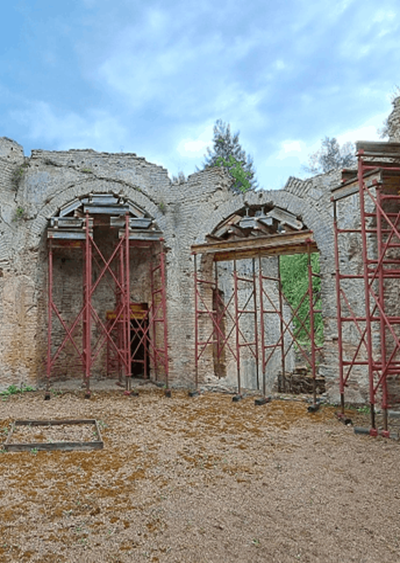
As part of the project to showcase the archaeological site, with funding of 1.6 million euros from the Operational Program “Northern Aegean 2014–2020” of the NSRF, the study for the site’s development and enhancement was updated, and extensive interventions were carried out to improve visitor access and protection of the site. The work included slope stabilization, the creation of walking trails and rest areas, the installation of visitor amenities, new fencing and a drainage system, as well as the restoration, maintenance, and enhancement of the ancient architectural remains. At the same time, accessibility for people with disabilities was ensured, and an outdoor event space was created.
Today, visitors can explore the eastern side of the archaeological site, visit the ceremonial areas, the auxiliary buildings, and Philoctetes’ cave, while a new trail leading to the “Promachon” is nearing completion. In contrast, the southern section remains unorganized and inaccessible to visitors. To highlight the site and ensure universal accessibility, a new 270-meter-long walking trail is proposed, which follows the natural topography. The route is divided into two main sections: the first features stairs and gentle ramps, and the second is suitable for simultaneous use by pedestrians and electric wheelchairs for people with disabilities, with ramps and wide steps in accordance with accessibility standards.


Leave A Comment