
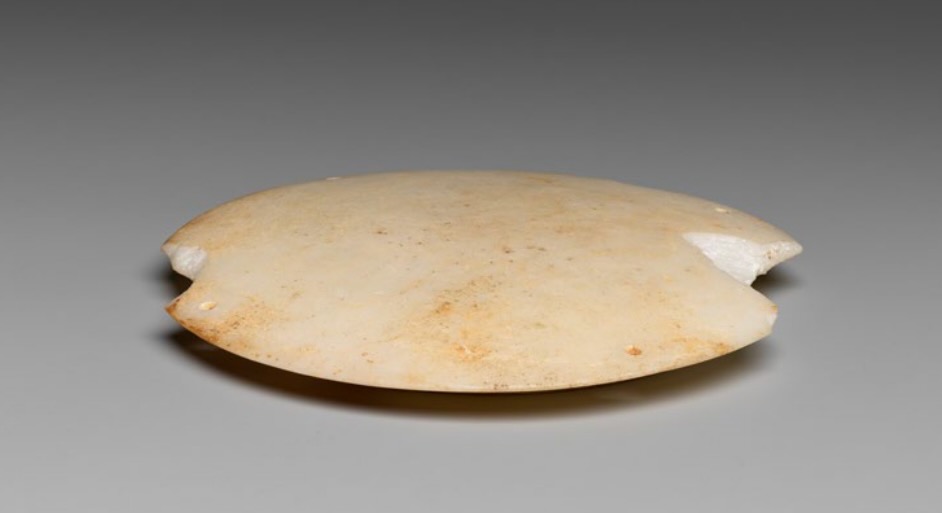
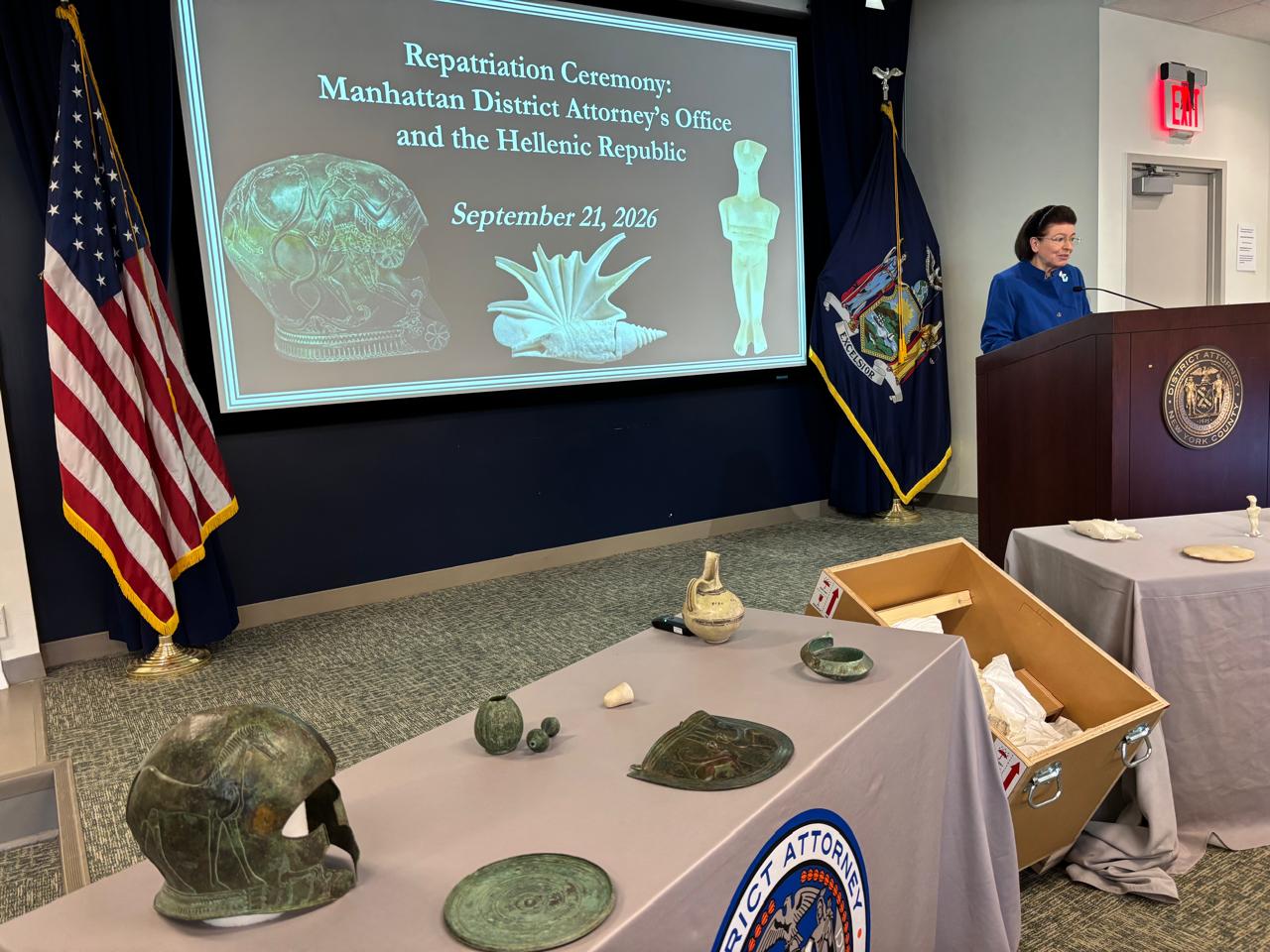
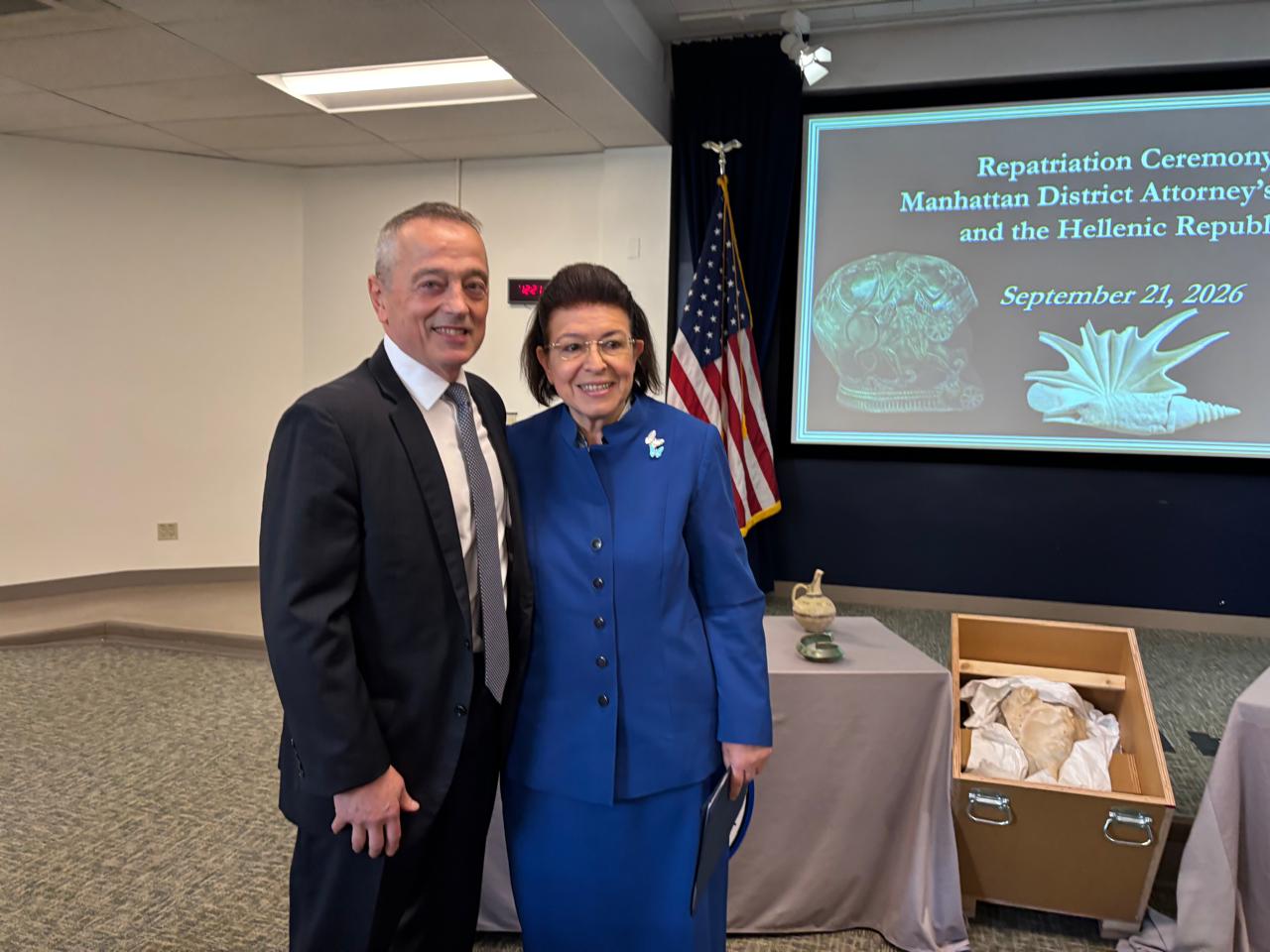
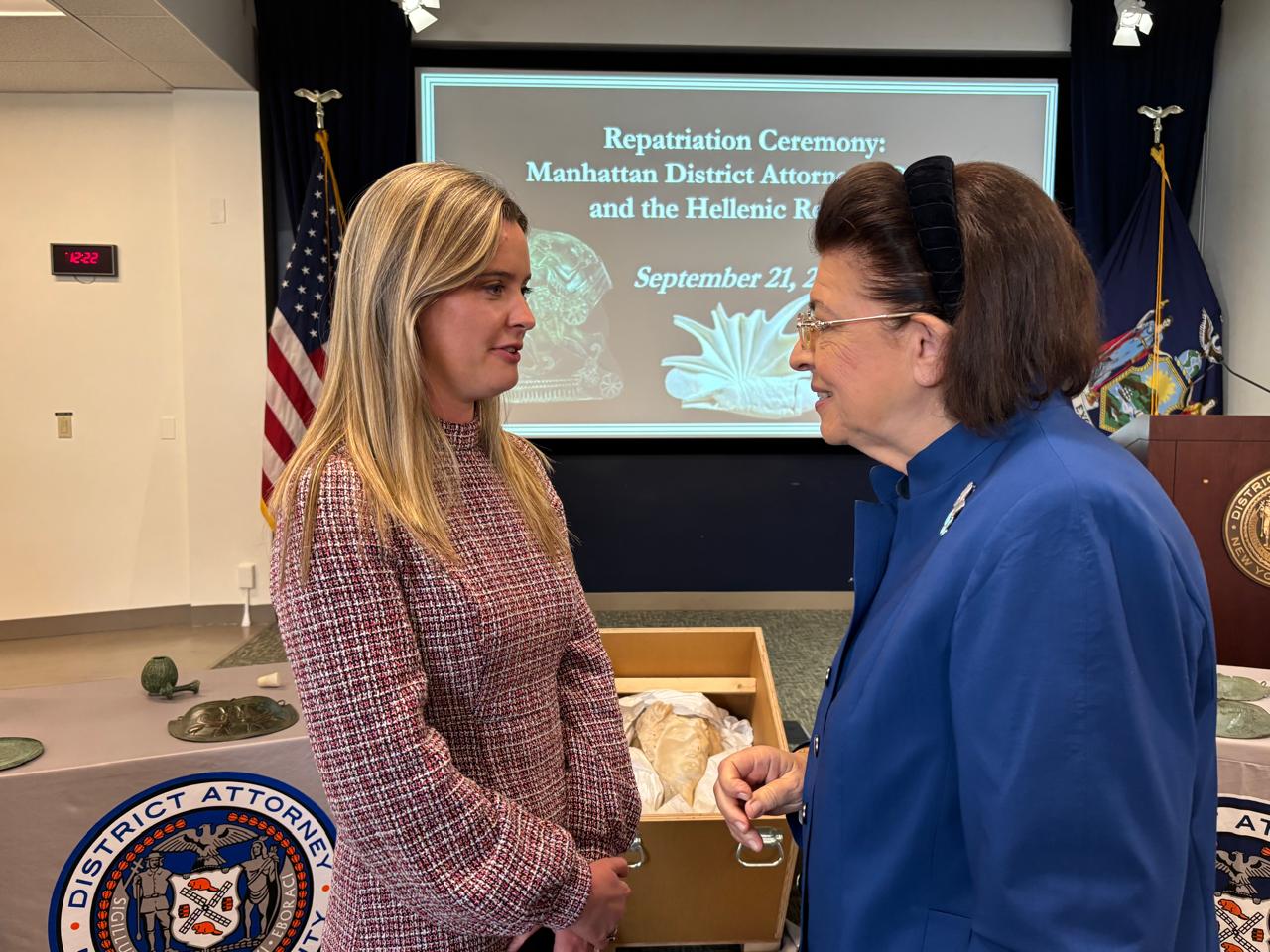
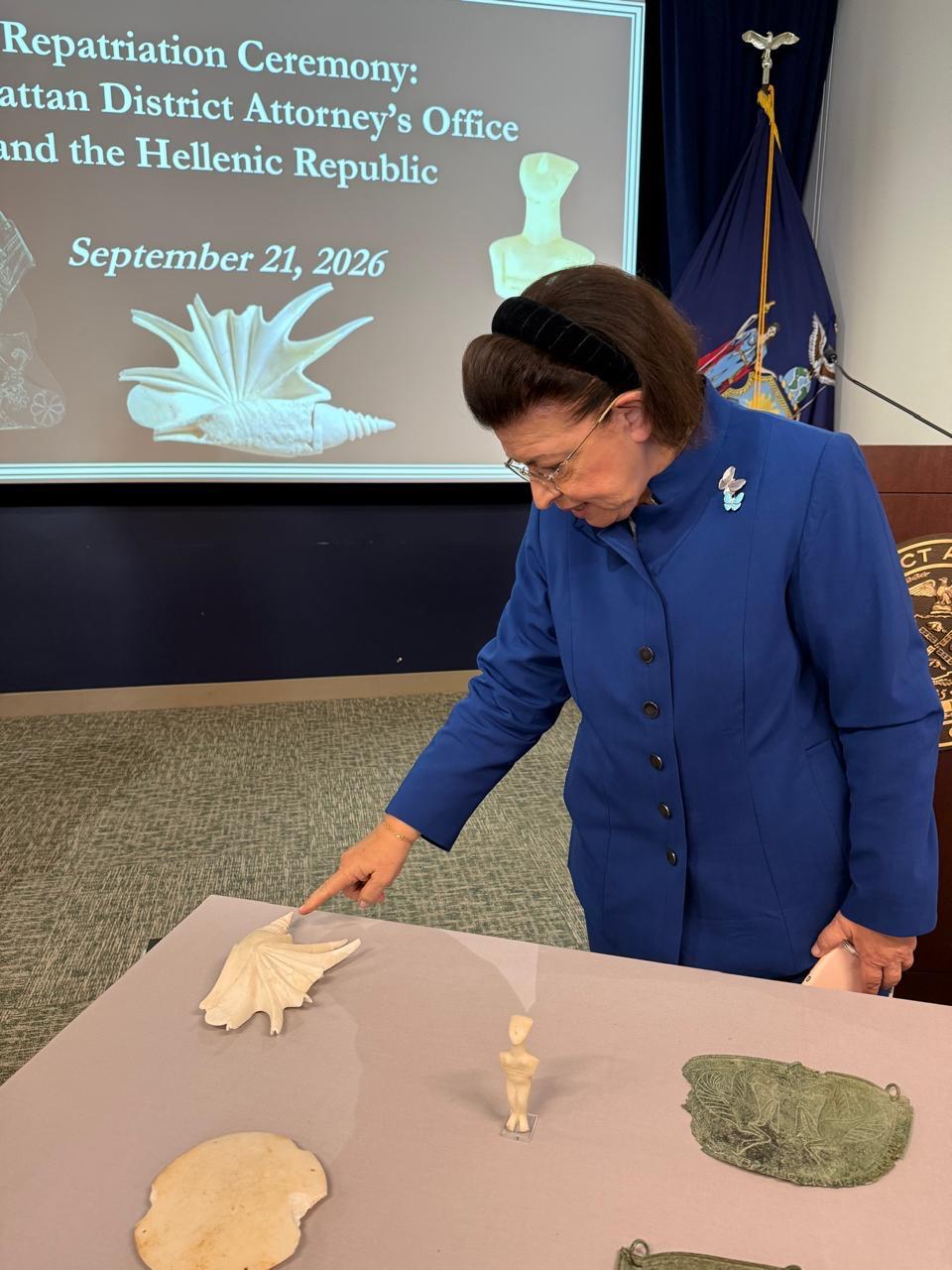
Fifteen antiquities are being returned to Greece from the United States, from which they had been illegally removed. They were handed over to Culture Minister Lina Mendoni during a special ceremony at the Manhattan District Attorney’s Office.
With this latest repatriation, the number of Greek antiquities returned since 2022, following decisions by the Manhattan District Attorney’s Office, has reached 179, highlighting the ongoing cooperation between the two countries in the fight against the illicit trafficking of antiquities.
This development also highlights the systematic efforts of the Manhattan District Attorney’s Office, and in particular the Antiquities Trafficking Unit (Antiquities Trafficking Unit), as well as the close cooperation with Greek authorities regarding the return of illicitly trafficked cultural property.
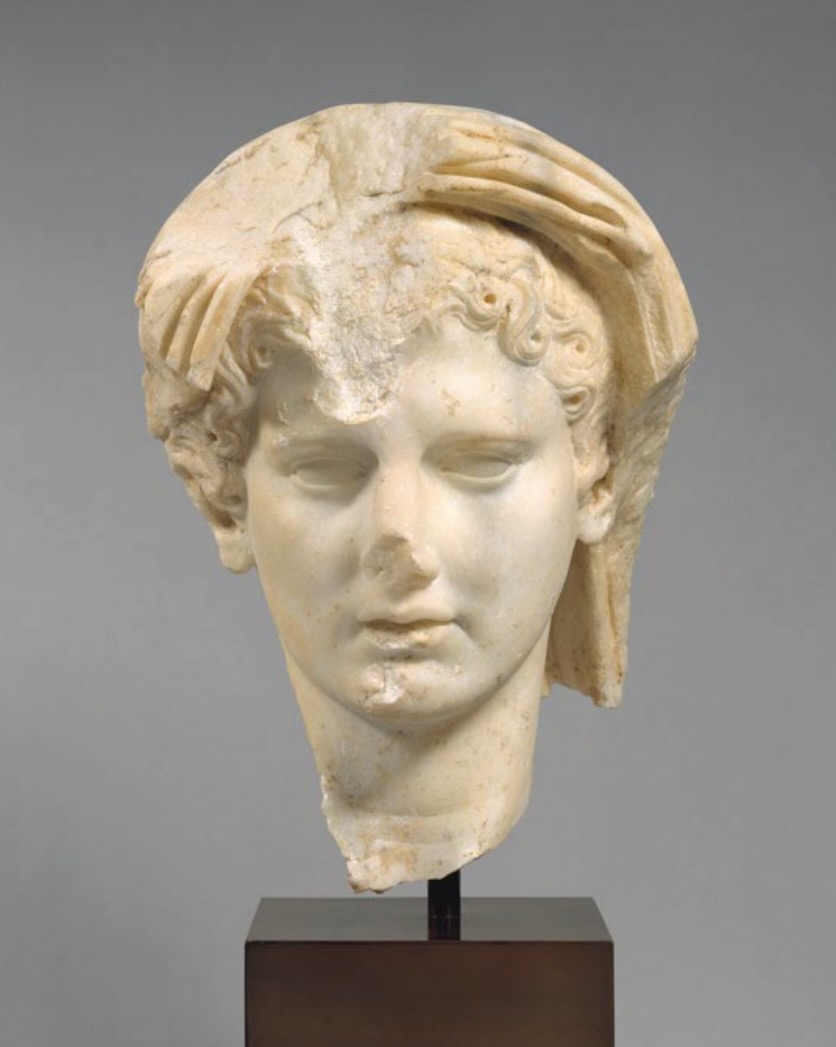
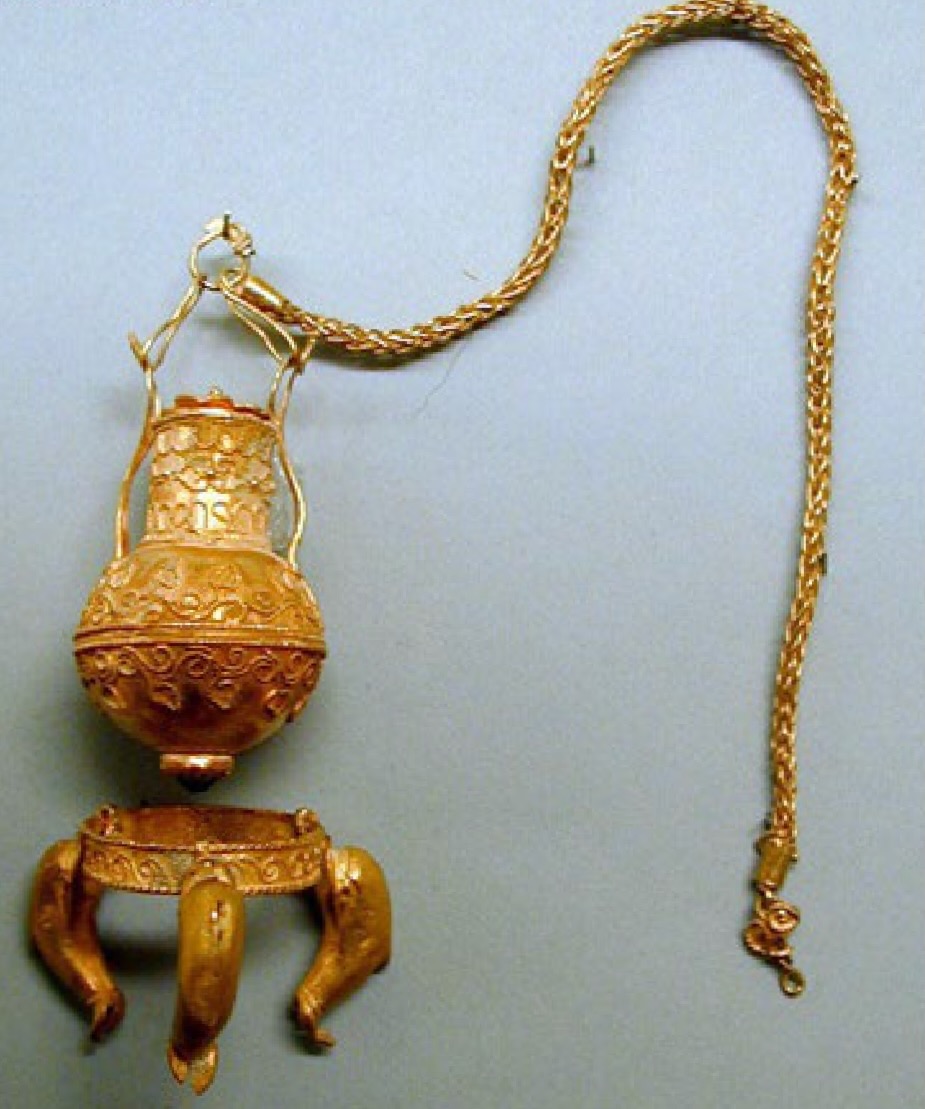
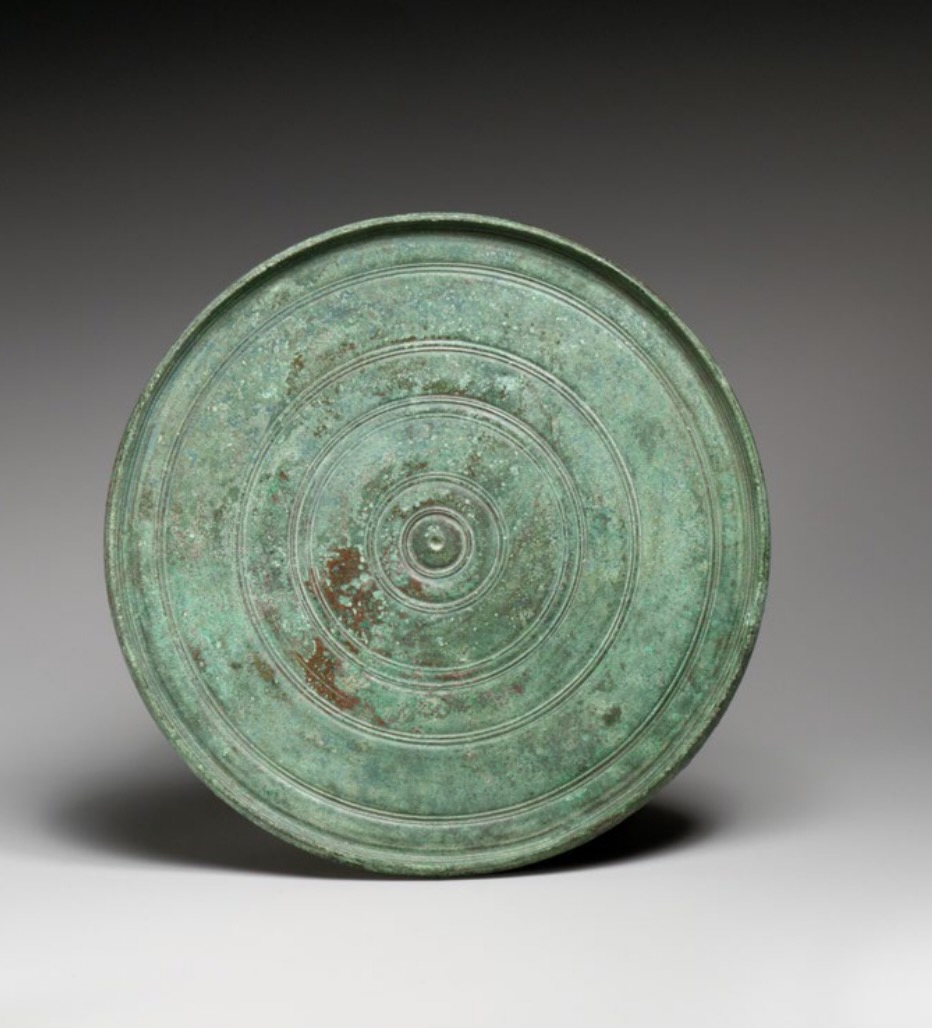
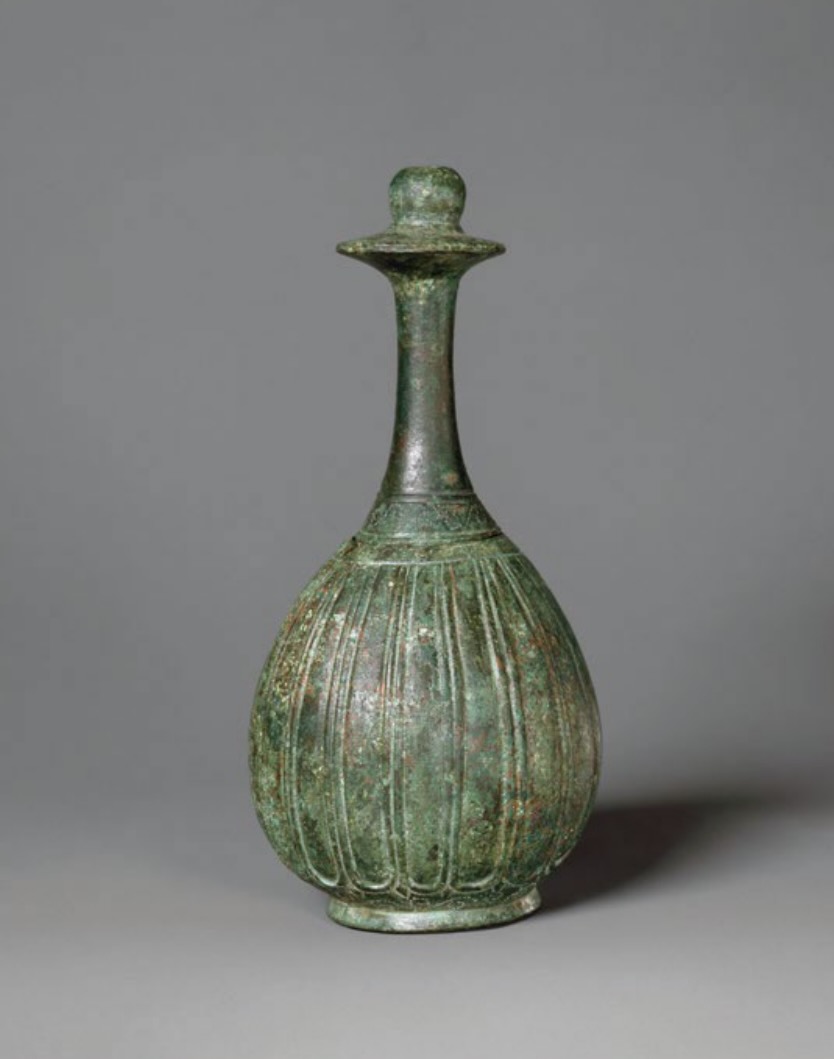
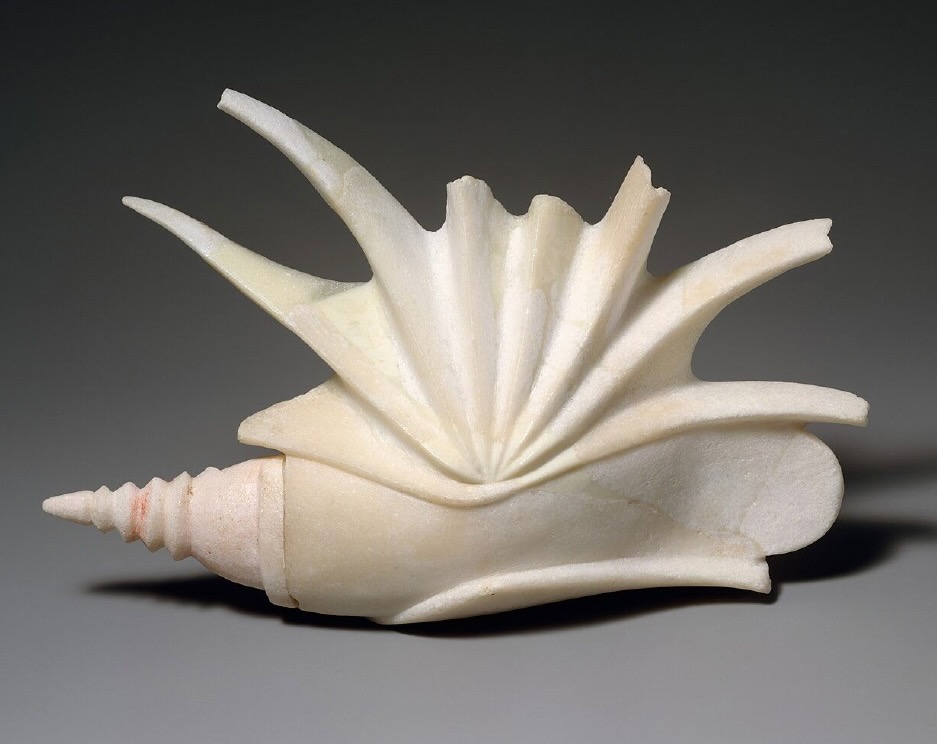
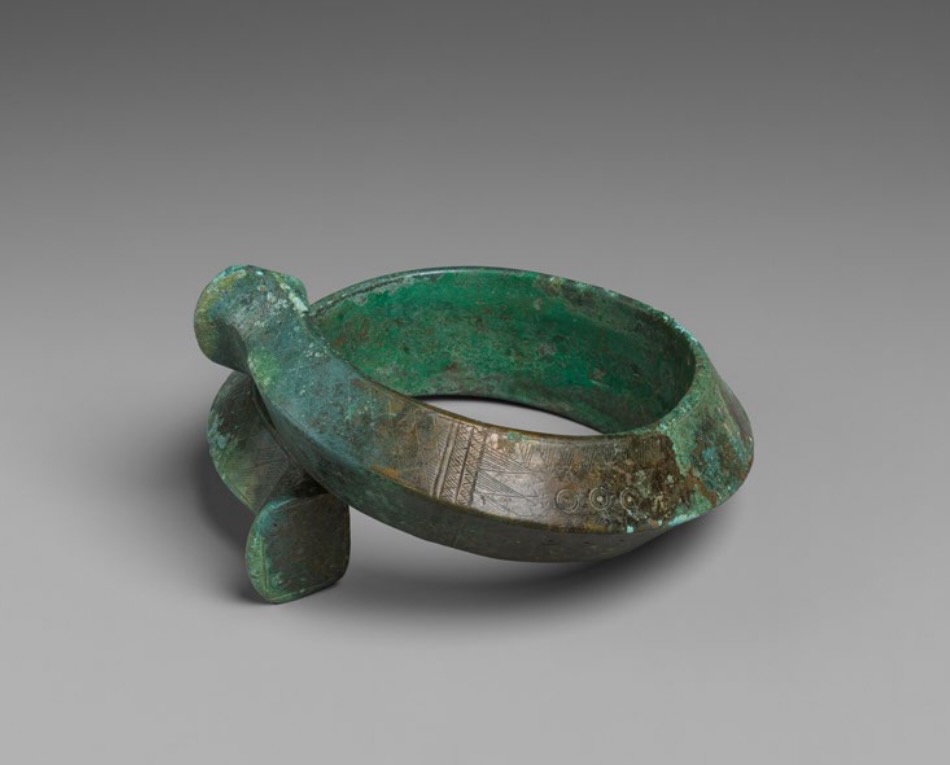
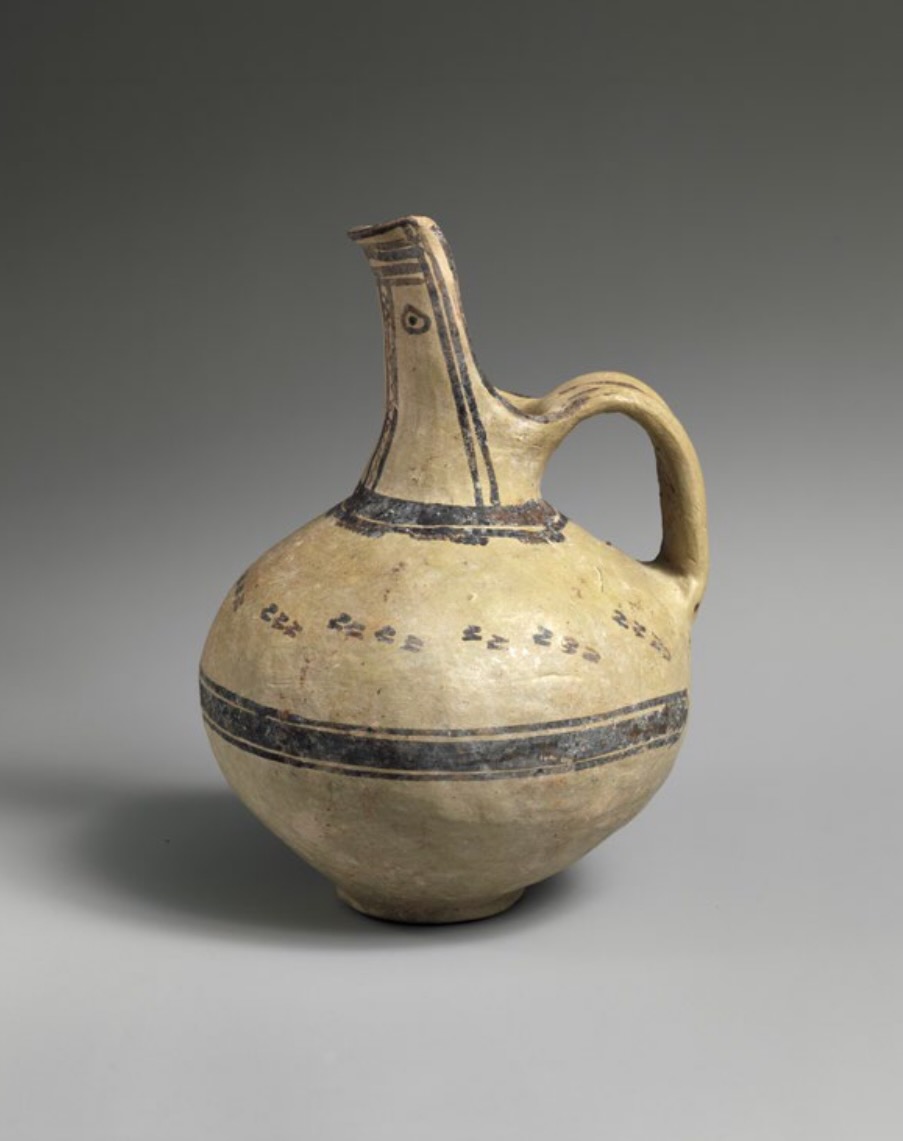
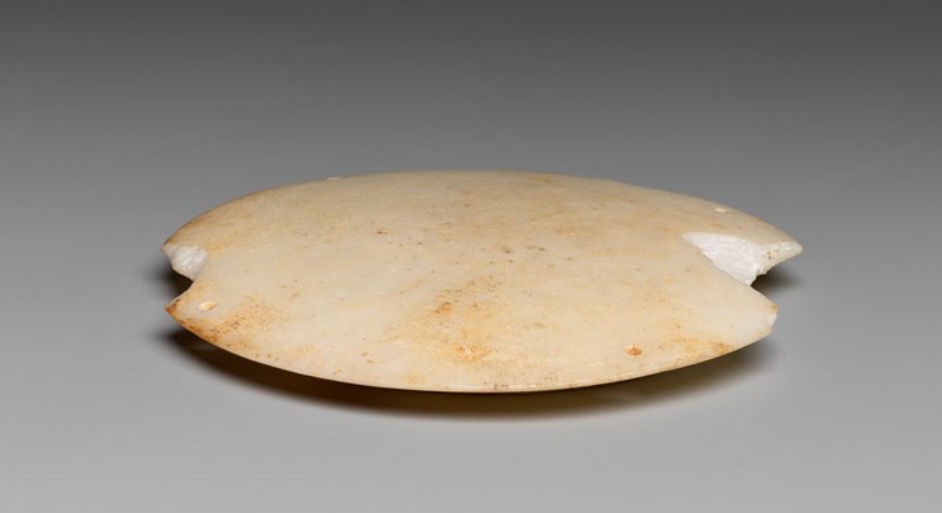
The artifacts span a particularly broad chronological range, from the Prehistoric and Early Mycenaean periods through the Archaic, Classical, and Hellenistic eras, extending to the Early Roman period (1st century AD). The antiquities include a Cycladic marble female figurine of the Spedos type (2700–2600 B.C.) and a marble compass cap (2700–2200 B.C.), as well as a clay spouted jug (1750–1700 B.C.). From the Archaic period comes a solid bronze bracelet with stippled decoration (7th–6th century B.C.), belonging to the category of so-called “Macedonian bronzes.” A marble spindle whorl dates to the Classical period, around 400 B.C., while a bronze mirror disc and a bronze water strainer, dating from between 350 and 300 B.C., belong to the Late Classical period. A gold necklace with an amphora-shaped pendant (125–120 B.C.) dates to the Hellenistic period. Finally, from the early Roman period, specifically the Julio-Claudian era (14–68 A.D.), a male head wearing a toga (a Roman garment), carved from exceptionally high-quality Parian marble, is dated to this period; it is believed to have depicted the Genius, the personification of the emperor’s spirit.
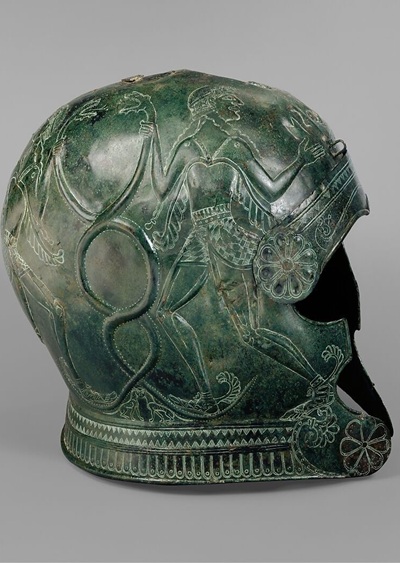
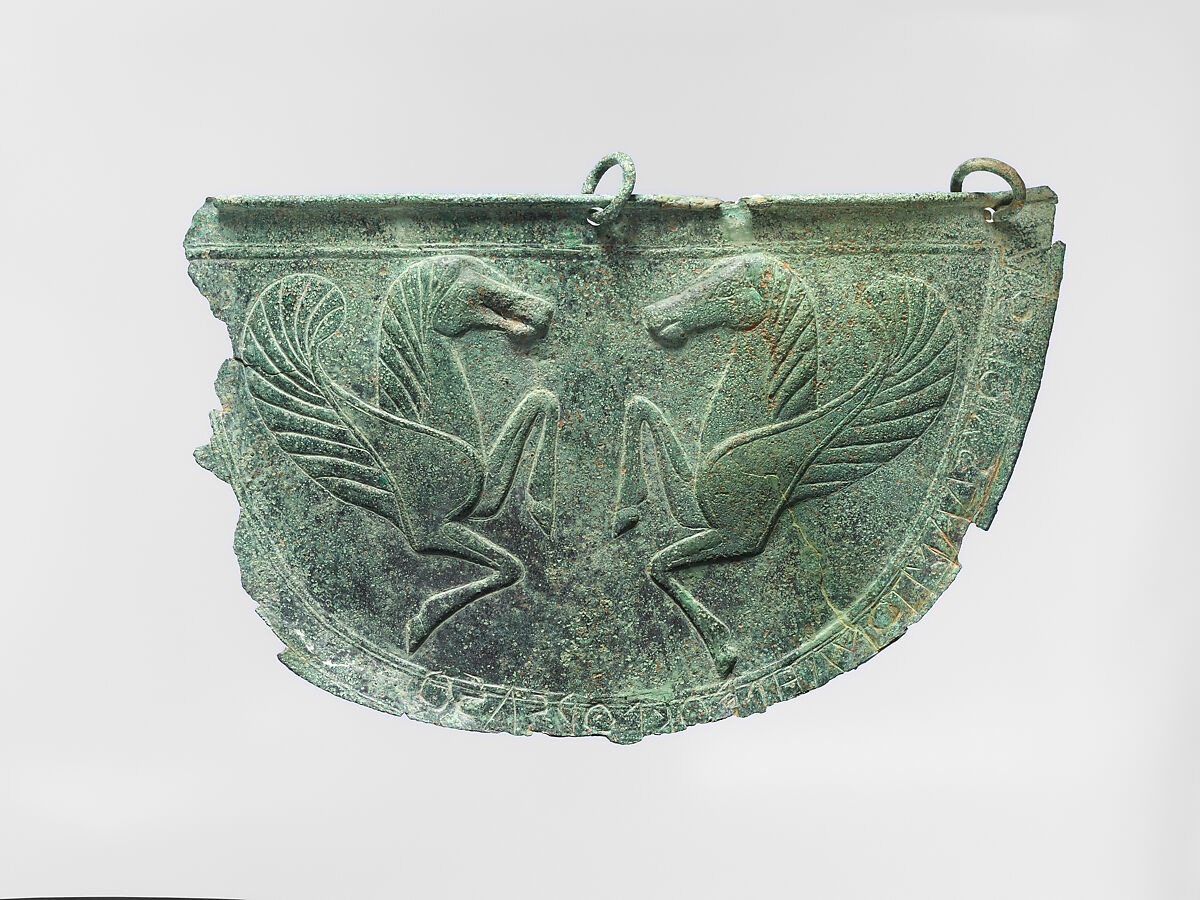
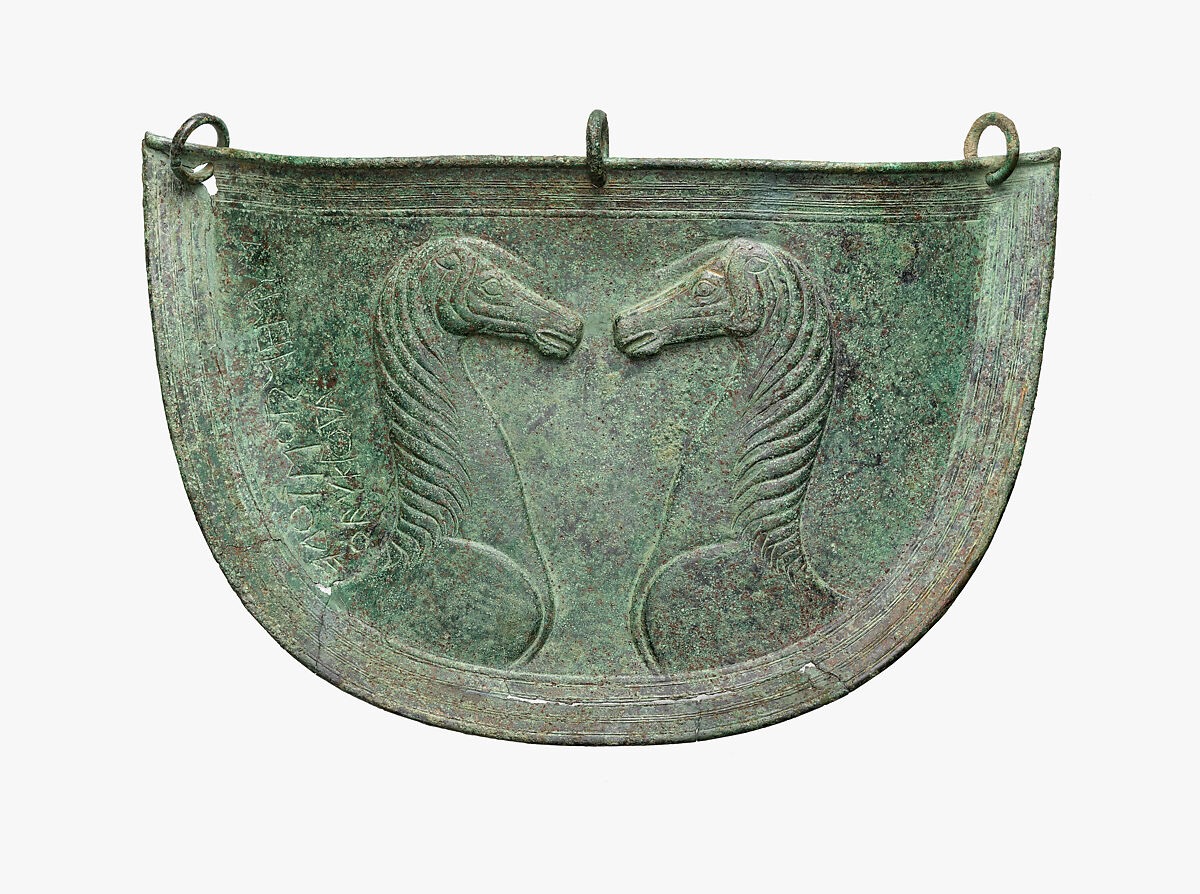
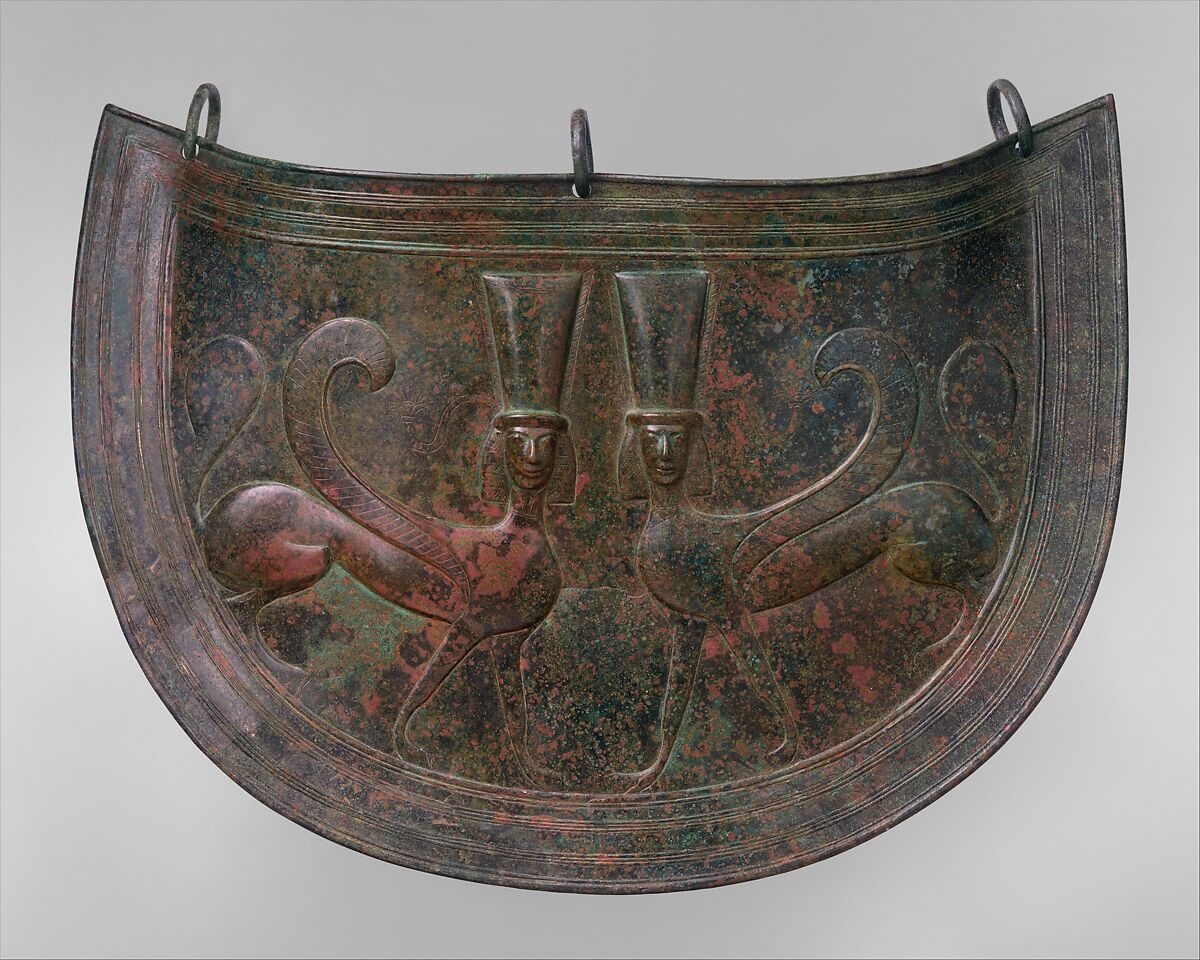
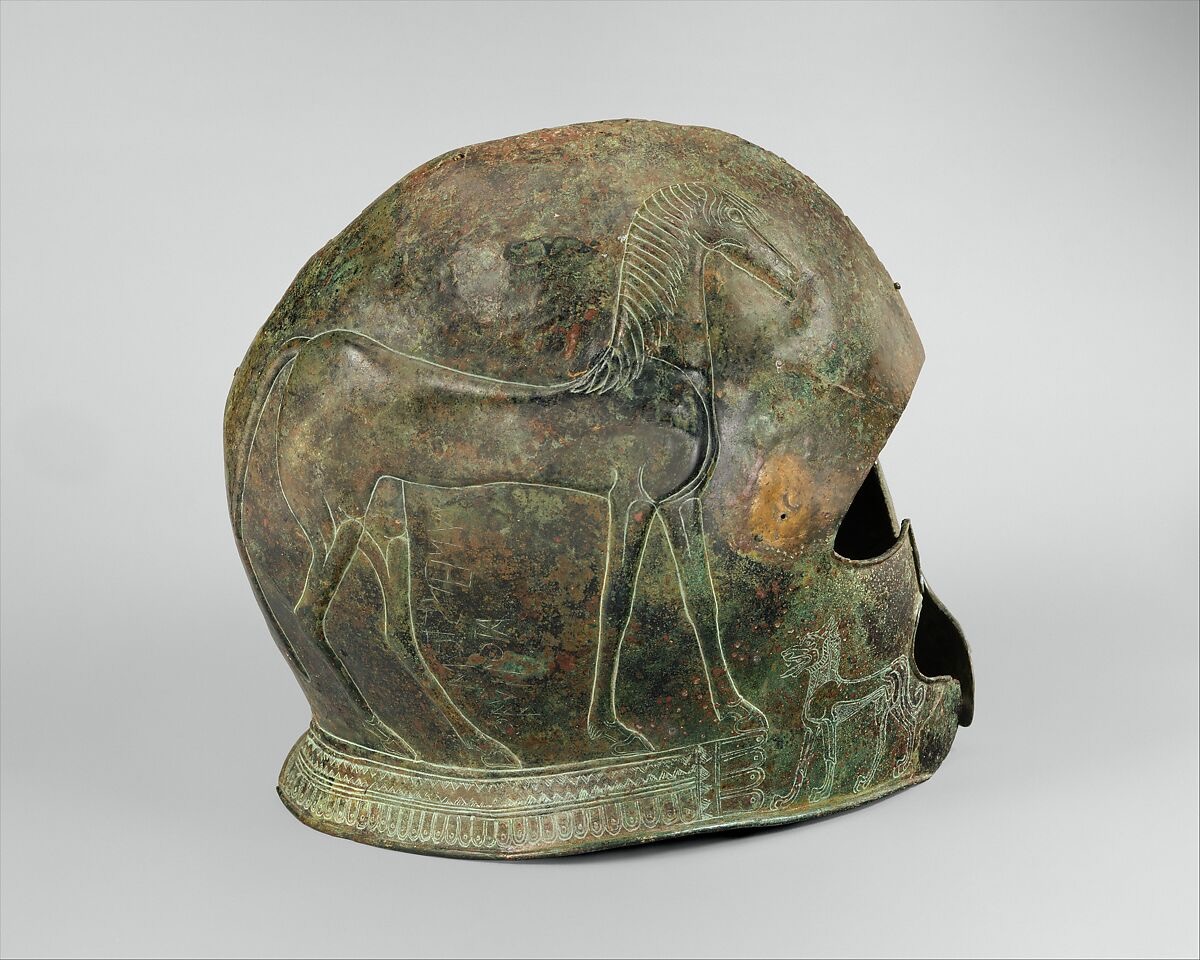
Of particular significance are five bronze items of military equipment—two helmets and three coifs with embossed decoration—dating to the late 7th century B.C. —which are documented as being linked to a large-scale illicit excavation carried out in 1964 at Afrati, Viannos, Heraklion, Crete. The Directorate for the Documentation and Protection of Cultural Assets of the Ministry of Culture documented the origin of the objects and the circumstances of the illegal excavation, drawing on archaeological and historical publications, archival material, documents, and telegrams from the relevant agencies to the police authorities, as well as evidence from seizures of antiquities carried out in the same area. The investigation made it possible to identify the objects and document their illegal trafficking outside Greece. Similar finds from the same illegal excavation had been seized by Greek authorities and are currently housed at the Archaeological Museum of Heraklion, a fact that now allows for the reunification of an important archaeological collection.
The ceremony for the repatriation of the antiquities took place in the presence of Catherine Dillon, U.S. Deputy Secretary of State for Educational and Cultural Affairs, Iphigenia Kanara, Consul General of Greece in New York; Vasso Papageorgiou, Director of the Directorate for Documentation and Protection of Cultural Assets; and officials from the Manhattan District Attorney’s Office and the Ministry of Culture.




Leave A Comment