By Panos Liakos
Classicist-Translator-Film Historian
The Cyprus Theater Organization’s (THOC) descent into the auditorium of the world’s most beautiful theater provided a perfect finale to this year’s Epidaurus Festival, presenting a play that we don’t often get to see performed. This play is none other than Euripides’ Ion (written during the Peace of Nicias, most likely in 413 B.C.), an ambiguous and utterly idiosyncratic blend of drama and absurdity, in which the great tragedian grapples with issues of identity, the search for truth (which constantly slips through the fingers of mortals), while introducing very early in the plot a dose of subtle irony that is brought out in a “Beckettian” manner by the director of this production, Thomas Moschopoulos.
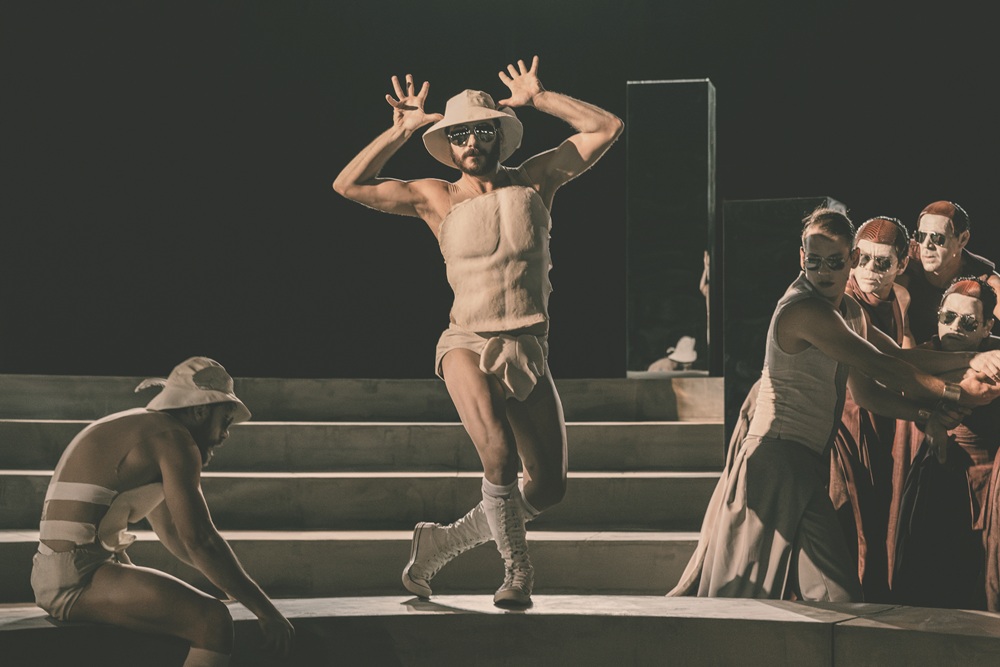
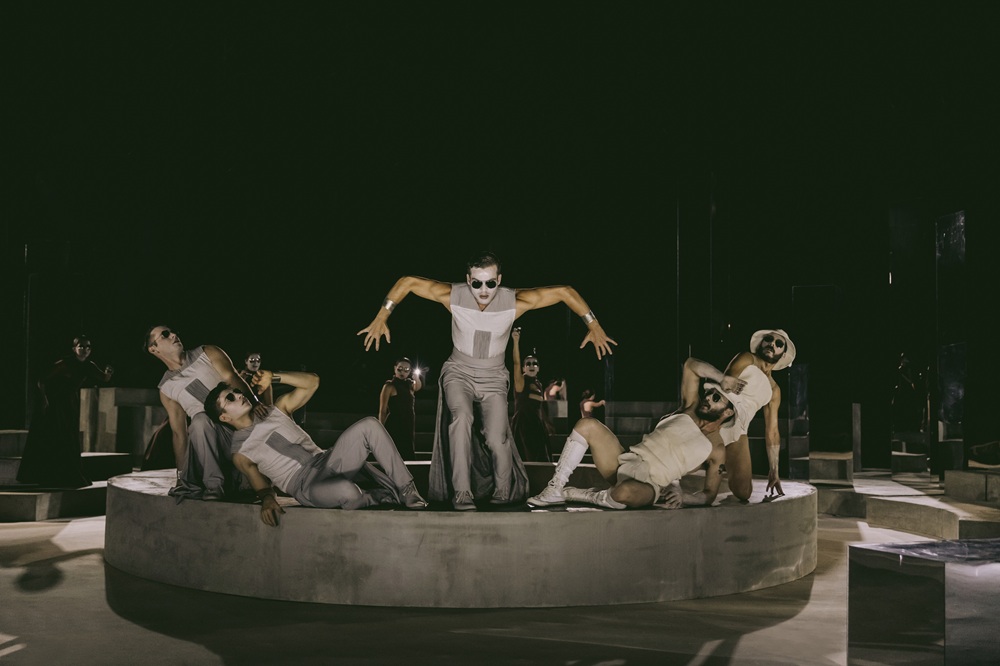
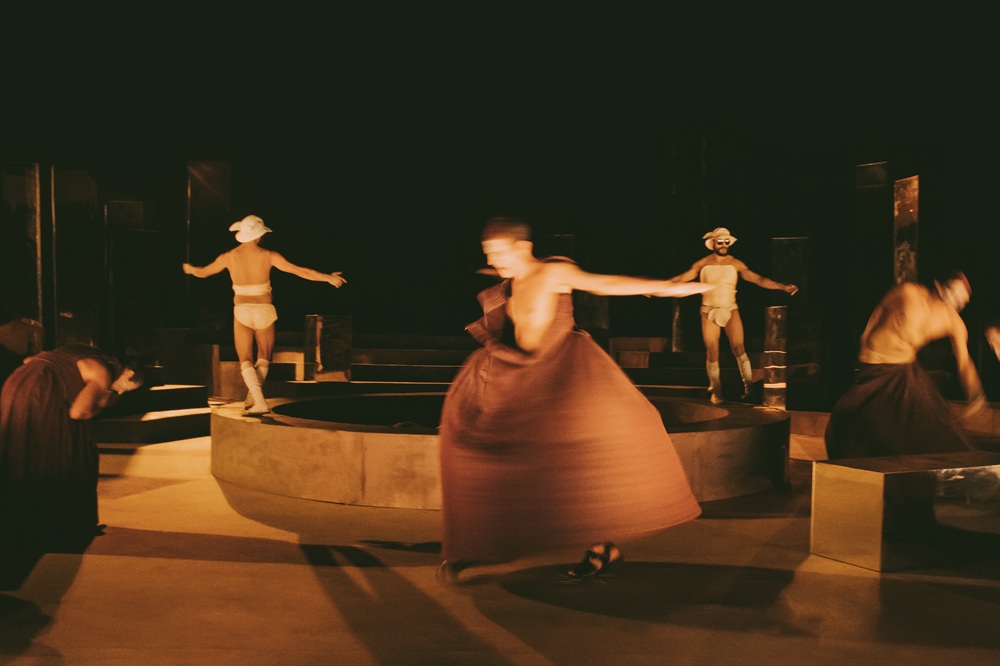
A set consisting of mirrors—inspired by Vasilis Papatsarouhas—reflects, on the one hand, the audience itself, which is captivated by the twists of fate and the gods’ intervention in events, and, on the other hand, signifies that multiplicity, the psychological twists and turns, and the reflection of one hero of the play onto another. In an abstract manner, this stage installation transports the audience’s imagination to Delphi, where Apollo delivers oracles from a golden tripod. Ion is also a humble servant of the temple, under the god’s protection ever since Hermes saved him as an abandoned infant—the product, as he was, of an unholy union between Apollo and Creusa. The noble lady abandoned the child, and now that she is married to Xuthus, they wonder if they will have children. Indeed, Xuthus very soon receives an oracle stating that the first person he meets upon leaving the temple will become his son. And, oh, what tragic irony! That person is Ion, who does not yet know whose child he is, and Creusa, too, will not initially suspect whom she is about to kill…
Ion… the coming one! The allure of the Greek language penetrates the viewer’s very being, when they encounter a translation like that of Thomas Moschopoulos, in which respect for the text’s original essence coexists with an almost ontological need for this text to communicate with the broad theater audience. I would venture to say that his rendition of Ion serves as a prime example of how a philological and a theatrical approach to ancient tragedy can be seamlessly integrated into a single performance. As the Chorus’s teaching unfolded and the secondary characters (Tutor, Athena), we felt at the ancient theater of Epidaurus that the choice of play was by no means random; for where Euripides leaves our thoughts suspended as we read the play on the page, Thomas Moschopoulos finds the right rhythm and balance, so that within the episodes of this play, melodrama coexists with the purely comic element in a perfectly symbiotic relationship.
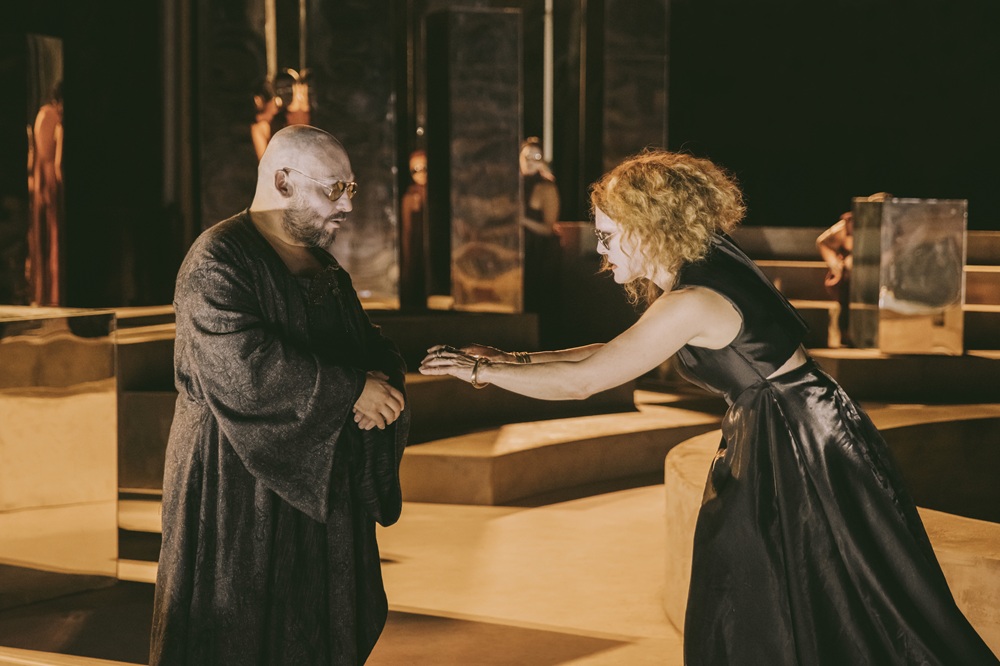
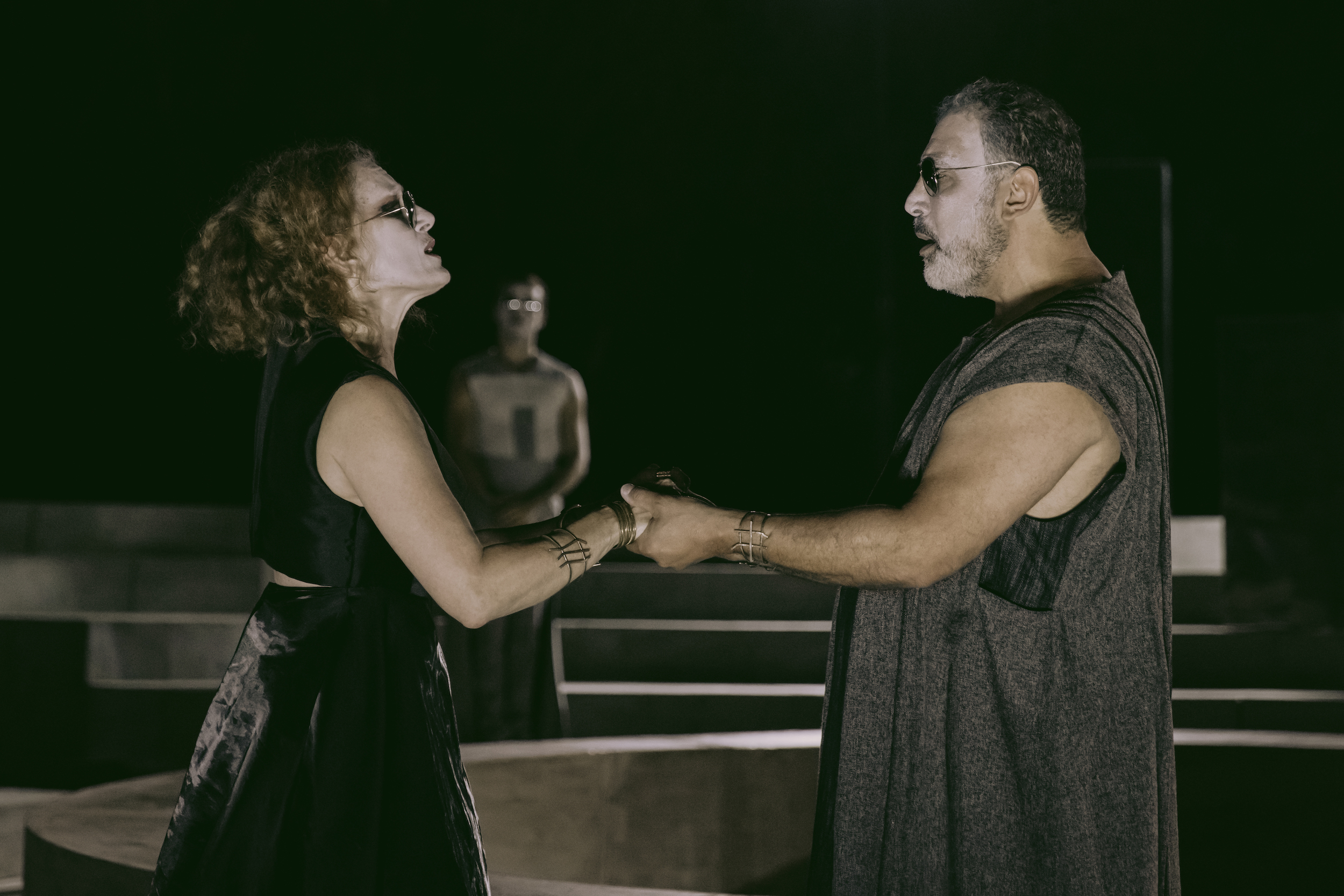
The performers, of course, follow the same tone, with Yannis Tsoumarakis surprising the audience in his introductory solo as Ion, and Thomas Moschopoulos helping him draw parallels with other Euripidean heroes, such as Hippolytus, and the comic digressions to his “father” Xuthus cement the audience’s sympathy for Ion. Stela Fyrogeni’s approach is subtle in a role that gradually builds toward the central revelation of Apollo’s sin and a scene of recognition (‘anagnorisis’) with Ion, where the audience’s tears now flow effortlessly down their cheeks.
From that point on, Neoklis Neokleous, as Xuthus, surprises the audience by approaching his hero’s personal tragedy as comedy, bringing to the surface the dimension of a false bliss secured for the hero by Athena’s “deus ex machina” appearance. Incidentally, Margarita Zachariou as Athena sparks our reflection on Euripides’ views regarding divine interventions, while the Machiavellian figure of the Old Tutor—as portrayed with inimitable restraint by Valentinos Kokkinos—is deeply etched in our memory.
“Ion” was a resounding success in a production that evoked the theater of a bygone era (in a good way), with the director’s views on issues concerning the interaction between the chorus and the actors clearly articulated (paying close attention even to the slightest movements and reactions of the chorus members during the exchanges between the characters), and an admirable balance between laughter and tears.
A masterpiece, and an exploration of how the audience can truly leave the ancient theater of Epidaurus feeling cleansed.
*Thomas Moschopoulos’s translation is available in an exceptionally elegant edition published by Nefeli Publications.
***Actors Yannis Tsoumarakis Ion, Stela Fyrogeni Creusa, Νeoklis Neokleous Xuthus, Valentinos Kokkinos Old Tutor
ChorusVasilis Athanasopoulos, Dimitris Antoniou, Ioannis Varvaressos, Grigoris Georgiou, Nikolas Grammatikopoulos, Maria Drakou, Margarita Zachariou, Ioanna Kordatou, Theofanis Kosmas, Andreas Koutsoftas, Marian Kyprianou, Dimitris Lagoutis, Pella Makrodimitri, Theophilos Manologlou, Athina Moustaka, Christos Papadopoulos, Christina Papadopoulou, Ioanna Papamichalopoulou, Chris Spyrou, Maria Tsiakka, Vasilis Charalambous




Leave A Comment