It is well known that lyric poetry knows no borders and that Sappho’s verses serve as a universal benchmark for love poetry and as a code of communication that transcends eras and cultures. It is, however, a special joy when Greek artists are invited to present their work at internationally recognized institutions and events.
Maria Zervos’ invitation to present her poetic and translational work at Grolier, America’s poetry bookstore, constitutes a significant distinction and, at the same time, a substantial bridge of cultural dialogue between lyric poetry and contemporary artistic creation.
Zervos approaches the translation of Sapphic fragments through her visual and cinematic practice, treating fragmentary lyric poetry as a sequence of images. For her, the fragments function as “film strips,” where each verse can be viewed as an autonomous shot, shaped by rhythm, emotional intensity, and the stimulation of the senses, rather than as a linear narrative.
Drawing on film theory and editing techniques she explored during her studies in the Film and Visual Studies program at Harvard University, Zervos approaches translation as a form of poetic cinema. Her goal is not only to render the original text linguistically, but also to activate the sensory and visual dimensions of the poems through Sapphic meter, pauses, and shifts in imagery.
Sappho, who lived approximately between 630–570 B.C. on Lesbos, is considered the most important lyric poet of antiquity. In contrast to epic poetry, which extolled collective ideals and heroic figures, her poetry turns toward introspection, emotion, memory, and longing, shaping a deeply personal and timeless poetic voice.
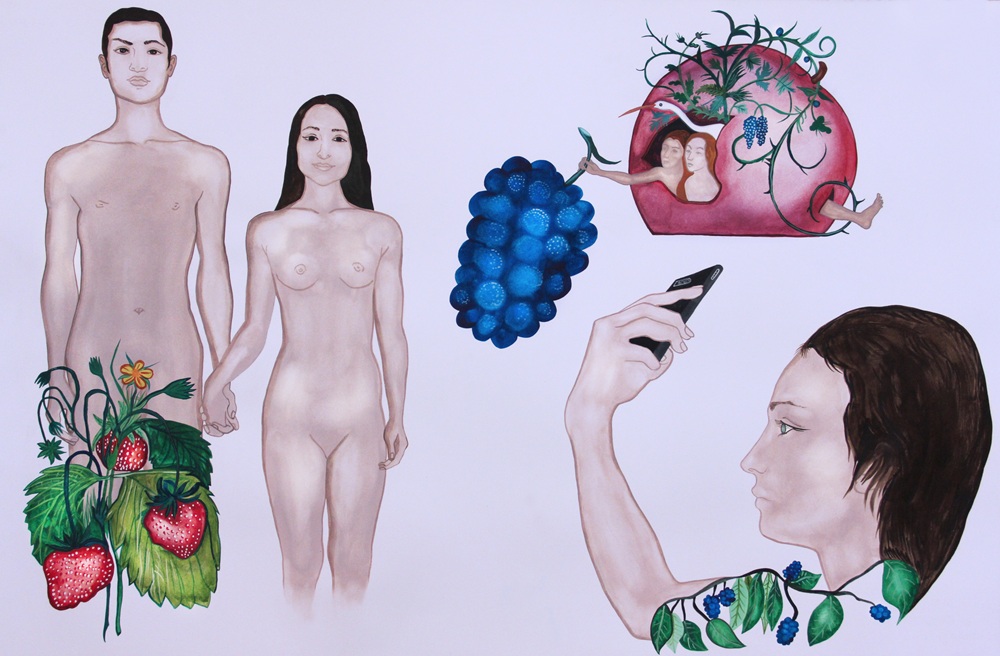
In Zervos’s translation, Sappho’s intensely personal voice is treated as an early form of self-portraiture, with direct parallels to the contemporary culture of the selfie. Zervos highlights the radical integration of the personal element into Sappho’s poetry, where the boundary between the individual and the collective, the inside and the outside, remains constantly fluid.
For Zervos, translation is not an isolated literary act, but an extension of her artistic exploration of personal and collective memory. Her work seeks to bridge ancient and modern forms of thought, proposing a reading of poetry as a moving image that transforms over time.
The introduction will be given by Fred Marchant, known for his work in contemporary poetry and his reflections on topics such as war, ethics, and memory. The event will also feature poet and translator Gary Whited, a renowned translator of the pre-Socratic philosophers, particularly Parmenides and Heraclitus. His translation of Parmenides’ fragments is included in the book Being, There (2023, Wayfarer Books).
The event will take place on June 11, 2026, at 7:00 p.m., at Grolier Poetry Bookstore (6 Plympton Street, Cambridge, Massachusetts) and simultaneously online via Zoom. Grolier is the oldest operating poetry bookstore in the United States.
The event will be conducted in English. More information and registration: https://lp.constantcontactpages.com/ev/reg/w6e3vc5/lp/31e7a289-aa5e-481c-89e7 f4da9c80fb3a
Bio
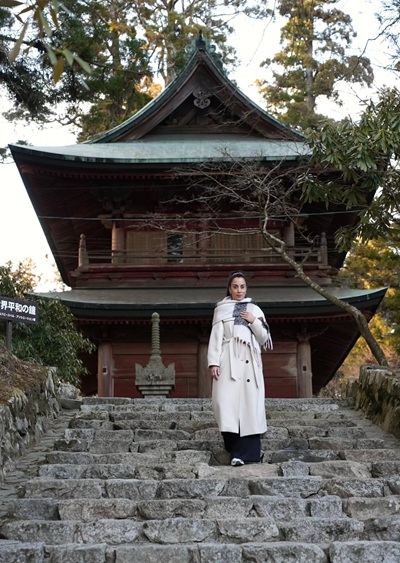
Maria Zervos is a visual artist, performer, poet, and translator. She lives and works in Athens. She studied visual arts and creative writing in Athens, Amsterdam, and Boston.
Her work includes drawing, painting, video, installations, and performance, with her often starring in her video works. Through her work, she explores the tension between the personal and the political, fiction and documentary, setting the stage for socio-political critique.
Zervos has represented Greece abroad through participations, among others, in New York’s internationally renowned artist residency program, the International Studio & Curatorial Program (ISCP), in 2020 and 2017, as well as at Harvard University, where she was invited in 2012 as a Visiting Fellow with a Fulbright Foundation scholarship.
From 2014 to 2017, she taught video art and film theory at Harvard University and Emerson College in Boston.
She has directed more than thirty video works, including *Entopic Diaries: Geography of Home* (2026), The Camp (2020), and Peripatetics (Athens) (2016), and has presented her films, drawings, and video poems internationally. Her writings have been published in journals such as Peripheries (Harvard University Press), Salamander, and [φρμκ].
More information: www.maria-zervos.com

Leave A Comment