By Panos Liakos
Film Historian, Classicist, Translator
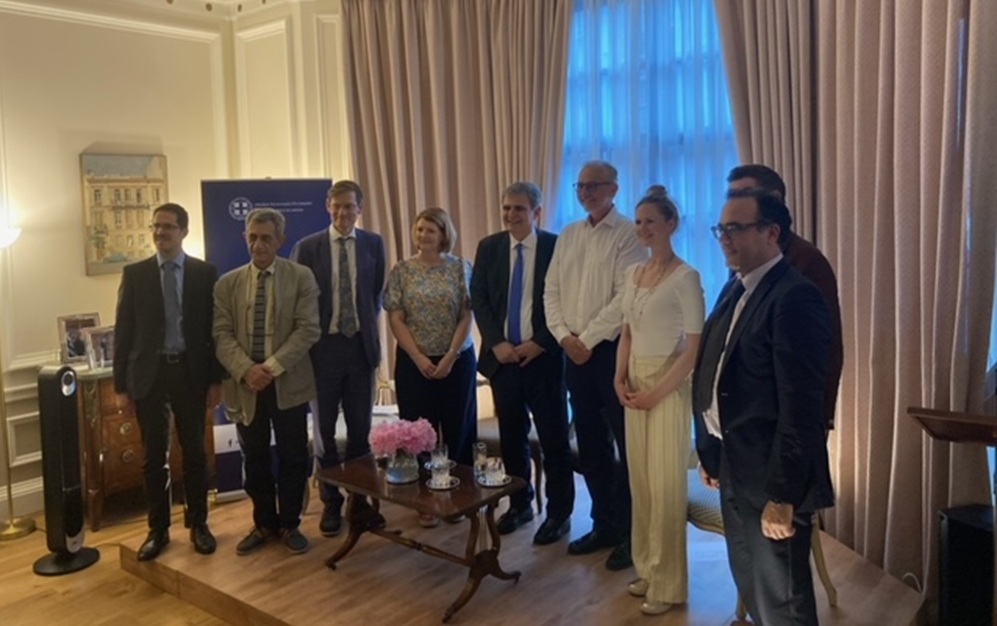
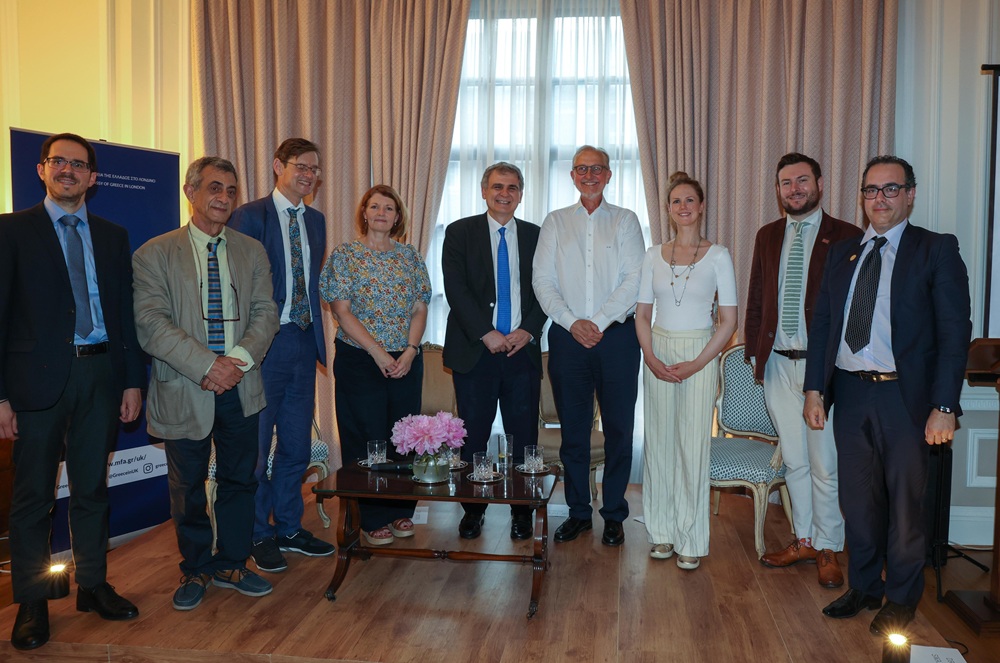
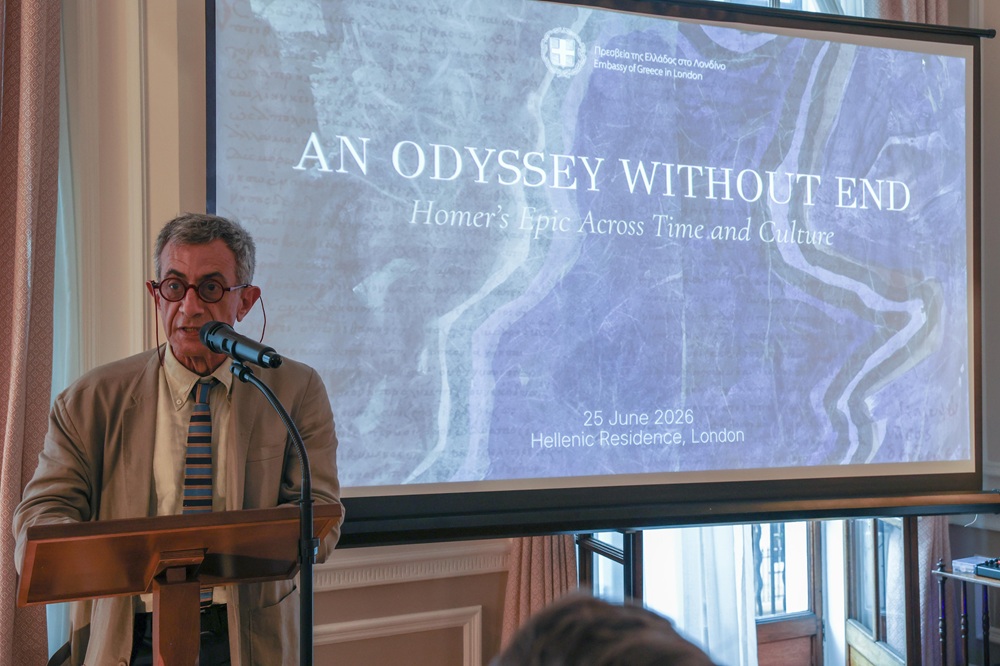
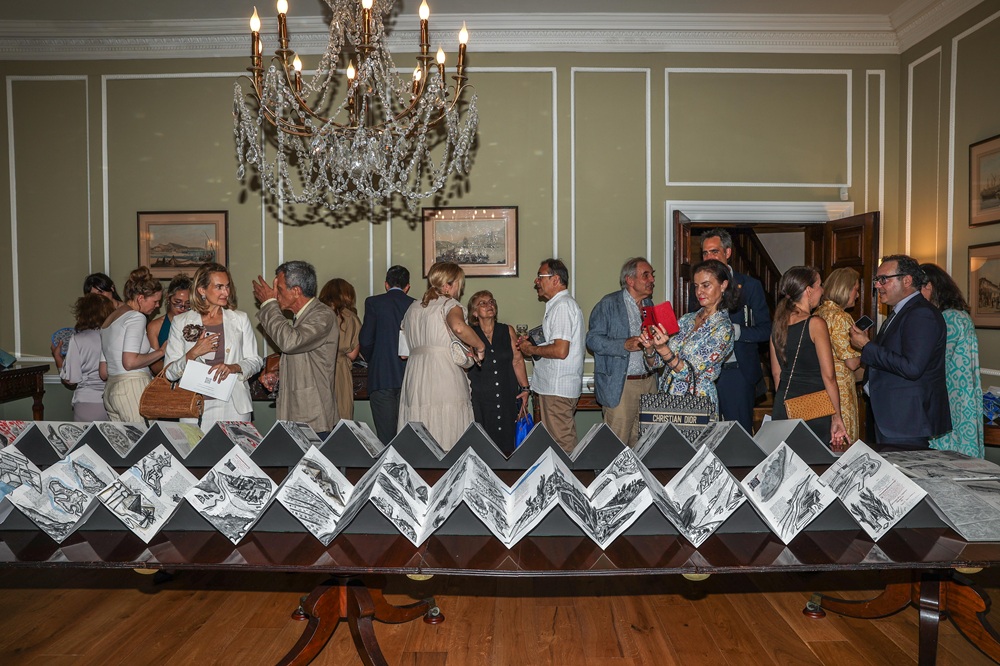
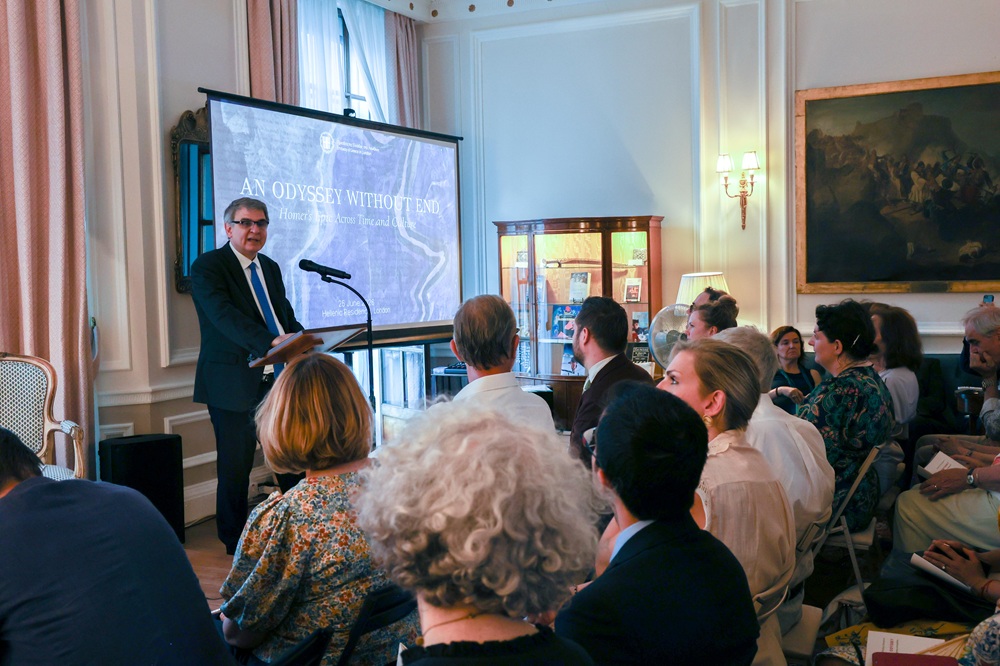
Braving temperatures that were unusually high for the season and by the city’s standards, people from academia, the media, artists, and staff of the Greek Embassy in London gathered on Thursday, June 25, 2026, at the Hellenic Residence, where, from June 26 through July 3, the series of works by the prominent Greek visual artist Markos Kampanis, titled “Odyssey,” will be on display.
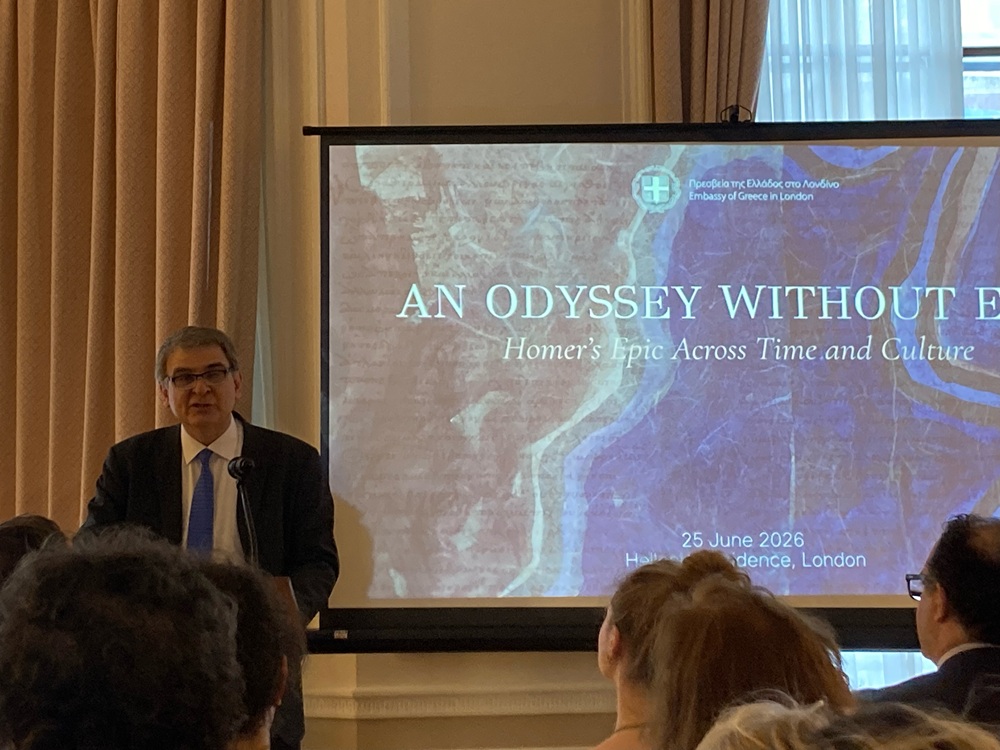
Ambassador Ioannis Tsaousis
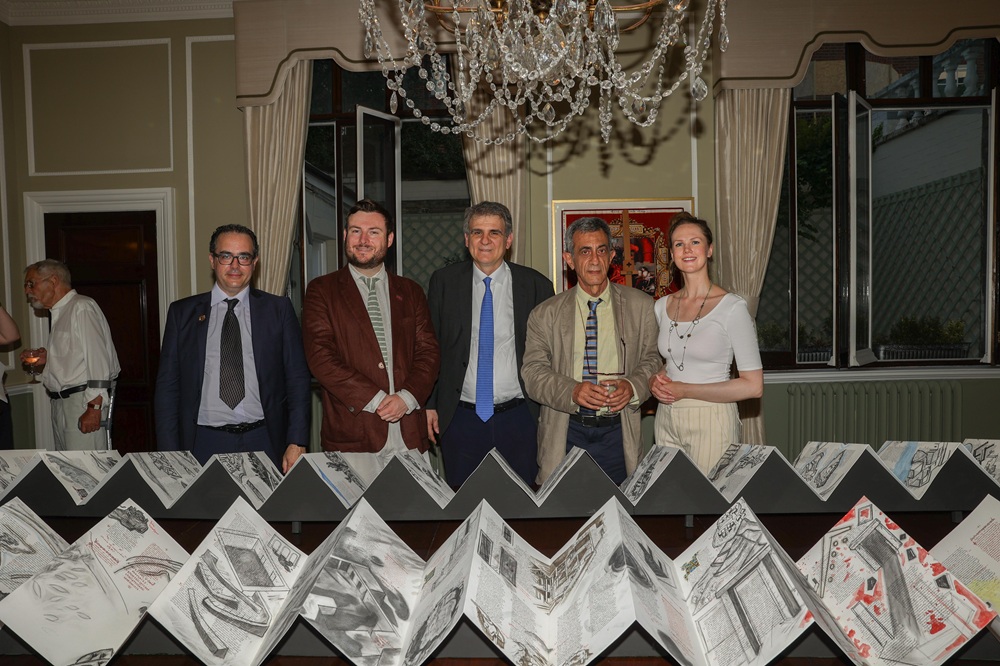
It was literally a multifaceted “vernissage,” as those of us in attendance enjoyed, on the one hand, an exceptional introduction by Ambassador Ioannis Tsaousis (who highlighted the significance of the Homeric symbol throughout the history of Greek poetry, from the works of Sophocles to Cavafy and Seferis) and, on the other hand, an insight into the world of Markos Kampanis through his own words. His body of work includes paintings, art books, and cartographic compositions, with the artist noting—something we indeed observed in the exhibition of his works at the Hellenic Residence—that what mattered to him was the “journey” through different art forms, with a unique artistic “odyssey” ultimately emerging and drawing the viewer’s gaze from one work to the next.
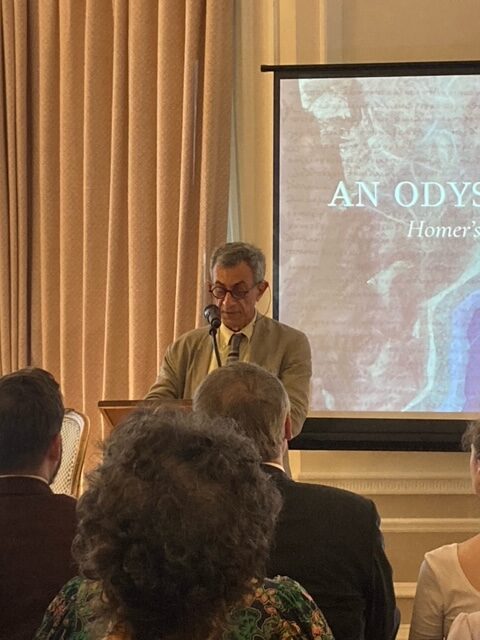
Visual Artist Markos Kampanis
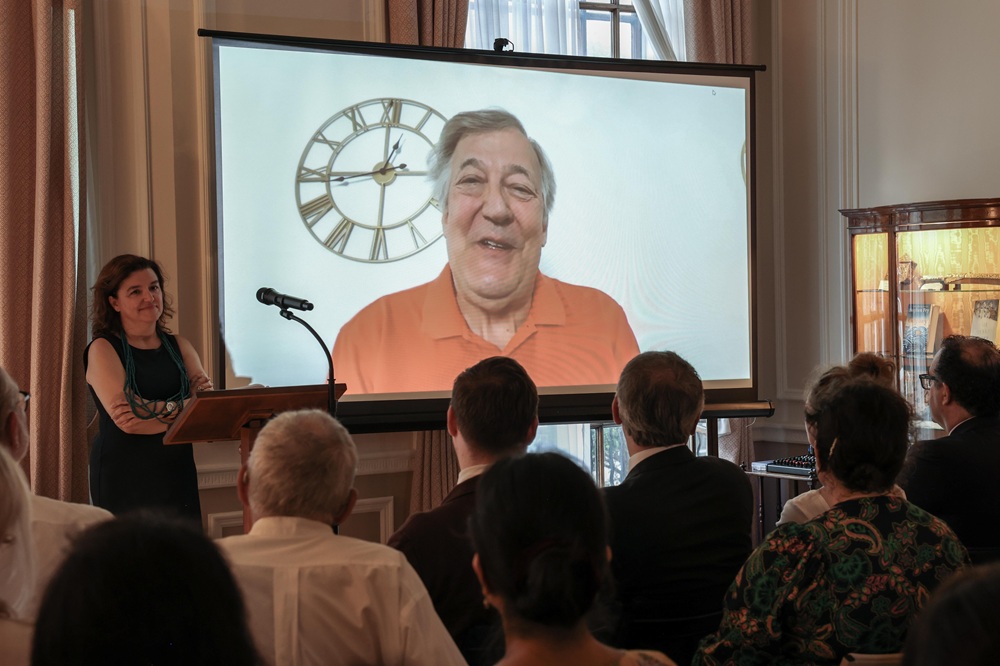
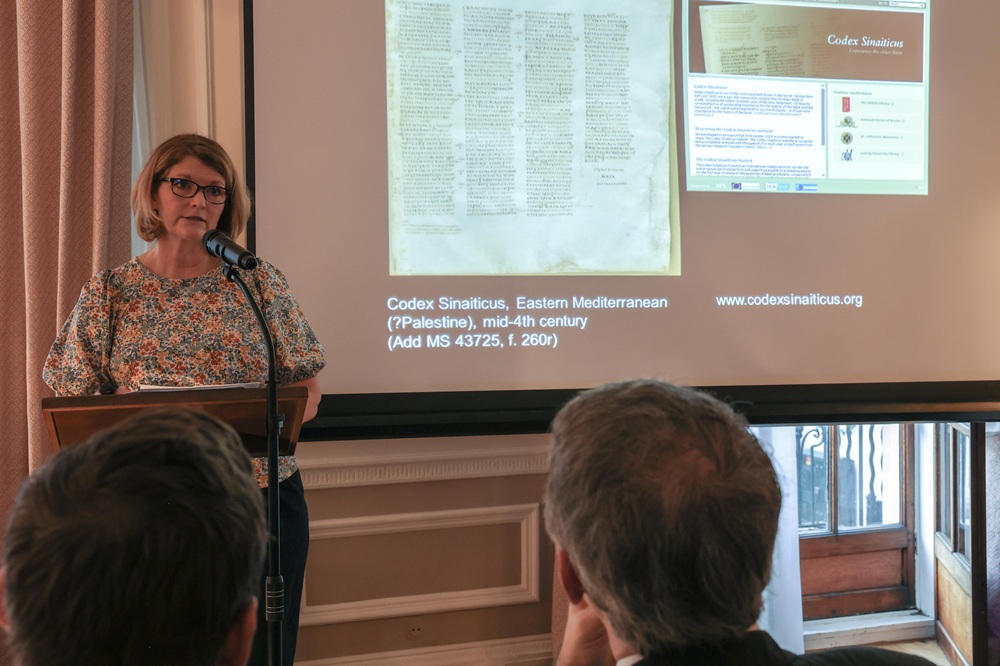
Next, in her brief but informative presentation, Dr. Andrea Clarke introduced the audience to some of the British Library’s treasures, with Homer’s work taking center stage, while Sir Stephen Fry greeted the event via a pre-recorded video message, expressing his admiration for the Homeric world, and in particular the way it weaves a narrative featuring gods, humans, and monsters, yet remains focused on the universal human issues it directly addresses. With a similar message, Emily Wilson, one of the most influential contemporary translators of the Odyssey, addressed the audience, expressing her love for Homer’s prose, which she was called upon to render in English verse.
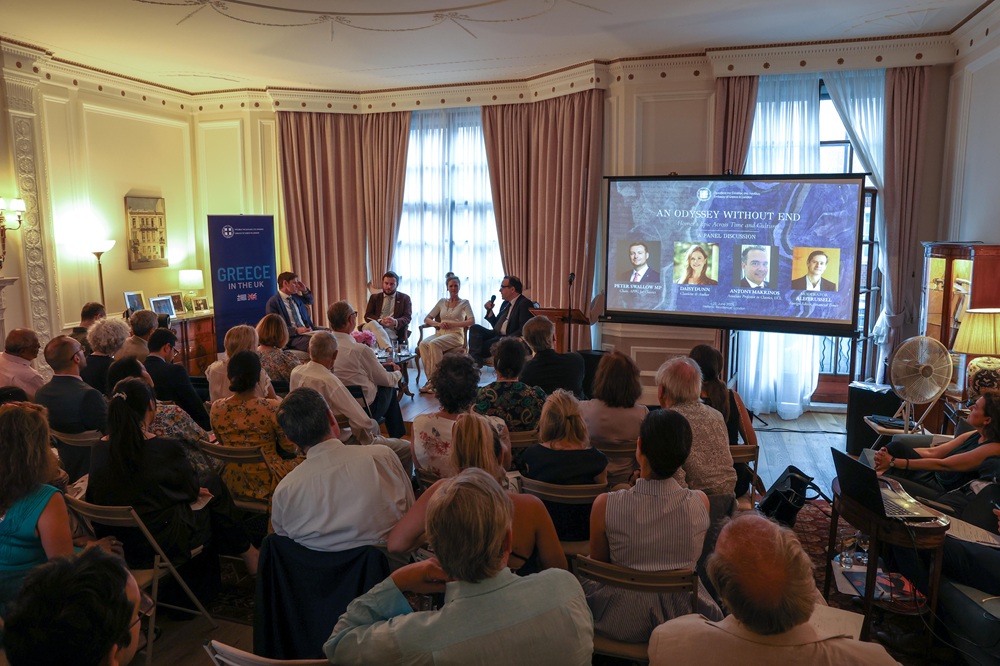
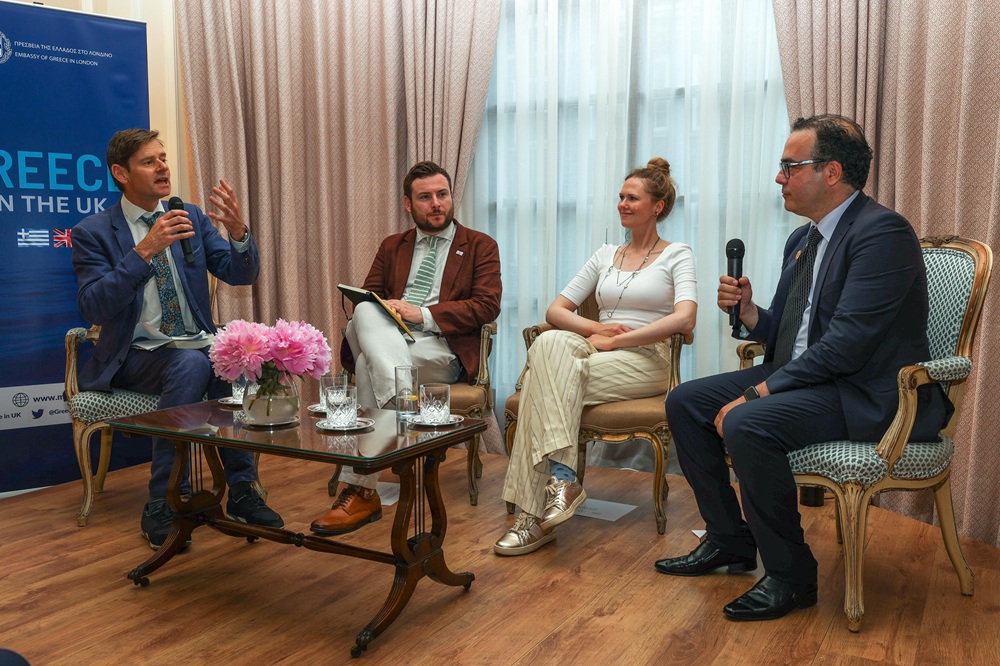
In the live panel discussion that followed, moderator Alec Russell (Foreign Editor, Financial Times) engaged in a stimulating conversation with Antony Makrinos (Associate Professor of Classics, UCL), Daisy Dunn (classicist and author), and Peter Swallow MP (Chair of the APPG for Classics) about the political dimension of Homer’s work. Professor Makrinos focused on the issues of governance that arise in Homer’s two works, while Daisy Dunn spoke about how she seeks to highlight the female perspective by engaging with Homeric archetypes in her writing. For his part, Peter Swallow, in an effort to solve the difficult equation of the contemporary British political scene, advised younger and more established politicians alike to return to The Odyssey.
Despite their differing perspectives, all the participants agreed that Odysseus’s timelessness as a symbol stems from his many facets, his unexplored dimensions, and, above all, from the way in which the human spirit can overcome life’s adversities.
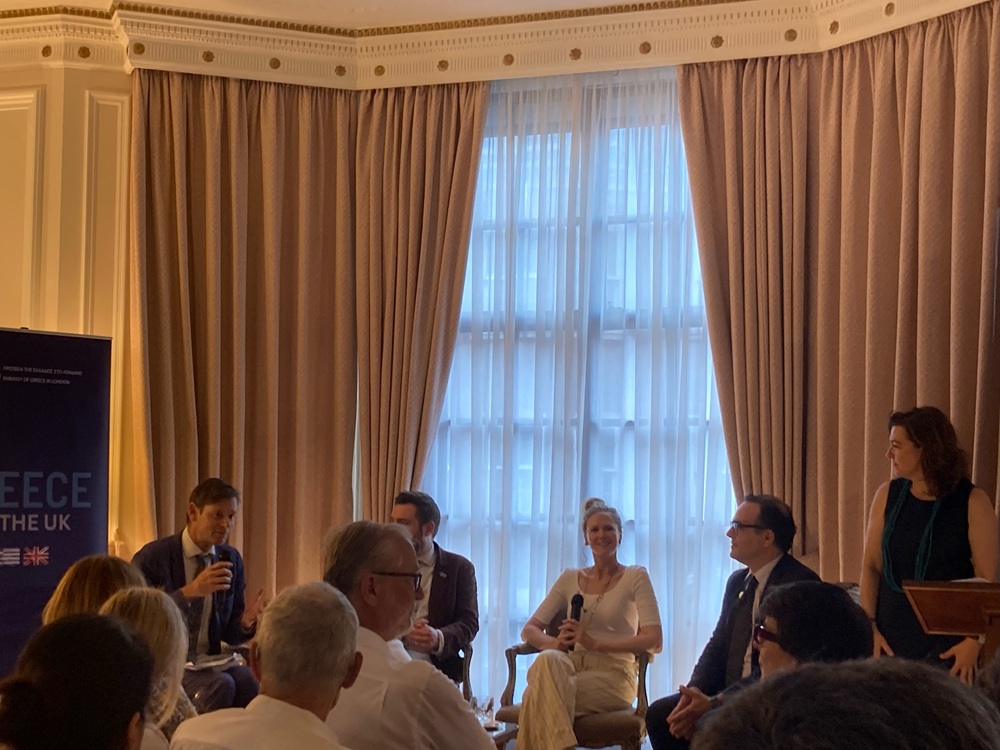
Panel moderator Alec Russell (Foreign Editor, Financial Times) speaks with Antony Makrinos (Associate Professor of Classics, UCL), Daisy Dunn (Classicist and Author), and Peter Swallow, MP (Chair, APPG for Classics).
Before we enjoyed Markos Kampanis’s exhibition and the fine products of Odysea, the evening was rounded out by a performance (experienced on video) of part of Tom Smail’s opera, also based on the adventures of Odysseus, with the audience giving a standing ovation to this opening that, in the midst of this peculiar summer, “refreshed” our souls with the waves that this immortal work continues to send out.





Leave A Comment