
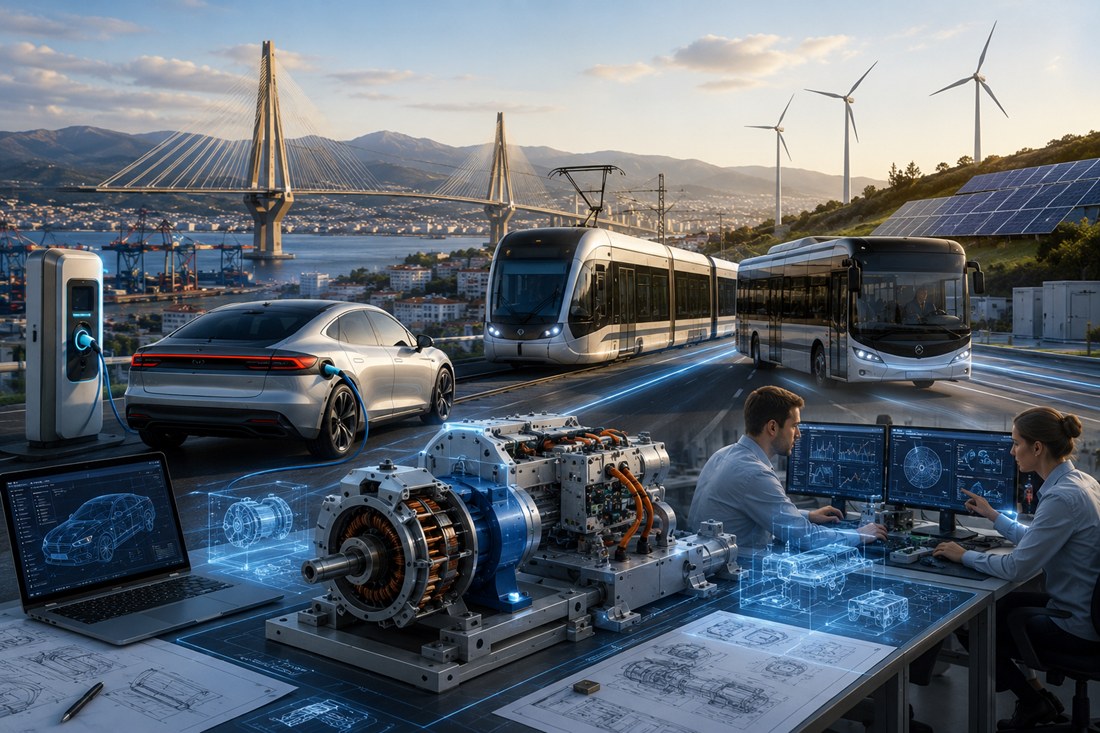
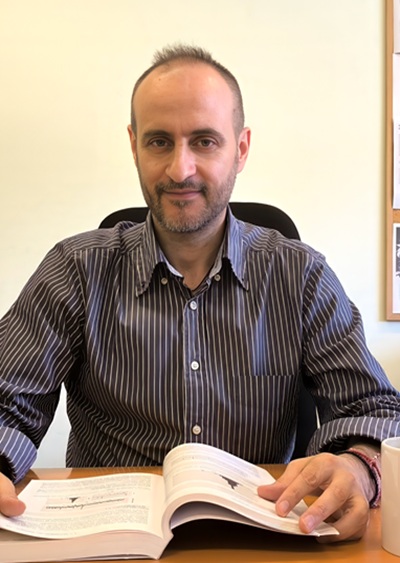
With regard to his interview with Days of Art in Greece, Yannis Karnavas, Director of the Interinstitutional English-language M.Sc. Program “Technological & Management Advances on Intelligent Transportation Electrification Systems” at Democritus University of Thrace and the National Technical University of Athens, speaks about the major technological transition toward electrification, the role of artificial intelligence in intelligent transportation systems, and the importance of a program that combines technical training, managerial skills, and research potential. He also highlights the opportunities this opens up for graduates, both in the labor market and in their academic and research careers.
In the discussion, Mr. Karnavas emphasizes that the master’s program does not merely provide specialized knowledge, but prepares scientists capable of actively participating in one of the most significant transformations of our time. He places particular emphasis on the convergence of electrification and artificial intelligence, on the need for tomorrow’s engineer to combine a strong theoretical background with digital skills, and on the importance of the energy transition, innovation, and international collaboration in shaping the technological future.
Days of Art in Greece: You are the Director of the Inter-Institutional English-taught Master’s Program “Technological & Management Advances on Intelligent Transportation Electrification Systems” at Democritus University of Thrace. What does attending this program mean for its graduates? What career opportunities does it offer, both in industry and academia?
Yannis Karnavas: Our Master’s program offers far more than specialized technical knowledge. It prepares scientists and engineers to actively contribute to one of the most significant technological transformations of our time: transportation electrification and the intelligent management of modern transportation systems. This is a rapidly evolving field that continuously creates new opportunities for highly qualified engineers and researchers.
The program combines advanced technological education with management competencies, covering areas such as electrical machines, power electronics, energy storage systems, artificial intelligence, intelligent transportation systems, and technology project management. This interdisciplinary approach directly addresses the needs of the global marketplace, where industries seek professionals capable of integrating technical expertise with innovation, strategic thinking, and effective decision-making.
Our graduates are well positioned to pursue careers in the electric mobility industry, automotive manufacturing, energy companies, research institutes, high-tech enterprises, and organizations developing sustainable mobility solutions. At the same time, the program provides a solid foundation for doctoral studies and academic research, both in Greece and internationally, by placing strong emphasis on scientific research, the solution of complex engineering challenges, and the creation of new knowledge.
I firmly believe that the greatest strength of our program is that it does not simply educate professionals for today’s job market. It develops engineers with an international outlook, scientific rigor, and the ability to lead the energy and digital transition. In a world characterized by continuous technological change, true value lies not merely in keeping pace with innovation, but in possessing the knowledge, vision, and leadership to shape the future.
D.A.: Your research interests also include the design, operation, and control of electrical machines. How would you characterize the future of this field in the era of Artificial Intelligence? What role will young scientists play?
Y.Κ.: For more than a century, electrical machines have been a cornerstone of industrial development. Today, however, we are entering a new era in which transportation electrification and Artificial Intelligence are no longer evolving independently. Instead, they are converging to create a new generation of intelligent electromechanical systems.
Artificial Intelligence will not replace the fundamental principles of electromagnetic design or control theory. Rather, it serves as a powerful catalyst for innovation. It enables the optimization of highly complex design problems, the development of intelligent control algorithms, predictive maintenance through advanced fault diagnosis, and the continuous adaptation of machine operation to real-world operating conditions. As a result, electrical machines are becoming more efficient, more reliable, and increasingly sustainable from an energy perspective.
This transformation is also redefining the role of the engineer. Tomorrow’s scientists and engineers will need far more than a solid understanding of electromagnetics or power electronics. They will be expected to integrate expertise in Artificial Intelligence, data analytics, advanced computational methods, and digital twins, while maintaining a strong foundation in the fundamental principles of engineering. True innovation will emerge from this multidisciplinary integration of knowledge.
I believe that today’s young scientists have an unprecedented opportunity. For the first time, they have access to tools that can accelerate research, design, and innovation to an extent that would have seemed unimaginable only a few years ago. The challenge, however, is to use Artificial Intelligence not as a substitute for scientific thinking, but as a means of enhancing it. Technology can generate answers quickly, but only a well-educated engineer can formulate the right questions. That will be the true competitive advantage of the next generation of researchers and innovators.
“I firmly believe that the greatest strength of our program is that it does not simply educate professionals for today’s job market. It develops engineers with an international outlook, scientific rigor, and the ability to lead the energy and digital transition.”
D.A.:What does energy efficiency mean today? Is the conversion of all energy sources into electricity a necessary prerequisite for the energy transition?
Y.Κ.:Today, the concept of energy efficiency extends far beyond simply reducing energy consumption. It encompasses the optimal utilization of every available energy source in a way that maximizes efficiency, minimizes environmental impact, and ensures both energy security and economic sustainability. In other words, it is no longer sufficient to consume less energy—we must use energy more intelligently.
Within this context, electricity plays a central role. While it is not necessarily the only energy carrier of the future, it is undoubtedly the most versatile. It can be generated from renewable energy sources, stored in advanced energy storage systems, transmitted with high efficiency, and utilized across a wide range of applications, from transportation and industry to smart buildings and modern power grids.
This does not imply that every energy source must inevitably be converted into electricity. In certain applications, hydrogen, synthetic fuels, or thermal energy may prove to be more efficient and practical solutions. Nevertheless, even in these cases, electricity typically serves as the common denominator, as it is essential for the production, management, conversion, and control of these energy carriers.
The real challenge of the coming decade is not simply replacing one fuel with another. It is about creating an integrated, intelligent, and interconnected energy ecosystem in which electricity, digitalization, and Artificial Intelligence work together to deliver higher efficiency, greater resilience, and long-term sustainability. This is the true essence of the energy transition, and it represents one of the greatest scientific, technological, and societal challenges of our time.
D.A.:Many people associate today’s technological revolution in electric vehicles with Elon Musk’s innovation. What would you say about the origins of this evolution and the future it points toward? Has science fiction become reality?
Y.Κ.: There is no doubt that Elon Musk has played a pivotal role in accelerating the commercial adoption of electric mobility and transforming the way society perceives electric vehicles. However, electrification is by no means a recent invention. The first electric carriages appeared as early as the late nineteenth century, while the fundamental principles of electrical machines and electric propulsion were established by pioneering scientists and engineers more than a century ago. What has truly changed in recent years is the convergence of multiple breakthrough technologies: advanced battery systems, power electronics, Artificial Intelligence, sensors, high-performance computing, and digital communications.
In reality, the vehicle of the future will be much more than an electric vehicle. It will function as an intelligent energy system, capable of interacting with the power grid, optimizing energy consumption, supporting advanced driver assistance and autonomous driving functions, and continuously improving through software updates. Increasingly, its value will be determined by the sophistication of its software and intelligent algorithms, while the importance of sound mechanical and electrical engineering design will remain fundamental.
I would argue that science fiction does not become reality because technology imitates imagination. Rather, science progressively transforms imagination into engineering reality. Concepts that seemed impossible only a few decades ago are now the subject of cutting-edge research laboratories and industrial innovation.
Most importantly, however, the next major technological breakthrough will not emerge from a single individual or a single company. It will arise from the collaboration of universities, research institutions, and industry. This is where the future of intelligent mobility is being shaped, and where the next generation of scientists and engineers will play a decisive role—transforming scientific knowledge into technological innovation and innovation into tangible societal progress.
D.A.: What could a faster transition to electric mobility, driven by Artificial Intelligence, mean for our country? Does Greece have the potential to expand its industrial production? What advice would you give to graduates of this Master’s program?
Y.Κ.: The transition to electric mobility and the integration of Artificial Intelligence represent far more than a technological evolution—they constitute a major development opportunity for our country. Greece does not need to compete with nations that have a long-established tradition in large-scale manufacturing. Instead, it can establish a strong position in high-value-added sectors such as advanced electrical system design, power electronics, embedded software, intelligent control algorithms, smart energy networks, and AI-driven applications for transportation and energy systems.
Greece’s strategic geographical location, its highly qualified human capital, and the strong presence of universities and research institutions provide the foundation for building a dynamic innovation ecosystem. By strengthening collaboration among academia, industry, and government, we can attract investment, foster high-technology entrepreneurship, and develop products and services that are internationally competitive.
To the graduates of our Master’s program, I would offer one key piece of advice: never confine your thinking to the boundaries of a single discipline. The engineer of the future will combine deep technical expertise with digital competencies, a solid understanding of Artificial Intelligence, creativity, and an international perspective. Continue investing in knowledge, seek collaborations beyond national borders, and view every technological challenge as an opportunity for innovation.
Ultimately, Greece’s greatest competitive advantage is neither its natural resources nor its geographical position—it is its people. If we continue to invest in education, research, and collaboration, we will not merely adopt the technologies of the future; we will actively contribute to their development. That is the path toward a more competitive economy, a stronger innovation ecosystem, and a sustainable future driven by knowledge and technological excellence.
D.A.: Democritus University of Thrace is located in close proximity to major industrial production centers, a strong productive base, and a strategic transportation hub of national importance. How can this geographical advantage, combined with the expertise developed by your Department, enhance the international outreach of Greece’s productive sector and strengthen the University’s role?
Y.Κ.: The geographical location of Democritus University of Thrace represents a significant strategic advantage. Thrace lies at the crossroads of Southeastern Europe, connecting Greece with the Balkans, the Eastern Mediterranean, and the wider Black Sea region. At a time when transportation networks, energy systems, and supply chains are being fundamentally reshaped, this strategic position becomes increasingly valuable.
Universities today must serve as hubs of knowledge creation, technological advancement, and innovation. In our Department, we invest extensively in research on transportation electrification, intelligent energy systems, electrical machines, power electronics, and Artificial Intelligence. However, this knowledge should not remain confined within laboratories. It must be transferred to industry, transformed into innovative products, competitive services, and entrepreneurial initiatives that generate tangible economic and societal value.
Today, international outreach is measured not only by scientific publications or collaborations with leading universities, important as these are. It is equally reflected in a university’s ability to contribute directly to the economic and technological development of its region and the nation as a whole. Through research projects, industrial partnerships, technology transfer, and high-quality education, we can foster an innovation ecosystem that attracts investment, retains talented young scientists, and enhances the competitiveness of the Greek economy.
I firmly believe that the university of the future extends well beyond its traditional educational mission. It must act as a strategic partner for industry, society, and sustainable development. This is precisely the vision we pursue: an open, internationally connected university that transforms scientific excellence into technological innovation, industrial competitiveness, and long-term societal impact.
“My vision is of a Greece that does not simply follow technological developments but actively contributes to shaping them. A country that invests in its young scientists, in research, and in innovation, transforming knowledge into industrial growth, sustainable development, and social progress. Ultimately, the greatest strength of any nation lies not in its natural resources, but in its people and in the quality of their education.”
D.A.: You come from Volos, a region with a strong industrial tradition and a strategic transportation infrastructure. It is also closely connected to the agricultural heartland of Thessaly and has witnessed every stage of Greece’s industrial development, as well as the social struggles of both farmers and industrial workers. Where do you see freedom in transportation electrification, and what ideas, books, or works of art inspired you to pursue this career? How much freedom and dignity do you believe the new industrial revolution can bring? What are your concerns, and what is your vision?
Y.Κ.: Volos is a city that teaches you that progress is not an abstract concept. It is the result of knowledge, productivity, and human effort. Growing up in an environment where industry, the port, the Thessalian plain, and technology coexisted, I realized from an early age that engineering is not merely about machines—it is fundamentally about improving people’s lives.
To me, transportation electrification represents far more than a technological advancement. It reflects our determination to apply scientific knowledge in ways that increase efficiency, reduce environmental impact, and improve quality of life. The freedom offered by technology is not simply the freedom to travel differently; it is the freedom of a society to create knowledge, foster innovation, and shape its own future.
Throughout my career, I have been inspired more by scientific ideas than by individuals. The history of technology demonstrates that every major breakthrough has emerged when scientific curiosity met a genuine societal need. That principle remains equally valid today in the age of Artificial Intelligence.
Despite the extraordinary opportunities offered by the new industrial revolution, I also maintain a healthy sense of caution. Technology alone does not guarantee either freedom or prosperity. Without education, scientific integrity, ethical responsibility, and thoughtful governance, technological progress may widen inequalities or create new forms of dependency.
My vision is of a Greece that does not simply follow technological developments but actively contributes to shaping them. A country that invests in its young scientists, in research, and in innovation, transforming knowledge into industrial growth, sustainable development, and social progress. Ultimately, the greatest strength of any nation lies not in its natural resources, but in its people and in the quality of their education.




Leave A Comment