The Ministry of Culture’s “All of Greece, One Culture” initiative returns in 2027 for its eighth year. The central theme of this year’s event—through which artists and artistic groups are invited to create new, original works—is Euripides’ maxim “Blessed is he who has learned from history,” which lends itself to at least three interpretations:
- Happy is the one who knows history.
Happy is the one who can benefit from the lessons of history.
Truly rich is the one who has learned how to systematically explore the world.
The “All of Greece, One Culture” initiative, having established itself as a landmark on the country’s cultural map, continues to broaden the creative dialogue between cultural heritage and contemporary artistic expression. In its eighth edition, participants are invited to engage with their sources—historical, epigraphic, archival, and oral—and, above all, with the history of the venue that will host them, not as a backdrop or an occasion for celebration, but as a field of inquiry, given that every monument is a palimpsest of successive uses, destructions, and interpretations, and every viewer is a potential “histōr”: both witness and judge. The three interpretations of Euripides’ “Blessedness” define an equal number of indicative themes for the artistic proposals:
- Knowledge of history: The distance between an event and its narration, the tug-of-war between memory and oblivion, the aesthetic and stylistic dimensions of historical narrative, as well as the incorporation of voices that official accounts have left “out of the picture” (microhistory, oral testimony, “grassroots” history).
- The Lessons of History: The question “whether and how history teaches,” from Thucydides’ “ktēma es aei” to the pointed observations of Hegel, Nietzsche, and Benjamin’s “angel of history”—whenever the past is mobilized, embellished, or repeated.
- The exploration of the world: the Ionian “ἱστορίη,” Herodotus’s “ἱστορίης ἀπόδεξις,” the natural “histories” of Aristotle and Theophrastus, and the archaeological spade—as the foundations of a rational stance toward reality, in an era of post-truth, synthetic images, and algorithmic certainty, bringing the artist to the forefront as a researcher.
The Ministry of Culture and Sports’ 2027 Program “All of Greece, One Culture” consists of proposals to be selected by the Ministry of Culture’s Special Evaluation Committee, following an open call addressed to cultural organizations operating as Urban Non-Profit Organizations (AMKE) and have completed their incorporation by June 30, 2026.
Proposals will be submitted electronically through the Registry of Cultural Organizations (here) from Thursday, December 3, 2026, through Monday, January 11, 2027. Interested organizations can register by December 28, 2026, in the Ministry of Culture’s Registry of Cultural Organizations by following the steps provided here: Participating.
The deadline for registration is determined solely by the date on which the sworn registration statement is submitted to [email protected], and not by the date on which the organization’s identification document is submitted electronically.
Each proposal must combine at least two of the six areas:
- Music (all genres: classical, contemporary, traditional—world premieres, innovative concert formats, new media, etc.)
Theater (all genres: prose, puppet theater, shadow theater, etc.—if the secondary art form involves music, it must be original or an adaptation/paraphrase of existing music)
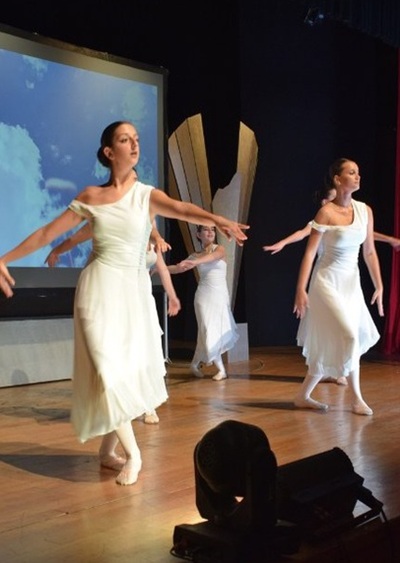
Dance (all genres: classical, contemporary, etc.—the music must be original)
Musical theater (original music required)
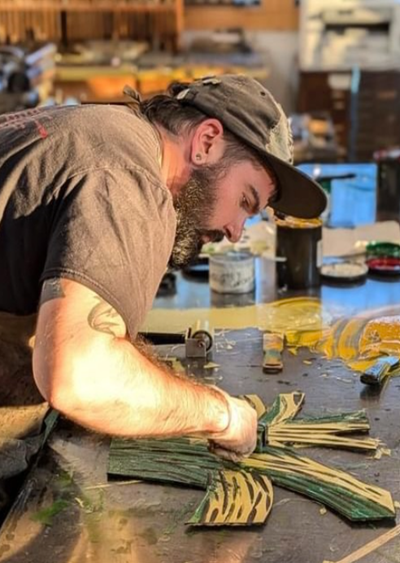
Visual arts / performance art (all genres: painting, sculpture, photography, etc.)
Performances / activities for children and adolescents
In visual arts proposals, the visual arts component may cover the entire duration of the program, while the second required art form will be presented up to two times.




Leave A Comment