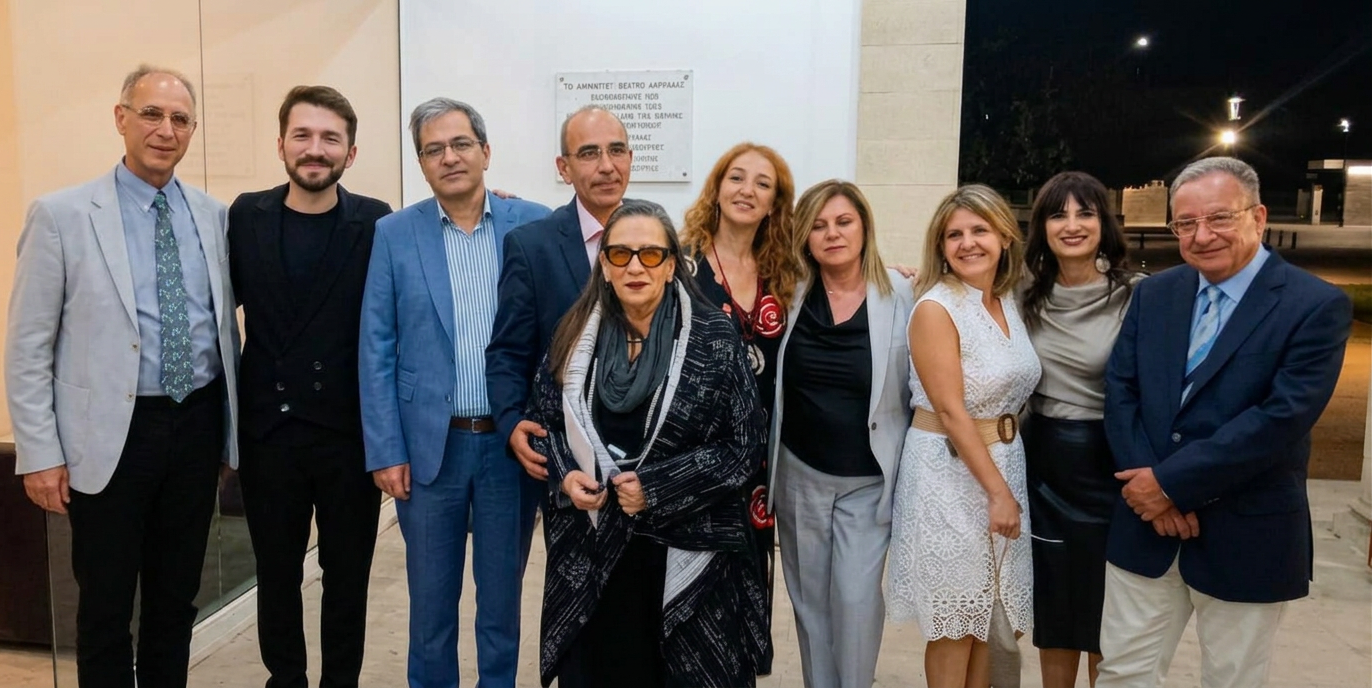
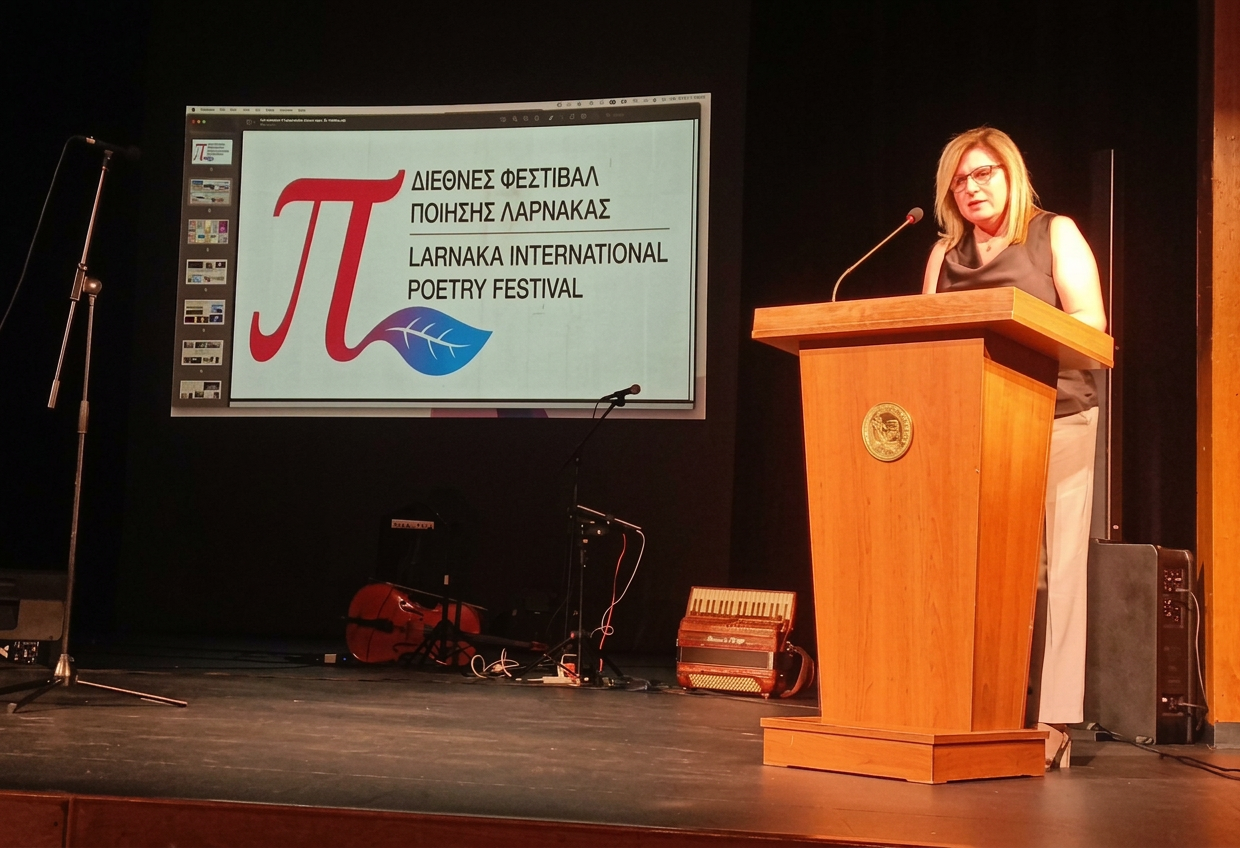
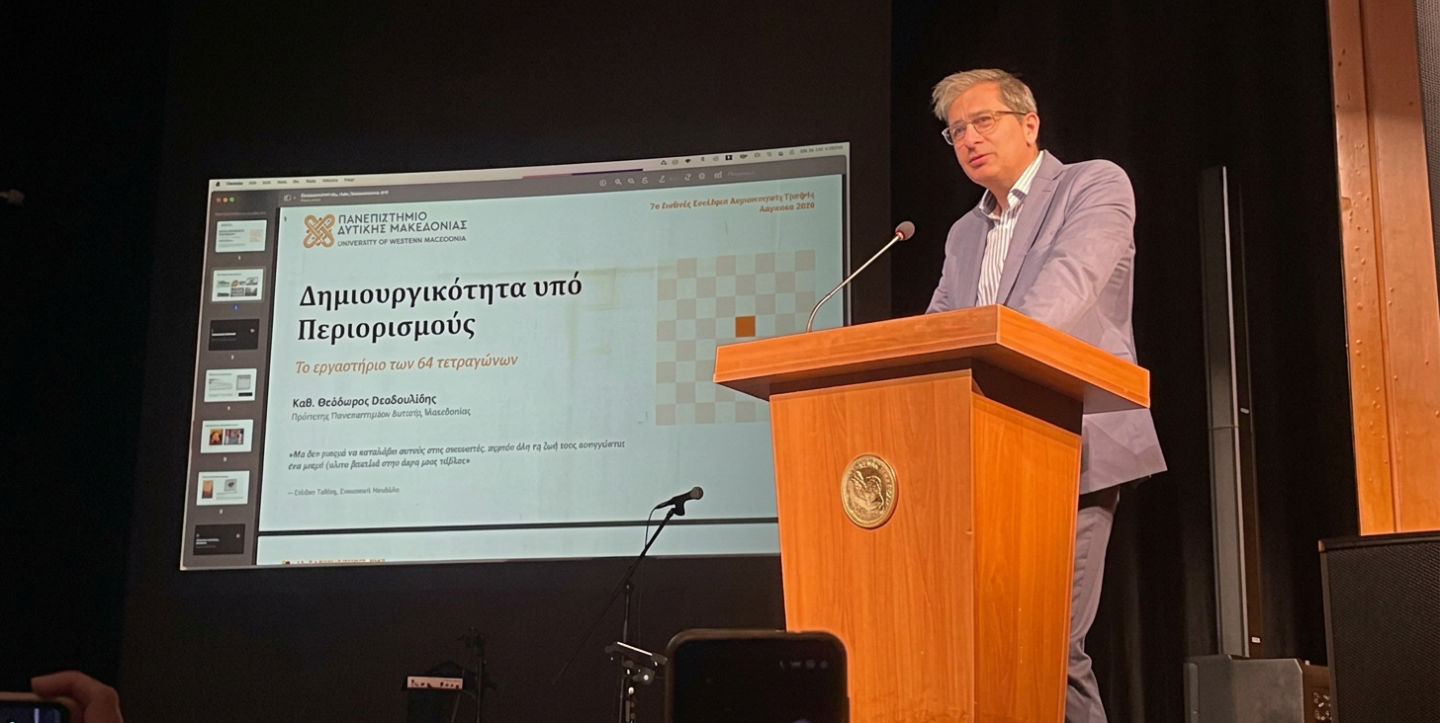
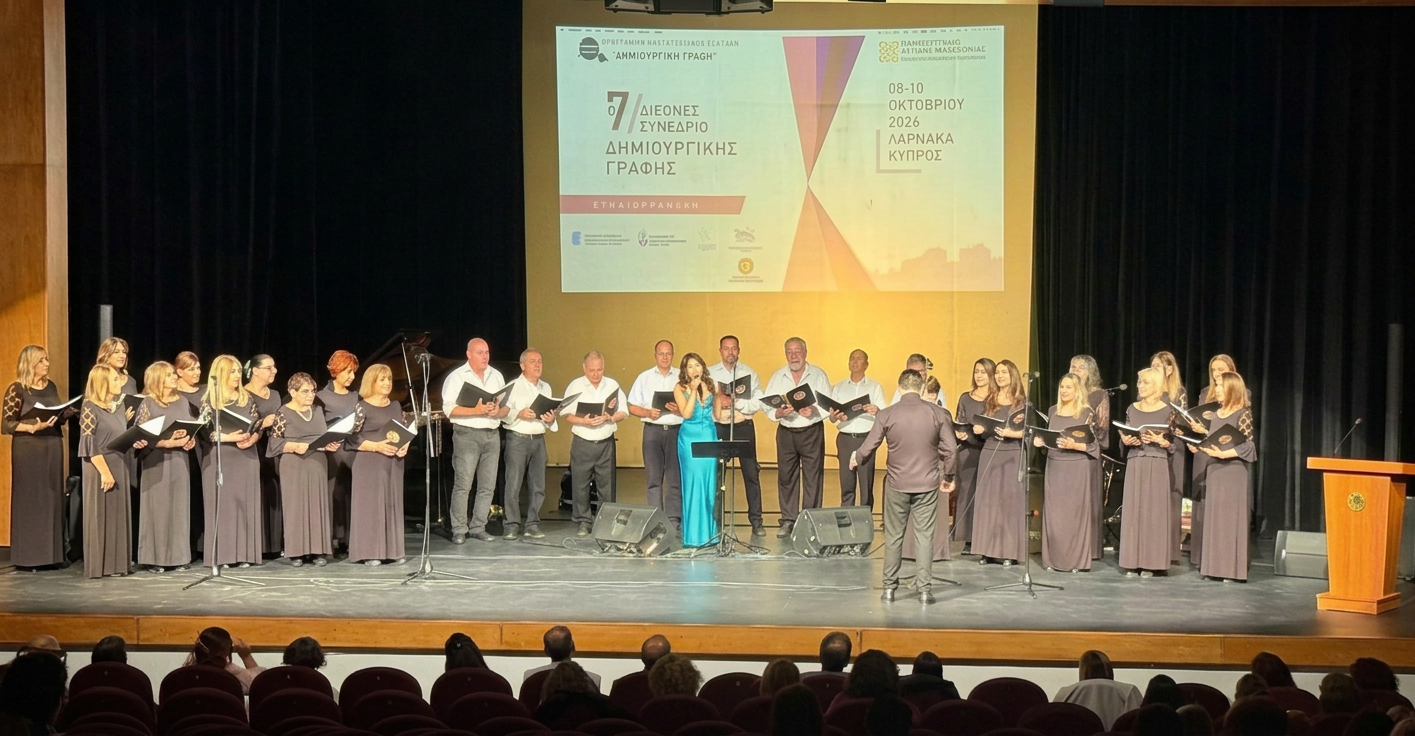
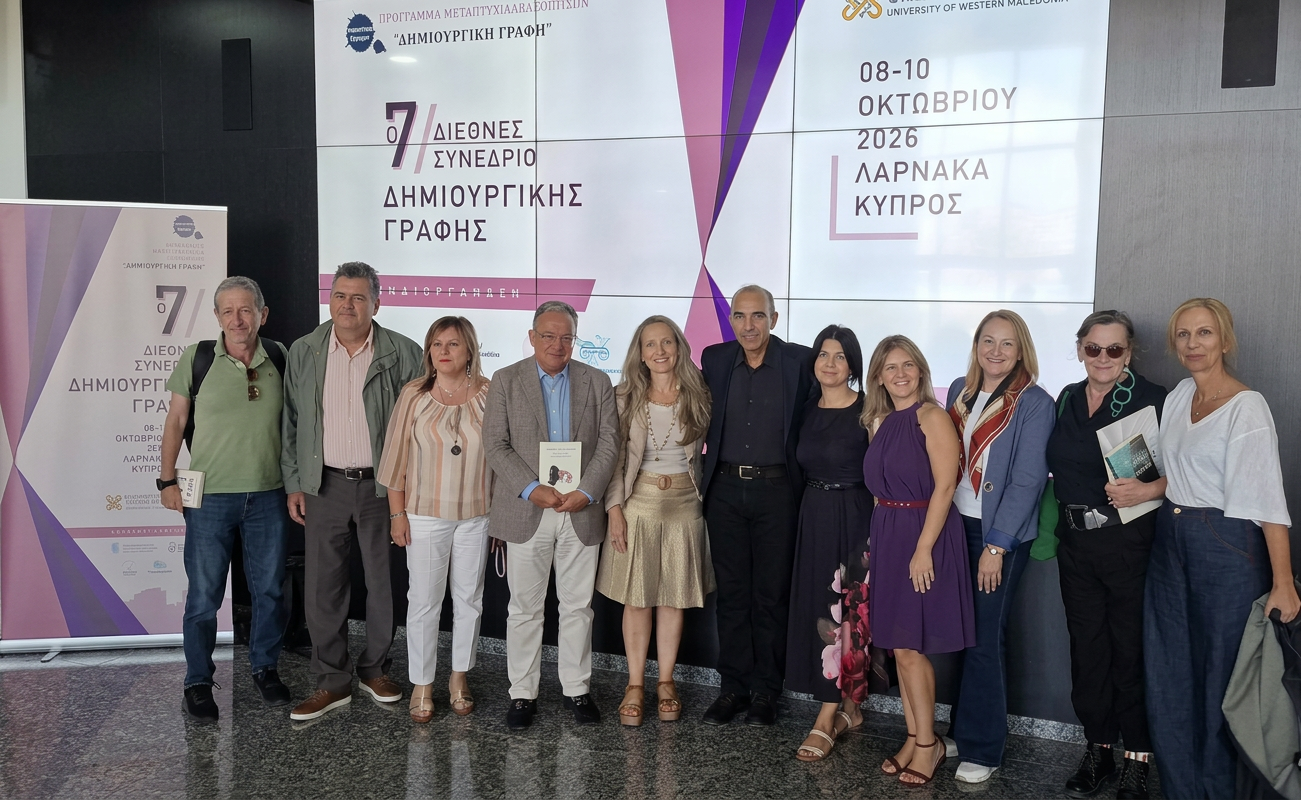
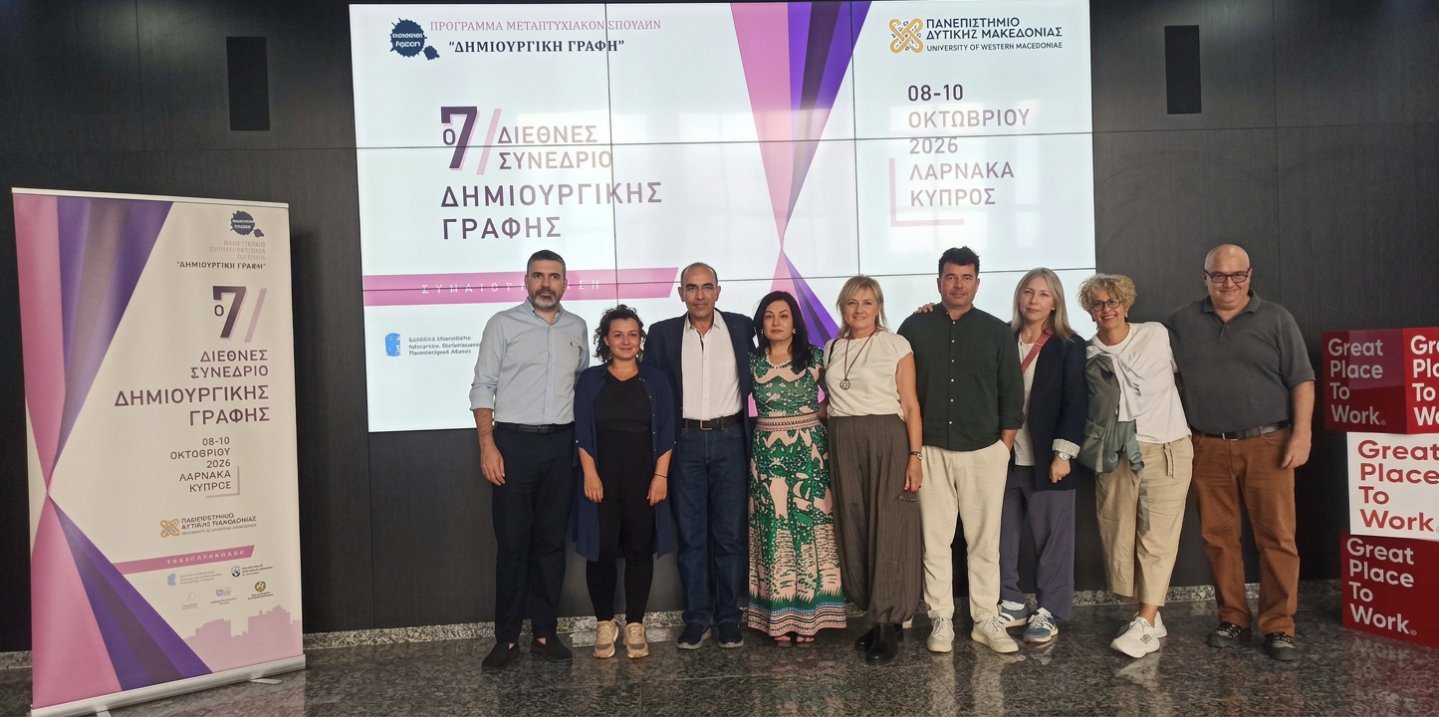
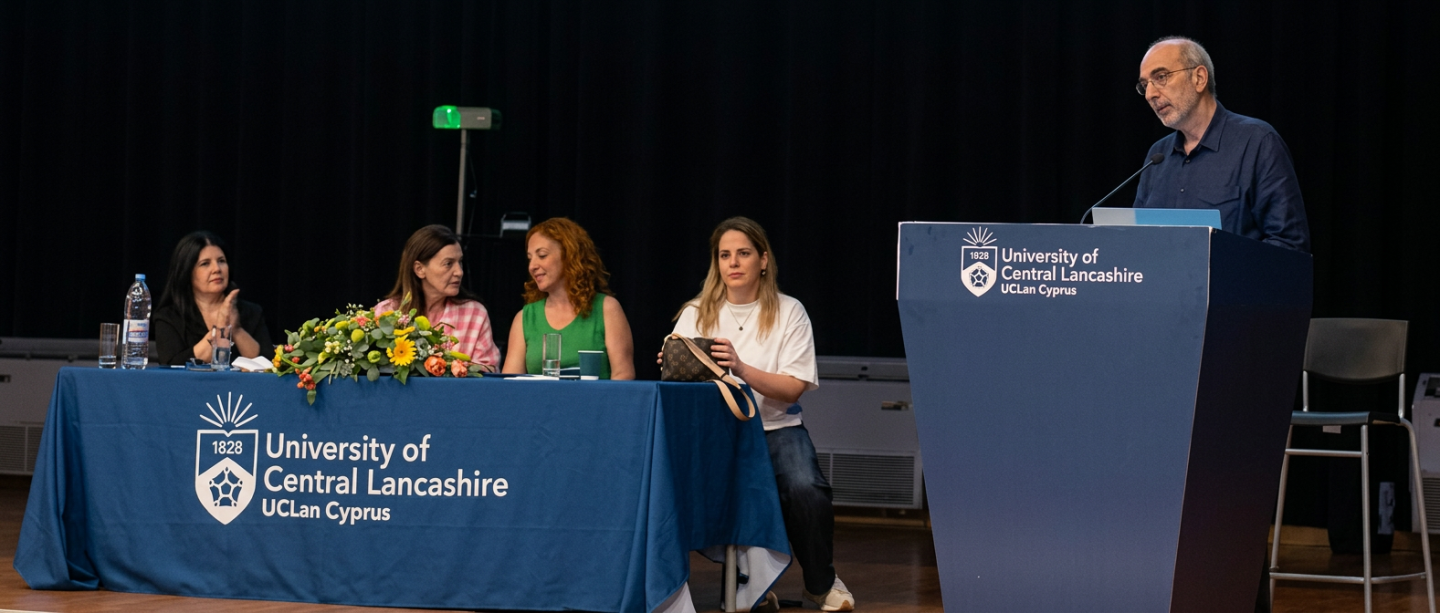
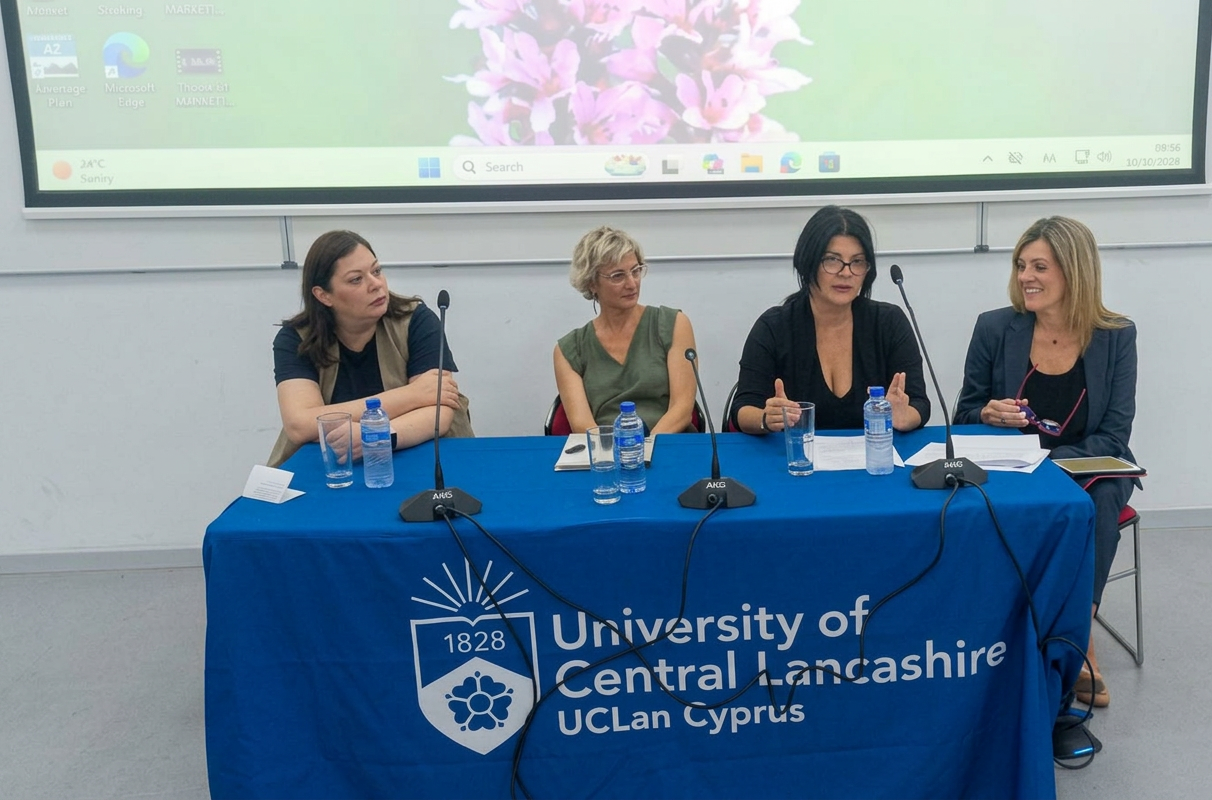
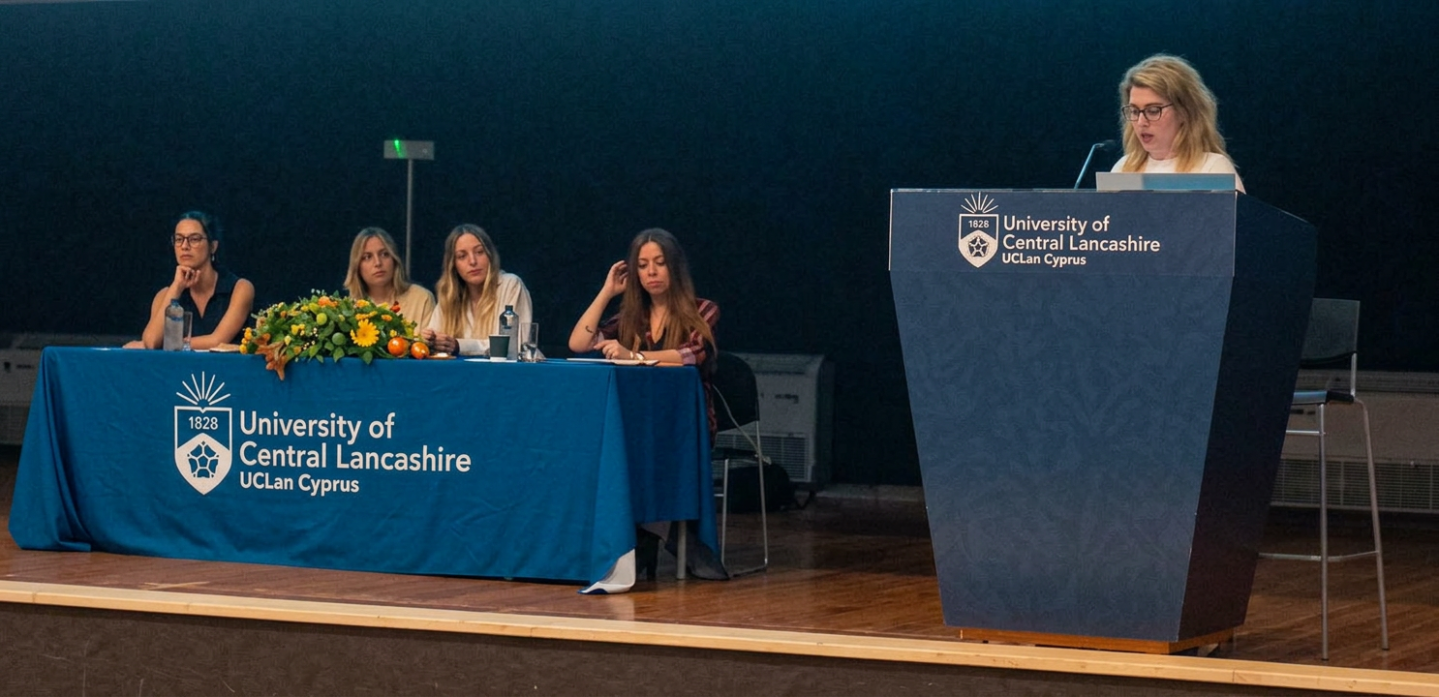
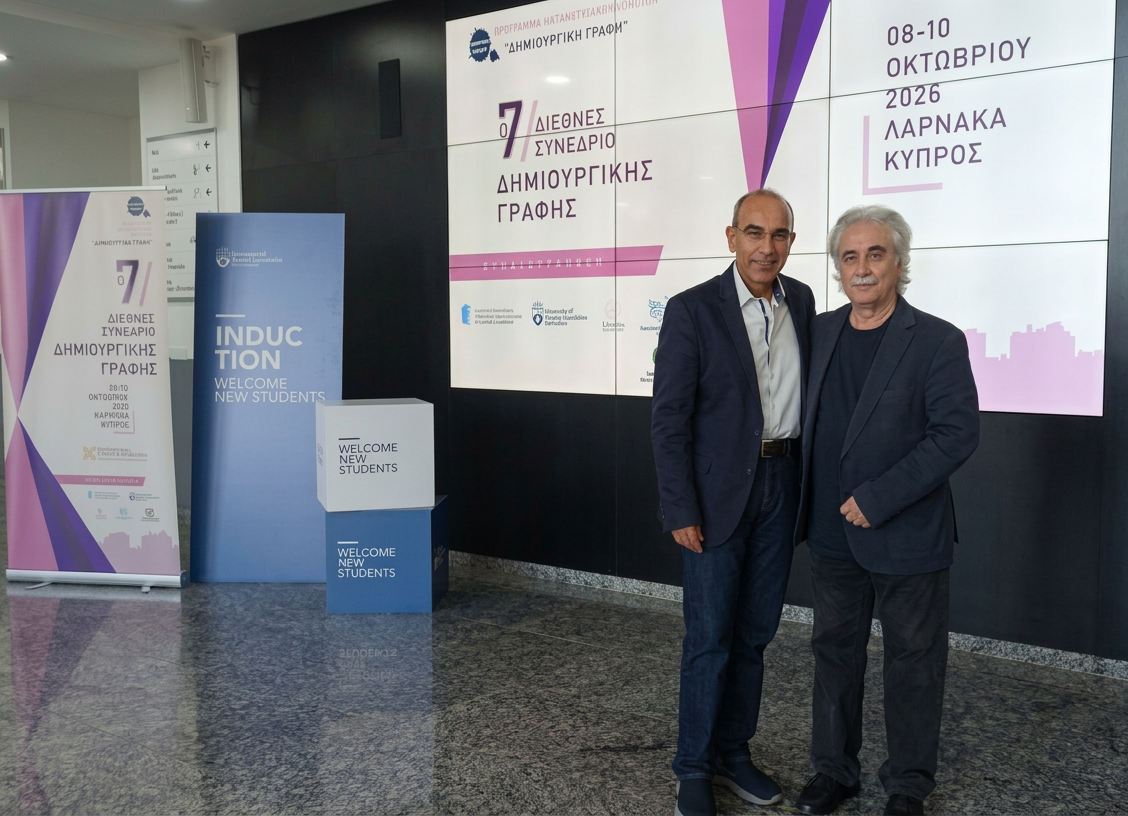
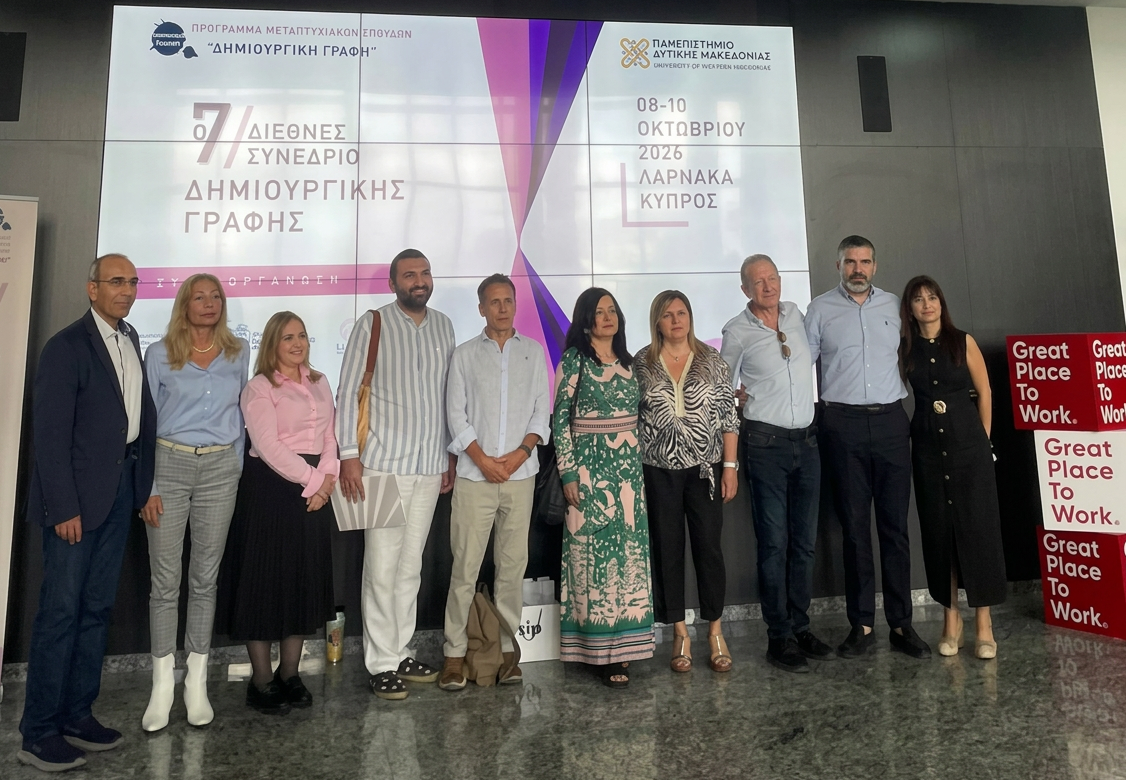
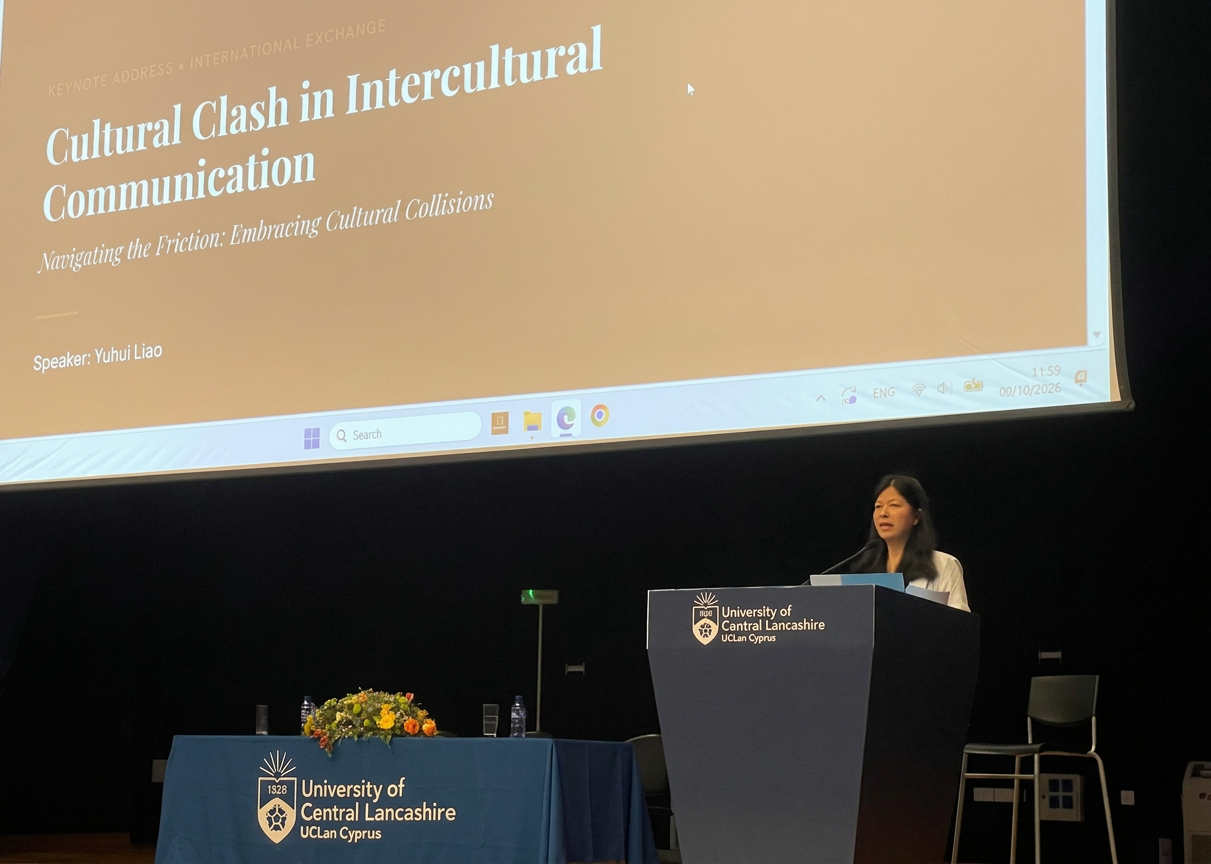
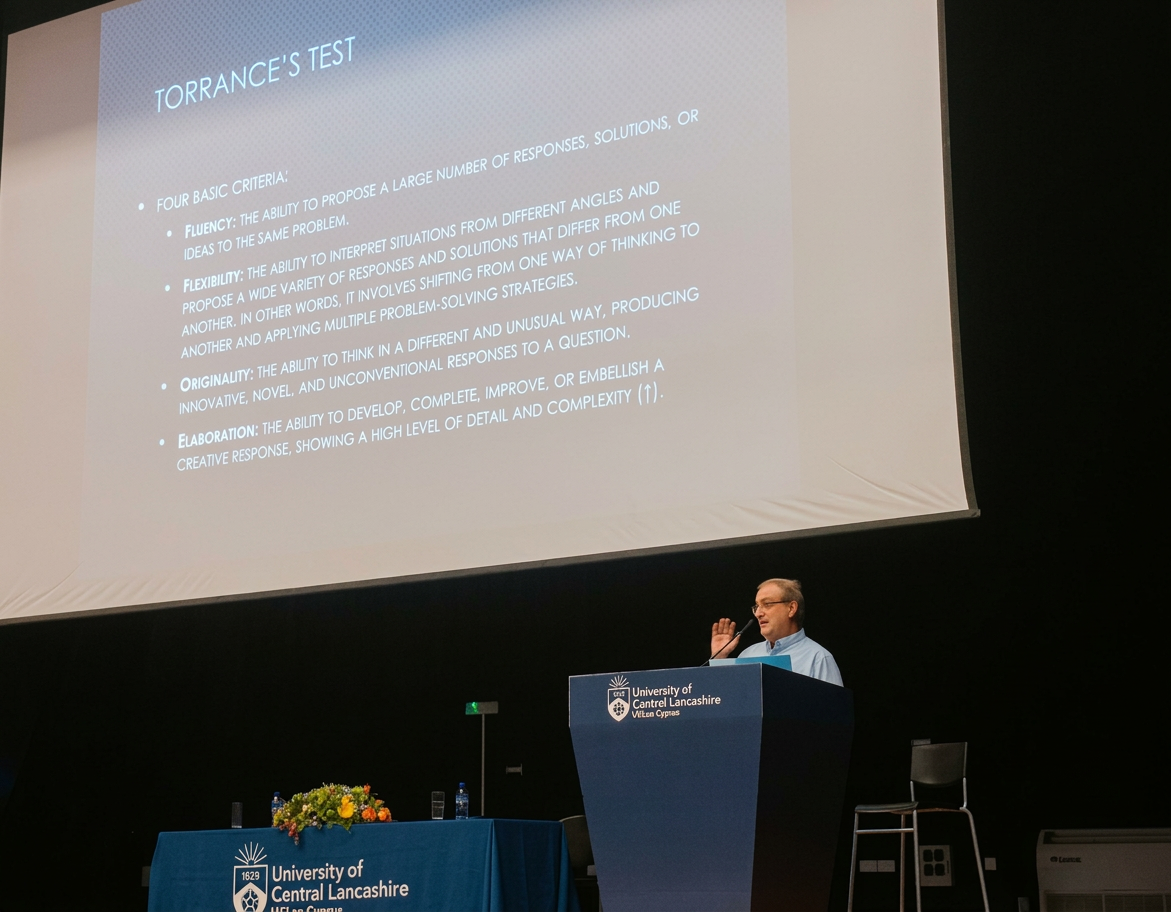
The connection between literary creation and scientific research, teaching practice, and social reflection was the focus of the 7th International Conference “Creative Writing,” held in Larnaca from October 8 to 10, 2026. With the participation of approximately 400 delegates and more than 170 presenters from Greece, Cyprus, and around the world, the event served as a meeting ground for diverse scholarly traditions and creative practices, all united by a common focus on the exploration of writing and its multiple functions.
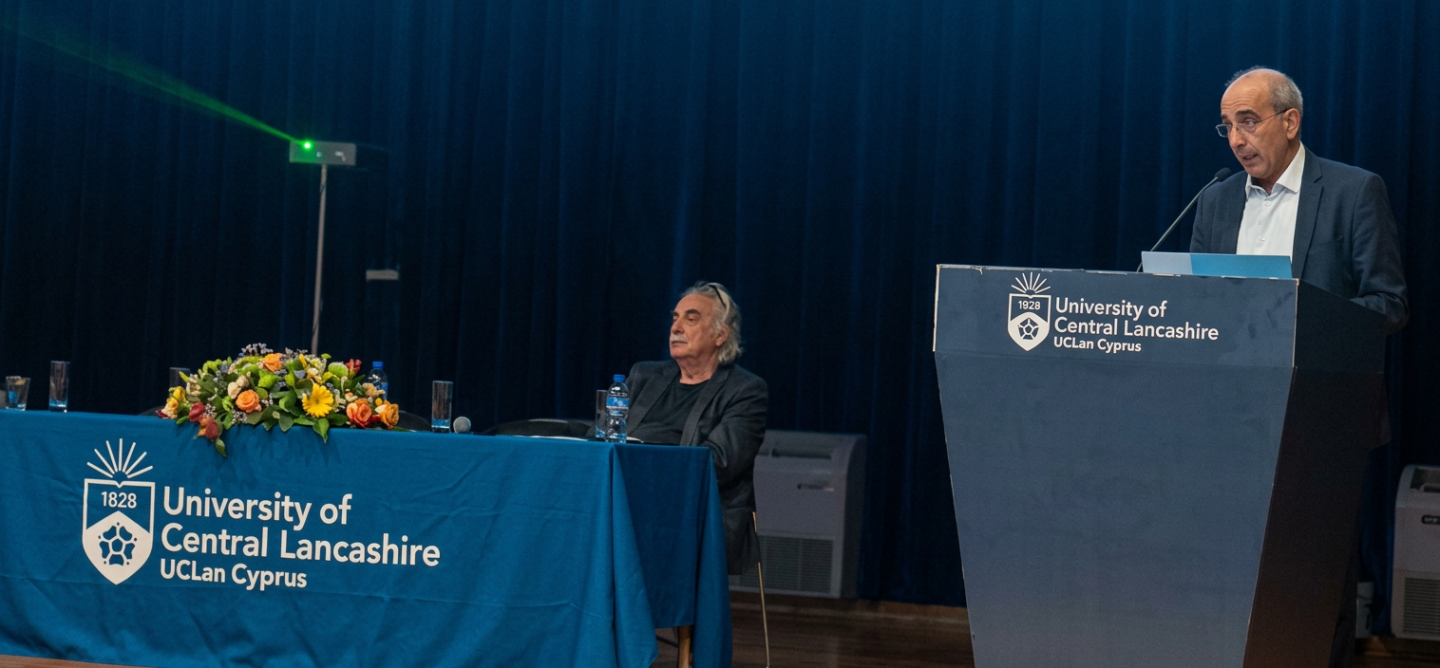
The conference was organized by the “Creative Writing” Graduate Program at the University of Western Macedonia, in collaboration with the Inter-institutional Graduate Program “Rhetoric, Communication, and Creative Writing in Education” of the National and Kapodistrian University of Athens and the University of Western Macedonia, Lund University, UCLan Cyprus, and the Cyprus Pedagogical Institute, with the support of the Municipality of Larnaca. This collaboration gave the event an international and inter-university character, linking academic study with educational and cultural activities.
A comprehensive assessment of the Conference’s themes highlights the importance of an approach that examines the creative process, its theoretical understanding, and the conditions under which it develops as a unified whole. Writing, reading, teaching, and criticism are interrelated activities, and their systematic consideration can broaden our understanding of literary creation. The presentation by the Conference Chair, Professor Triantafyllos H. Kotopoulos, titled “The Theory of the Creative Writing Ecosystem,” was also part of this theoretical discussion.
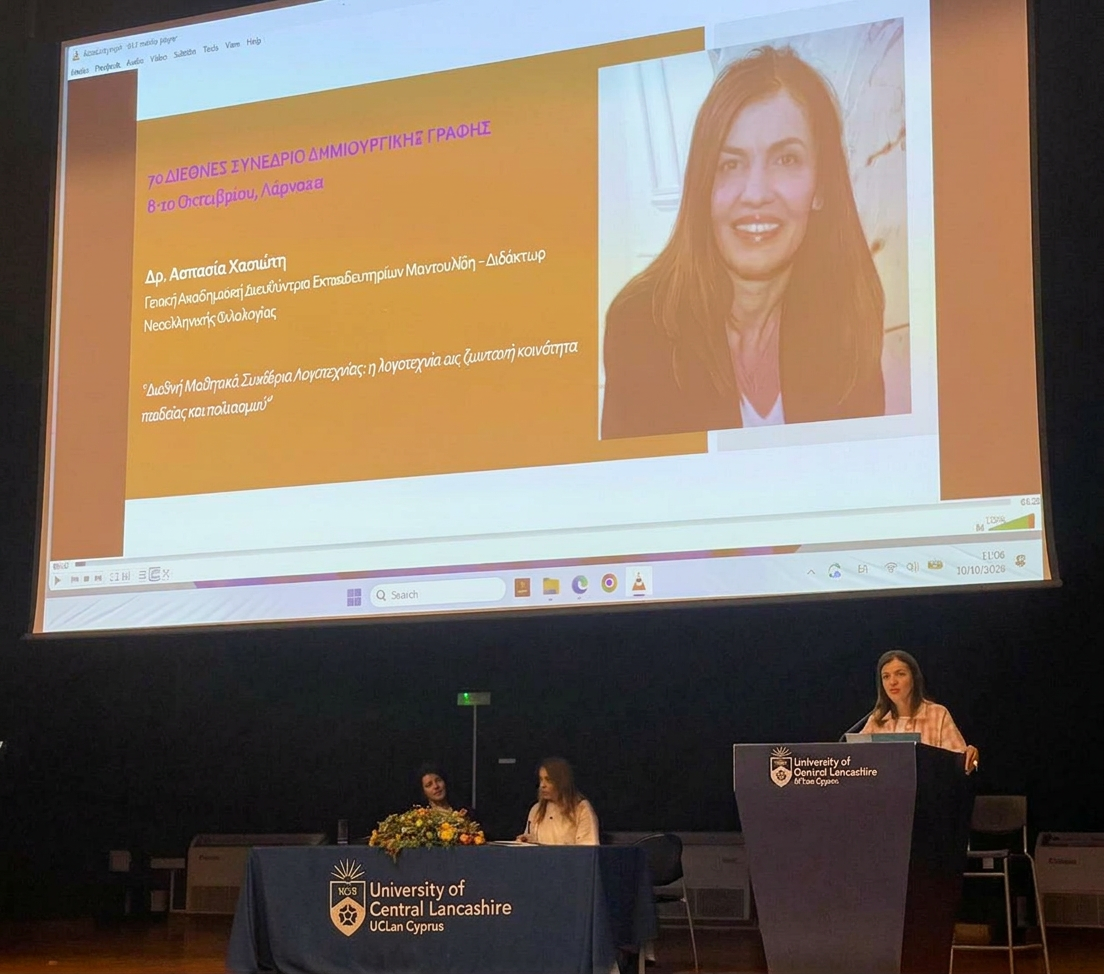
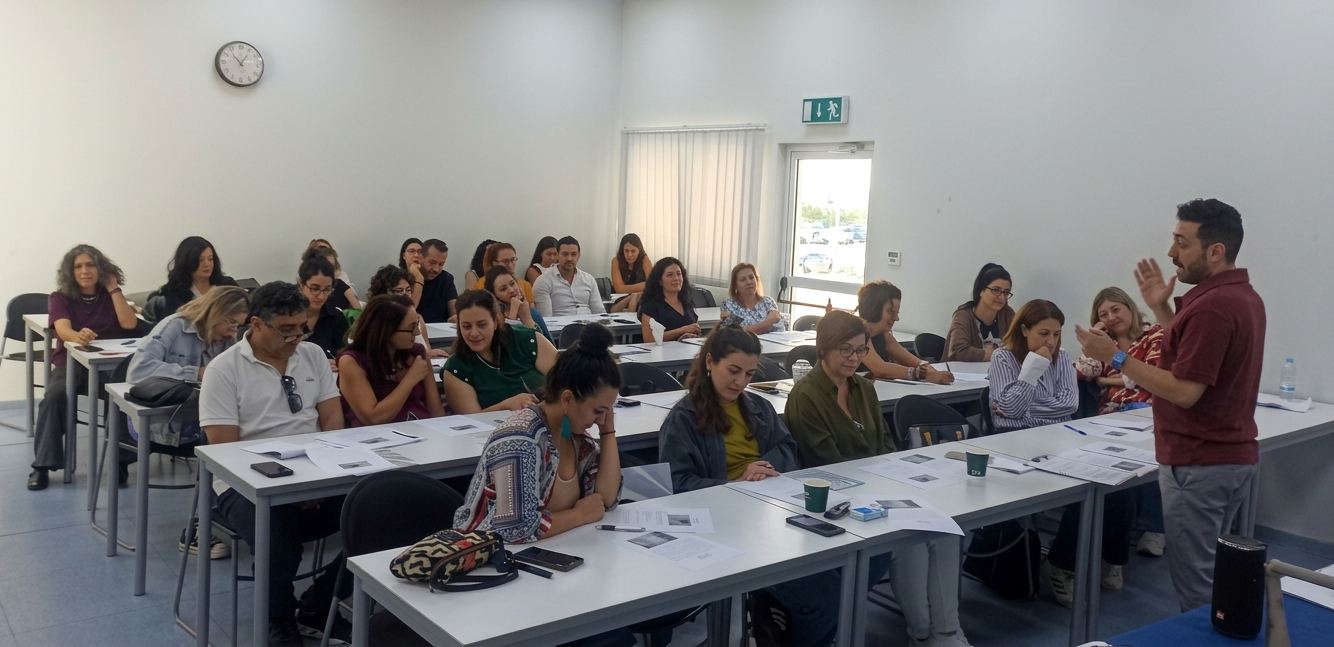
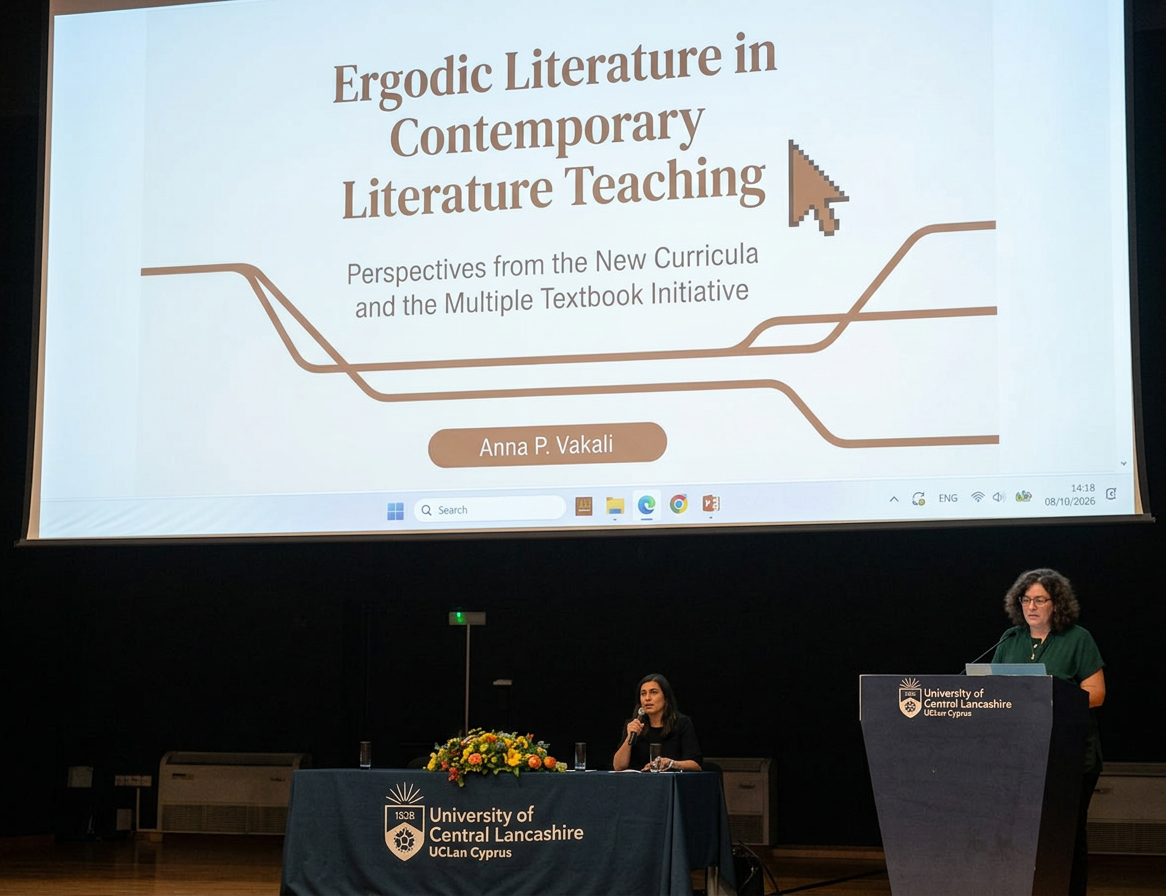
The connection between theory and practice took on particular significance in the presentations on education. Approaches focusing on creative engagement with literature, differentiated instruction, inclusion, and reading communities provide starting points for a learning process in which text comprehension is linked to personal experimentation and collaboration. From this perspective, the pedagogical value of creative writing lies in its ability to provide a space for formulating questions, exploring different perspectives, and gradually developing a personal voice. Making the most of this potential requires clear instructional planning, appropriate feedback, and respect for the individuality of each learner.
This pedagogical dimension is directly linked to the social function of writing, which has been brought to the forefront by themes such as identity, gender, memory, trauma, and interculturalism. Their coexistence within the academic program allows us to approach narrative as a process through which individual experience intersects with collective representations and the social conditions of expression. From this perspective, a key direction for research and teaching is the creation of conditions that foster the listening to diverse voices, the critical examination of stereotypes, and the processing of experiences seeking a place in public discourse.
Questions regarding the creator’s voice and role take on added significance in the context of digital technologies. The inclusion of artificial intelligence in the conference program—with references to ethical boundaries, transparency, and changes in literary production—makes it necessary to systematically examine the conditions for its use. One prospect that emerges is the development of a critical relationship with these new tools, one that will link technological experimentation with authorial responsibility and the conscious crafting of language. The importance of continuing to write as a means of expression and communication in the face of the challenges posed by artificial intelligence was also revisited in the public discussion led by Triantafyllos H. Kotopoulos following the conclusion of the conference.
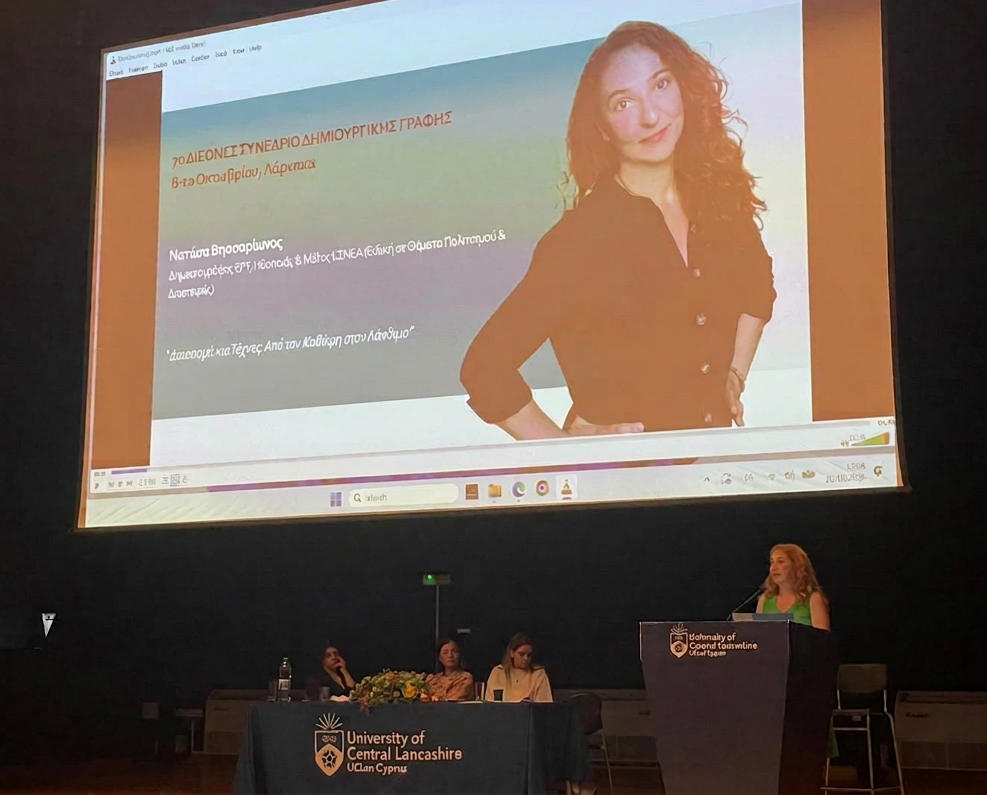
At the same time, the intersection of creative writing with the visual arts, theater, music, and audiovisual forms has opened up a broad field of interdisciplinary exploration. The transition from image to word, from literary text to the stage, and from reading to creative response raises questions about how experience is transformed when the medium of expression changes. The significance of these approaches lies in the possibilities they offer for enriching writing practice and for designing educational activities that combine different modes of reception and creation.
The assessment of the 7th International Conference on “Creative Writing” thus establishes a framework for further work centered on the dialogue between research, education, and artistic practice. The continuation of this dialogue can be based on the systematic study of pedagogical applications, the exchange of experiences between creators and researchers, and the development of collaborations that ensure the sustainability of these academic gatherings. In this regard, creative writing offers a shared space for cultivating expression, understanding human experience, and participating in contemporary culture.


Leave A Comment