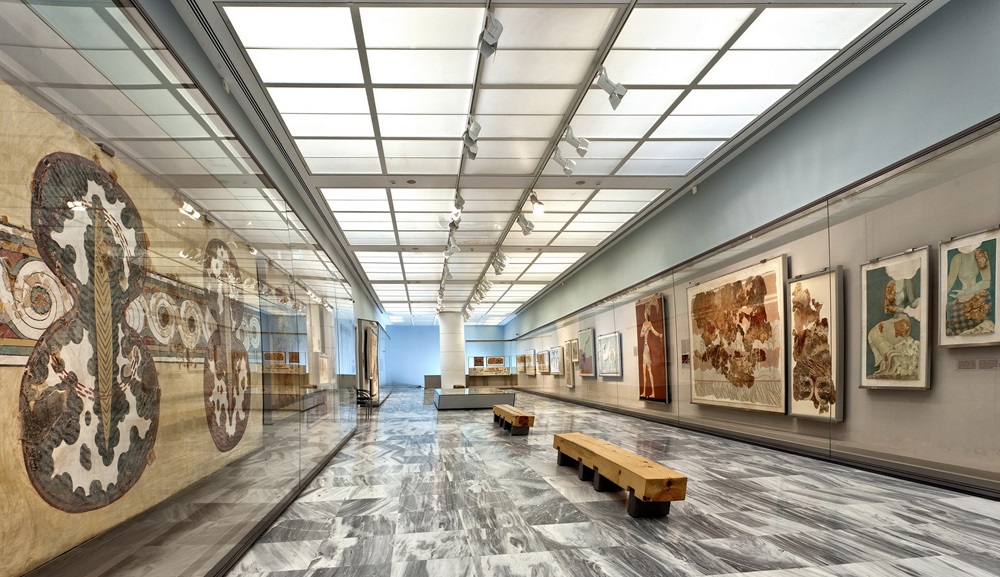
The Archaeological Museum of Heraklion is organizing, on Wednesday, October 21, 2026, the first lecture in the “Wednesday Lectures” series as part of the “Around the Exhibition” events accompanying the temporary exhibition *In the Middle of the World*. Crete in European Cartography from the 16th to the 18th Century: Representations and Identities.
The speaker will be Dr. Nikos Skoutelis, Professor at the School of Architectural Engineering at the Technical University of Crete and Director of the Laboratory for the Documentation and Restoration of Historic Buildings and Complexes.
Τhis lecture seeks to define the spatiotemporal context of Venice’s fortifications and its strategy during its heyday, and to present the work of the military engineers and architects of the era. By focusing on the form of cities (walls, harbors, administrative centers, residences) and their relationship with the hinterland—using the city of Chandaka as a key point of reference— fortified sites (ports and cities) interact within the framework of an often unacknowledged planning framework, with potential conflicts as the primary criterion. The impending war, as a spatial organizer, now dictates daily life, not only in cities but also in the countryside, definitively thwarting efforts toward greater unity and cohesion in a region that is by its very nature fragmented, such as that of the “maritime state” of the Republic of St. Mark.



Leave A Comment