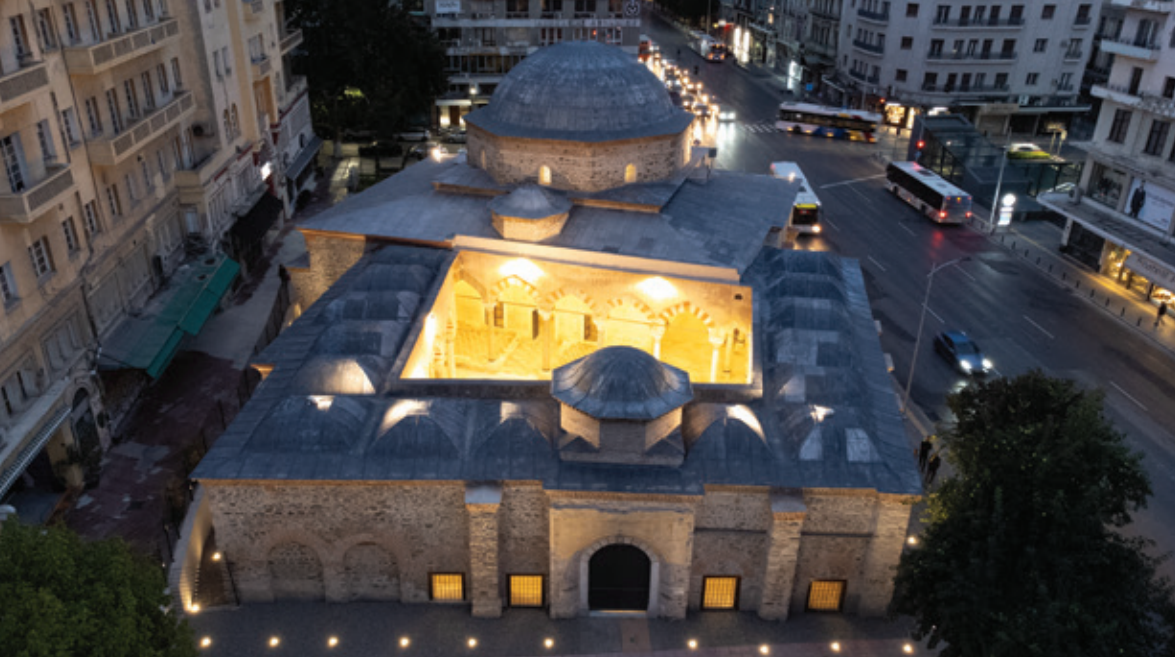
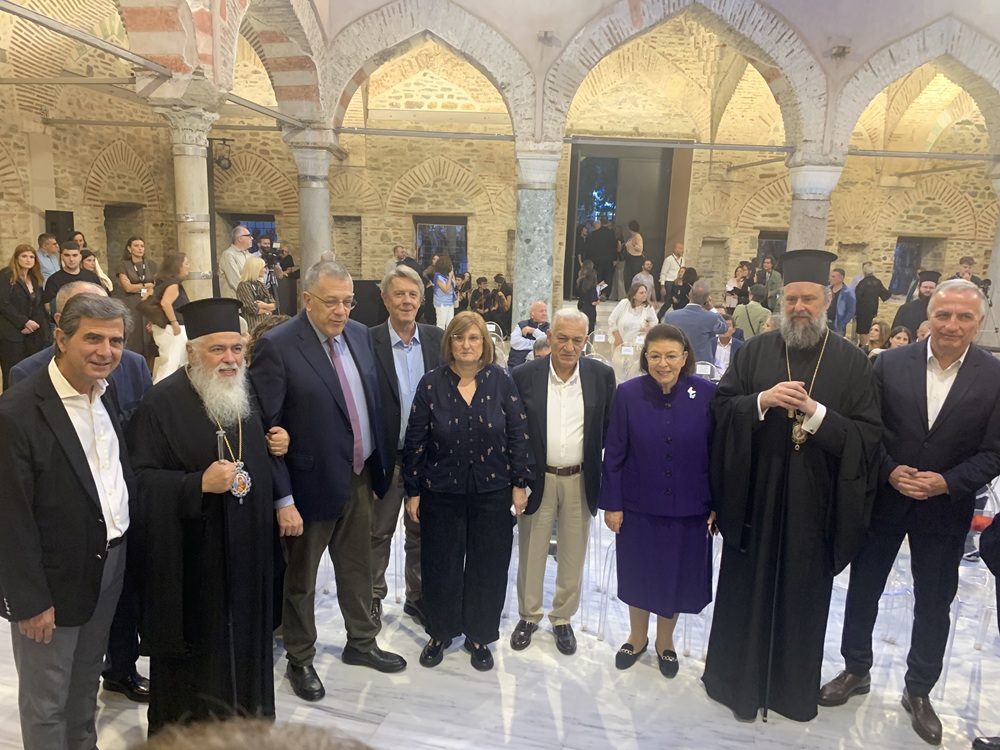
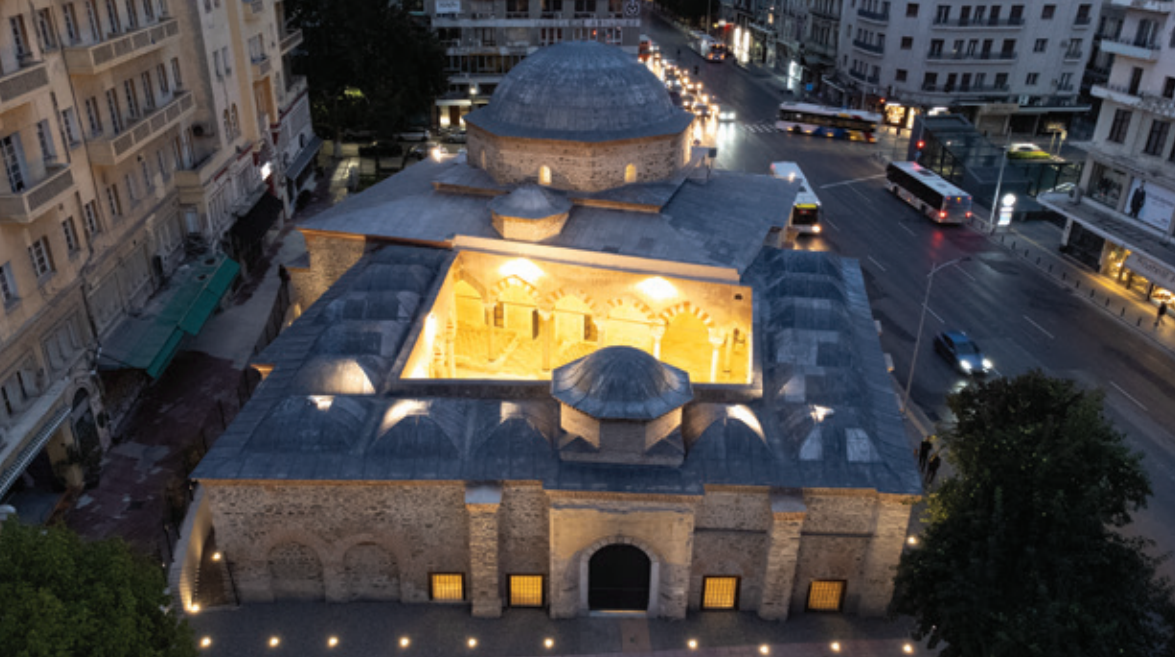
The restored Hamza Bey Mosque, known to the people of Thessaloniki as the “Alcazar,” was returned to the city by Minister of Culture Lina Mendoni, marking a new chapter in its history. The monument, inextricably linked to the successive historical phases of Thessaloniki, has witnessed significant political, social, and demographic changes; now fully restored, it is being reintegrated into the modern urban fabric.
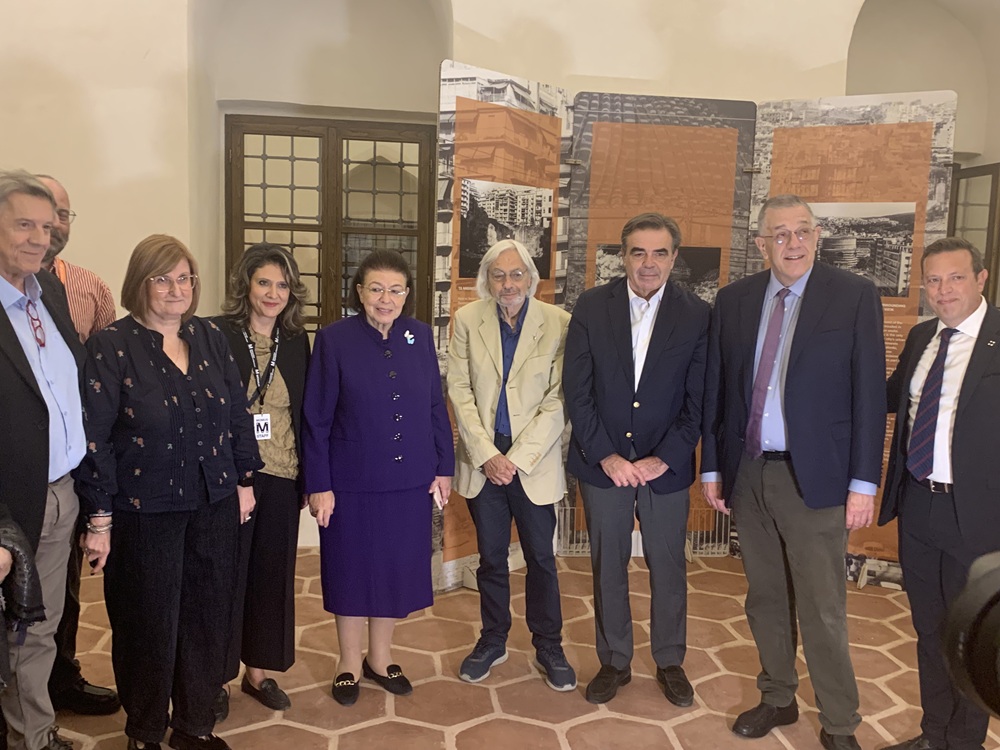
The monument has now become a vibrant hub of the city’s cultural life, hosting cultural events in close collaboration with the Thessaloniki Metropolitan Organization of Visual Arts Museums (MOMus) and the Ephorate of Antiquities of the City of Thessaloniki. This creates new opportunities to connect cultural heritage with contemporary artistic creation. The Hamza Bey Mosque’s operation as a cultural venue is inaugurated with an exhibition titled “Thessaloniki: The Imprint of Transition (1960–1980),” featuring photographs by Pete Marifoglou.
The Hamza Bey Mosque—“Alkazar,” due to the operation of the cinema of the same name in the monument’s atrium—is the oldest Islamic place of worship built in Thessaloniki after the conquest (1430). According to a dedicatory inscription, it was founded in 1467–8 by Hafsa, daughter of Hamza Bey, as a neighborhood mosque. It consisted of a four-sided domed prayer hall and a portico on the northwest side. In the mid-16th century, the mosque was converted into a mosque with the addition of a portico and a minaret. The complex was completed in the final decades of the 16th century with the addition of a three-sided portico on the west side, which, together with the northwest wing of the portico, created a four-sided atrium. A unique architectural achievement in the Balkan region, with the exception of sultanate institutions in Adrianople and Constantinople.
Hamza Bey’s role as a cultural venue was inaugurated with the exhibition: “Thessaloniki: The Imprint of Transition (1960–1980). The Photographs of Pete Marifoglou,” which offers a visual tour of Thessaloniki during the 1960s–1980s, a two-decade period of rapid transformation. Through the black-and-white lens of this Thessaloniki-based photographer—with images being presented to the public for the first time—the city is revealed as a living organism in transition, where the traditional coexists and clashes with the new. Many of the landmarks shown here—once neglected or obscured by cars—have now been restored, meticulously preserved, and fully integrated into the city’s modern life through pedestrianization and urban renewal. The exhibition is not merely a retrospective but a point of comparison that highlights Thessaloniki’s journey toward modernization, inviting us to recognize the birth of the modern city.


Leave A Comment