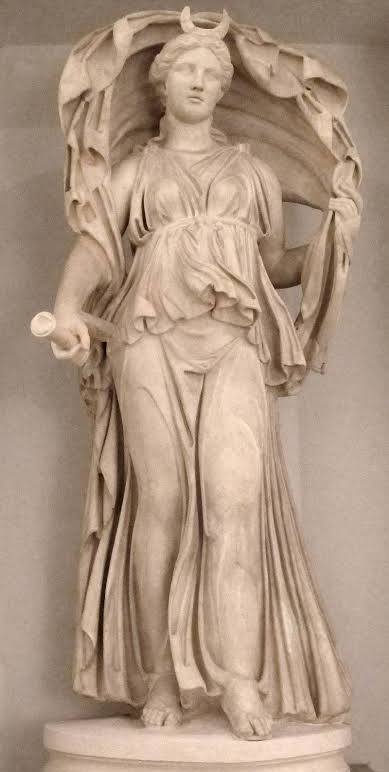
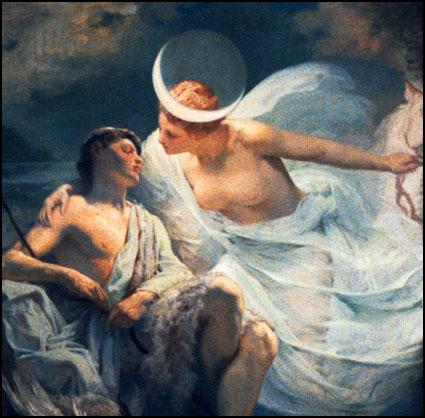
As far back as antiquity, Selene had taken her place in mythology as the goddess of the moon, the daughter, wife, and mother of gods and divine creatures such as the Nemean Lion and the Hours (who represented the seasons of the year). However, her most famous romantic relationship was with the mortal shepherd Endymion, whom she plunged into an eternal sleep so that he would never die.
Similarly, as Luna, she was worshipped by the Romans, who had attributed a triple nature to her corresponding to the phases of the Moon: Luna for the full moon, Hecate for the period when the moon is invisible, and Diana for the new moon and its first few days.
The Moon was certainly worshipped all over the world—in the Mediterranean, the Americas, and Australia. Myths and cults related to the phases of the moon were associated with fertility, magic, and divination.
In Aztec mythology, the gods created the Sun and the Moon to combat darkness; initially, both had the same brilliance. However, they soon had to deal with the constant and intense light. The solution to this problem was to send a hare to the Moon, which dimmed its brightness but also created the distinctive marks on the Moon’s surface. A myth similar to that of the Hare on the Moon also exists in the folklore of East Asian peoples, including the Chinese, Japanese, and Koreans.
In Norse mythology, the wolf Hati Hróðvitnisson, also known as Mánagarmr, chased the moon goddess Mani across the night sky and managed to swallow her. The Sun met the same fate, plunging the world into a harsh winter that lasted three full years. According to Jewish tradition, the Moon is a creation of God and not a self-existent deity as pagan peoples believed; in fact, it possessed human characteristics. The Moon played a pivotal role in the lives of the Israelites. The Jewish calendar was structured around its phases, and it was worshiped as a manifestation of God.
Of course, for millennia, the moon, along with the sun and the stars, has been observed by sailors, shepherds, and farmers to predict weather conditions and calculate distances and routes…
By now, humans have studied, photographed, and set foot on the moon. Nevertheless, science has not managed to dispel the fascination it exerts. The full moon, in particular, continues to “enchant” the world.
The Moon, now freed from its role as an object of worship, maintains its place in pop culture and continues to be a leading symbol in contemporary literature, cinema, art, and music.
Gods and monsters, lovers and the desperate, dreamy romantics and realistic scientists—all vie for a share of the full moon’s light.
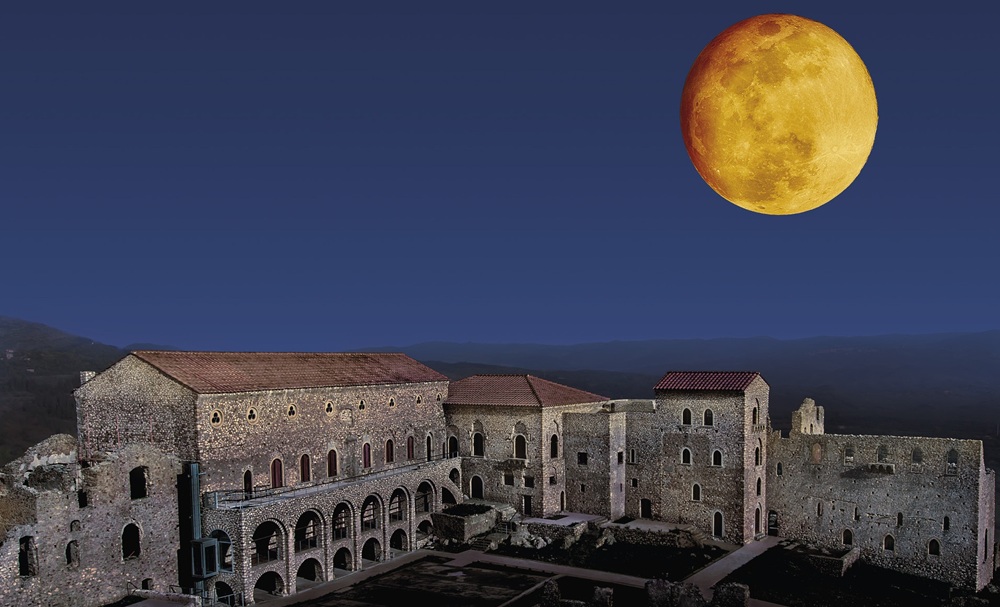
The August full moon is the most “popular” in our country, not only because of its brightness and size but also because it coincides with the vacation season. Most of us have the opportunity—perhaps with less stress—to view the moon from a beach, a mountain, a forest, or any landscape that best “suits” the full moon.
On the night of the full moon, 126 archaeological sites, historic sites, monuments, and museums across the country will welcome visitors with free admission, offering a unique opportunity to explore our cultural heritage under the light of the August moon.
As part of the celebration, events will take place at 61 archaeological sites, monuments, and museums, while 65 additional sites will remain open to the public with free admission from 7:30/8:00 p.m. to 11:00 p.m./midnight.



Leave A Comment