I didn’t find spring so much in the fields, or even in a Botticelli, as in a small red palm-bearing icon. And so one day, I felt the sea while looking at a bust of Zeus. When we discover the secret relationships between concepts and explore them in depth, we will emerge into a different kind of clearing, which is Poetry. And Poetry is always one, just as the sky is one. The question is from where one views the sky.
I’ve seen it from the middle of the sea.
Odysseas Elytis, Little Nautilus
So, if the question is “from where does one view the sky,” then, for the painter, the question shifts: what does he see within the sea and, above all, through what gaze. For the sea, however obvious it may seem as a subject, resists simple representation. It is not merely surface or depth, nor exclusively light or movement. It is a realm where things shift from their axis: outlines soften, distances expand, color becomes time. The painter standing before it—or, more precisely, within it—does not seek to represent, but to preserve, through the medium of painting, something of that “mysterious relationship.”
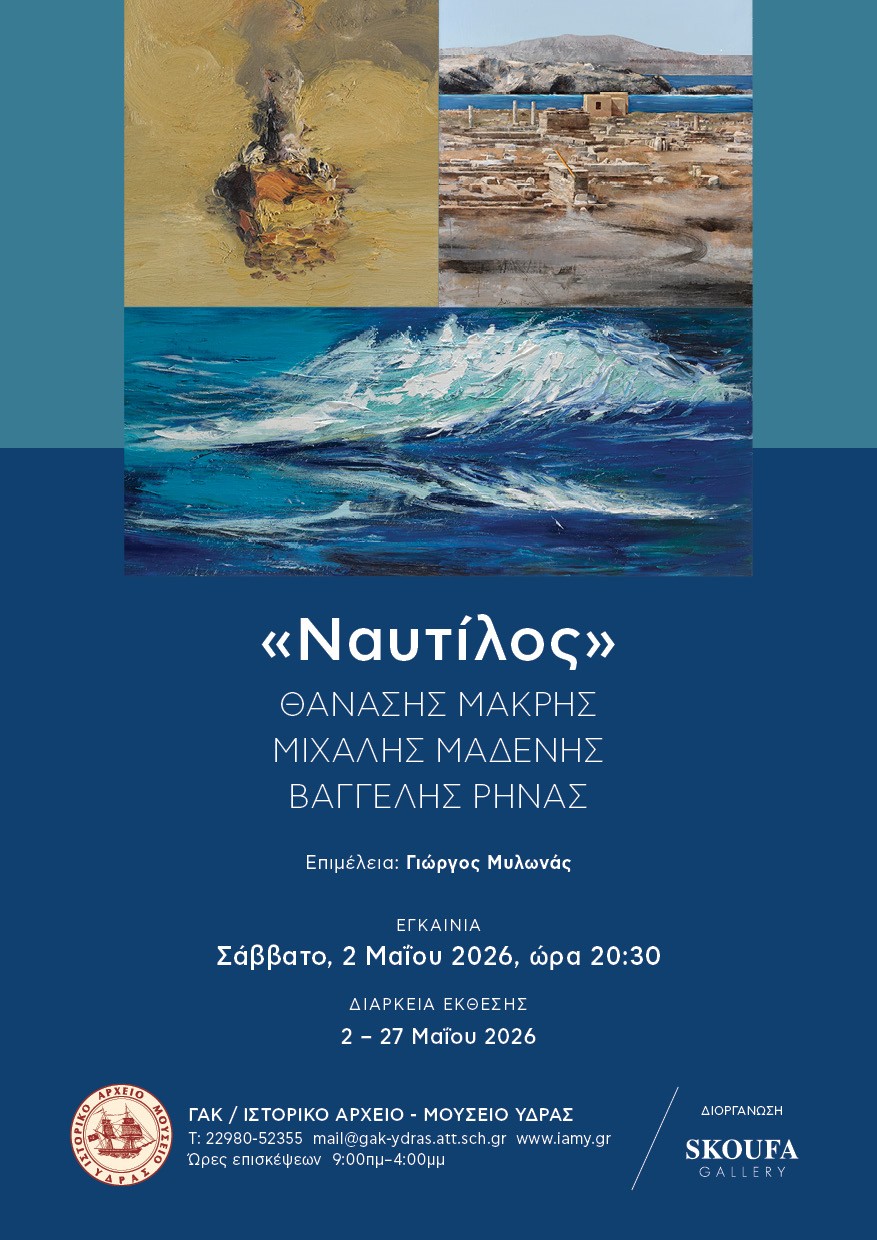
Three painters—Thanasis Makris (1955), Michalis Madenis (1960), and Vangelis Rinas (1965)—travel to Hydra, responding to an inner calling: through the act of painting, they seek a spiritual identity forged in the space and light of the Aegean. The sea in their work emerges as the other Greece. Through the convergence of the three, the exhibition titled “Nautilus” takes on the significance of an instrument: it regulates the path of the gaze, directs it toward an inner depth, and reveals the way in which the image coalesces into experience.
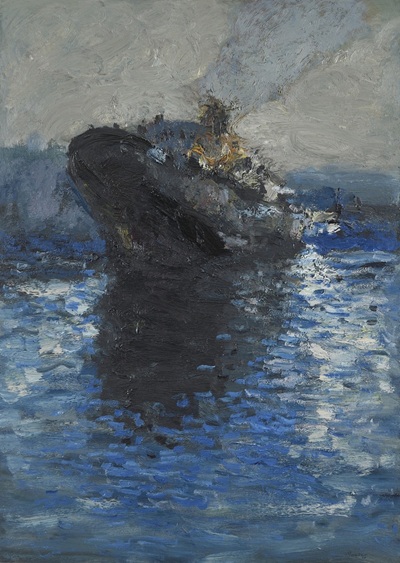
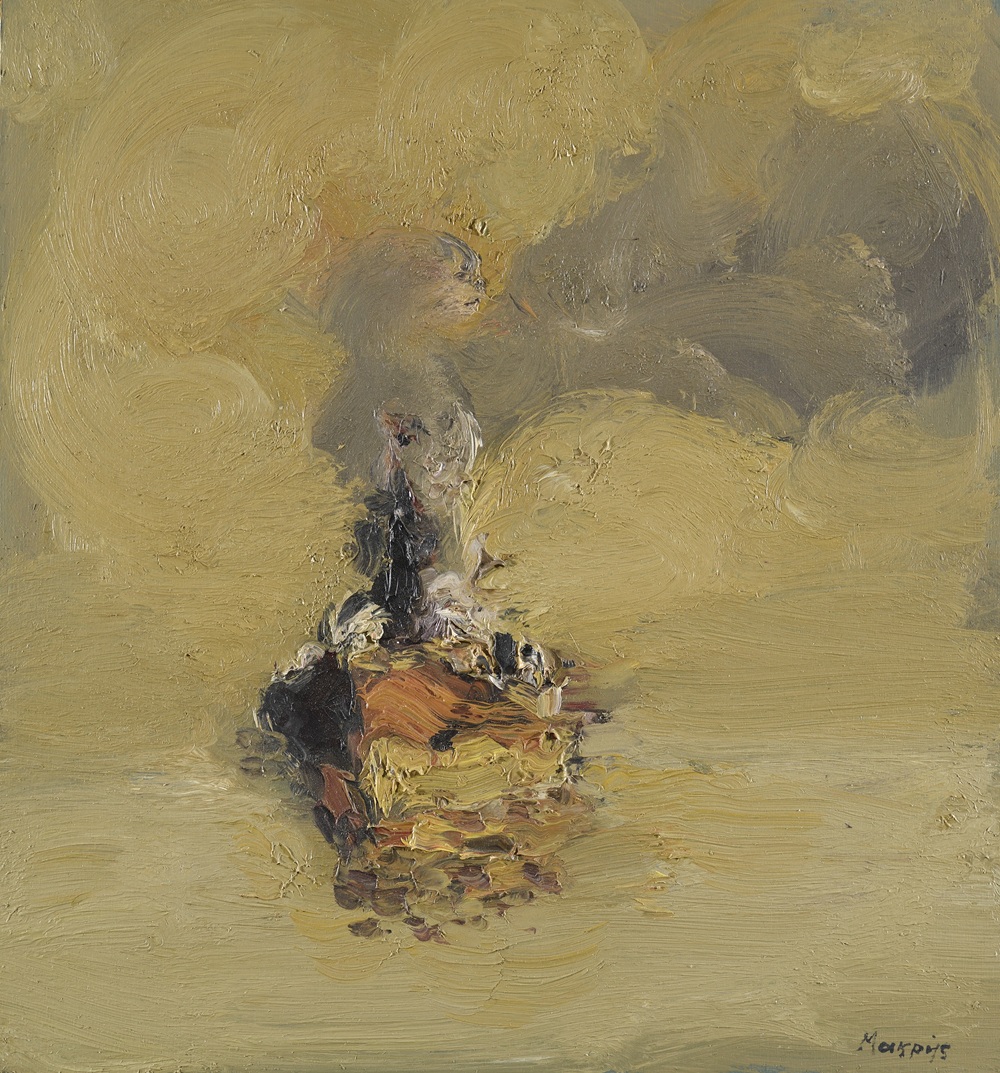
Makris’s “Libertys”—World War II cargo ships—become banners of liberation from form. Their mass dissolves into the water, as if testing the very limits of their existence. The freedom they proclaim is a fluid, fragile state, a constant transition from matter to light and from the visible to the inner reflection.
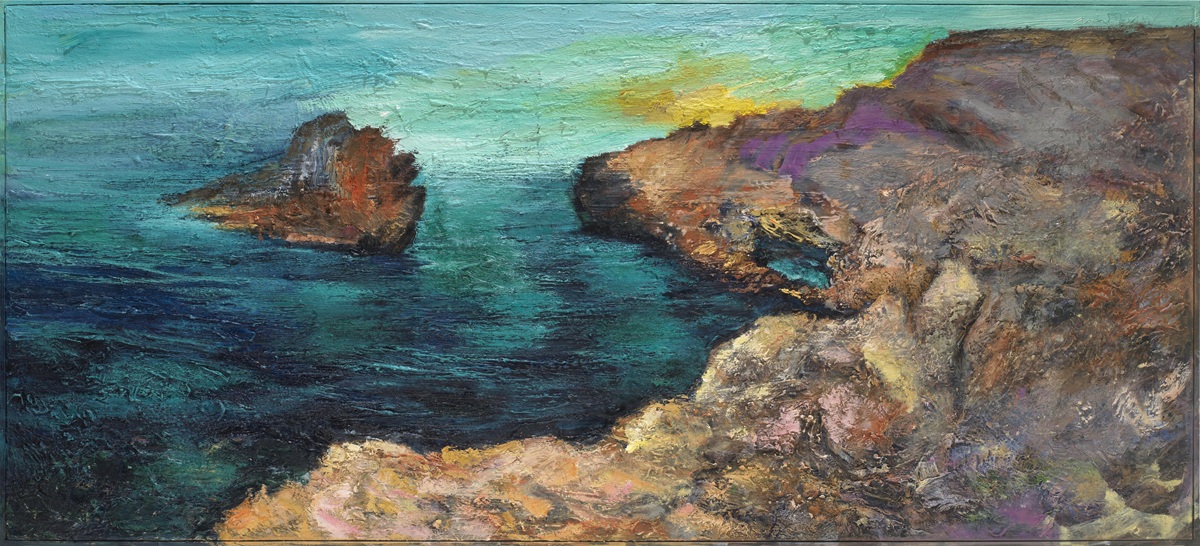
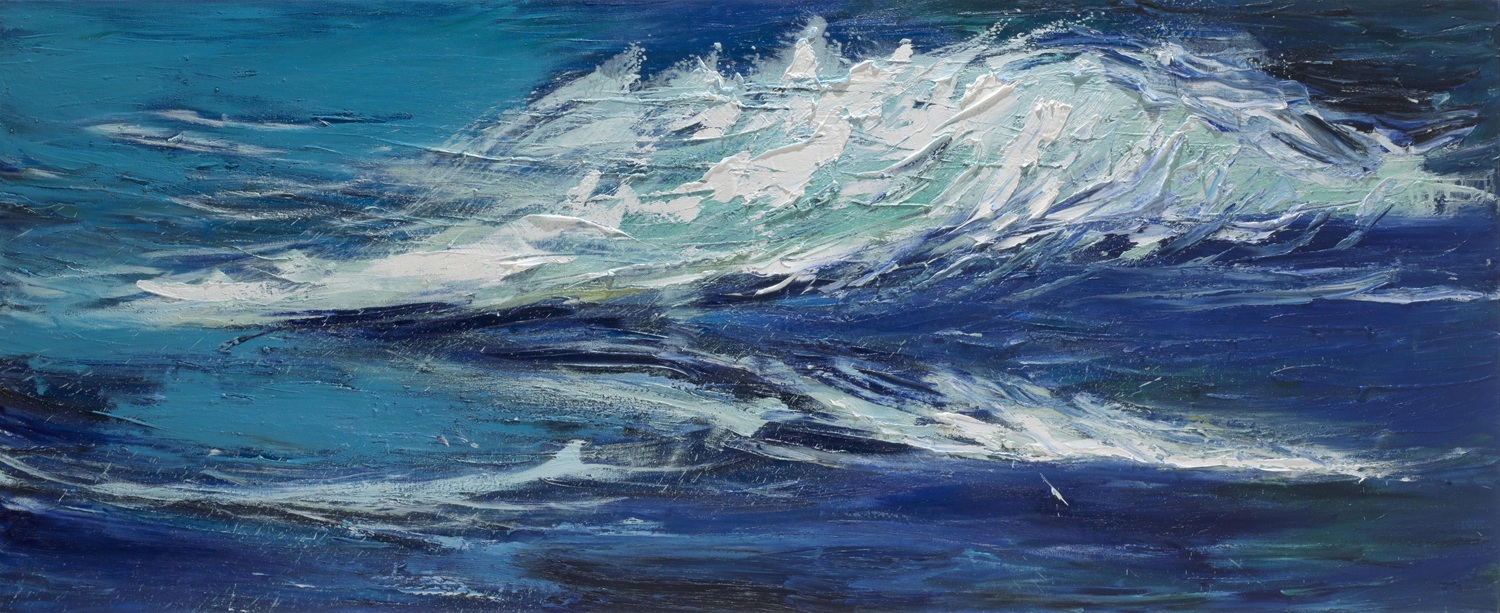
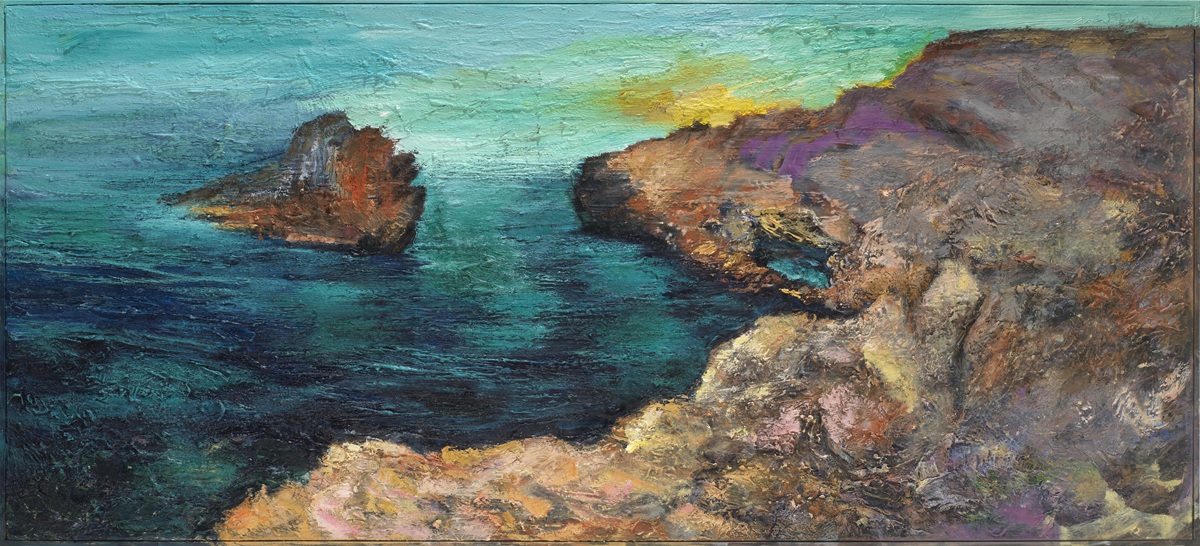
Their destination resembles the landscape of Madeni, a timeless shoreline, as if drawn from myth. Hydra breaks free from its geography and shifts to a place that cannot be located—a utopia in the literal sense, a non-place. In The Wave, painted specifically for the Historical Archive – Museum of the island, the artist captures in an explosion of color all the vitality, the play of the waves, the scent of the abyss; there where, as has been said, “the spirit of truth lies in the waters that are constantly changing.”
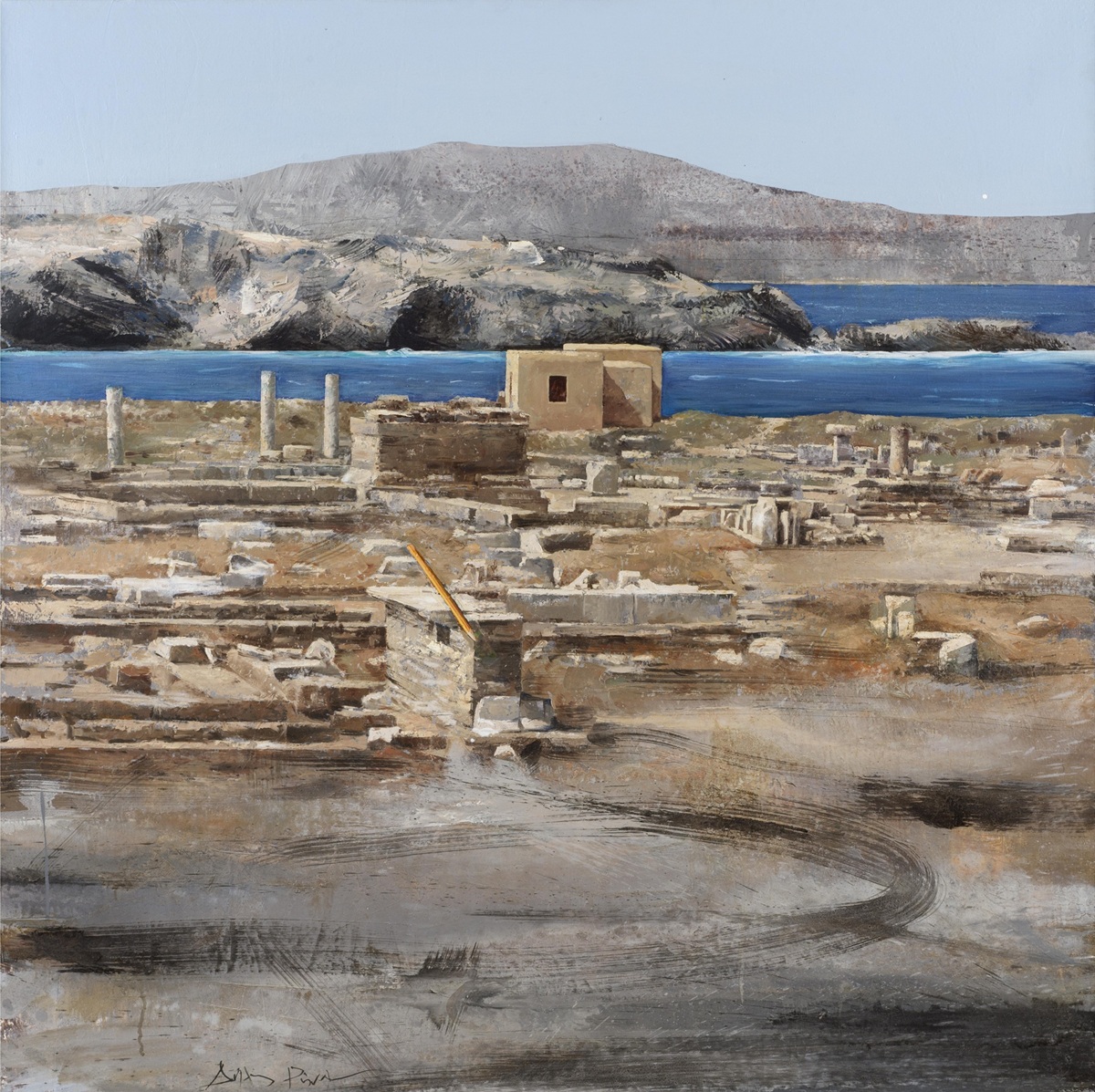
On a parallel trajectory, Renas turns toward Delos, arranging the volumes into an architectural balance. In this painting, one recognizes the Greek gaze that saw the landscape as a bearer of order and measure: the Apollonian field in his homeland, where the gaze finds its course not through fluidity, but through clarity. And the landscape takes on a timeless character, as if it belongs simultaneously to the present and to a primordial time.
The time of consciousness is not singular; it is not the same for every experience. Nor does every experience have its own fixed time. Experiences are not stars in the sky of consciousness. Their meaning, their position, their course—all are subject to reversal and transformation at every moment. The sky of consciousness does not resemble the one we see; it is waves without fixed positions. At any moment, nothingness transforms into something. Nothing is a given, not even nothingness.
Outside the Museum, the viewer will find themselves facing the sea. Perhaps then they will see the sky as the painters saw it…
Curator: Giorgos Mylonas
GSA/HISTORICAL ARCHIVES – MUSEUM OF HYDRA
Opening Hours 9:00 – 16:00
The exhibition is presented with the support of Skoufa Gallery.
Learn more about the artists at skoufagallery.gr





Leave A Comment