
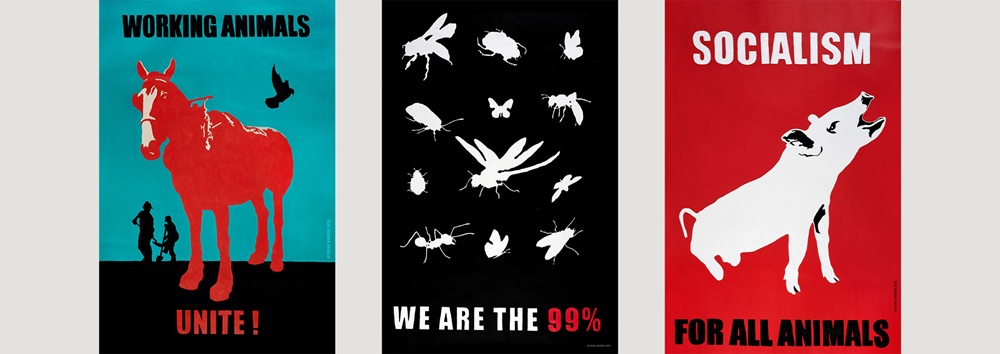
Non-human animals are exploited in all areas of life, including food production, medicine, and entertainment. Currently, livestock farming occupies over 75% of the Earth’s total arable land and is one of the main causes of deforestation, while over 90% of animals are raised in intensive, industrial-scale production facilities, in confined spaces and cages, often without ever seeing daylight. At the same time, wild animals face the threat of extinction due to the destruction of their habitats, and die by the thousands in forest fires, as well as from overfishing and hunting. In short, the use and abuse of non-human animals is one of the most significant issues of our time. And yet, the ethical problems arising within these systems of exploitation remain largely invisible to the general public.
Part of the public program of the Why Look at Animals? exhibitionand in dialogue with this, this symposium examines key questions regarding the role of non-human animals in contemporary society: how do legal frameworks permit the exploitation of animals as non-sentient objects on an assembly line on a scale beyond comprehension? How is violence against animals linked to violence against humans, and how does unregulated animal labor generate value under capitalism? The symposium’s speakers propose ways to create fairer legal frameworks and forms of governance, and discuss strategies for a justice that embraces all species.
Speakers: Rimona Afana, Charlotte Blattner, Katerina Gregou, Terike Haapoja, Tiziana Pers, and Richard Twine.
Remote participants: Jo-Anne McArthur, Shay Salehi, Syl Ko, and Dinesh Wadiwel.
Moderators: Federica Timeto, Gizem Haspolat, and Pablo P. Castello.
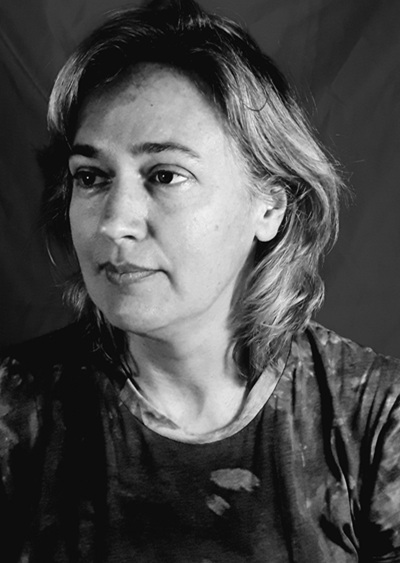
The symposium is curated by Terike Haapoja. It is an extension of her long-term research on capitalism’s dependence on the exploitation and “animalization” of animals, a concept she refers to as “Animal Capitalism” (Animal Capitalism). Haapoja is an interdisciplinary artist based in Berlin. Her work focuses on animal rights and the possibility of harmonious coexistence between species. She is participating in the exhibition Why Look at Animals? Justice for Non-Human Life.
The Symposium will also include a presentation of David Brooks’ book, Coralographies: the 7,500-year-old Coral Animalesque, in collaboration with the Archipelagos Institute of Marine Conservation, as well as the work of the NGO A PROMISE TO ANIMALS in advancing animal protection and rights.
The Symposium will be conducted in English, with interpretation provided in Greek.





Leave A Comment