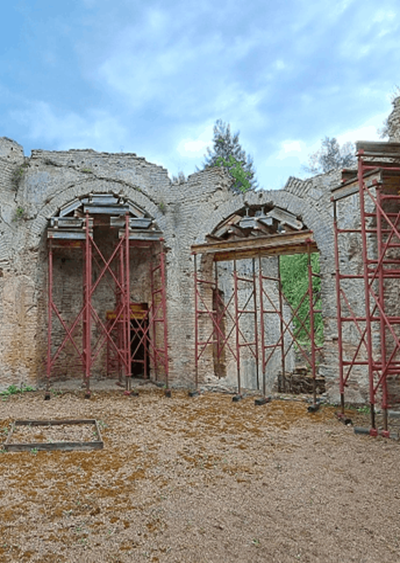
The Ministry of Culture, in collaboration with the Region of Epirus and the Municipality of Arta, is planning the restoration of the major historical and archaeological site, Church of Panagia Parigoritissa in Arta, following the completion of restoration studies (architectural, structural, and electromechanical) of the monument and the positive opinion of the Central Archaeological Council. The maintenance and restoration of Parigoritissa will be carried out by the Directorates for the Restoration of Byzantine and Post-Byzantine Monuments and the Maintenance of Ancient and Modern Monuments of the Ministry of Culture and will be included in the Municipality’s Sustainable Urban Development program, with funding from the Regional Operational Program “Epirus” – NSRF 2021-2027. Sustainable Urban Development Program of the Municipality, with funding from the Regional Operational Program “Epirus” – NSRF 2021-2027.
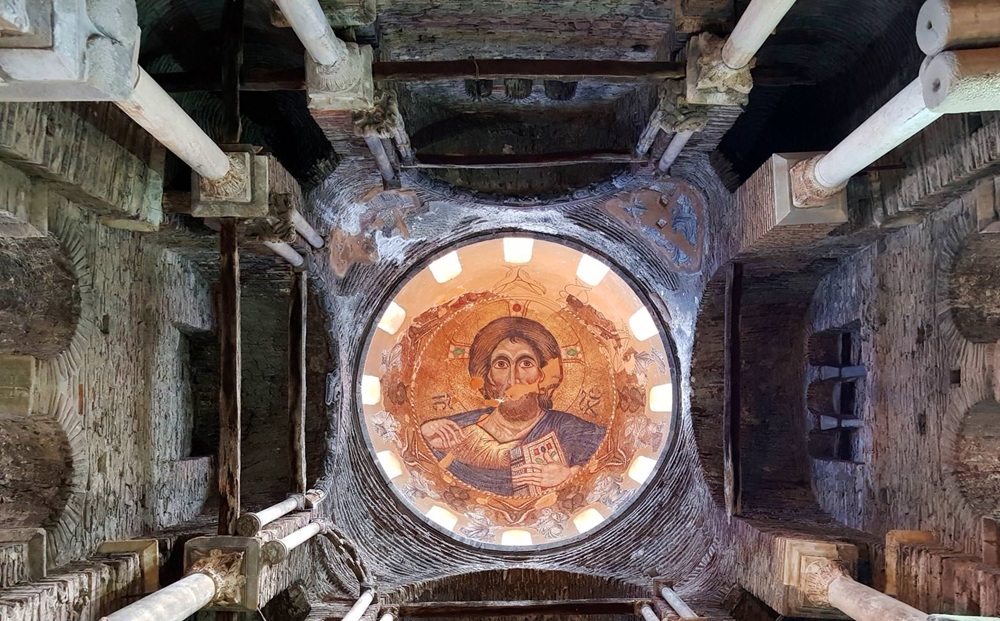
The Minister of Culture, Lina Mendoni, stated: “The Church of Panagia Parigoritissa in Arta, dedicated to the Annunciation of the Virgin Mary, is a prominent Byzantine monument of major importance in the history of art. It was built in a unique style, unicum for Byzantine architecture to date, at the end of the 13th century, by the despot of Epirus Nikiforos Komnenos Doukas, his wife Anna Palaiologina, and their son Thomas. Contemporary to the monument are the mosaic representations of the Pantocrator and the prophets in the central dome, probably the work of two groups of craftsmen from Constantinople or Thessaloniki. The planned interventions aim to stabilize and protect the monument, upgrade its form and interior layout, and highlight it as a whole. The monument underwent restoration work in the middle of the last century, most notably by A. Orlandos. The monument features exceptional decoration from various periods, including mosaics, frescoes, and sculptures. The studies were carried out within the framework of a Cultural Development Program Agreement between the Ministry of Culture and the Region of Epirus. However, the complexity and significance of the monument necessitated a research program, which was undertaken by the National Technical University of Athens, in order to document critical assumptions of the structural study and the support system. The completion of all the studies is a crucial step towards the documented and scientifically sound restoration of one of our most important Byzantine monuments.
The studies include a complete study of the monument’s exterior and interior lighting (functional, safety, and accent lighting) with soft, general, and subdued lighting that focuses on five key points of the monument, both inside and outside. Also included is a complete electromechanical study, harmonized with the lighting study, which will provide for an automatic fire detection system, as well as a study of the configuration of the monument’s surroundings, following an excavation to uncover the older, registered post-Byzantine church, with plans to showcase and highlight both of these important parts of the monument.
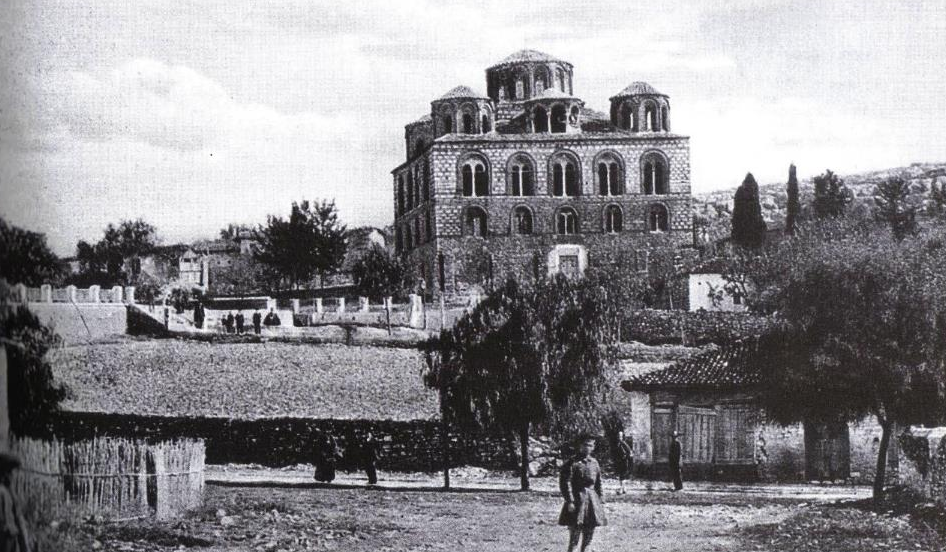
The Holy Church of Parigiritissa in Arta. Photo 1890
The Church of Parigoritissa is dedicated to the Annunciation of the Virgin Mary and was built at the end of the 13th century on the site of an older church by Nikiforos I Komnenos Doukas, Despot of Epirus, his wife Anna Palaiologina, and their son Thomas, according to an inscription preserved above the central entrance of the monument. The ground floor has a layout similar to that of octagonal churches, while the upper floor follows the type of a cruciform inscribed church. The main church is square, without internal supports. Its characteristic feature is the original system of supporting the dome on eight pillars, on which columns in three successive rows rest.
At the base of the dome, on the large arches of the vaults, there was sculpted decoration, of which only the complexes of the Nativity and the Lamb, framed by Evangelists and Prophets, survive today. The themes and technique of the sculptures reveal Western influences.
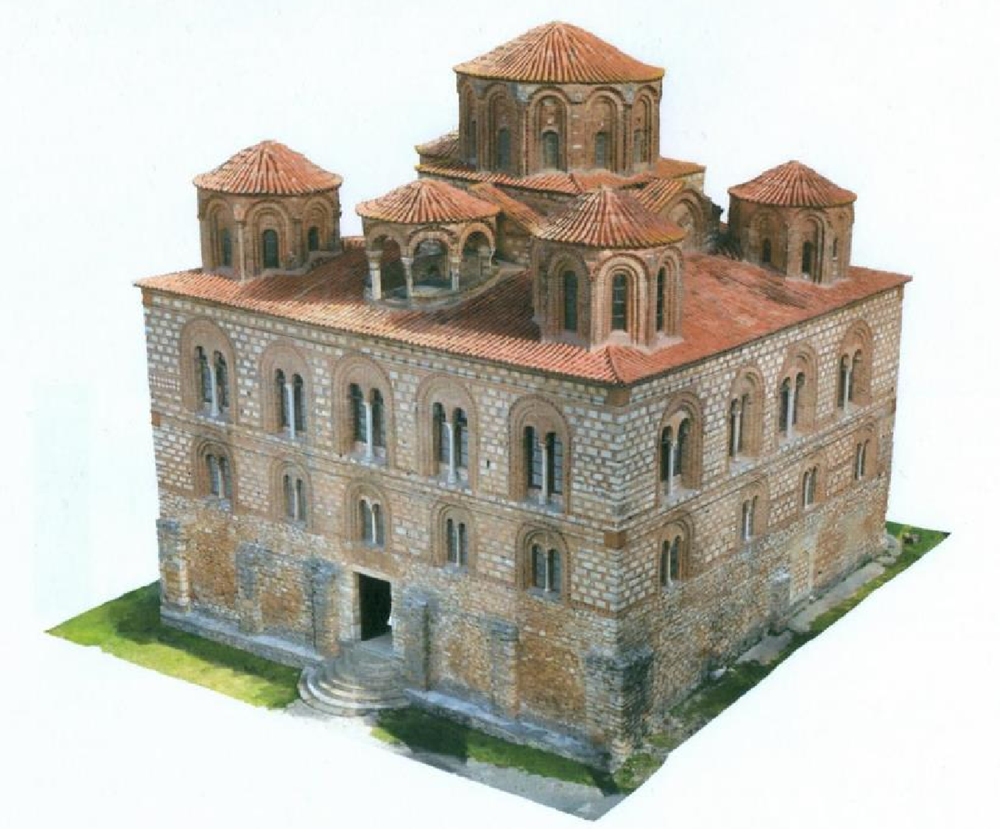
The church in its present form is largely the result of restoration work carried out by Orlandos in the 20th century.
The frescoes adorning the walls date from different periods. Those in the sanctuary are the work of the monk Ananias and date back to 1558, while the frescoes in the main church probably date back to the late 17th or early 18th century. The frescoes in the narthex are even more recent.
On the outside, on the east side of the church, there are five arches, which, like the rest of the walls, have rich ceramic decorations (meanders, crosses, rhombuses, etc.).


Leave A Comment