
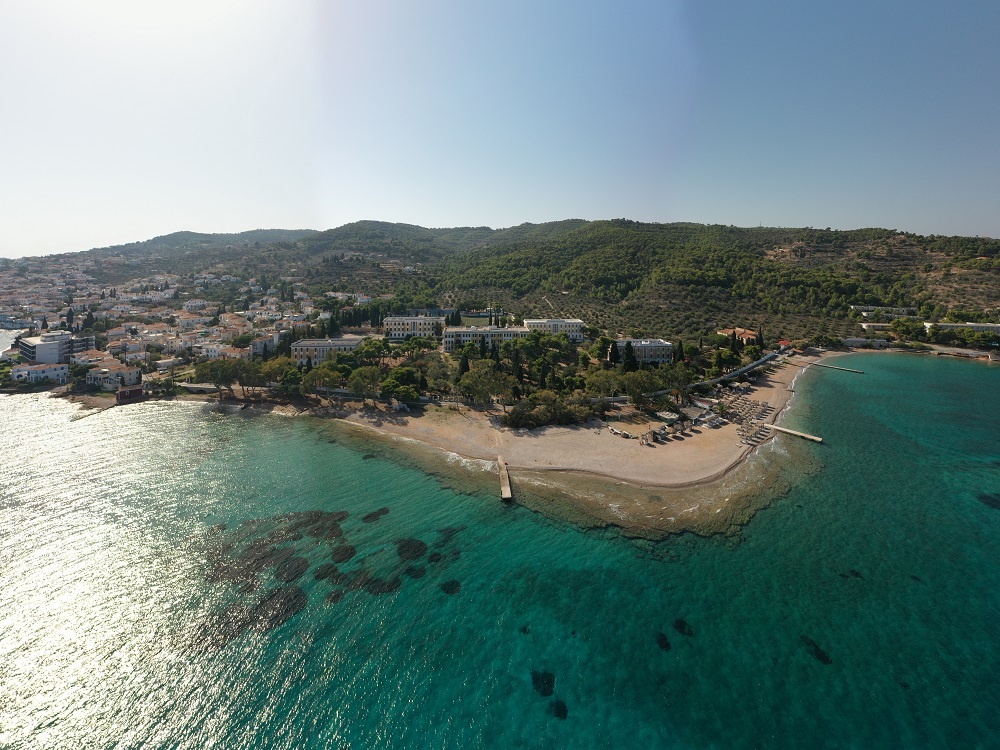
There are places where history has left such a mark that it remains alive—and therefore present—to this day. Visitors can almost touch it—on the walls of houses, in the alleys, at the monuments…
Spetses is certainly one such place. However, the island is known worldwide for its cosmopolitan atmosphere. Famous visitors seeking a slower-paced vacation destination created the cosmopolitan circles that made Spetses famous. From the 1950s onward, Spetses was no longer exclusively the “Island of the Revolution” but a destination that embodied the magic and charm of the Greek summer.
The small boats approaching the old port of Spetses are greeted by the bronze statue of the fire ship captain Kosmas Barbatsis, a work by sculptor Natalia Mela. Under the gaze of this hero of the Revolution, sailboats and caiques from the traditional shipyards set sail. From this port set sail the merchant ships of the island’s shipowners, which traveled throughout the Mediterranean and the Black Sea, as well as the warships of Laskarina Bouboulina, which took part in the Revolution.
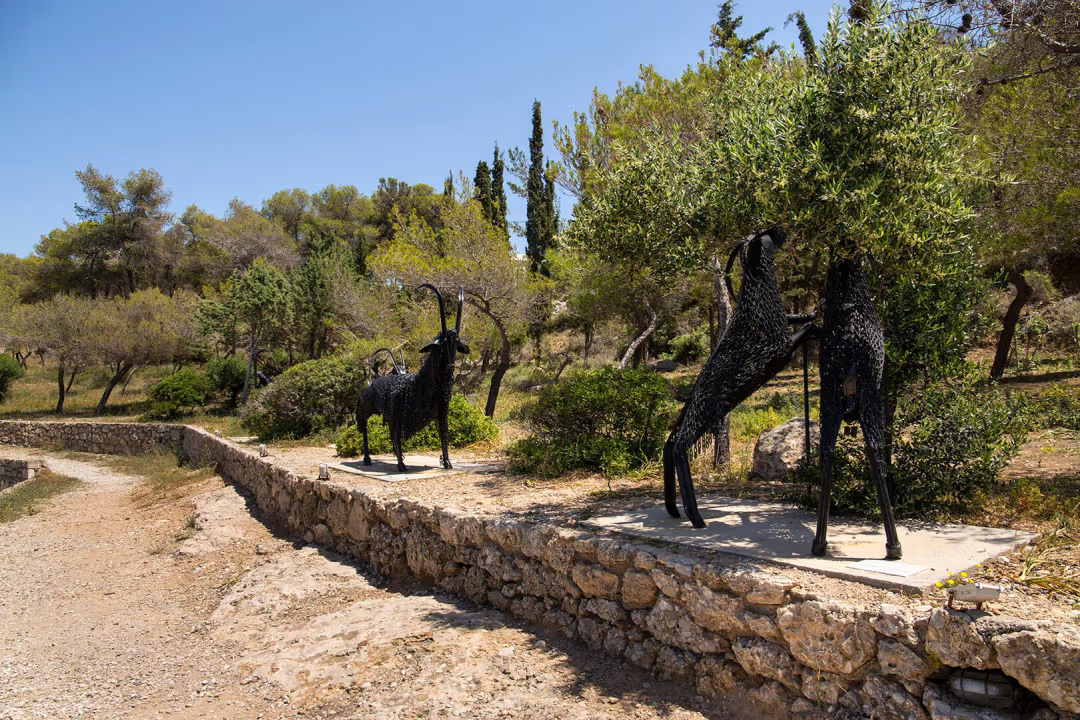
Lighthouse – Sculptures by Natalia Mela
Not far from the harbor stands the island’s lighthouse, which was built in 1885. It is ten meters tall, and the lighthouse keepers’ residence is located right next to it. This lighthouse replaced an older one from 1837, whose exact location is unknown, but it is indicative of Spetses’s maritime importance, as it was one of the first lighthouses to operate along the Greek coast.
The island’s modern needs are served by Dapia, the new port. It is located in the center of Spetses town, where taxis and scheduled ferries dock. This is where routes to the island’s interior begin and end, and it also serves as the starting point for horse-drawn carriages.
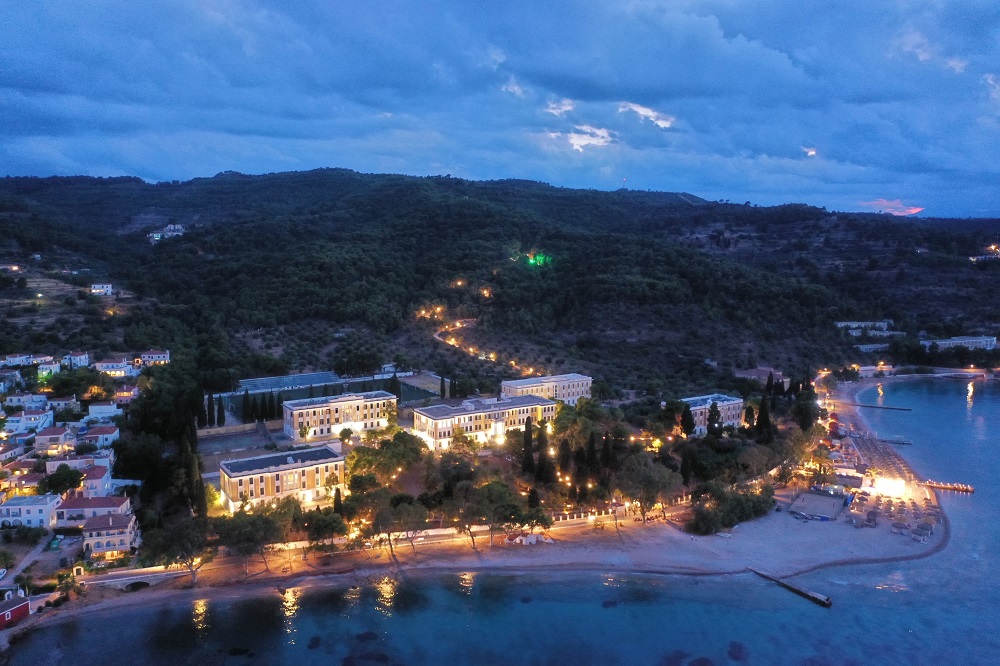
A unique experience offered by the island of Spetses is a stroll along the seaside road from Dapia, either toward the Old Harbor or toward the Anargyrios and Korgialeneios School of Spetses (A.K.S.S.), a project of the philanthropist Sotirios Anargyros, who founded the School in 1924; it operated as a college with a pioneering educational system. Today, the School continues to operate as an educational, cultural, and athletic center hosting summer schools and conferences.
In the city center stands the Mansion of Laskarina Bouboulina, which houses the Bouboulina Museum, where personal belongings, weapons, embroideries, and portraits of the heroine, as well as other 18th-century artifacts, are on display. The carved ceiling of the mansion’s grand hall is a sight of unique beauty; it has been restored and retains its original, impressive appearance.
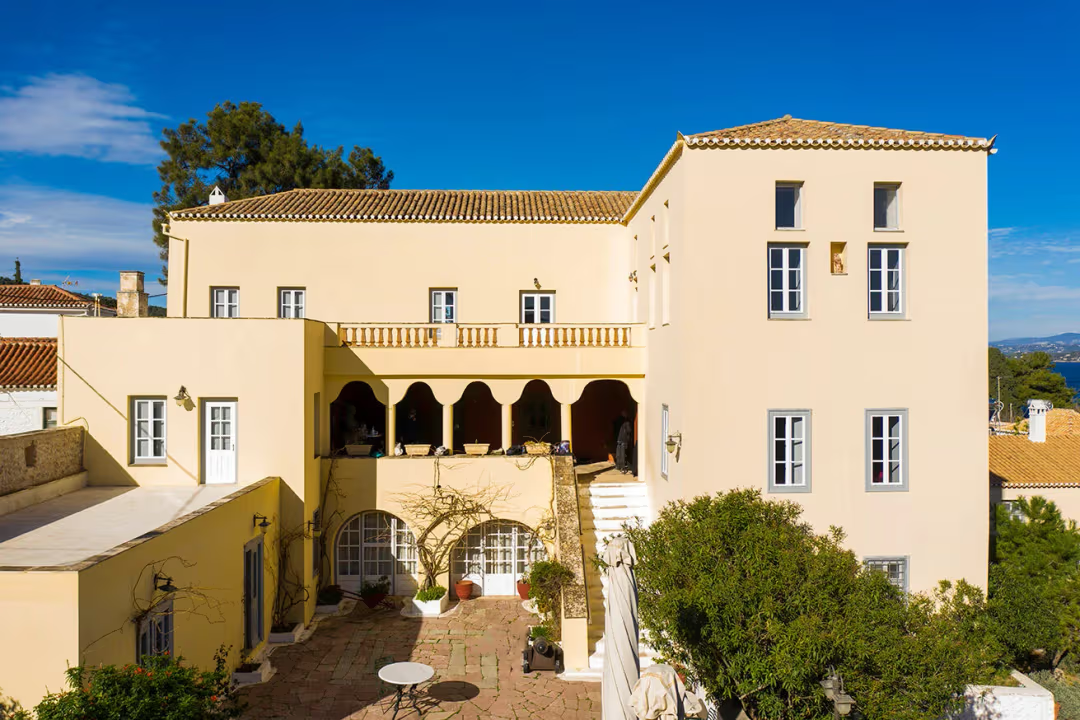
Bouboulina Museum
Nearby, the Spetses Museum houses historical and archaeological artifacts from the island. It is located in the mansion of shipowner and revolutionary Hatzigiannis Mexis. The magnificent building highlights the prosperity and wealth of Spetses in the pre-revolutionary era, which was due to its merchant fleet. At the same time, visitors have the opportunity to explore the rooms and experience daily life in such a residence at the end of the 18th century. The office, the room with the safe, the women’s quarters, the guesthouse, the courtyard, and “the grand hall” all bring to life the business meetings, the preparations for the Revolution, as well as the celebrations, the anxieties, and the daily activities of the people who lived in these spaces.
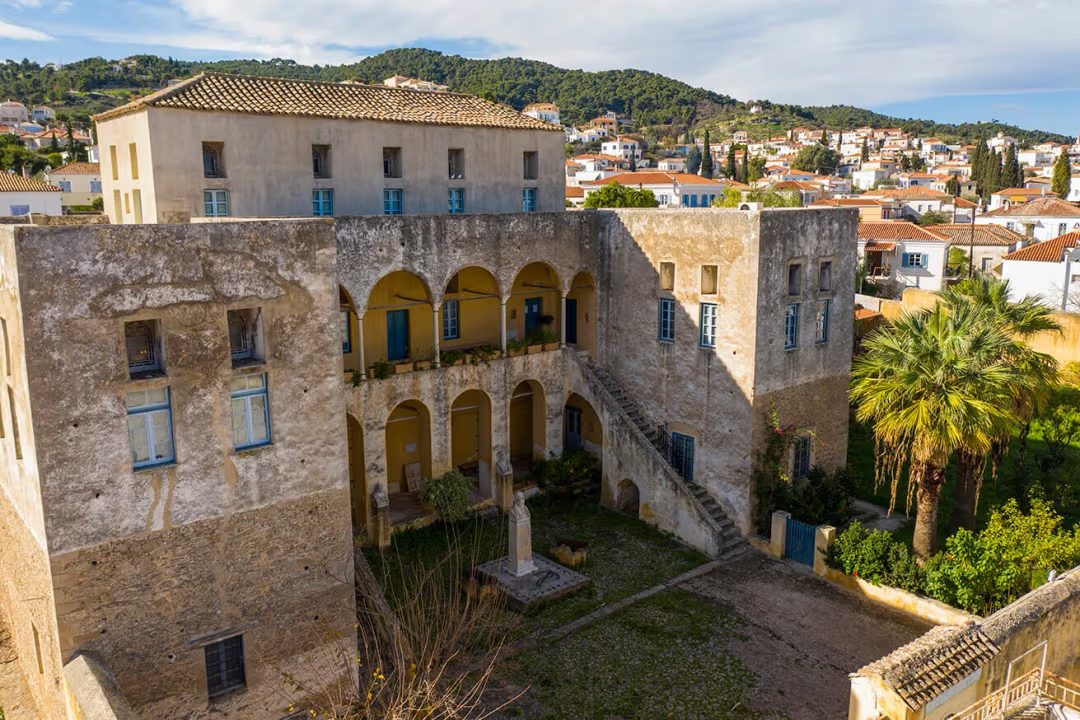
Spetses Museum: The Hatzigiannis Mexis Mansion
However, every corner, every turn, every narrow street on the island offers a breathtaking view, with houses from centuries past, well-maintained facades, striking colors, and traditional architecture that coexists with the island’s history and aristocratic style.

The Spetses of Elytis, Fowles, Mela, Mantas, and Gortzos still exist…
They are protected by the iron cannons at the Old Harbor…



Leave A Comment