The building housing the Archaeological Museum of Heraklion occupies the city’s ancient harbor, the very site where the Venetian monastery of St. Francis was built—a landmark for ships arriving at the port from all corners of the Mediterranean. It was in this monastery, after it was converted into the Hunkar Mosque, that the conqueror of the ruined Handakas offered his first prayer following twenty-one years of a grueling siege.
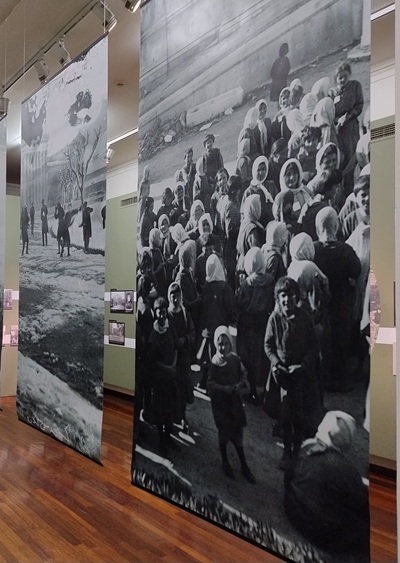
The roundtable discussion titled “The Hill of the Monastery of St. Francis and the Fall of Handakas” is one of the four pillars of the temporary exhibition “In the Middle of the World. Crete in European Cartography from the 16th to the 18th Century: Representations and Identities,” all of which aim to present the exhibition to visitors in the best possible light. The Round Table aims to reveal aspects and details of the siege of Handakas through the eyes of an Ottoman anti-hero who recounted the siege, based on the account of the conversion of the Monastery of St. Francis— the iconic monastery—a landmark for many decades—into the Hunkar Mosque, and through archaeological research conducted in recent years, both at the remains of the monastery, on the hill, where the Heraklion Archaeological Museum now stands, as well as on the walls of Handakas, which withstood twenty years of relentless Ottoman attacks until their final fall.
The presentation of these events will conclude with a screening of the film: “The Siege of Handakas” (Magenta TV, directed by Orpheas Peretzis, narrated by Alexandros Logothetis), which chronicles the final days of the siege and the fall of the city to the Ottomans.


Leave A Comment