On Wednesday, October 7, 2026, at the Benaki Museum / 138 Piraeus Street, the major retrospective exhibition “Alekos V. Levidis. Painting 1961–2026. A Lifelong Game” will open, the first retrospective exhibition dedicated to the work of painter and academic Alekos V. Levidis.
The exhibition spans his entire artistic career, from 1961 to the present, and traces the evolution of his painting over more than six decades of creative work. The exhibition is curated by the artist himself in collaboration with Marika Robou-Levidis. The exhibition will run from October 8, 2026, to February 14, 2027.
For him, the Benaki Museum had always been the natural venue for such an exhibition. He had been planning and envisioning it for years. Its realization marks the culmination of a long-standing, difficult, and demanding endeavor that he experienced as a special challenge. The realization of this project—which includes the exhibition and the publication of an accompanying book in Greek and English (in two separate volumes)—was made possible through the generous support of the Academy of Athens, the Ioannis F. Kostopoulou Foundation, the Ministry of Culture, the families of Dimitrios Prokopios and Michalis and Nikolaos Lykiardopoulos, Sandra Lykiardopoulou, Michalis and Myrto Patera, and, finally, Nikolaos and Irini Laimos.
Levidis consciously chose to curate the exhibition himself, with the assistance of his partner, social anthropologist Marika Robou-Levidis, believing that they know his work better than anyone else, no matter how specialized a scholar may be in the field of art theory or art history. He sought this intimacy of perspective and knowledge of the content. Their goal is to highlight the connections between the seemingly distinct categories of the painter’s work, such as, for example, his drawings, paintings, and sketchbooks.
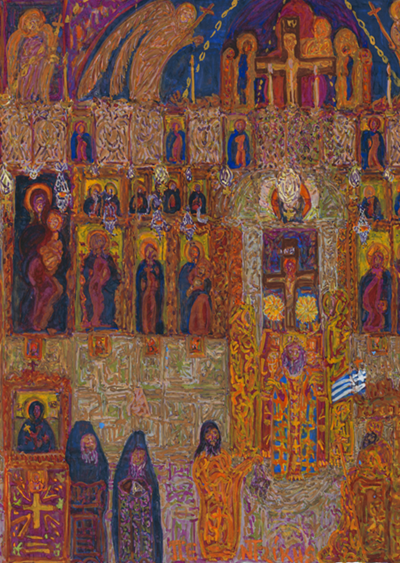
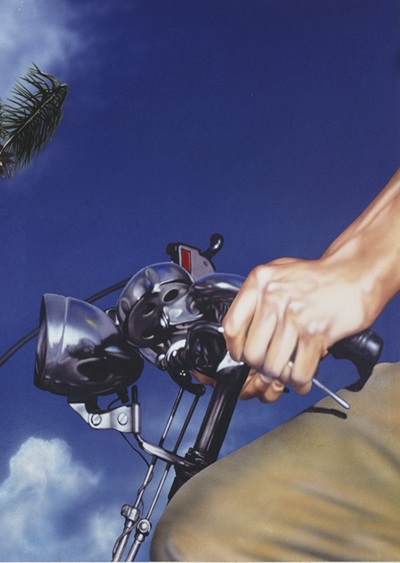
The exhibition features over 500 works: paintings, drawings, murals, set designs, book illustrations, installations, and art journals. It is organized into sections; however, the chronology of the works is also taken into account where necessary. The criteria for selecting the works on display are both “objective” and subjective or emotional. The wall texts, written by the painter himself, are in the first person so that they speak directly to the viewer, who is guided through the exhibition by the artist himself. The architectural design of the space was undertaken collaboratively by the painter himself, set designer Pavlos Thanopoulos, and the exhibition’s co-curator.
In the first section, the tour of the exhibition begins with his very early works, starting in 1961, when the painter was 17 years old. The works from the 1960s and 1970s consist almost exclusively of drawings, many of which have political content. This was a period marked, both in Greece and internationally, by dictatorships, wars, and intense social upheavals. As a teenager and later as a young man, Levidis observed these events with interest and concern, expressing his thoughts through his art.
After the political transition, these works—testaments to an era—were deliberately kept in a drawer and exhibited only once, in 2006, at the Astra Gallery, under the title “Testimonies 1965–1976.”
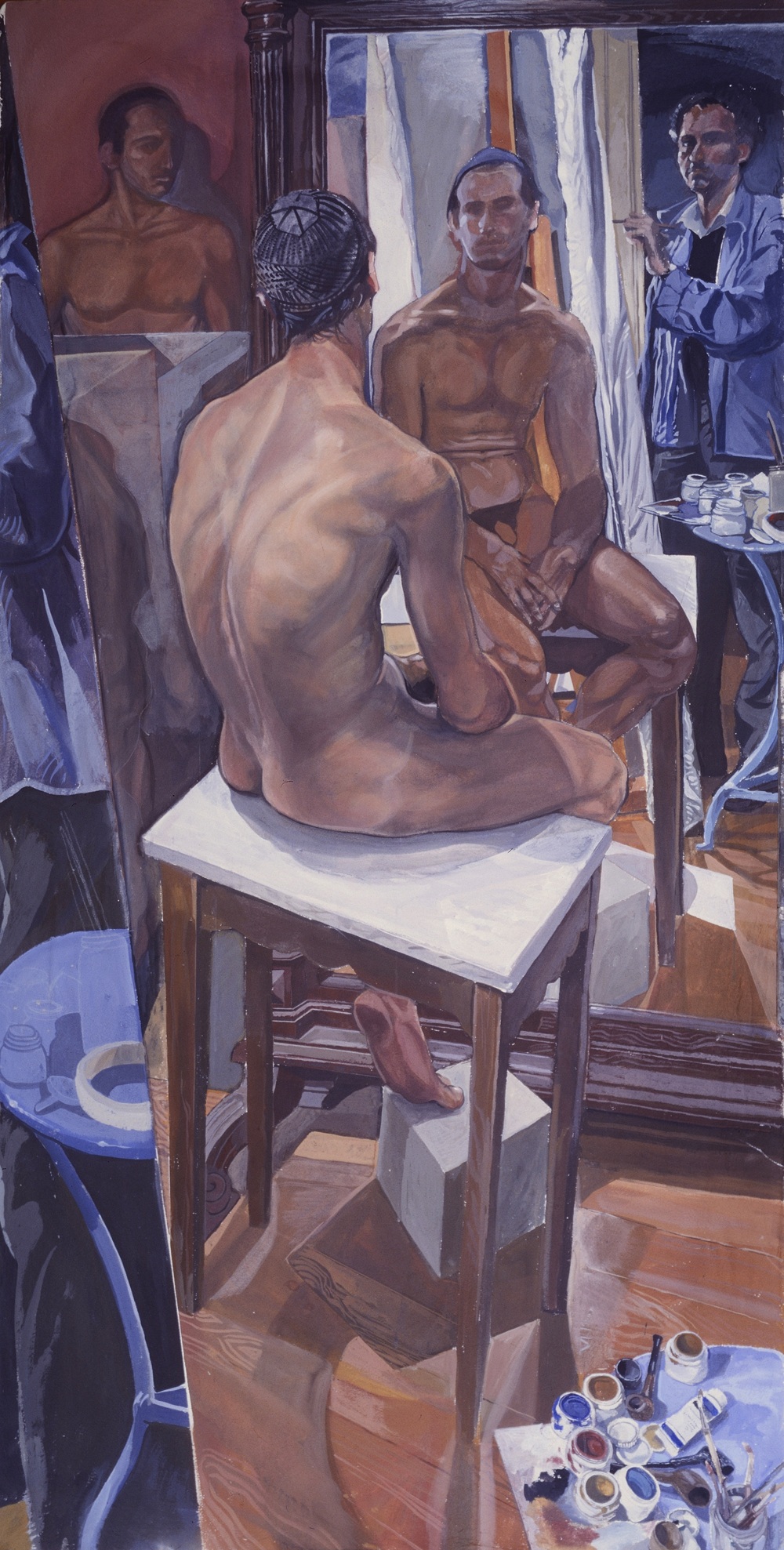
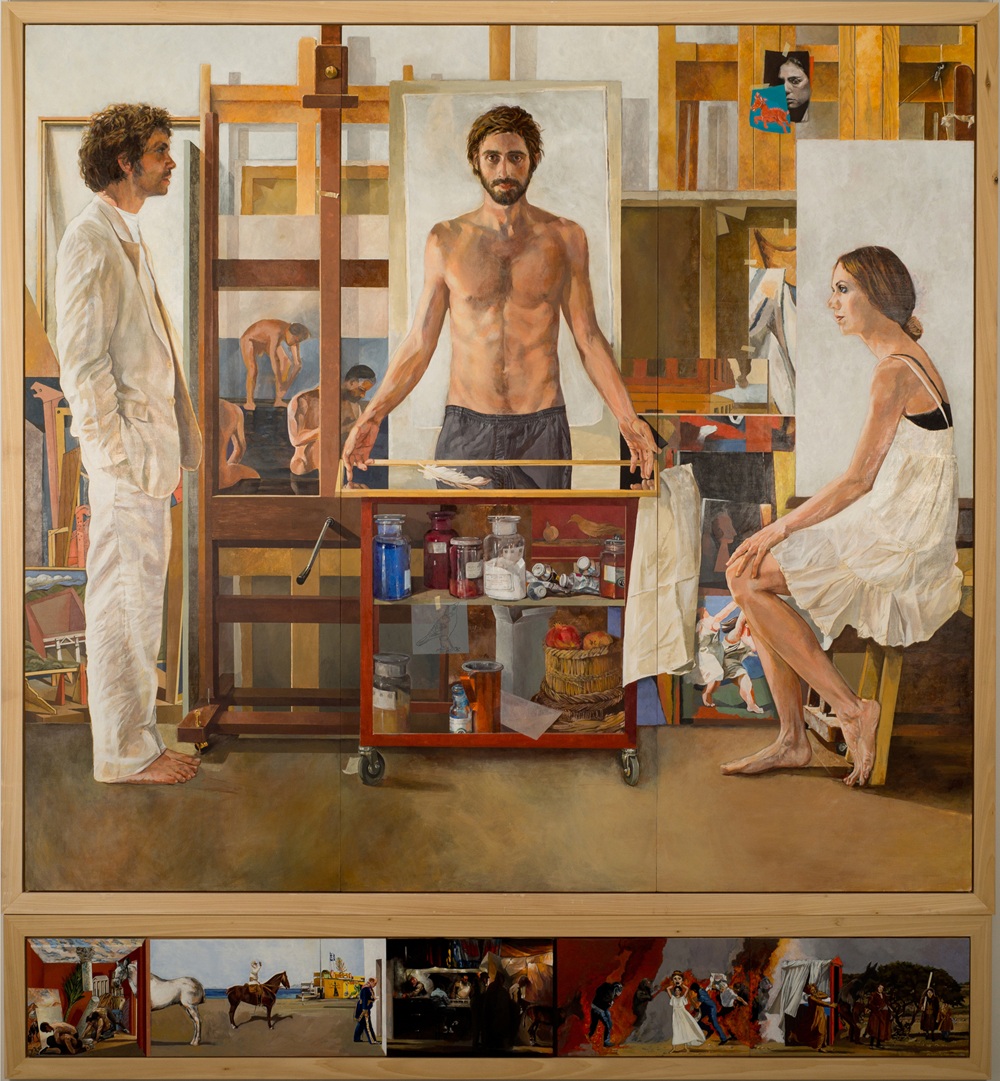
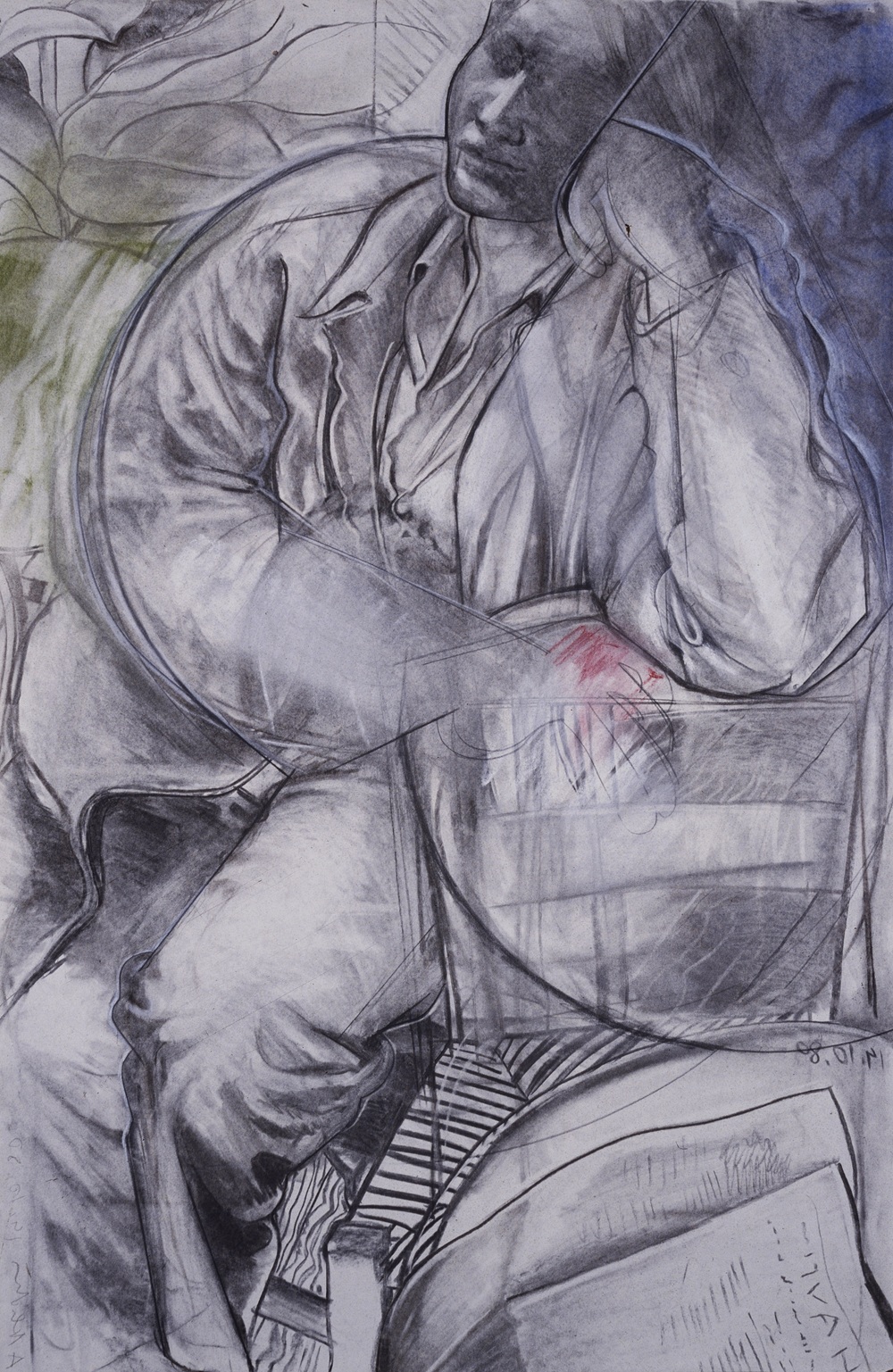
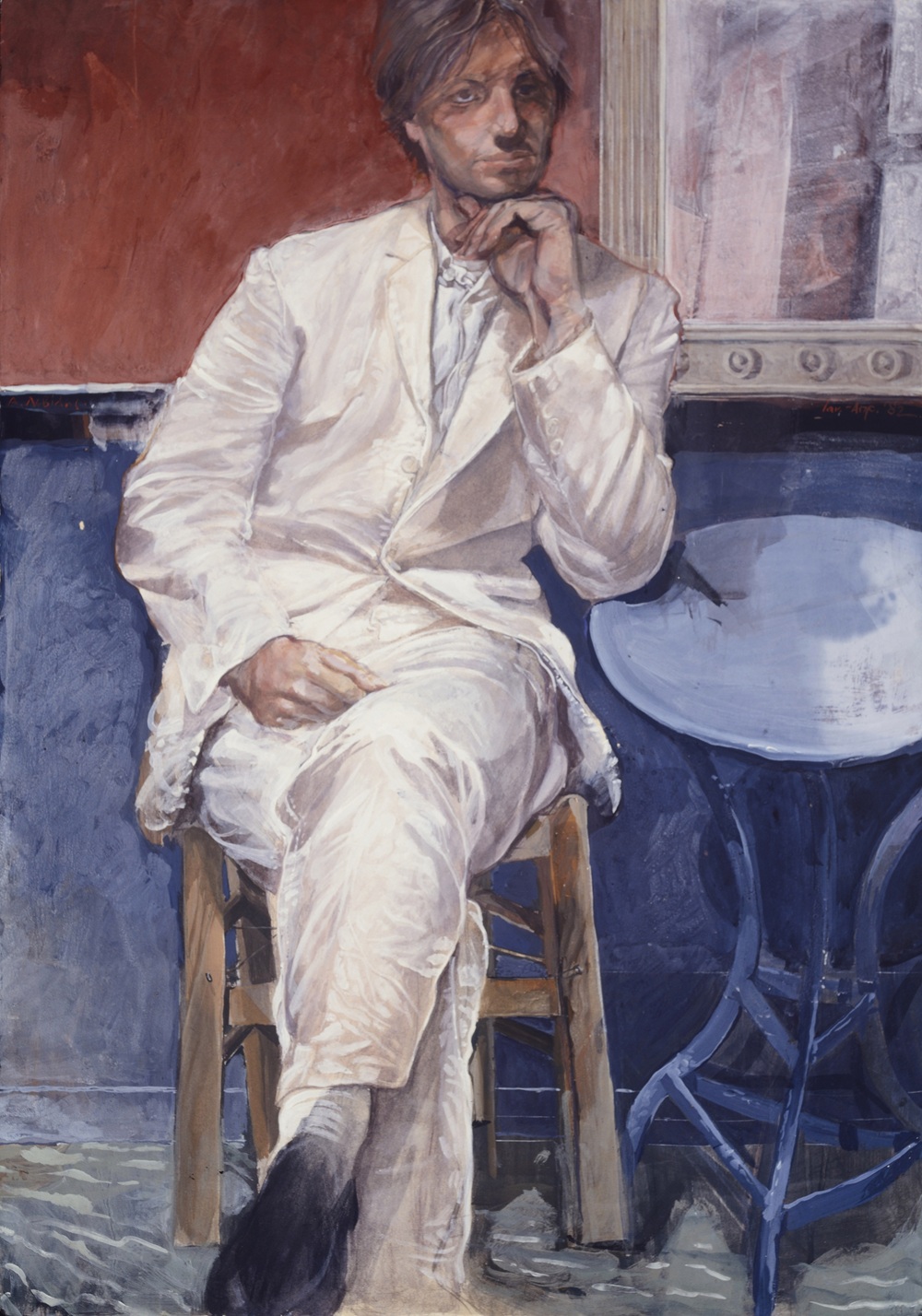
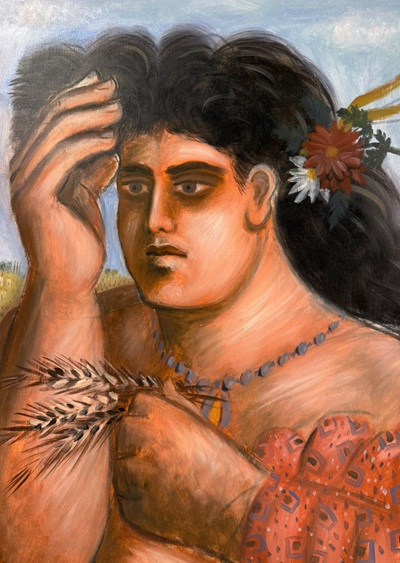
The journey through the second section continues with six early portraits, painted at the turn of the 1970s and 1980s, which introduce the viewer to the theme of the human figure. There, works depicting models—usually in the artist’s studio— painted using mixed media or pastels, as well as drawings in colored pencils or charcoal, are displayed freely throughout the space, surrounded by anthropocentric works and drawings from other decades and display cases containing sketchbooks with notes related to them. A smaller, enclosed space features thirteen portraits from very different periods. Three of these, painted over the last three years, are on public display for the first time and belong to the Ioannis F. Kostopoulos Foundation.
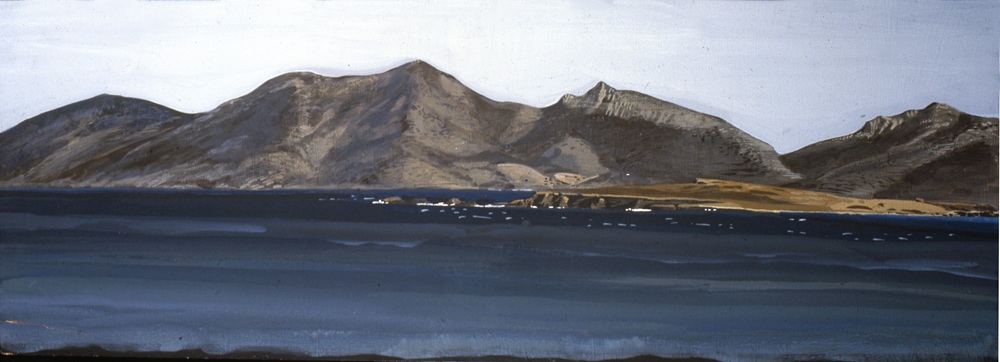
The next section then features a series of landscapes interwoven with still lifes that, for the most part, were painted in the 1980s and 1990s, as well as display cases with sketchbooks tracing the painter’s artistic journey during that period. A large double “gate,” which is part of a mural in a residence that, when the property changed hands, was removed by the Benaki Museum’s conservation department and has been reconstructed specifically for this exhibition. Passing through it, we are led to the works on “Greater Greece” that Levidis created in 2000 to mark the dawn of the new millennium, commissioned by AGET Heracles.
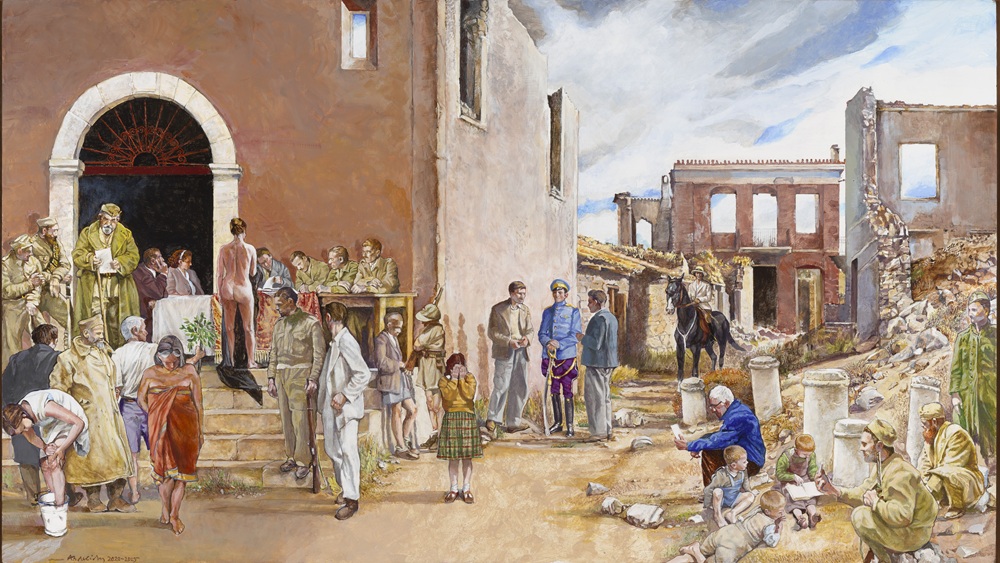
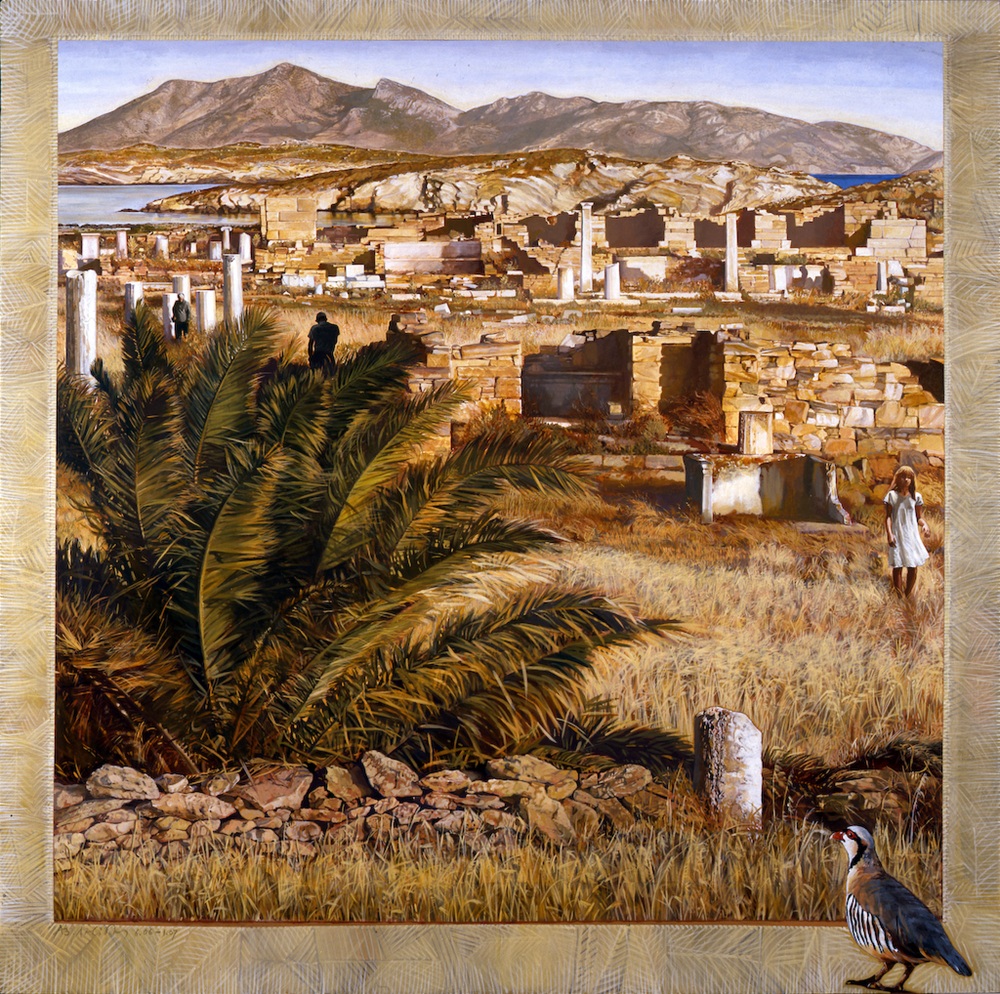
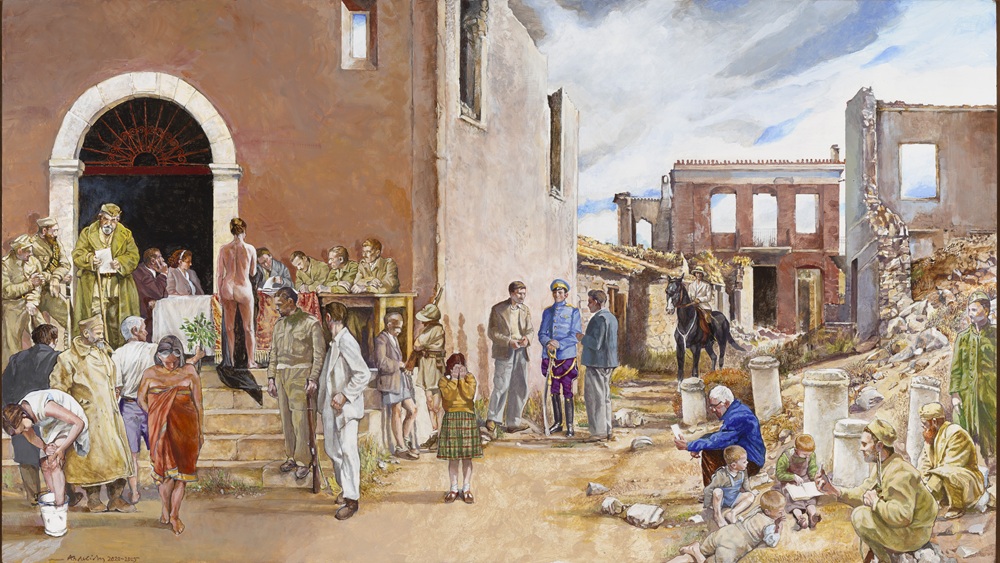
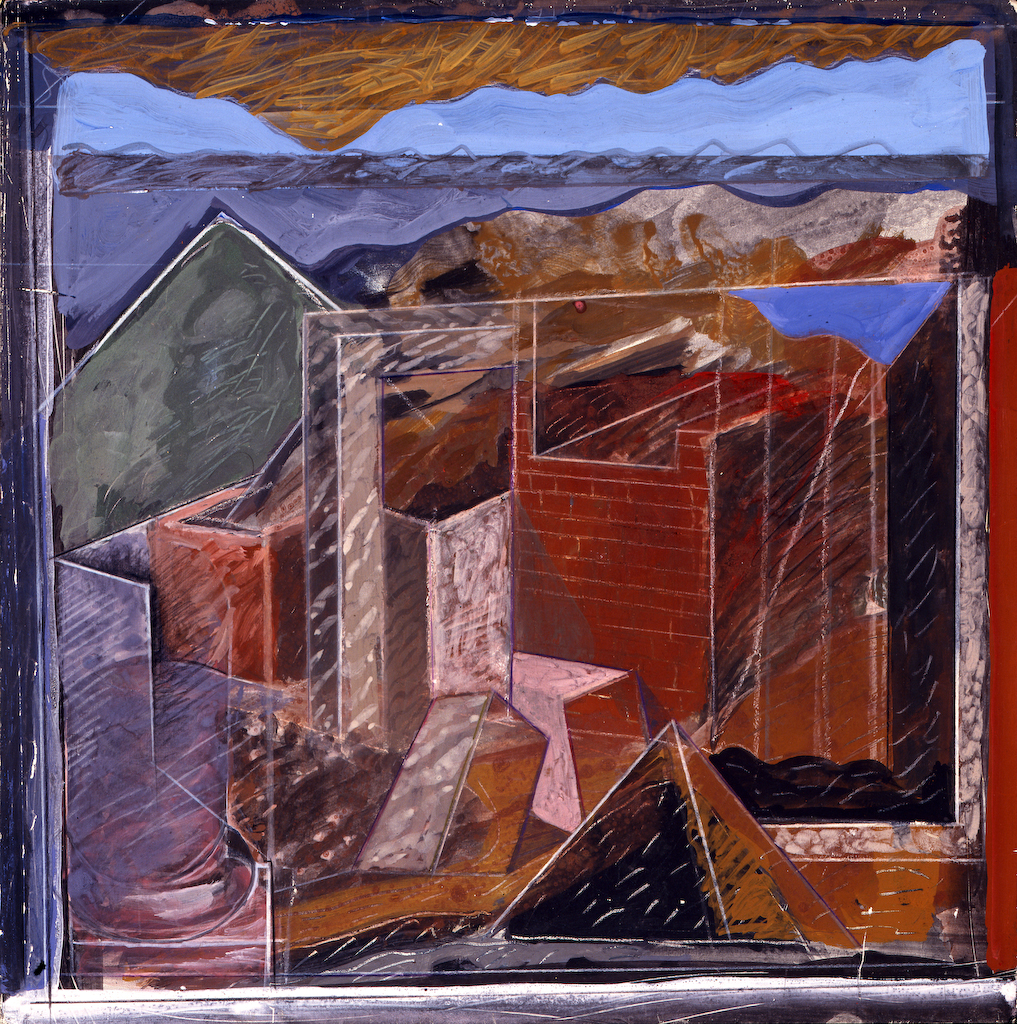
In the very large ground-floor hall on Pireos Street—which has been rearranged for the occasion, always with the aim of creating a sense of depth and openness—works from the “Myth-Historical” section have been displayed, that is, works in which personal history meets broader history and myth meets reality. Included are works from the exhibitions Swimmers (Athens Art Gallery, 1991), “Twelve Paintings” (Athens Art Gallery, 2004), and “Myth-Historias” (Hatzikyriakou–Gika Art Gallery, 2020). Next, a distinctly delineated space houses over thirty works, square in shape and small in size (35 × 35 cm, Illustrations, 1990, and 36 × 36 cm, 36 × 36: Painting Essays, 2018), the “nursery” of the “mythistories,” which span several decades, from the ’80s to the very recent years. Display cases containing visual art notebooks round out the presentation of the painter’s artistic journey.
At the end of the main exhibition space, a representative selection of book cover mockups is on display—an activity to which Levidis has devoted himself intensively and over the years. His collaborations with Agra Publications, the University of Crete Press, Kedros, Estia, Alexandria, François Maspero Publications, the Athens Concert Hall, the “Friends of Music” Association, the National Bank of Greece Cultural Foundation, and others are presented collectively after many years and highlight his intention to treat each cover as a work of art.
The exhibition is complemented by installations such as “Memory of Palmyra,” which was set up in the building on Koumbari Street in 2016, when Palmyra was looted and archaeologist Khaled Al Asaad was brutally beheaded by ISIS, or sections of the Prop prop room from the 1995 and 2002 Argos Festivals.
Finally, in a separate room on the ground floor of 138 Pireos Street, set designs created by Levidis are on display, the most prominent of which is the one for Sophocles’ Antigone, directed by Lefteris Vogiatzis in 199 2 at the Kyklades Street Theater.



Leave A Comment