The House of Cyprus is perhaps the most important center of Cypriot culture in the heart of Athens. Since its establishment in 1987 in Kolonaki, until its relocation in December 2011 to the new building of the Cypriot Embassy (2A Xenophontos Street, in Syntagma), it has played and continues to play an essential role in promoting the intellectual output of Cypriot artists and writers, as well as in cultivating and strengthening cultural ties between Greece and Cyprus.
Since 2024, Diomides Nikita has been at the helm of this important cultural hub, a man who has revamped the style of the House of Cyprus, introduced new annual institutions and contemporary themed events, attracted a younger audience to this cultural community, and opened up opportunities for platforms that will monitor the artistic exchanges between Greece and Cyprus in the coming years. Moreover, the House of Cyprus, as a contemporary “hub” of cultural exchanges, utilizes a wide range of interdisciplinary practices, rendering activities accessible to the public, from the academic and scientific community to the visual arts, and from the performing arts to literature, music, poetry, and cinema.
Diomides Nikita welcomed Days of Art in Greece to the House of Cyprus permanent home, within the Cypriot Embassy, guiding us through the art hall, the lecture hall, and the library before giving us a detailed account of the organization’s most recent achievements, its plans for Cyprus’s Presidency of the Council of the EU (first half of 2026), his colleagues at the House of Cyprus, and, of course, his personal journey.
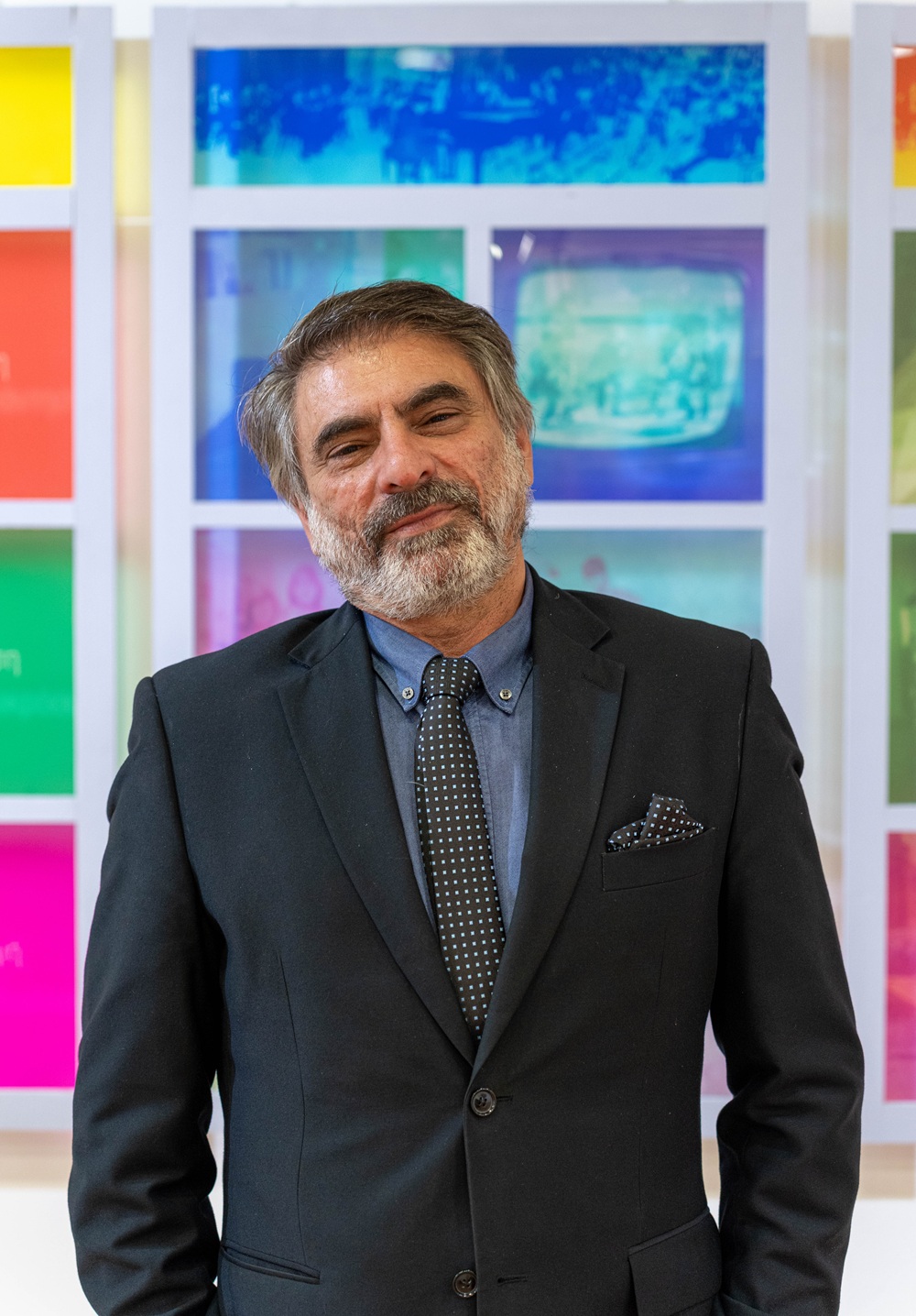
Director Diomides Nikita in the art hall of the House of Cyprus
Days of Art in Greece: Who are the Cypriot artists active in Greece, and who are the scientists and academics producing work in our country?
Diomides Nikita: The Cypriot artistic community active in Greece is particularly dynamic and diverse, with a presence in all fields of contemporary creation, from the visual and performing arts to cinema, music, and literature. These are creators from different generations who participate actively in Greek cultural life, often with work that engages with issues of identity, historical memory, folk tradition, and contemporary experience. Similarly, the Cypriot scientific and academic community in Greece produces important and internationally recognized work in universities and research centers, often acting as a bridge of knowledge and cooperation between Greece, Cyprus, and abroad.
In this vibrant and polyphonic environment, the House of Cyprus functions as an open cultural and intellectual hub, creating conditions for artists, academics, and the public to meet, contributing significantly to the formation of a dynamic field of contemporary cultural presence of Cyprus in Greece.
D.A.: Can you give us a brief overview of the work of the House of Cyprus for 2025?
D.N.: Both 2025 and 2024 were two years with particular historical and symbolic significance for Cyprus and, by extension, for the House of Cyprus. 2024 marked the 50th anniversary of the brutal Turkish invasion of Cyprus, which led to the occupation of 37% of the territory of the Republic of Cyprus and the division of the island, sowing death, driving more than 200,000 Cypriots into exile, and leaving behind 6,000 dead and 1,619 missing.
The year 2025 marked the 70th anniversary of the start of Cyprus’ struggle for liberation from British colonial rule (1955-1959), which led to the proclamation of the Republic of Cyprus in 1960.
On both anniversaries, the House of Cyprus, in collaboration with the Embassy, Cypriot organisations in Greece, as well as schools and other institutions in Greece, organised a number of events to commemorate and honour the heroes and missing persons of the recent tragedy that struck the island.
In the context of 2025, the House of Cyprus developed a multi-level contemporary culture program with renewed themes, while introducing new annual institutions, such as: Cyprus Choreography Athens to promote contemporary Cypriot choreography, Women’s Week with activities and events dedicated to Cypriot women, the Panorama of Cypriot Films to promote older and contemporary Cypriot cinema and further strengthen the ties between the film families of Cyprus and Greece, participation in Francophonie Month with music, poetry, theater, and cinema, with the screening of a Cypriot film with French subtitles, the strengthening of the multi-themed Cyprus Days, an initiative of the Embassy of Cyprus that began in 2024, Cyprus Theatre Week in collaboration with the National Theatre of Greece, the Department of Contemporary Culture of the Deputy Ministry of Culture of Cyprus and the Cyprus Centre of the International Theatre Institute, and finally, the Cyprus Days tribute at the Archaeological Museum of Athens for the destruction of our cultural heritage and antiquities in the occupied part of Cyprus, an initiative of the National Archaeological Museum of Athens in collaboration with the House of Cyprus.
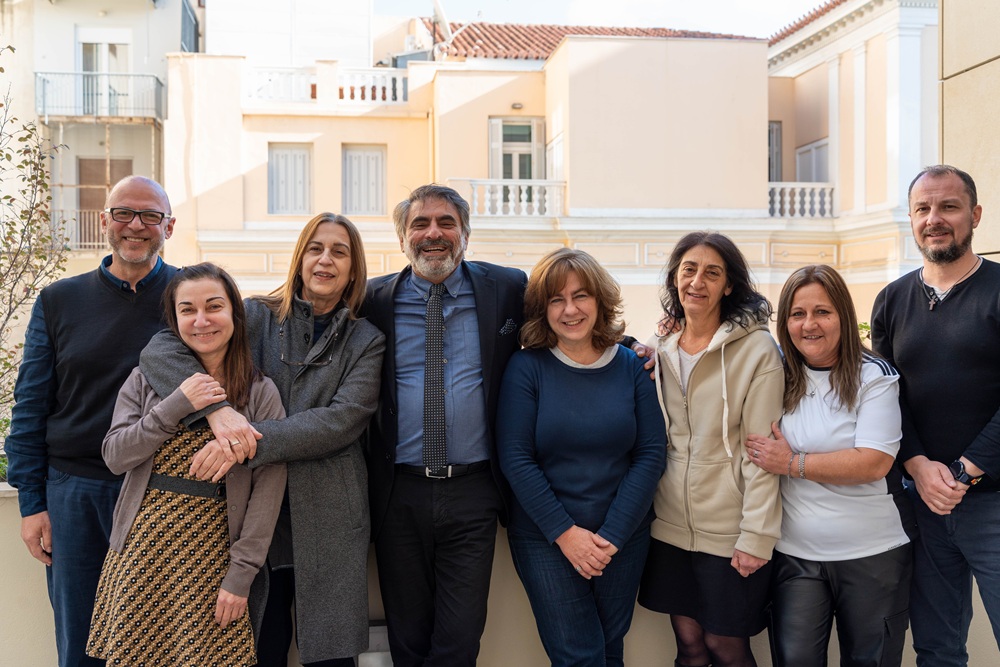
“I would like to thank my colleagues for their long-standing dedication: Maria Ragia, Takis Voilas, Eleftheria Theocharous, Andri Chrysanthou, Sofia Garpozi, Ilias Kefalas, and Chrysanthi Kouzi.” – Diomides Nikita, Director of the House of Cyprus
D.A.: What will be the role of the House of Cyprus in relation to Cyprus’ Presidency of the Council of the EU (first half of 2026)? What specific actions does it plan to implement in this direction?
D.N.: Cyprus’s assumption of the Presidency of the Council of Europe in the first half of 2026 is an important moment of extroversion and European dialogue for Cyprus. The House of Cyprus is taking on an essential role of cultural mediation in Athens, leveraging its potential as a meeting place for art, thought, and public discourse.
The House of Cyprus approaches the Presidency as an opportunity for creative reflection on European values such as democracy, human rights, cultural diversity, and freedom of expression, through contemporary artistic and interdisciplinary practices.
A coherent program of actions is being planned, including exhibitions, public discussions, artistic projects, and film/performance events that shed light on the European dialogue through the contemporary Cypriot experience, strengthening cooperation with universities, research centers, and European cultural institutions.
D.A.: How do you perceive the interactions and osmosis between the European and Greek spirit in the modern world?
D.N.: The interactions between the European and Greek spirit constitute a dialogue of timelessness, ideas, and aesthetics. The Greek philosophical and cultural tradition—Socrates, Plato, Aristotle—and European thought—Kant, Hegel, Nietzsche, Habermas—enrich our understanding of democracy, human rights, and social organization.
In today’s world, where communication technologies multiply cultural exchanges, art, philosophy, science, and public intellectualism serve as bridges between the local and the European, creating common grounds for reflection and creative expression. The House of Cyprus aspires to be such a space, where Cypriot, Greek, and European thought meet through art, reflection, and public dialogue.
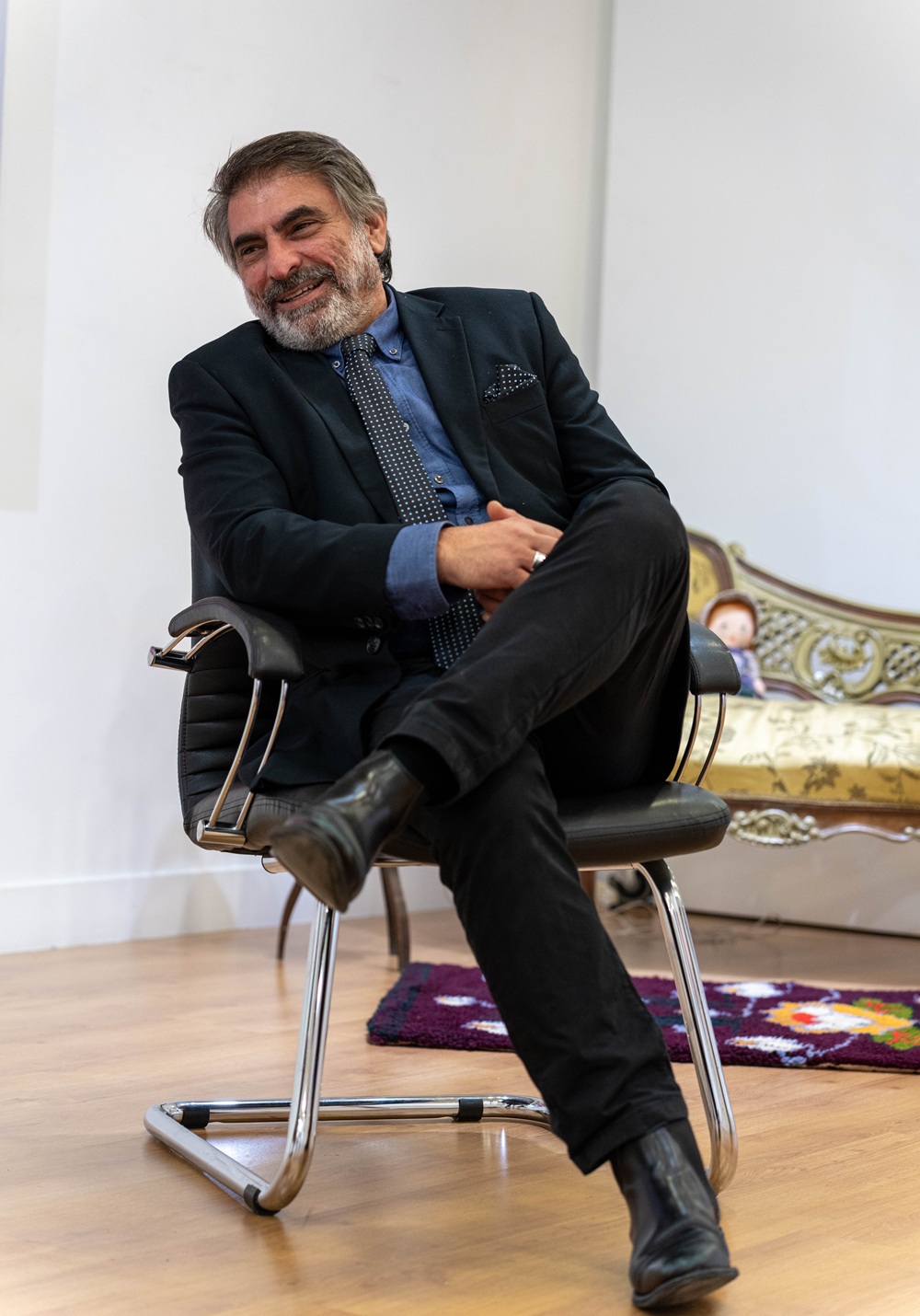
Diomides Nikita welcomed Days of Art in Greece to the House of Cyprus permanent home, within the Cypriot Embassy
D.A.: Tell us about your film studies and the works of art that have influenced you.
D.N.: Although I began studying architecture (Ecole d’architecture Paris Villemin), it wasn’t long before I switched to what had always interested me most: the arts and cinema. My creative journey has been shaped by a rich array of aesthetic, cinematic, and artistic influences. Directors such as Stanley Kubrick, Federico Fellini, Theodoros Angelopoulos, the creators of the French New Wave (Nouvelle Vague), Jean-Luc Godard, François Truffaut, Éric Rohmer, and the timeless Agnès Varda, as well as the pioneers of German expressionism with films such as The Cabinet of Dr. Caligari (Robert Wiene) and Metropolis (Fritz Lang), taught me the value of slow cinematic storytelling and directorial precision.
My studies in Aesthetic of Sciences (Esthétique de l’Art et de la Communication) allowed me to deepen my philosophical and theoretical understanding of the aesthetic approach, exploring the relationship between form, color, and meaning through different art forms. Artists such as the romantic painters of the 19th century inspired me with their emotional power and imagination, while 20th-century creators and modernists such as Kandinsky, Mondrian, Picasso, Matisse, Paul Klee, Klimt, Jackson Pollock, Niki de Saint Phalle, Takis, and Yves Klein, played a catalytic role in shaping my personal understanding of space, light, color, and texture. The combination of these cinematic and visual experiences with my theoretical training has created an approach that unites philosophy, art, and cinema, enriching and defining my own aesthetic perception of things.
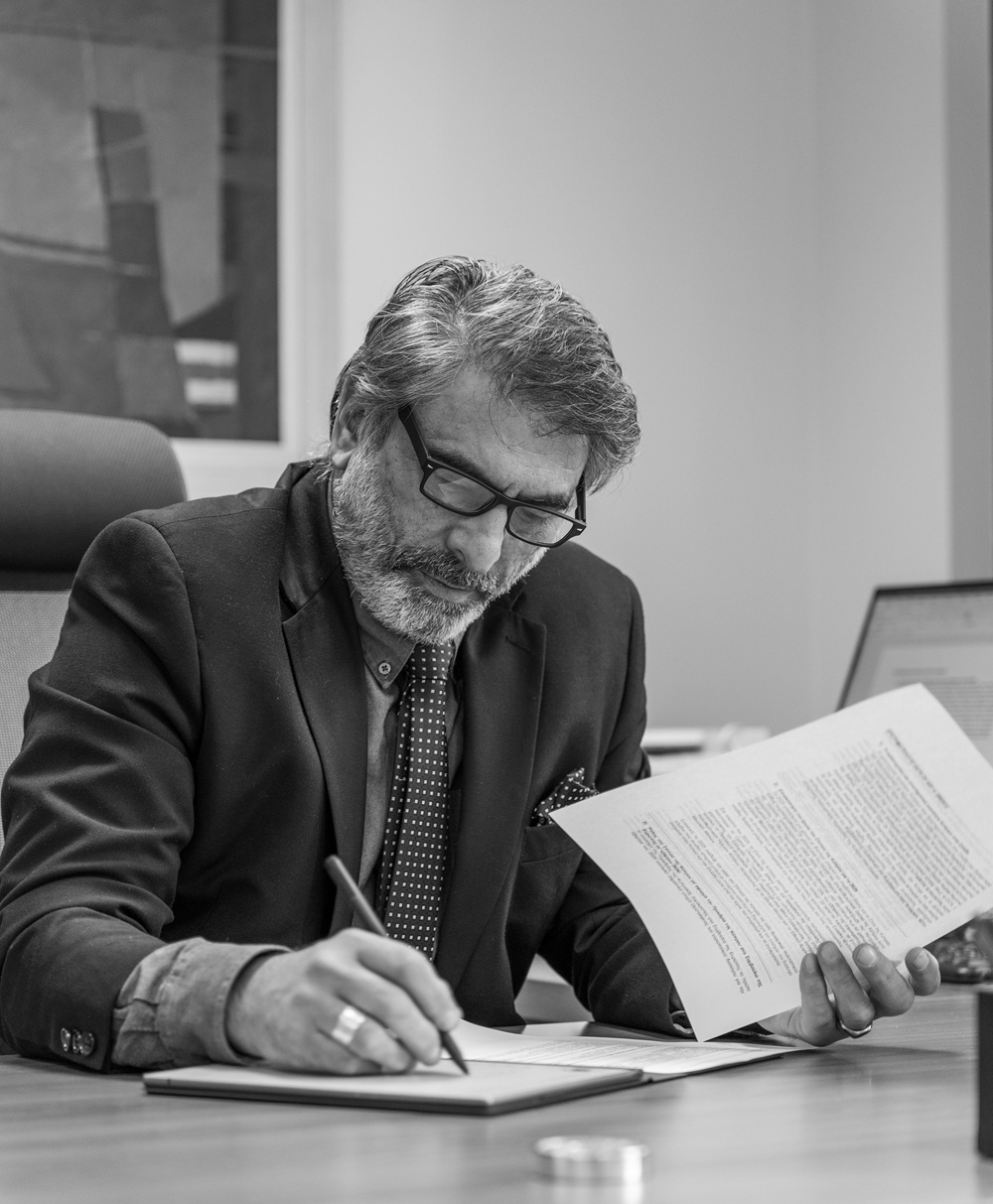
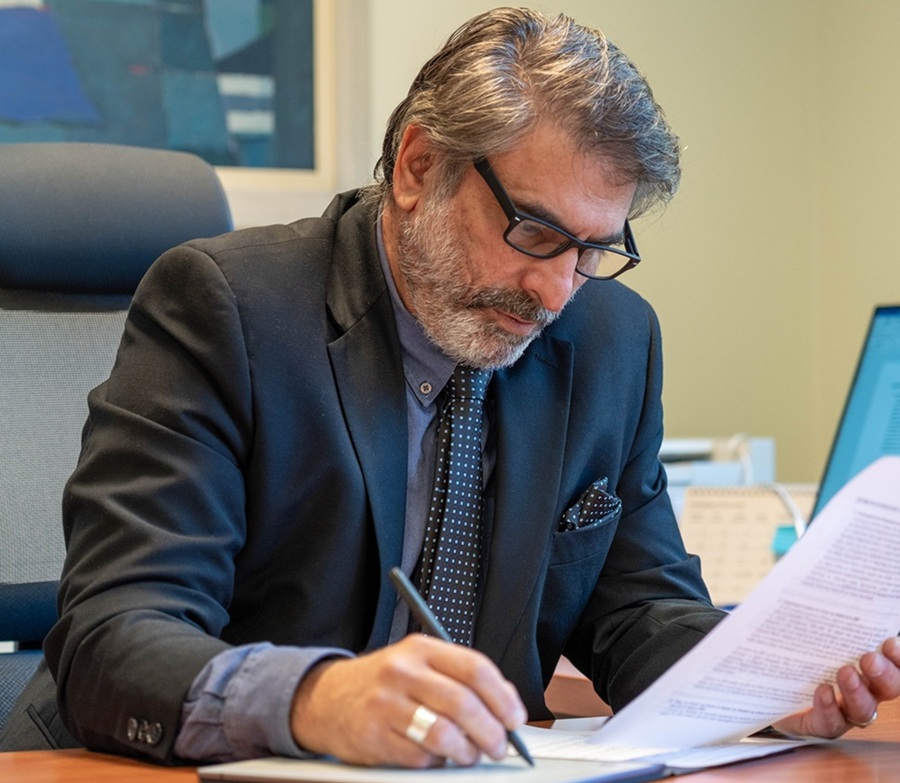
Diomides Nikita in his study
D.A.: What is the standing of Cypriot cinema in the global film industry?
D.N.: Having served Cypriot cinema tirelessly for the past 21 years, in the Department of Contemporary Culture of the Deputy Ministry of Culture of Cyprus, as well as representing Cyprus in EURIMAGES (European Cinema Support Fund), this topic is certainly very dear and familiar to me. Cypriot cinema, although younger and smaller in scale than other national cinemas, has managed to gain an important place in the global cinema map. Most films, both short and feature-length, travel to international film festivals around the world, winning important awards and recognition, standing out for their quality, themes, and unique cultural identity, addressing contemporary issues, topics of collective memory, history, and issues centred on people, society, and more. This position is further strengthened by the creation of a dynamic network of producers, directors, and technicians, connecting Cyprus with Greece, Europe, and the rest of the world. It should be noted that Cypriot films participate in several festivals in Greece, including Thessaloniki, Drama, Syros, Samos, and Kastelorizo, and sometimes compete for the IRIS awards. Cypriot films are also promoted through the booths maintained by Cyprus at international festivals such as Cannes, Berlin, Clermont Ferrant, and Annesi.
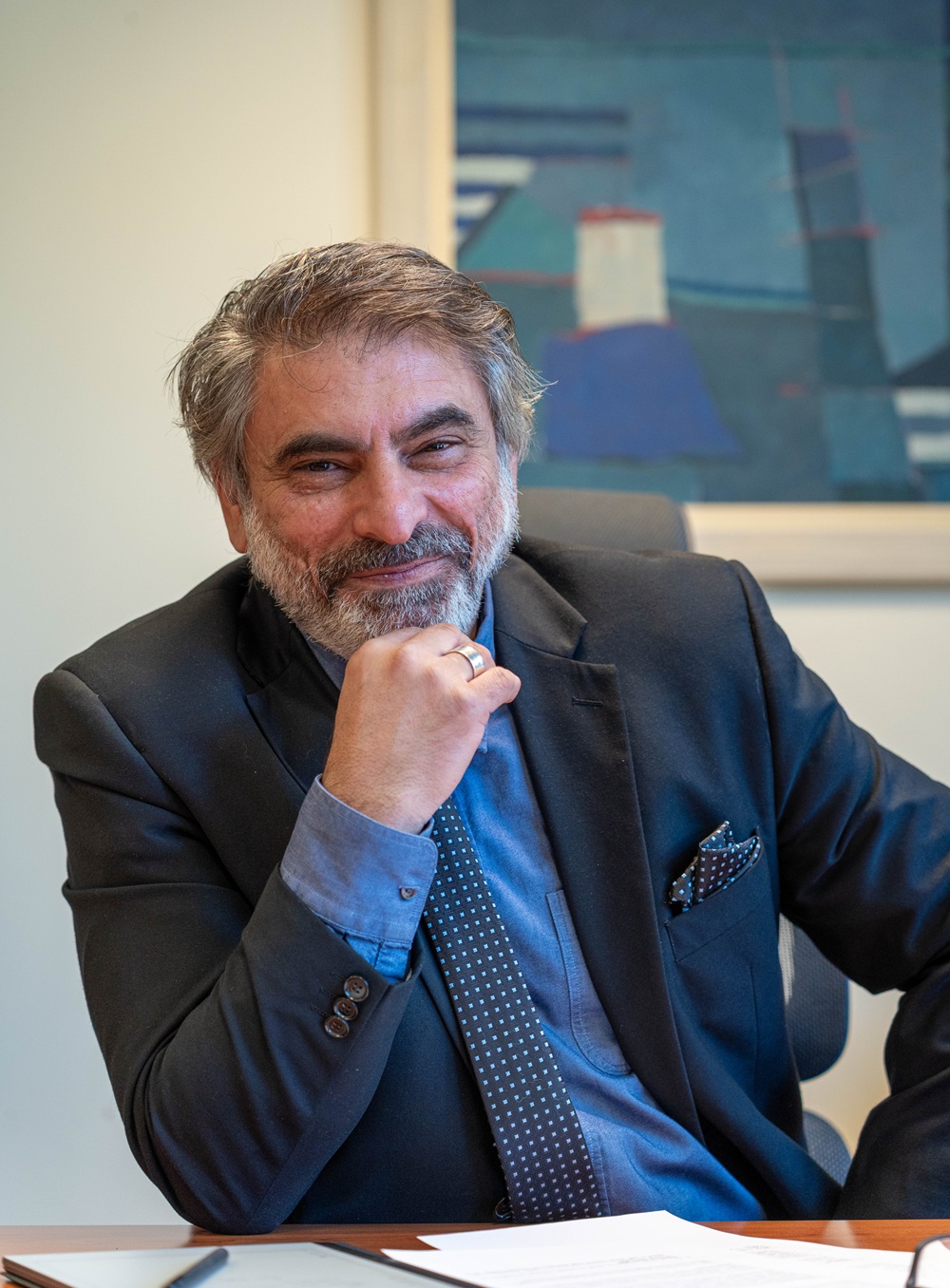
Diomides Nikita
D.A.: How does your wife, Catherine Louis Nikita—holder of the French Order of Arts and Letters—support your work?
D.N.: Catherine and I met during our studies at the Sorbonne in Paris. We started with a common foundation in aesthetics of science (Esthétique de l’Art et de la Communication), although she went on to specialize further in Art History (Histoire de l’Art), Cultural Management (ingénierie culturelle), and the Restoration of Historic Monuments (réhabilitation de monuments historiques), while I focused on Audiovisual Media and Cinema (langage des techniques des médias et du cinéma). She is a person whose mind never stops thinking. She comes up with new ideas, initiates artistic collaborations with creators, curates exhibitions and cultural activities, conducts museological research, and works as a communications and arts consultant. It is worth noting that he directed one of Cyprus’ most important cultural centers, the Evagoras Lanitis Centre (at the Lanitis carob mills) in Limassol, for over 25 years. Now, due to my posting in Athens, the way and time we meet has changed. However, this has not changed the way we have always worked. On the contrary, I would say that the new situation has further strengthened our creative spirit. We continue to exchange views and share ideas. It is interesting how we coexist and evolve on parallel paths, each serving our own part in art, from different yet converging perspectives.
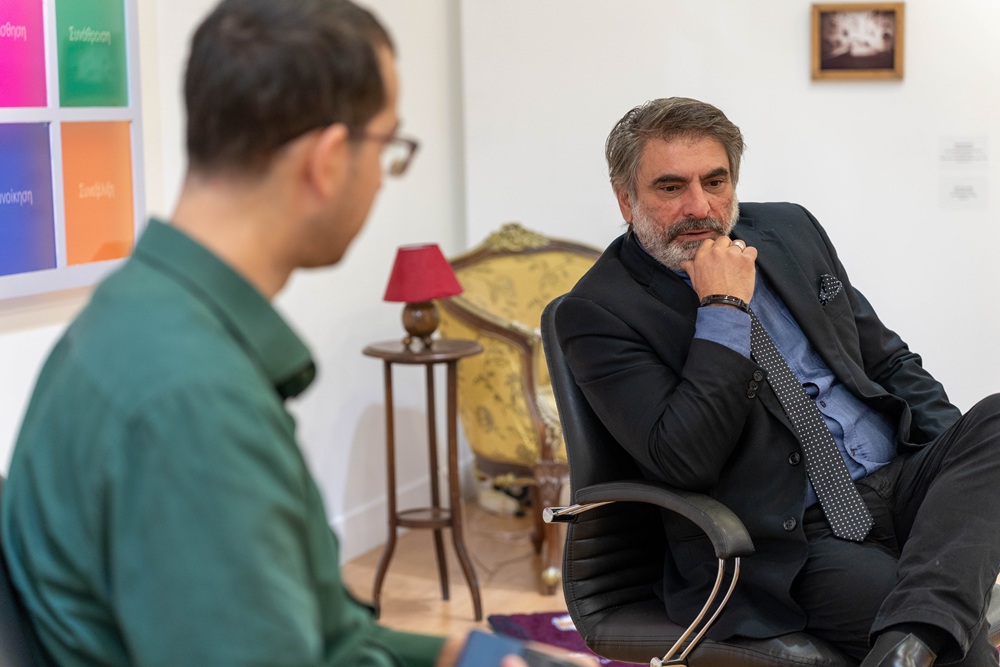
A snapshot from the interview with the Director of the House of Cyprus, Diomides Nikita, at Days of Art in Greece and journalist Panos Liakos.
D.A.: From directing television programs, commercials, documentaries, and theatrical productions to supervising film productions and managing multifaceted organizations, what are the main challenges that individuals of your stature face at each stage?
D.N.: The path from directing and supervising film productions to managing multifaceted organizations is characterized by a gradual increase in complexity and responsibility. Each stage brings different challenges. At the level of artistic direction, the challenge is to achieve a balance between creative freedom and clear targeting. More specifically, in Cypriot cinema, its rapid development and the increase in the number of productions each year require more direct and closer cooperation with film producers and, in some cases, with all levels of the production chain. The biggest challenges are time and resource management.
When it comes to managing organizations such as the House of Cyprus, careful planning is required when formulating strategy, coordinating multiple actions, managing funding, preserving intellectual identity, and maintaining the overall vision and role that the organization must fulfill. This line is drawn by the respective director, always in consultation with the Department of Contemporary Culture of the Deputy Ministry of Culture of Cyprus.
In short, the challenge at each stage is not only technical or organisational, but also substantive: maintaining authenticity, selecting quality activities, renewing the audience, redefining the role of the House of Cyprus in the cultural life of Greece, in a constantly changing environment.
But let me talk about the people who make up the House of Cyprus team. These are people who started working for the organization almost forty years ago and remain faithful to the vision of the House of Cyprus. The bond they have with each other as a team is incredibly beautiful, and when I took up my duties in 2024, I felt that they accepted me immediately. So, it’s not just the new ideas you want to bring to an organization like the House of Cyprus that matter, but also the colleagues who are by your side and are willing to follow you. These people, I repeat, have been possessed by the same inner flame for decades, they have a tireless spirit and have sacrificed countless hours to keep this House standing. I would like to thank my colleagues for their long-standing dedication: Maria Ragia, Takis Voilas, Eleftheria Theocharous, Andri Chrysanthou, Sofia Garpozi, Ilias Kefalas, and Chrysanthi Kouzi.
*The interview was conducted by journalist-film critic Panos Liakos.
**The photos were taken by Stavros Tsiaras.

Leave A Comment