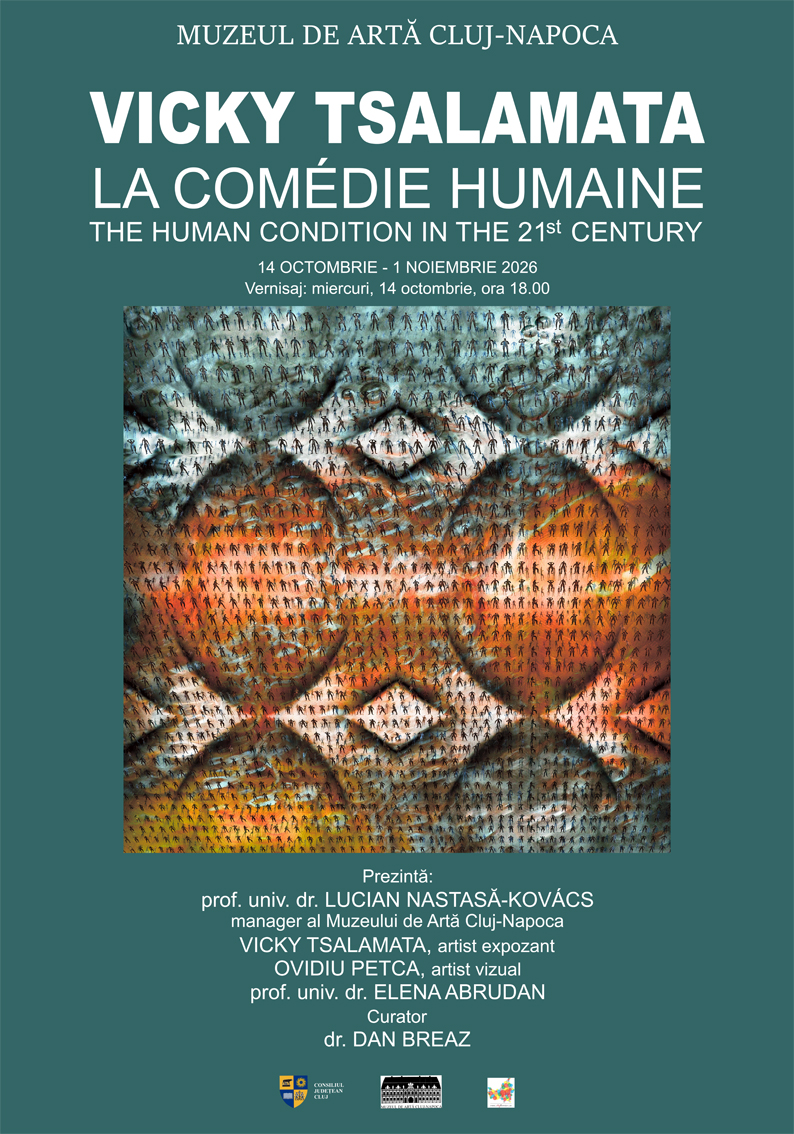
At the impressive “Art Museum of Cluj –Napoca,” housed in the former Banffy Palace—a magnificent example of 18th-century Baroque architecture—is hosting the new solo exhibition by the distinguished printmaker, renowned both in Greece and abroad, Professor Emerita of Printmaking at the Athens School of Fine Arts, Vicky Tsalamata. The exhibition, titled “La Comédie Humaine/The Human Condition in the 21st Century,” opens on October 14 and runs through November 1, 2026, in Cluj-Napoca, which is Romania’s second-largest city and the unofficial capital of the historic region of Transylvania.
The exhibition is curated by art historian Dr. Dan Breaz, curator of the “Art Museum of Cluj-Napoca,” who provides the introduction to the exhibition catalog in his curatorial essay. The selection of works was curated by art historian Spyros Moschonas. The exhibition is on view in all five galleries of the museum that are dedicated to international exhibitions.
The exhibition will open with speeches by: • Mr. Lucian Năstase-Kovács, Director of the Museum; Dr. Dan Braez, curator of the Museum and the exhibition; Ovidiu Petca, visual artist and President of the “International Print Biennial” Cultural Foundation in Cluj, Romania; and Elena Abrudan, Professor and Director of the Department of Journalism and Digital Media at Babeș-Bolyai University (UBB) in Cluj-Napoca, Romania.
“My solo exhibition, ‘La Comédie Humaine/The Human Condition in the 21st Century,’ at the Cluj-Napoca Museum of Art is a significant milestone in my artistic career,” notes Vicky Tsalamata. This is not the first time the distinguished printmaker has exhibited her work at this venue: “I share bonds of collaboration, love, and friendship that have developed over time, through my participation as a guest artist in major international printmaking exhibitions at the personal invitation of Ovidiu Petca, curator and organizer of all international printmaking exhibitions at the Art Museum of Cluj-Napoca, Banffy Palace. This time, I have the pleasure and honor of presenting my entire body of printmaking work from recent years in a solo exhibition.”
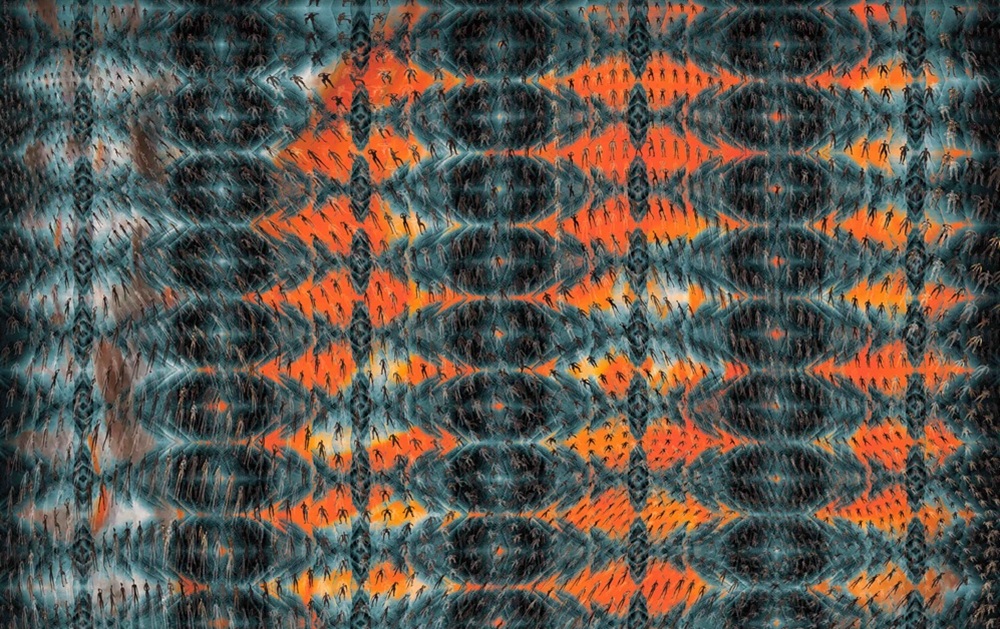
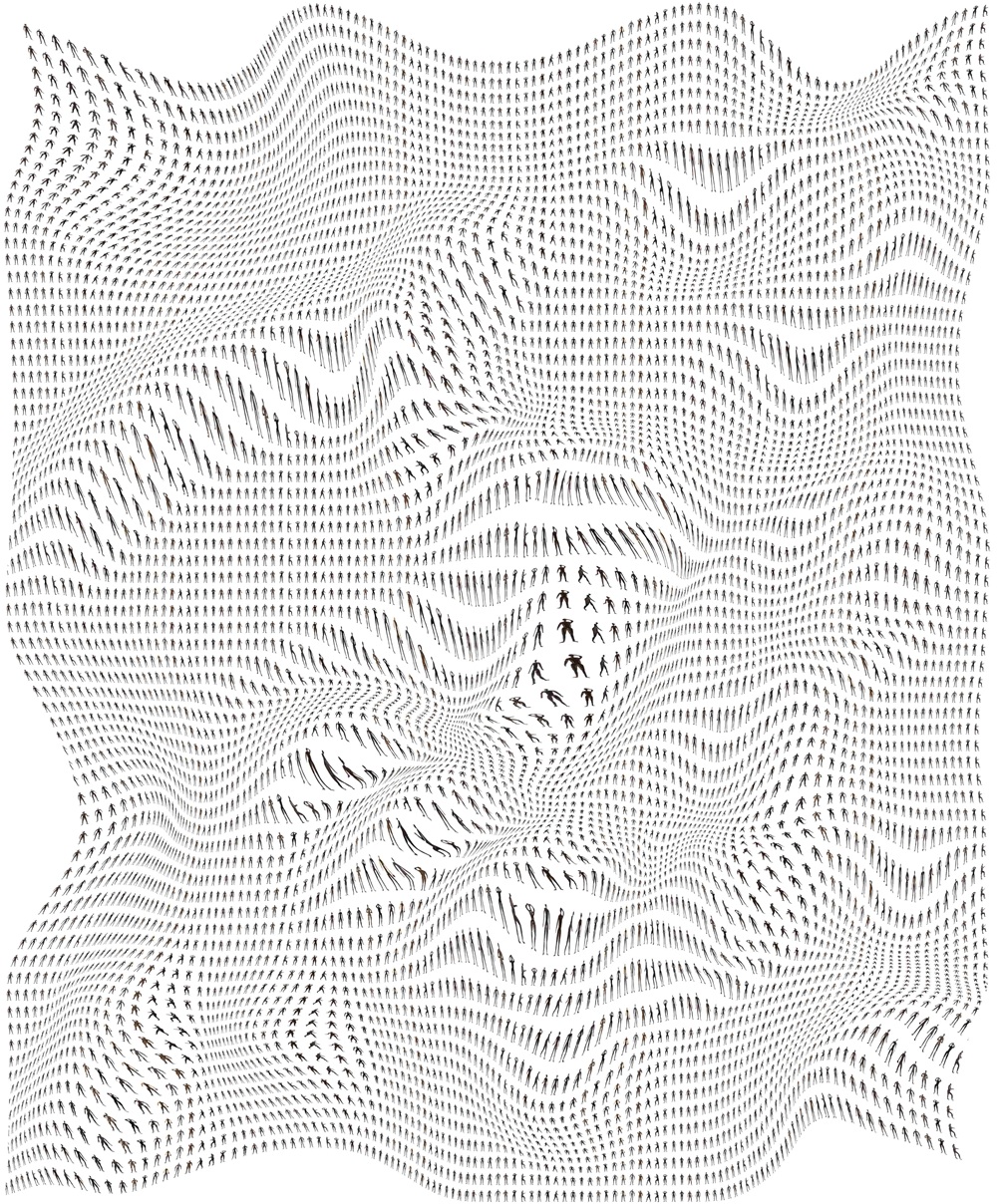
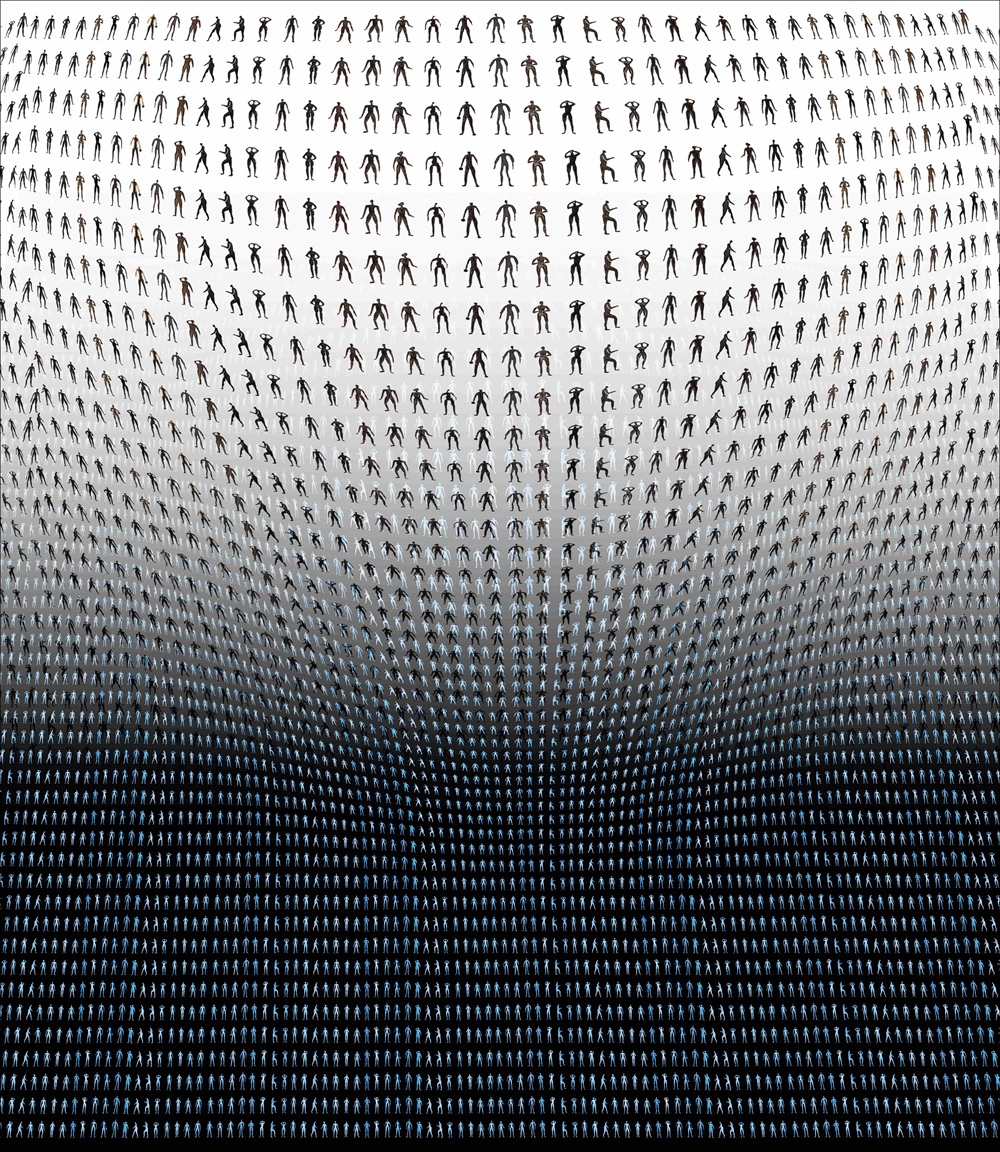
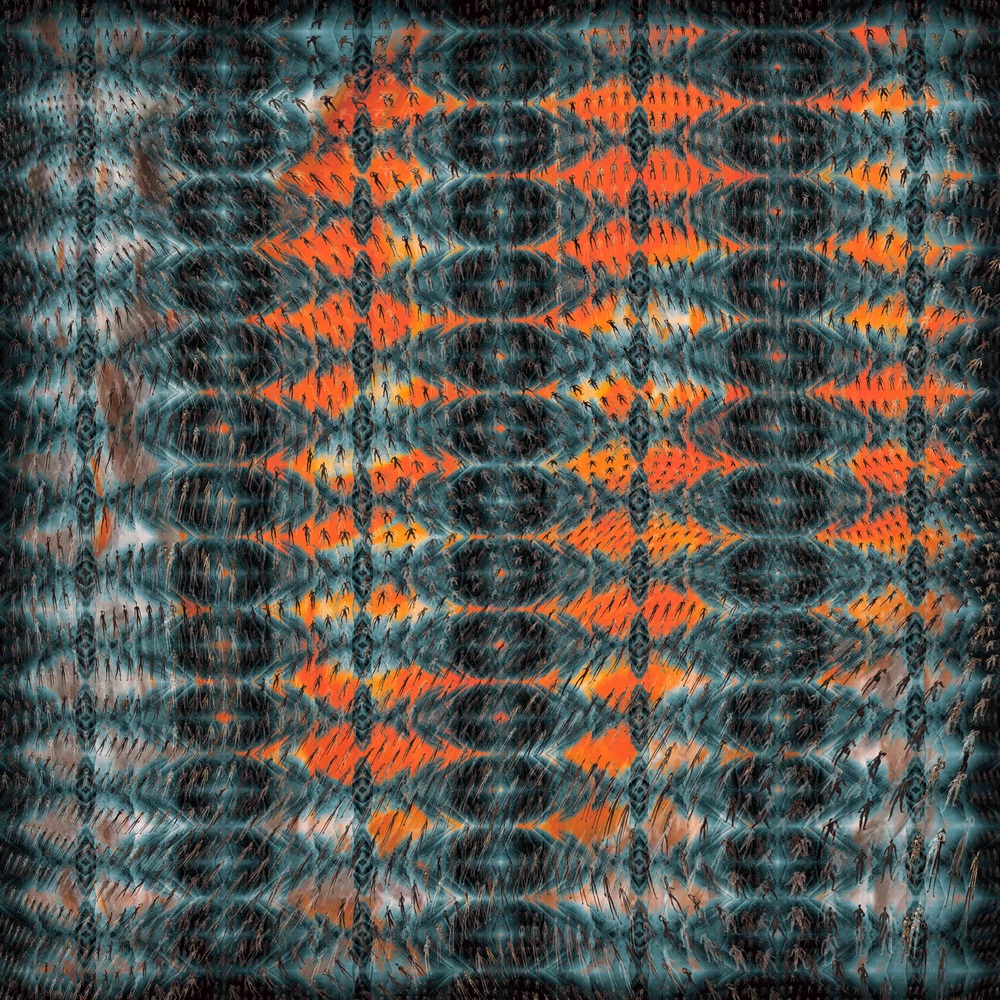
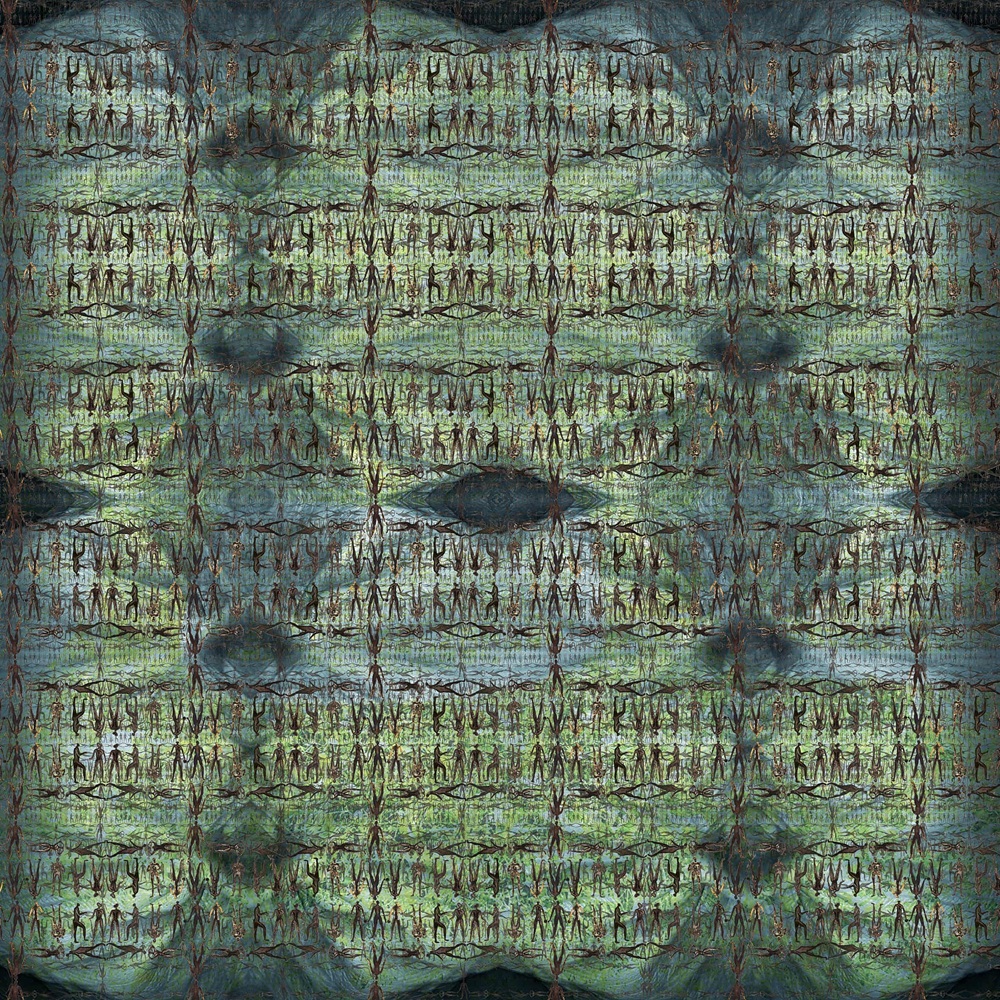
Speaking about this particular body of work, she notes: “The human form in my work is part of clusters that create human ripples and evoke a collective experience. The series ‘la Comédie Humaine’ was created within the context of a broader exploration of the human condition during and after the crisis. Contemporary society becomes a stage for multiple roles. Social masks sometimes protect and sometimes imprison. The citizen’s face becomes both identity and a mask: alienation, suspicion, loneliness, competition, aggression, but also a persistent need for meaningful communication. In the series “La Comédie Humaine,” humanity experiences the crisis of modern society. What does it ultimately mean to be human in an era where old certainties and values have been shaken?…
This exhibition aims to capture the fluidity of our times, where everything is transient and short-lived. Bonds and institutions are unstable and fragile in a society where life appears fragmented and uncertain, devoid of long-term goals and moral commitments. “The crisis of society today is the flip side of the crisis of Nature, according to Zygmunt Bauman: the ‘Interwaving Nature’ series,” concludes Vicky Tsalamata.
Finally, art historian Spyros Moschonas notes in his own essay on the exhibition: “ At the heart of the “La Comédie Humaine” print series lies the COVID-19 pandemic: the deliberate disruption of social relationships in the name of health. The severing of human bonds driven by the instinct for survival. The elevation of solitude to an end in itself. However, this is not the norm. Human beings are not, by nature, solitary creatures. And the journey from isolation toward the restoration of social bonds—that is the true meaning of the work. That is where the rebirth and the emergence from darkness into light lie, through a long, collective journey. Consequently, Tsalamata’s works are fundamentally optimistic. They view (or rather, prefer to view) humanity as “together,” as a single body, as a shared journey through difficulties. And although the engraver draws inspiration from a divine order, she sees humanity as an inseparable part of it.
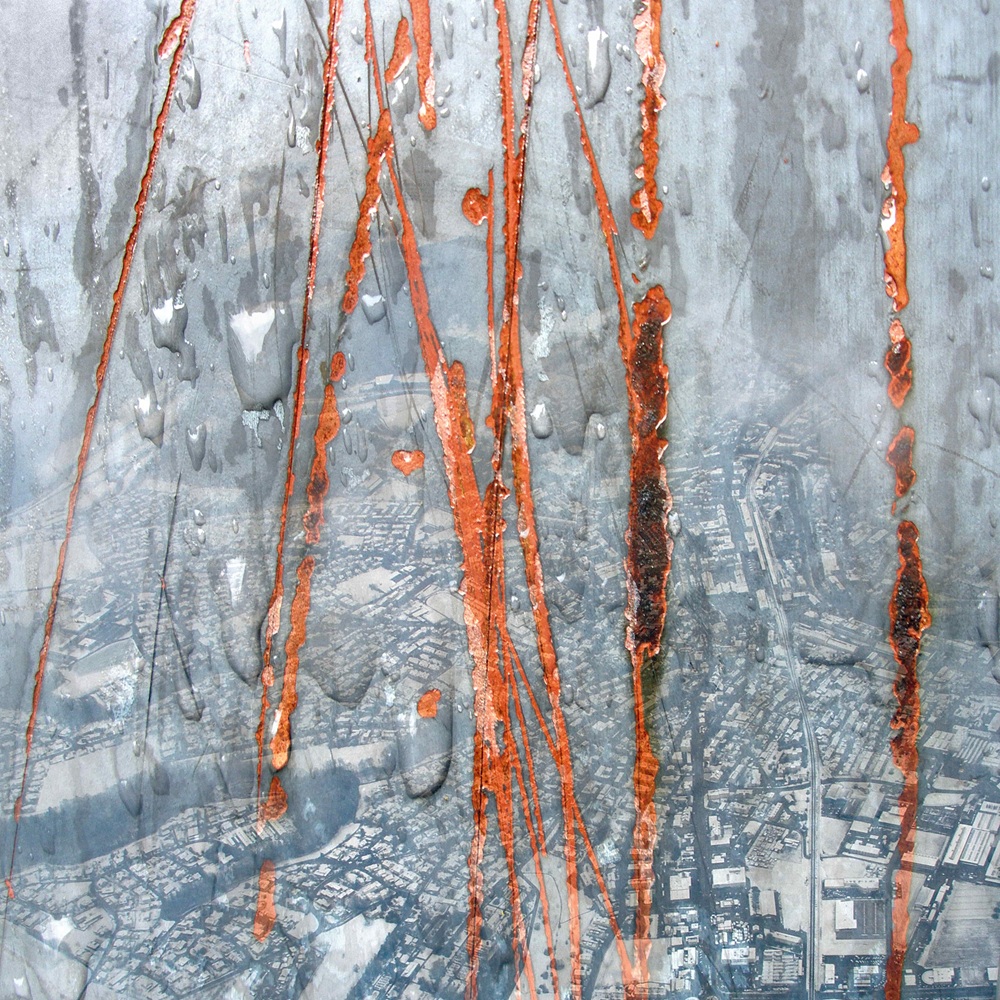
Tsalamata is searching for her own roots: in European literature (Dante, Balzac), in human creations (Angkor Wat or modern metropolises). In reality, however, she is now mature enough to look deep within herself and tell us her own truth—a truth that is revealed with crystal clarity in her palimpsestic engravings, where humanity takes center stage not as individuals, but as a society.”



Leave A Comment