By Panos Liakos
Classicist – Translator – Film Historian
In The Birth of Tragedy, Friedrich Nietzsche discusses the duality inherent in the evolution of art—the intertwining of the Apollonian and the Dionysian elements. These are the two impulses that most often give rise to dialectical-aesthetic conflicts, but at the same time also lead to new creative expressions.
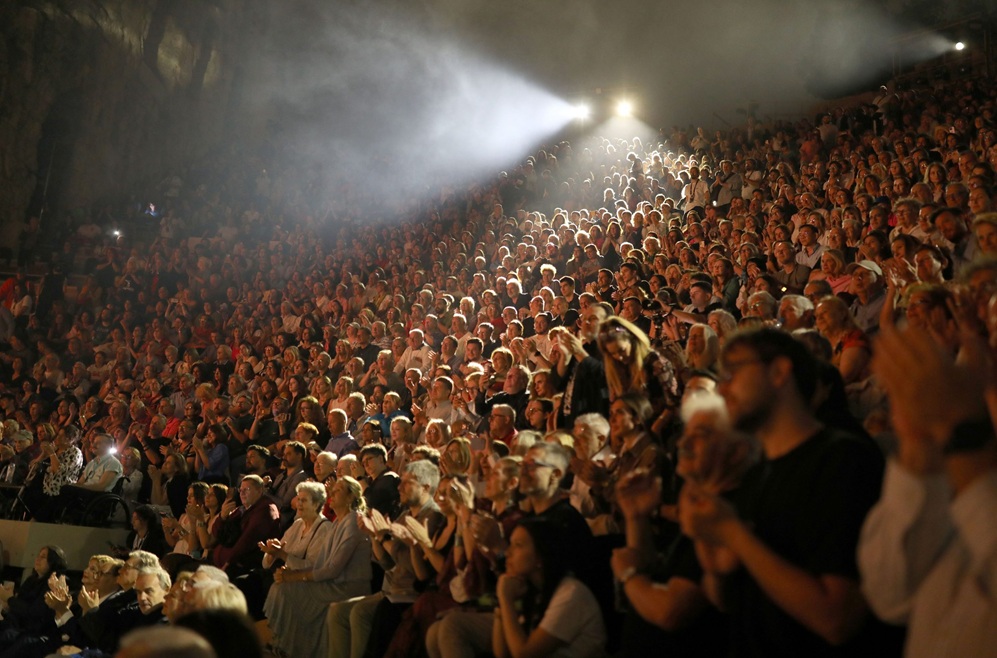
Stamatis Kraounakis, steeped in the tradition of Aristophanes, with his side-splitting opera based on the myth of Lysistrata, reaches yet another pinnacle in his musical work, stemming precisely from that perfect balance between Apollo and Dionysus, as we experienced it in his libretto and staging last Saturday at the Odeon of Herodes Atticus.
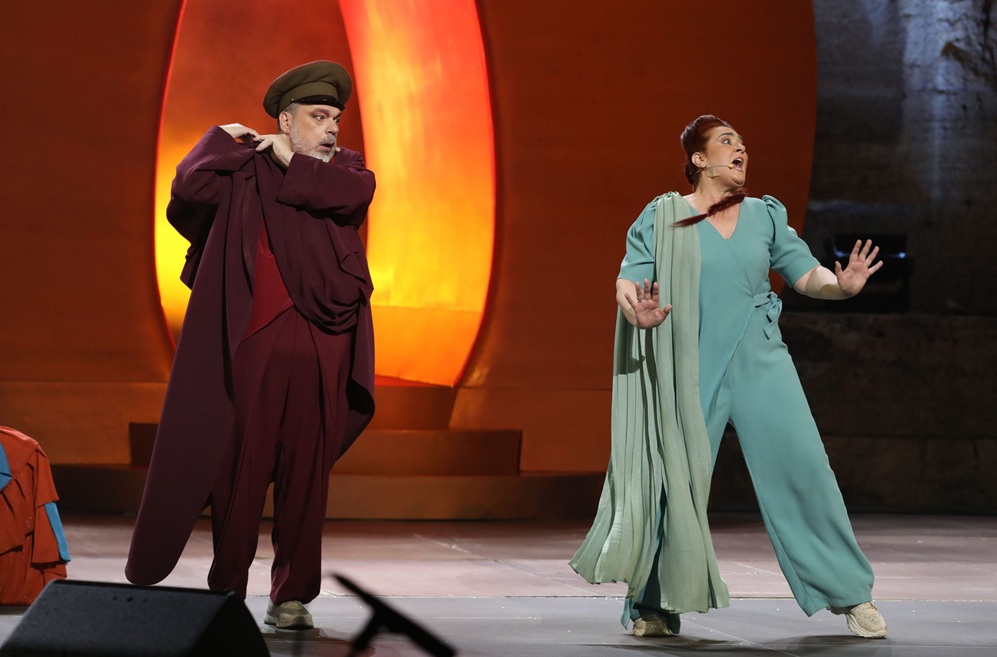
Christoforos Stampoglis and Lena Ouzounidou. Photo: Thomas Daskalakis
With Lena Ouzounidou as the anti-war priestess, Stamatis Kraounakis—as is always the case with fine adaptations—preserved the core elements of Aristophanes’ text (Lysistrata’s entrance, the oath, the debate with Magistrate Proboulos, the scene between Kinesias and Myrrhine, which is of paramount importance to world drama) and conveyed it through a contemporary narrative (takis’s set and costume design also follow this direction), steering clear of populist flourishes that merely dazzle the audience momentarily.
This libretto embodies the timelessness of the Greek language, the idiom of Kraounakis’s work, and a deep knowledge of the history of opera—yet it never comes across as pretentious. How can one forget Christoforos Stampoglis as Proboulos, pounding on the box office door with such a voice: “Knock, knock, knock, knock. Open up for me.” Then, there was the emergence of Sofia Kounia (Kleoniki)—who so terrified us in Yannis Economides’ Broken Vein—as a comic actress with her own unique temperament, the inimitable Kostas Venetsanos in… a live broadcast from the Acropolis channel, as well as one of the most memorable Kinesias-Myrrhine duos we’ve seen in recent years, featuring Christos Gerontidis (accompanied by his skateboard!) and Stella Krouska.
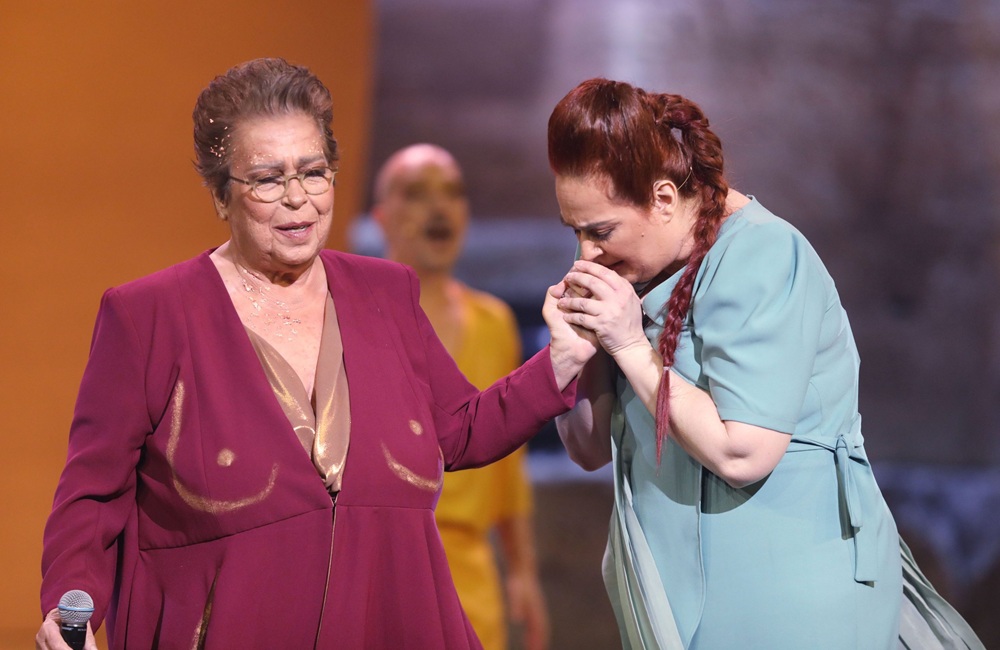
Dimitra Galani and Lena Ouzounidou. Photo: Thomas Daskalakis
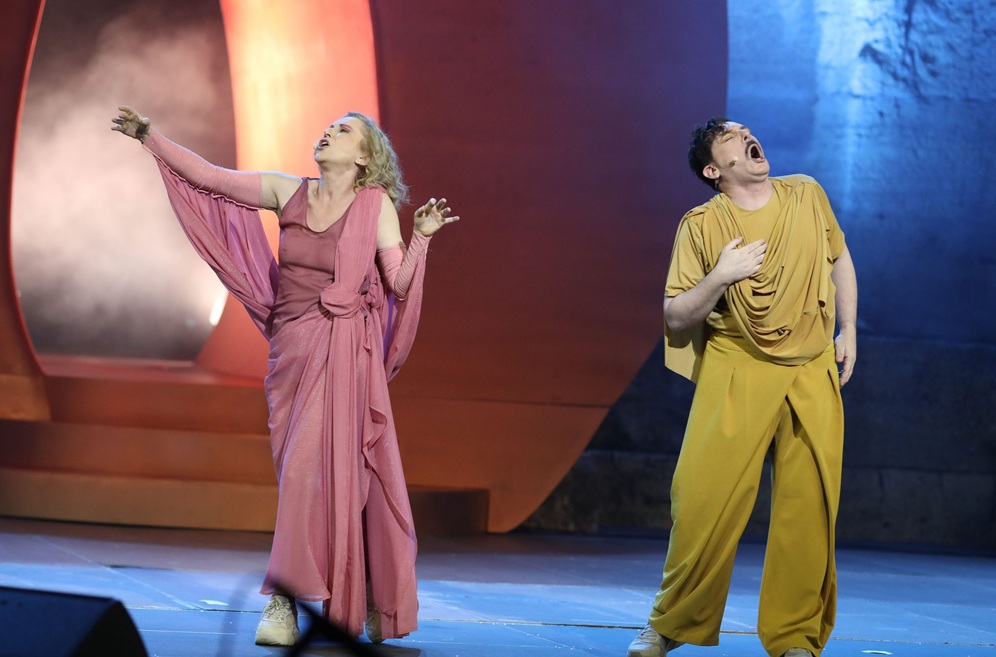
Stella Krouska and Christos Gerontidis. Photo: Thomas Daskalakis



Leave A Comment