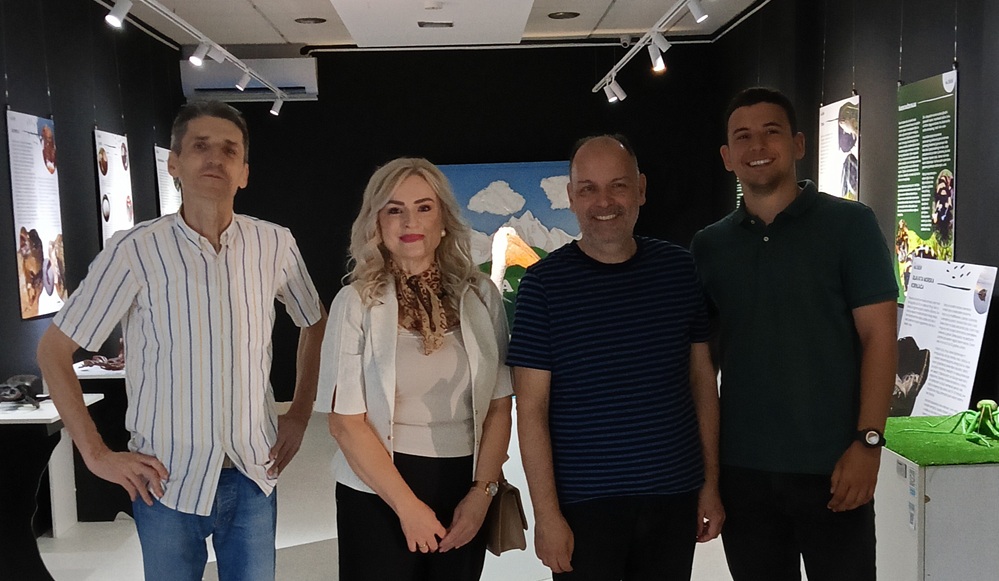
A training seminar on 3D scanning and printing of museum objects was held with great success on July 8, 2026, in Podgorica, with the Helmi Museum also participating.
Specifically, in a particularly welcoming atmosphere, an educational event was held at the Natural History Museum of Montenegro (Prirodnjački muzej CrneGore) on the topic of 3D scanning and 3D printing (3D Printing) to create replicas of museum collections. The session was led by Mr. Theodoros Ganetsos, Professor in the Department of Industrial Design and Manufacturing Engineering at the School of Engineering of the University of West Attica (PADA).
The featured museum of the aforementioned event was the Helmis Zakynthos Natural History Museum, as its work, philosophy, and contribution to the preservation and promotion of Zakynthos’s and the wider region’s natural heritage were highlighted. Mr. Stoupathis, President of the Helmi Museum of Natural History, gave a detailed presentation on the objectives, exhibition policy, and the types of collections at the Helmi Museum through specific examples—highlighting its educational and research role, and referring to the prospects for further educational initiatives and international collaborations (with both the Podgorica Museum and PADA). Moreover, a year earlier, in 2025, the Helmi Museum was among the speakers at the 1st Symposium of Museum Professionals of Montenegro (ISMM2025) in Petrovac.
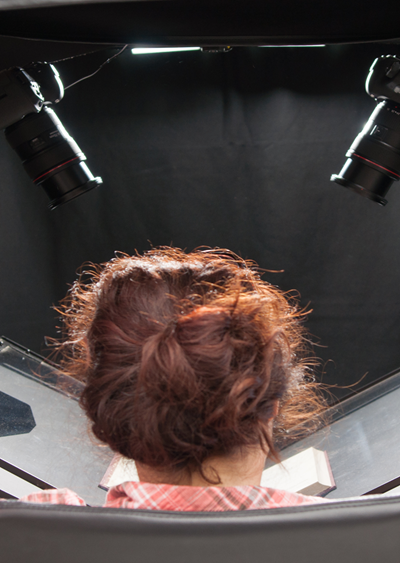
During the practical portion of the seminar, Professor Theodoros Ganetsos presented modern techniques for 3D scanning and digital documentation of natural history specimens, demonstrating specialized digital tools for the precise capture of the morphological characteristics of museum objects. At the same time, he explained to the participants the capabilities of 3D printing, presenting the available scanning techniques, the appropriate processing and printing materials, and their applications in conservation, documentation, research, and the educational use of museum replicas.
The event drew a large number of participants from the fields of museums, science, education, and cultural management, who filled the conference venue. The Director of the Montenegro Museum (Ms. Natalija Čađenović) and the curators of the collections (Mr. M. Karaman, Mr. A. Popović) embraced this initiative with great enthusiasm, giving the speakers a tour and sharing experiences from their personal and collective journeys.
In conclusion, the seminar highlighted the importance of collaboration between universities and museums, as well as the crucial role that modern technologies play in the protection, documentation, promotion, and dissemination of natural and cultural heritage, opening new horizons for research, education, and the outreach of museums.

Leave A Comment