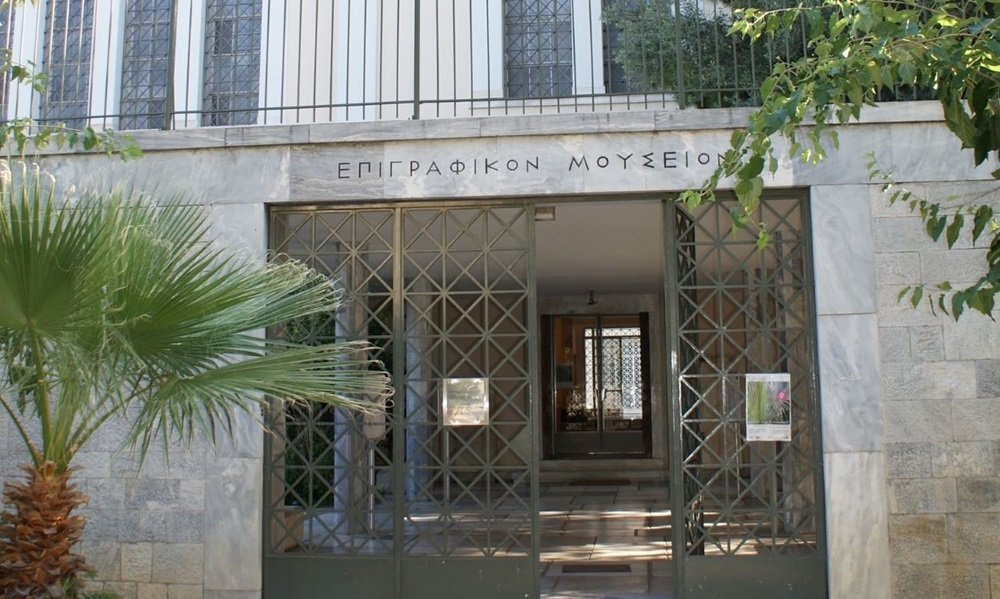
The Hellenic Authors’ Society will launch, on Tuesday, April 28, 2026, at 6:00 p.m. (subsequent lectures will be held at the same time, Tuesday, May 12, and Tuesday, May 19), the 11th series of lectures it is organizing in collaboration with the Epigraphic Museum, featuring speakers who are members of the Society and topics spanning broader fields, such as Mathematics, Artificial Intelligence, Linguistics, the Environment, and more. Three talks on the psychological mechanisms that drive (and are driven by) poetry and the relationship between poetic function and psychopathology, dreams, and self-healing.
First Lecture: Tuesday, April 28, 6:00 p.m.: Poetry as a Crisis and as a Solution
A poet becomes a poet by surviving a crisis that he manages to transform into light, however dim. This initial experience leaves within him a sensitized core that is set in motion—along with his poetic response—by every new crisis, whether personal or social.
Second Lecture: Tuesday, May 12, 6:00 p.m.: Psychopathology in Poetic Function
Does a poet need to have a mental disorder to be a poet? Can the nature and severity of mental illness enhance or undermine poetic creation? Does poetic creation serve the same needs in poets with and without serious mental illness? Does it make sense to ask such questions?
Lecture 3: Tuesday, May 19, 6:00 p.m.: Poetry and Dreams: Common Grounds and Modes
“A dream is an unintentional form of poetry,” wrote the British psychologist Charles Rycroft. “And poetry is a kind of constructed dream.” Both possess an ambiguity and an emotional intensity that is lost if they are paraphrased or explained. Both employ condensations, striking images, and disregard conventional logic. At an even more fundamental level, both are forms of play as well as self-therapy.
Yannis Zervas is a poet and Professor of Psychiatry and Psychosomatic Medicine at the NKUA.




Leave A Comment