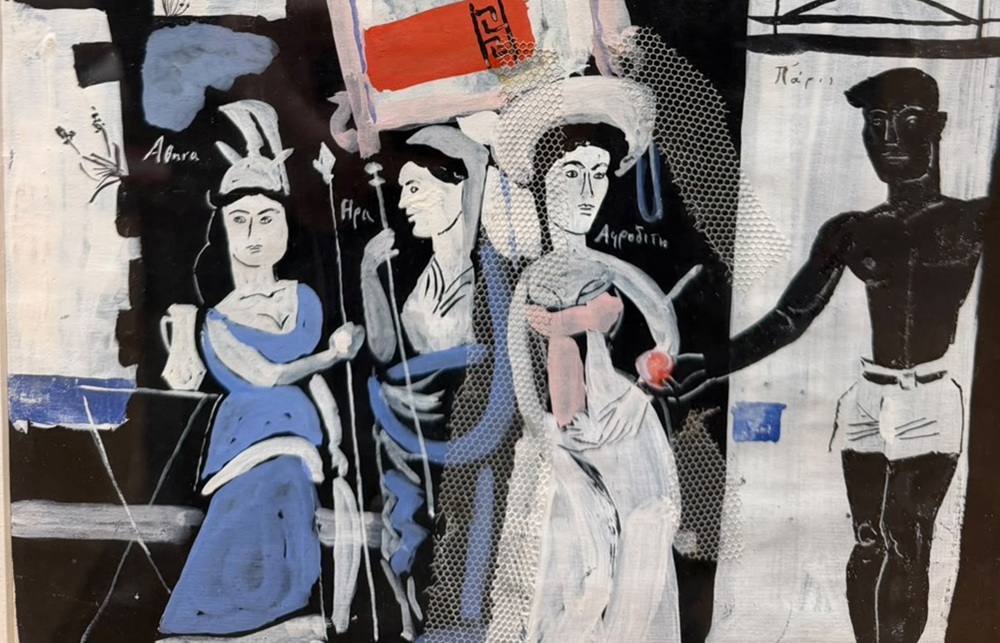
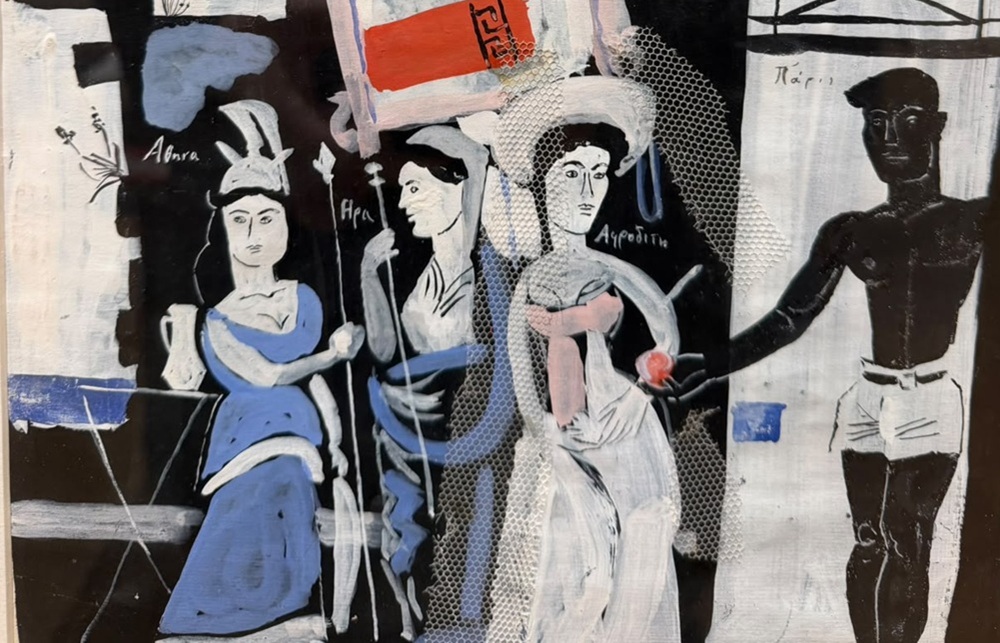
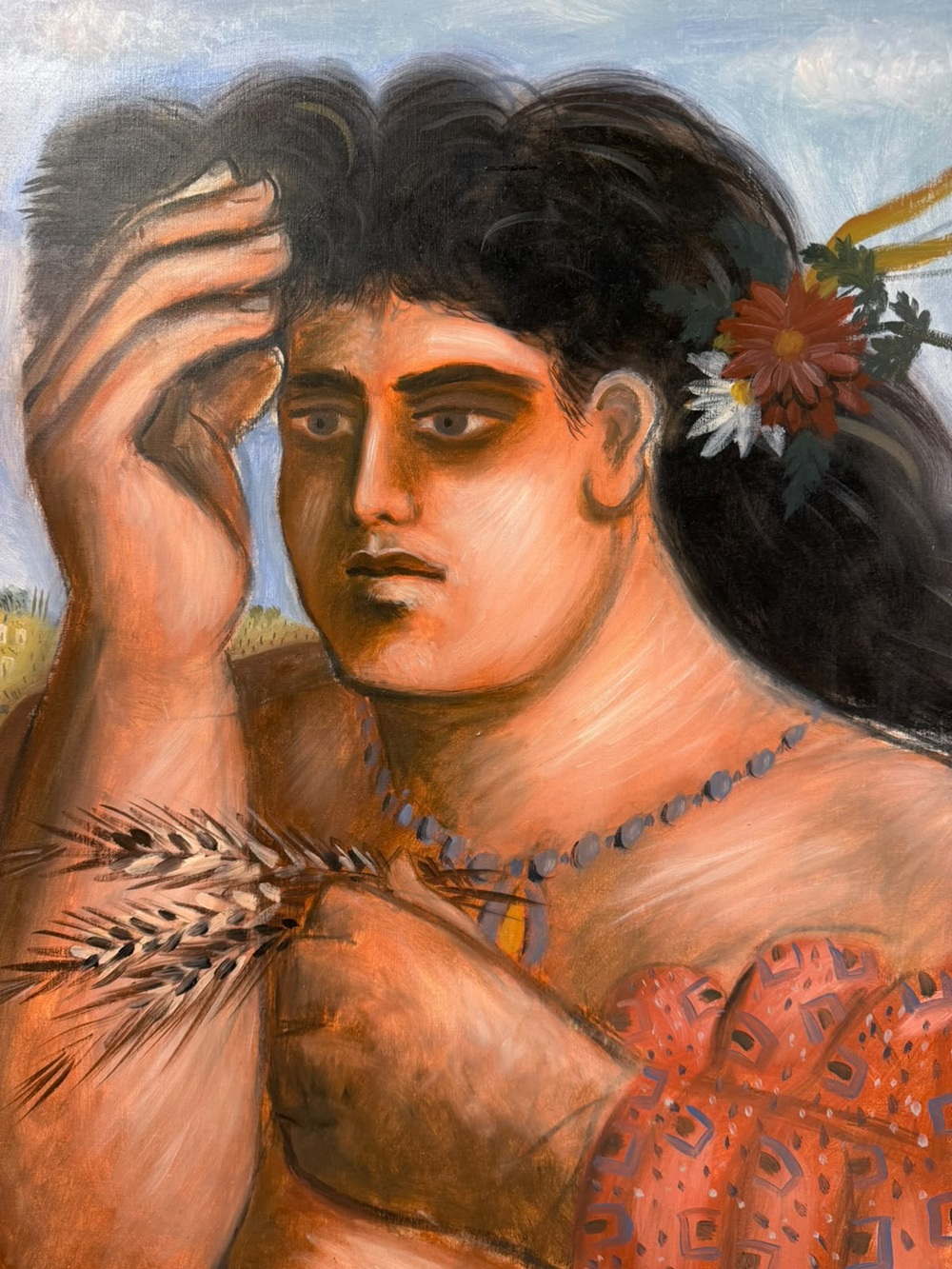
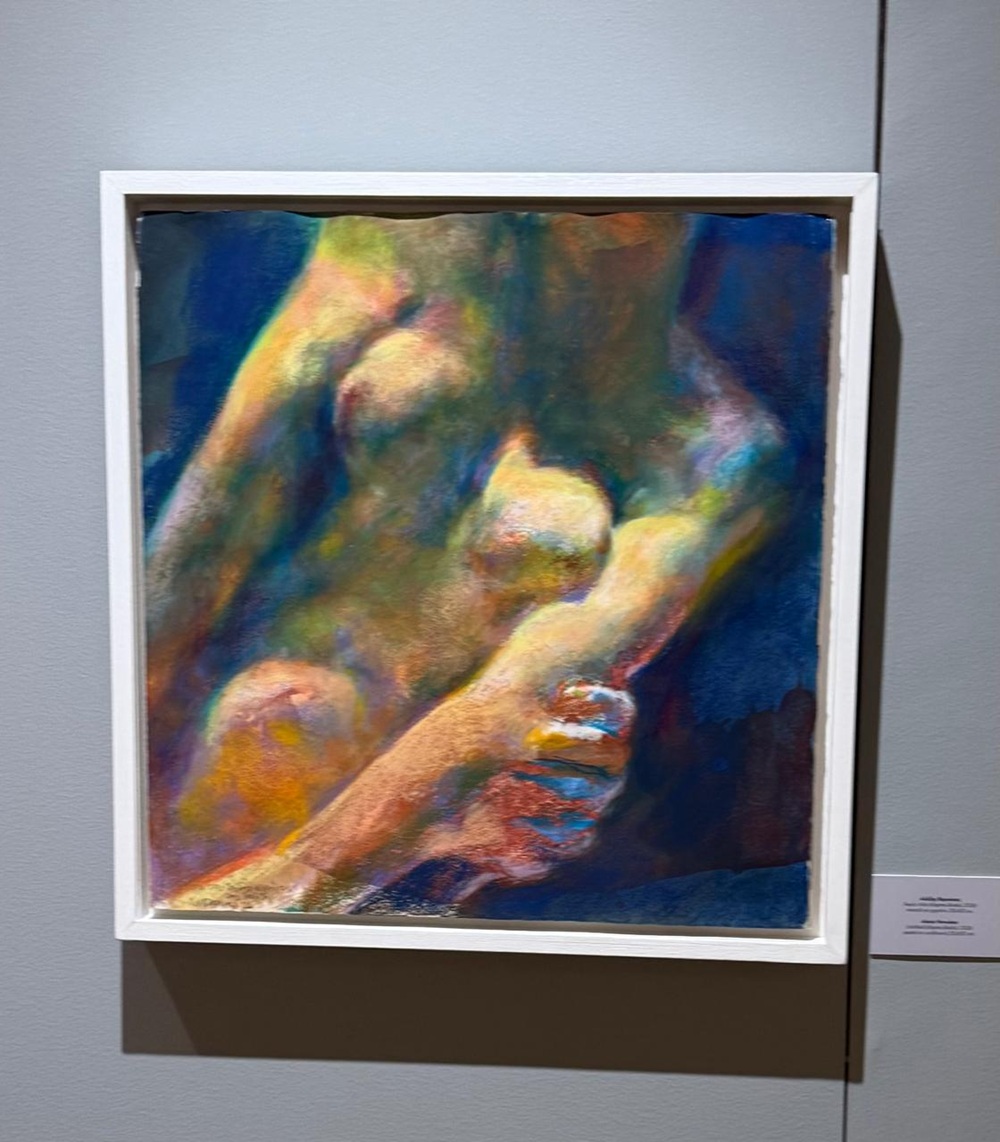
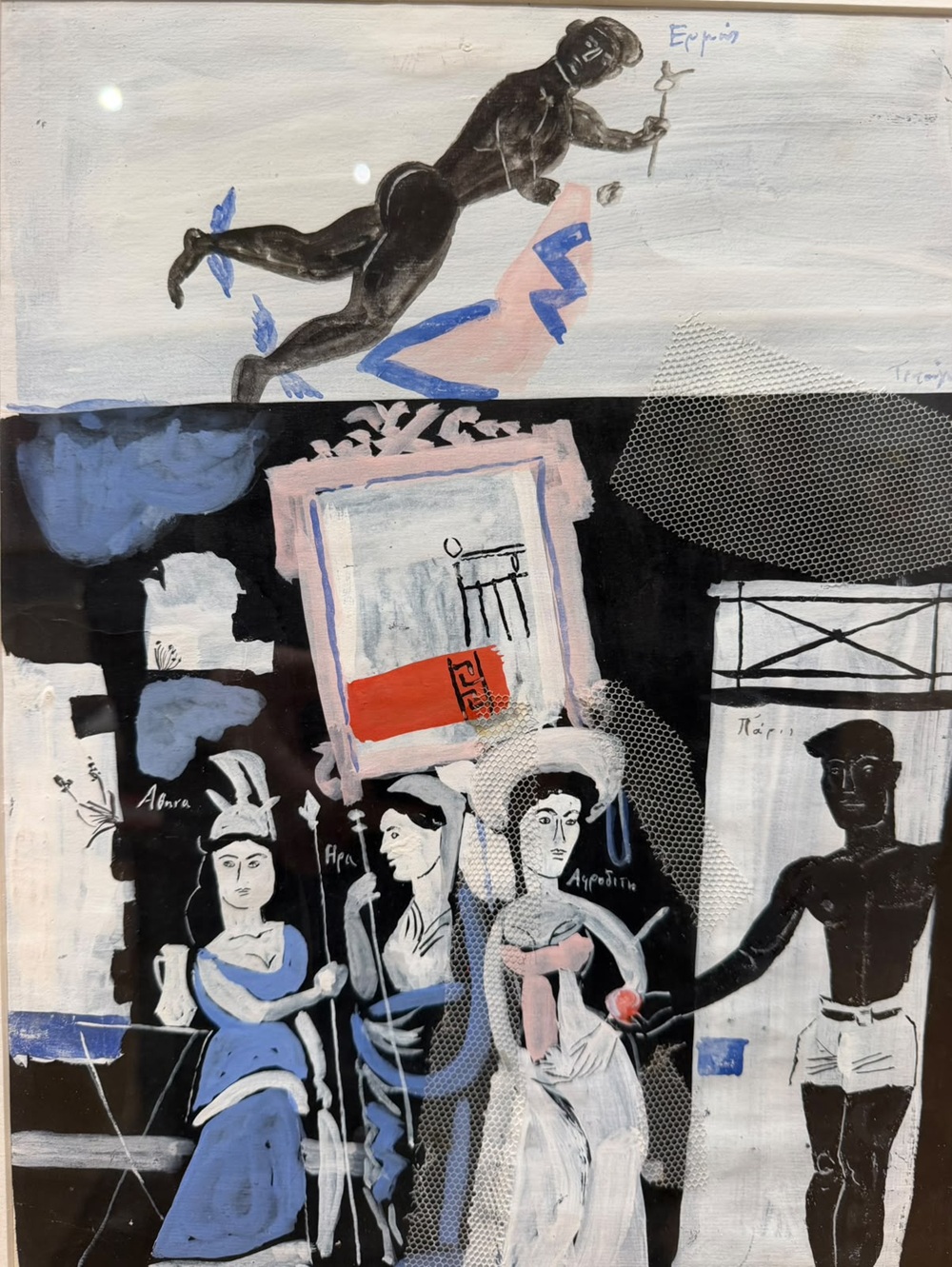
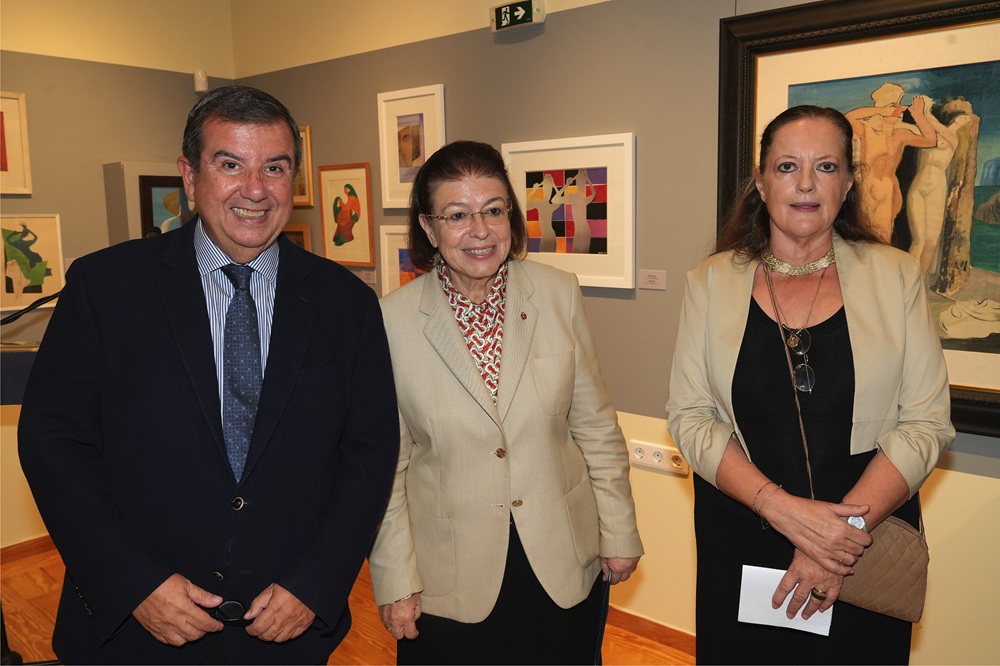
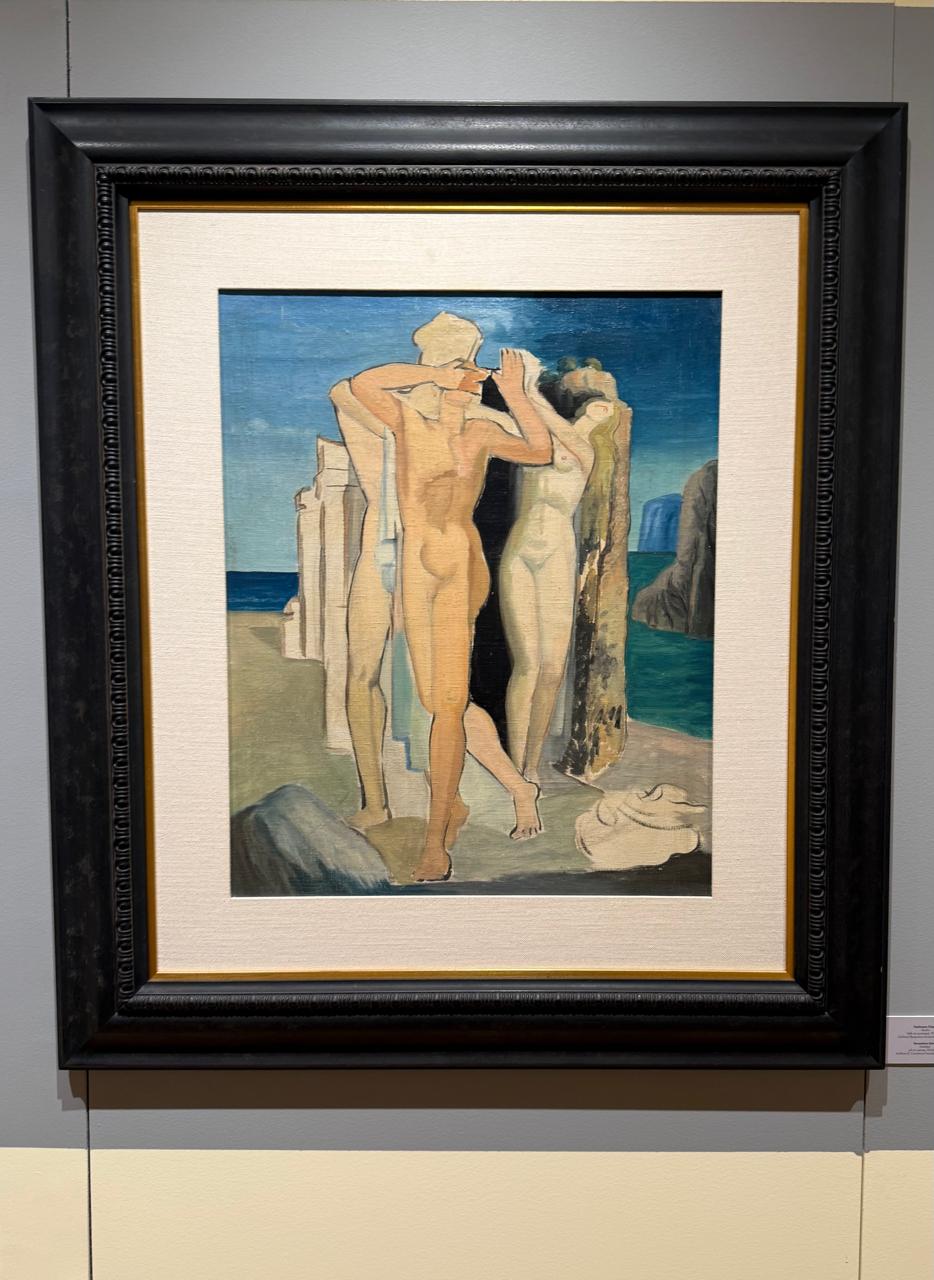
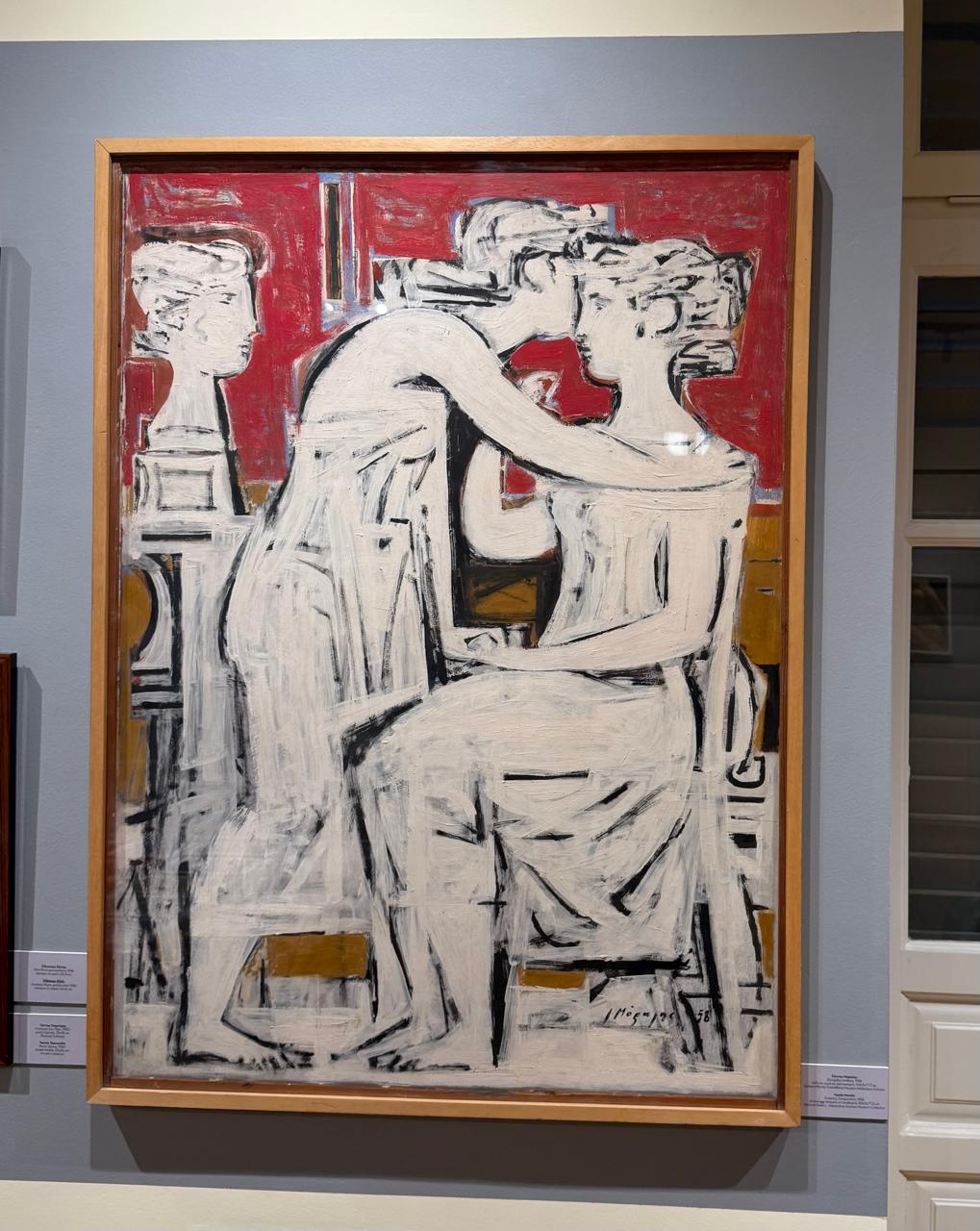
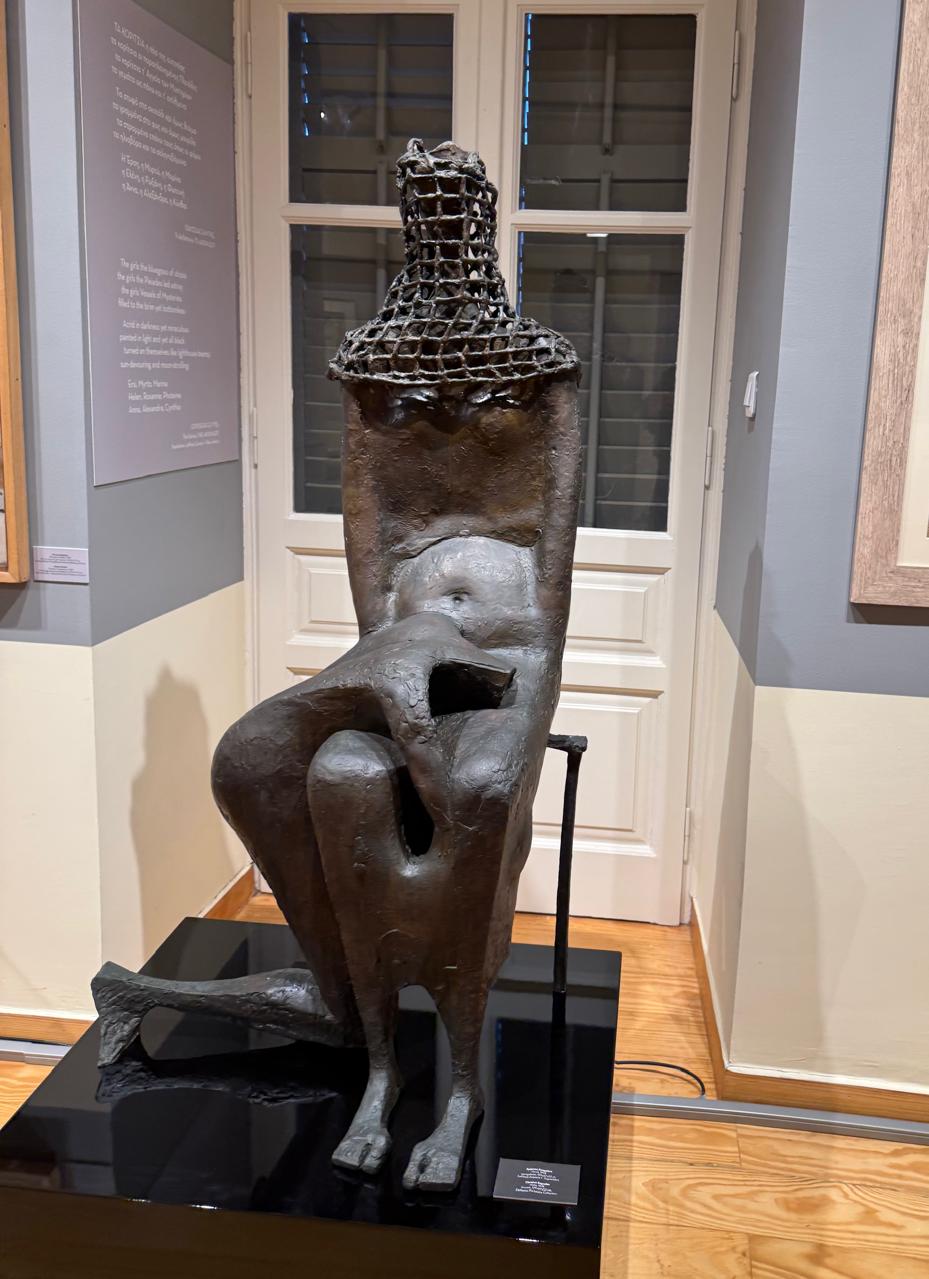
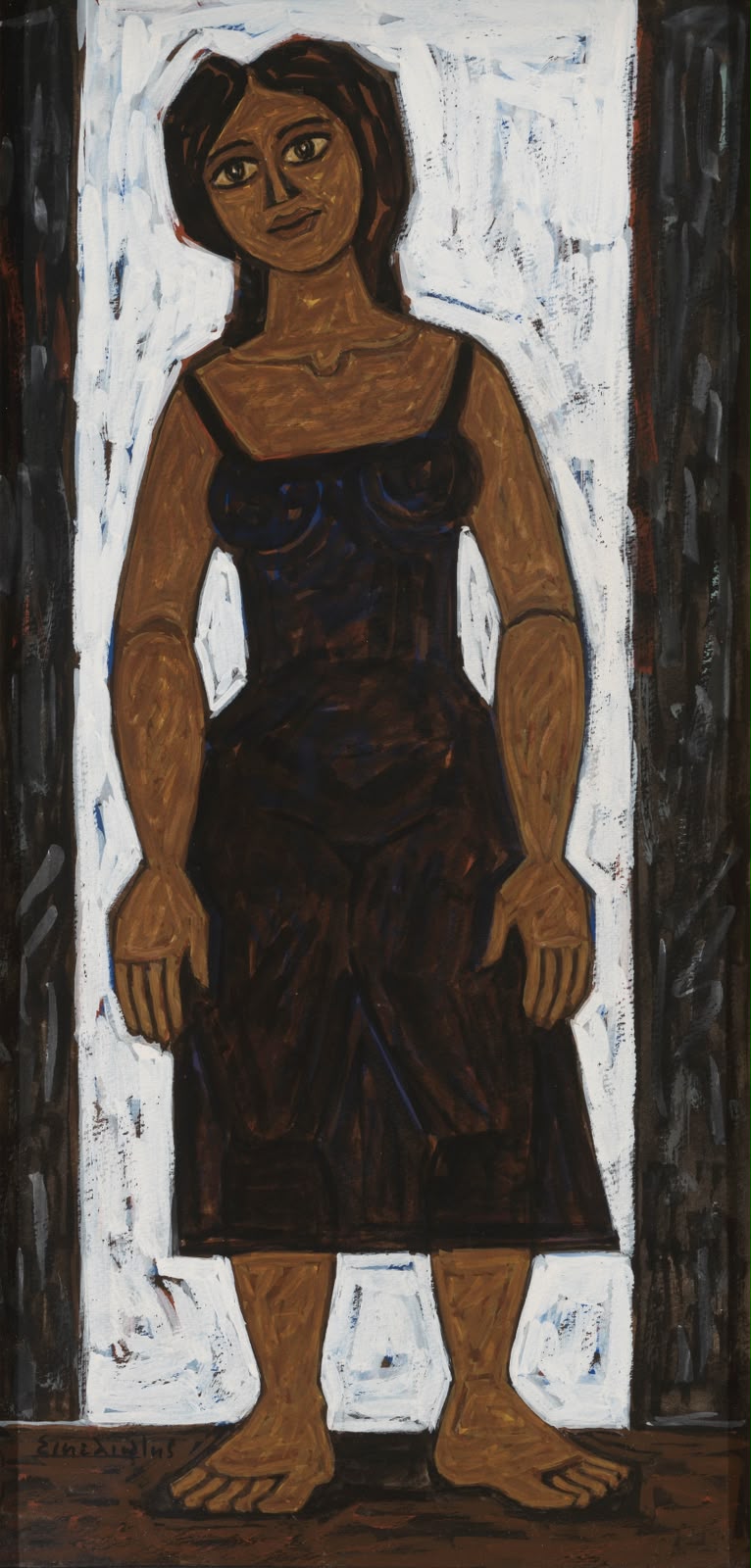
The Minister of Culture, Lina Mendoni, inaugurated the temporary group exhibition “Female Angels” at the “House of Elytis” Museum in Plaka. The exhibition highlights the vital feminine element in the work of Odysseas Elytis as an archetypal symbol of strength and rebirth. The exhibition features 50 works of painting and sculpture, 20 of which are by Odysseas Elytis. Thirteen artists are participating, with works that engage in a dialogue with the poetic and visual universe of the Nobel Prize-winning poet. Manuscripts, photographs, documents, and books from the poet’s collection complement the exhibits.
In her opening remarks, the Minister of Culture, Lina Mendoni, stated:
“Girls have a strong and indisputable presence in Elytis’s work, as they constitute a fertile, dreamlike presence in both his poetry and his visual art: ‘Iris, Maria, Nefeli—green in the grand stores of modernity, violet in the underground cafés, red at the funerals of the poor’—these are the myriad forms the poet gives to his female angels. Angels so earthly, such as “The Girls” in “Open Cards”: “A stone, a plant, a girl—if deep down they have a life of their own, independent of the turmoil or tranquility of their surface—this means, in fact, that Poetry, and Art in general, give us the false impression that they add to, alter, or transcend life, whereas, in reality, they do nothing more than reveal a part of its deepest essence, or render, simply and solely, through an instinctive mimetic ability, its marvelous workings.” The girl, like every element of nature, is, in Elytis’s work, the key to touching upon a part of the essence of life. This exhibition is not an exhaustive exploration of Elytis’s poetic universe—after all, how could that be possible?—but rather a journey through his dialogue with the works and artistic pursuits of leading visual artists, with whom he shares the same thematic core. The dialogue with some of them is conceptual and reconstructed in retrospect. With others, however—those present here today—the dialogue was real. He admired some of them, knew others intimately, and dedicated his writings to certain ones—for those who will refer to the Appendix of “Open Cards” and his related texts.”
Poet Ioulita Iliopoulou, director of the Museum, stated:
“The goal is to depict, through sensitivity, the unique style of each artist and the concept of the vital feminine element. A concept that functions archetypically in the poet’s work, depicted with tenderness, abstraction, and Elytis’s vibrant use of color, while in his writings it often takes on the many facets of a primal force. The girls, the vessels of the mysteries of Axion Esti; a sharp-witted girl, Maria Nefeli, a true threat to the future; the wind-swept daughter of the *Almanac* and a little goddess with a purple ribbon; a Venetian girl, but also the goddess Phyto, in her most spiritual manifestations, the girl constitutes an aesthetic symbol of indomitable strength, innocence, simple, condensed sensations, a marvelous synthesis of disparate elements, and the transformation and recreation of life.”
The exhibition’s curator, Takis Mavrotas, stated:
“The thematic exhibition ‘Female Angels’ expresses our multifaceted debt to the intellectual and artistic legacy of the poet Odysseas Elytis. Fifty works of painting and sculpture, both small and large, explore the female form, which, through the hand of the painter or sculptor, immortalizes love for the fairer sex. Maidens and women who reinforce the belief that they form the solid foundation of our perception of the world. This is an intimate sensory environment, featuring stylized depictions of tender figures in a realm of joy and passion, far removed from mourning and decay. It is as if their creators were heeding Petrarch’s reflection: “I know how to follow when I flee to escape my own fire; I freeze when I see it as if it were absent; my longing sets me ablaze.”
In addition to works by Odysseas Elytis, the exhibition features works by Henri Matisse, Henri Laurens, Gerasimos Steris, Christos Kapralos, Yannis Tsarouchis, Orestis Kanellis, Giorgos Mavroidis, Yannis Moralis, Giorgos Sikeliotis, Kostas Paniaras, Alekos Fassianos, Theodoros Papagiannis, and Alexis Veroukas.
In its first two years of operation, the Museum has welcomed 13,000 visitors and 1,500 students, while 2,500 attendees have participated in the 42 events held on the premises.


Leave A Comment