By Venia Pastaka
Art Historian
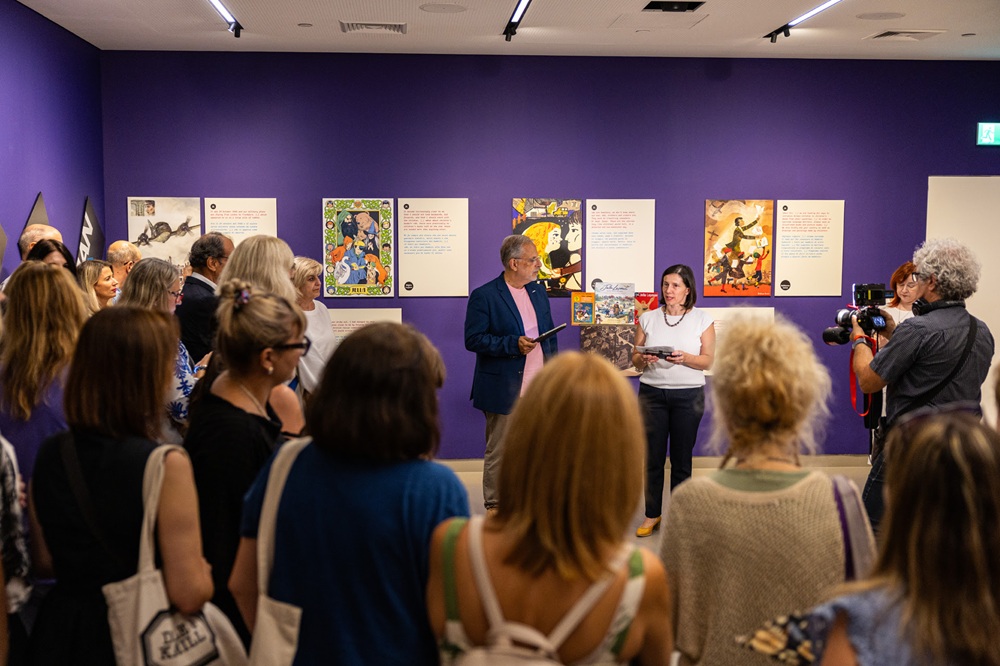
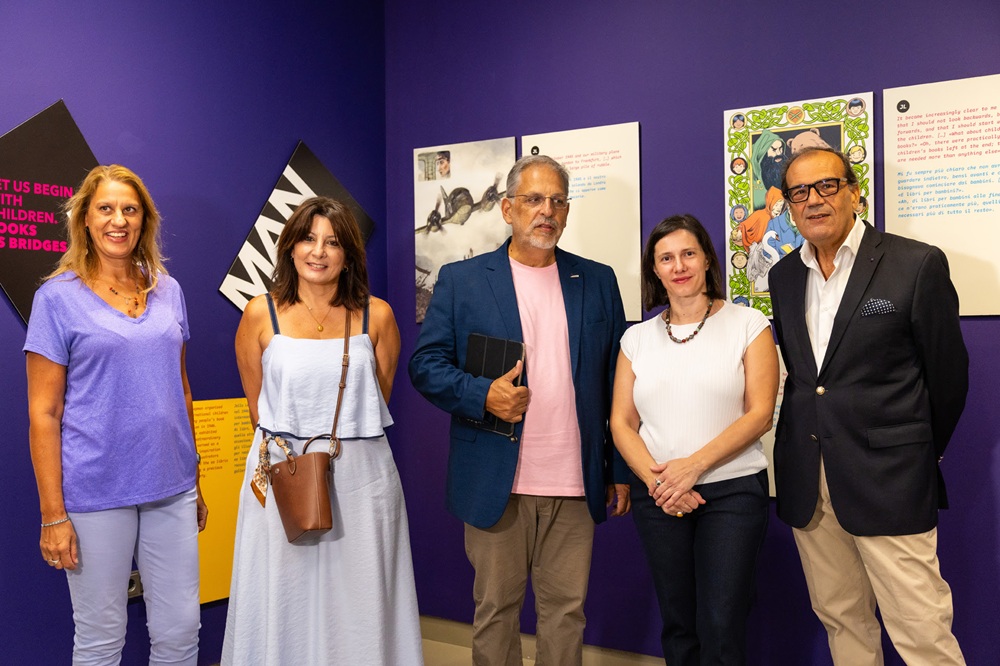
The international exhibition dedicated to Jella Lepman has also opened at the National Library of Greece and will run through October 19. At the exhibition, visitors have the opportunity to learn about an important woman who saw children’s books as a means of changing perspectives on diversity. Born in Stuttgart in 1891, Lepman was a journalist and writer who had already established a distinguished career before the war changed her life. After her husband’s death in 1922, she took over as editor of the newspaper Stuttgarter Neues Tagblatt, while also writing about social and political issues.
The rise of Nazism forced Lepman, who was of Jewish descent, to flee Germany with her two children. During the war, she initially found herself in Italy and then in England, where she continued to work as a journalist and writer. There she collaborated, among others, with the BBC and the American Broadcasting Station in Europe, and in 1943 she published, under the pseudonym Katherine Thomas, a book about women in Nazi Germany. When the war ended, Lepman returned to her homeland, where she found a society devastated by the war, with millions of people having lost their homes and, among them, a vast number of children who had been left without families or a safe environment.
For a time, she worked for the U.S. Army as an advisor on the cultural and educational needs of women and children in the American occupation zone. There, she also encountered an issue that deeply troubled her: what kind of books the children of postwar Germany would read and, above all, what literature could offer them after years of war and Nazi propaganda. For Lepman, the answer lay in introducing children in Germany to books from other countries. Thus was born the idea of a major international children’s book fair. She reached out to about twenty countries and asked them to send books, with the goal of creating a collection that would tour postwar Germany.
The first exhibition took place in Munich in the summer of 1946 and featured approximately 4,000 books from various countries, which the children could browse through and read. At the same time, Lepman asked the children to contribute their own drawings, wanting to give them an active role in the exhibition itself. The project was a huge success, with thousands of children visiting it. The exhibition then traveled to other German cities, such as Stuttgart, Frankfurt, Berlin, and Hamburg. For Lepman, however, the books were not merely a way to fill the shelves that had been emptied by the war.
It was a way for people to reconnect. Through a story, an image, or a character, a child could discover a world different from their own. And this, in a Europe still trying to recover from the war, was particularly significant. Books could serve as “messengers of peace,” building bridges between different cultures. A few years later, these exhibitions would give rise to the International Youth Library in Munich, founded in 1949, which served as an international meeting place centered on children’s books. At the same time, Lepman played a decisive role in the creation of IBBY, the international organization dedicated to promoting children’s literature, which is now active in dozens of countries.
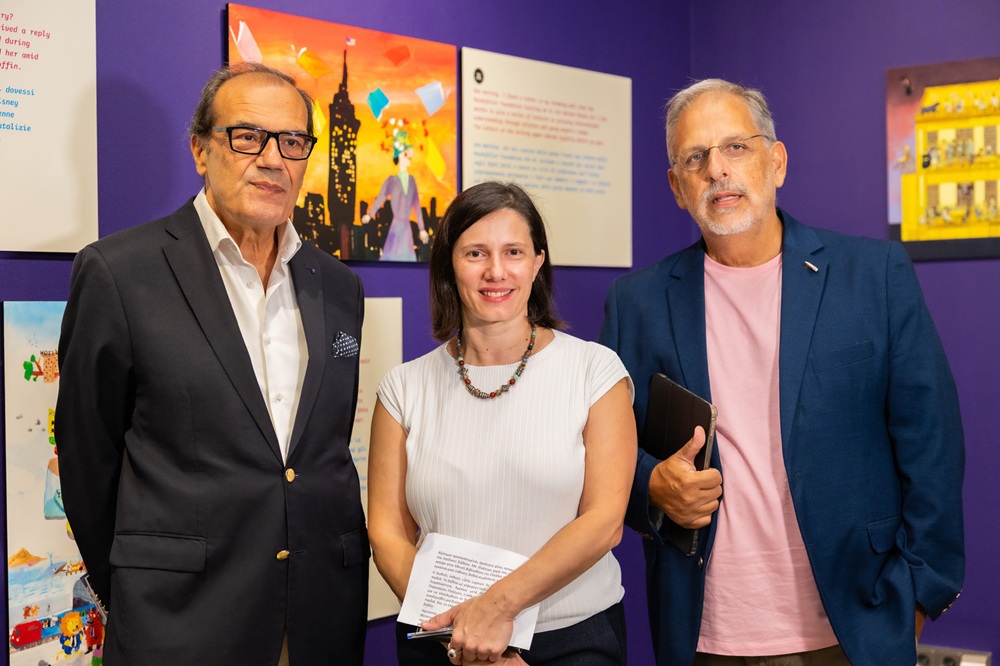
The exhibition at the National Library Greece presents the history of Lepman through a combination of images and storytelling. Twenty original works by illustrators from Italy, Spain, France, Argentina, Cuba, Finland, Belgium, Latvia, the United Kingdom, Russia, and Taiwan present different moments from the life and work of this remarkable woman. Thus, her story is presented through the works of the illustrators and becomes something that can be approached not only through knowledge but also through the imagination, making this one of the most interesting aspects of the exhibition.
Lepman believed in the power of children’s books at a time when Europe was trying to recover from a war. Today, several decades later, the same idea is being presented once again through an exhibition aimed at an audience living in a very different—but no less divided—world. The exhibition’s title, “Let’s Begin with the Children,” is no accident. The focus shifts to children who are still forming their view of the world and of others. And books, in this case, are presented as meeting points. This is precisely what the second part of the title, “Books as Bridges,” means. A bridge does not eliminate the difference between two sides but connects them. And that is the detail that makes Lepman’s work timeless.



Leave A Comment