Text edited by
Margarita Kataga-Art Critic
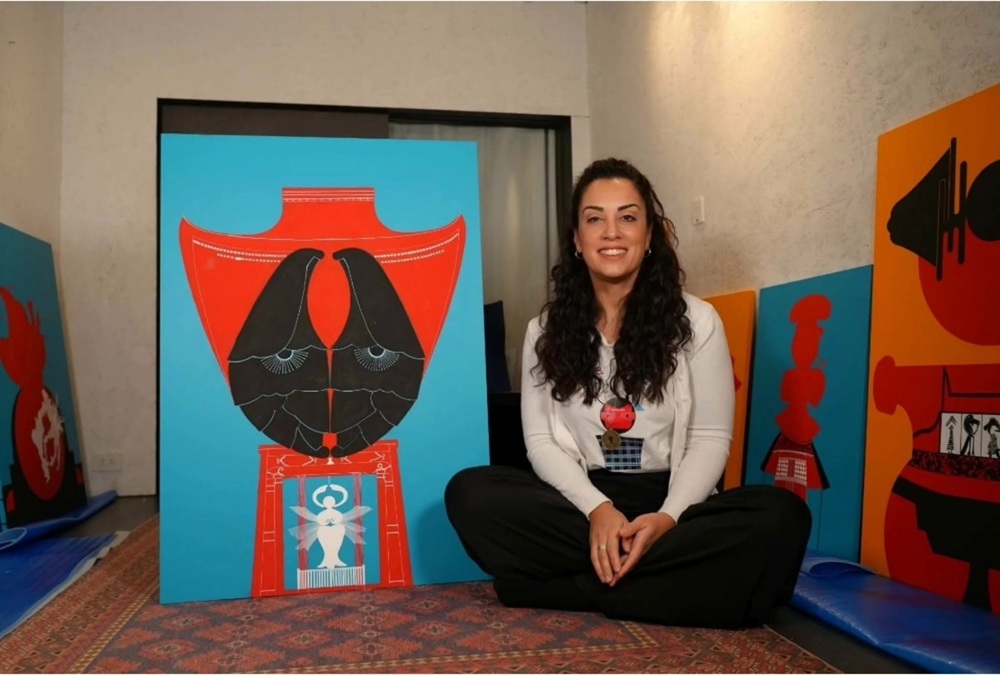
At the courtyard of Kastela Art Center, we met with visual artist Myrto Sakka and Alexandros J. Stanas, Artistic Director of the Kastela Art Center Residency Program, to discuss her recent artistic trajectory and her international presence in Japan.
At the centre of the conversation was Architecture of Memory, presented in March 2026 at the historic Enryaku-ji Temple Complex on Mount Hiei, Japan, as part of Sakka’s artist residency with GENETO Art Foundation. The discussion also extended to her creative process and to the trajectory connecting Oracles, presented at Kastela Art Center and curated by Antigoni Kapsali, with her more recent research into memory, symbols, lineage, and the dialogue between different cultural traditions.
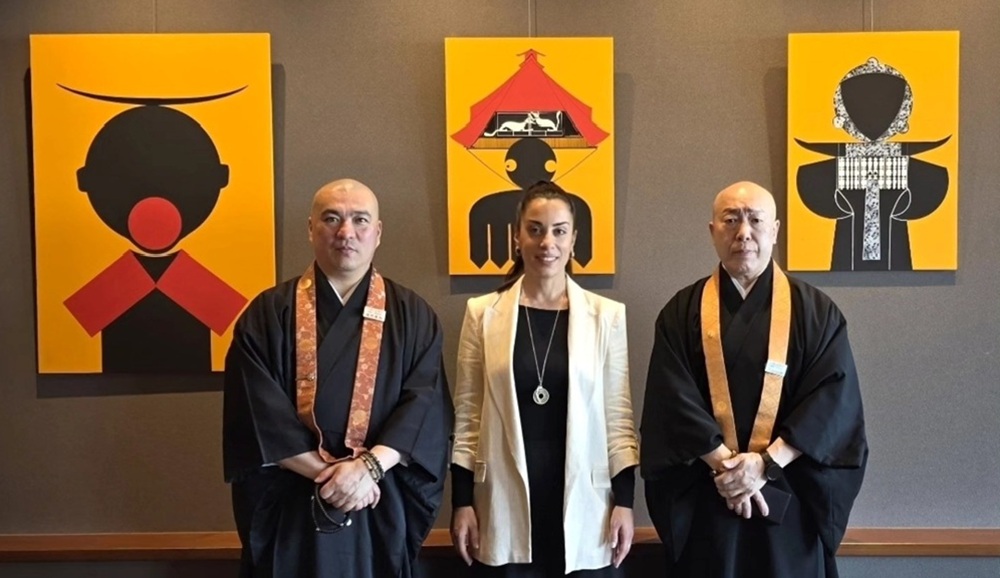
Alongside this conversation, interviews given to Margarita Kataga by Daria Luchina, curator at GENETO Art Foundation and international producer; architect, researcher and GENETO founder Koji Yamanaka; and Reverend Gyokai Imadegawa, senior monk of Hieizan Enryaku-ji and Chairperson of GENETO Art Foundation, reveal the particular cultural context within which Architecture of Memory was created and presented: the encounter between a contemporary artistic practice and a place carrying more than 1,200 years of history, religious tradition, and cultural memory.
Architecture of Memory: an exhibition on Mount Hiei
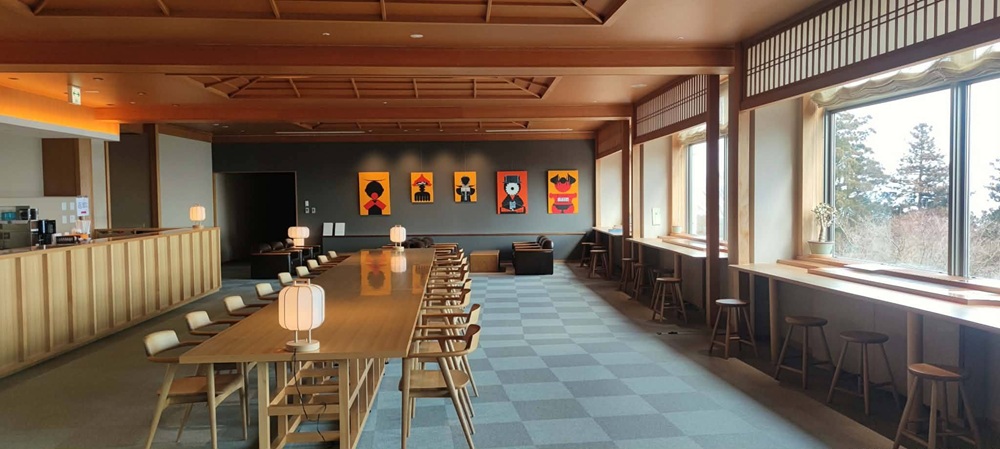
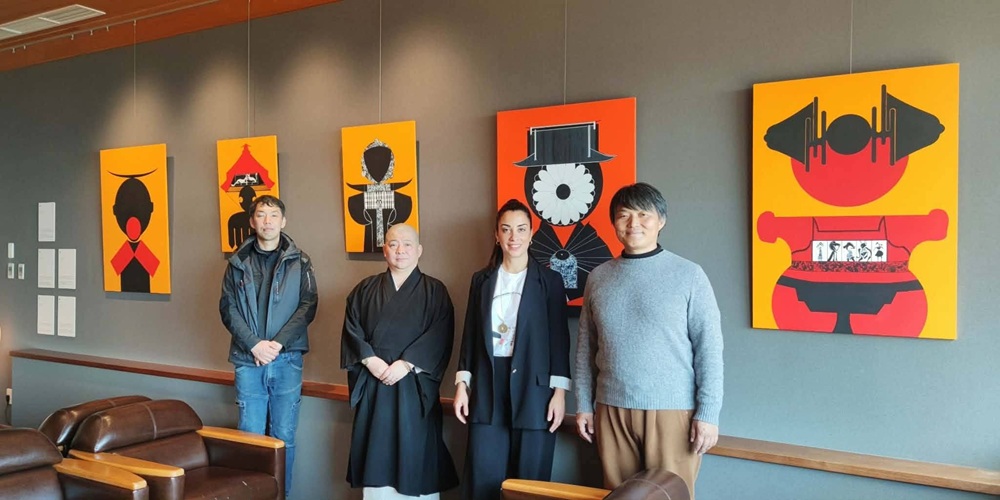
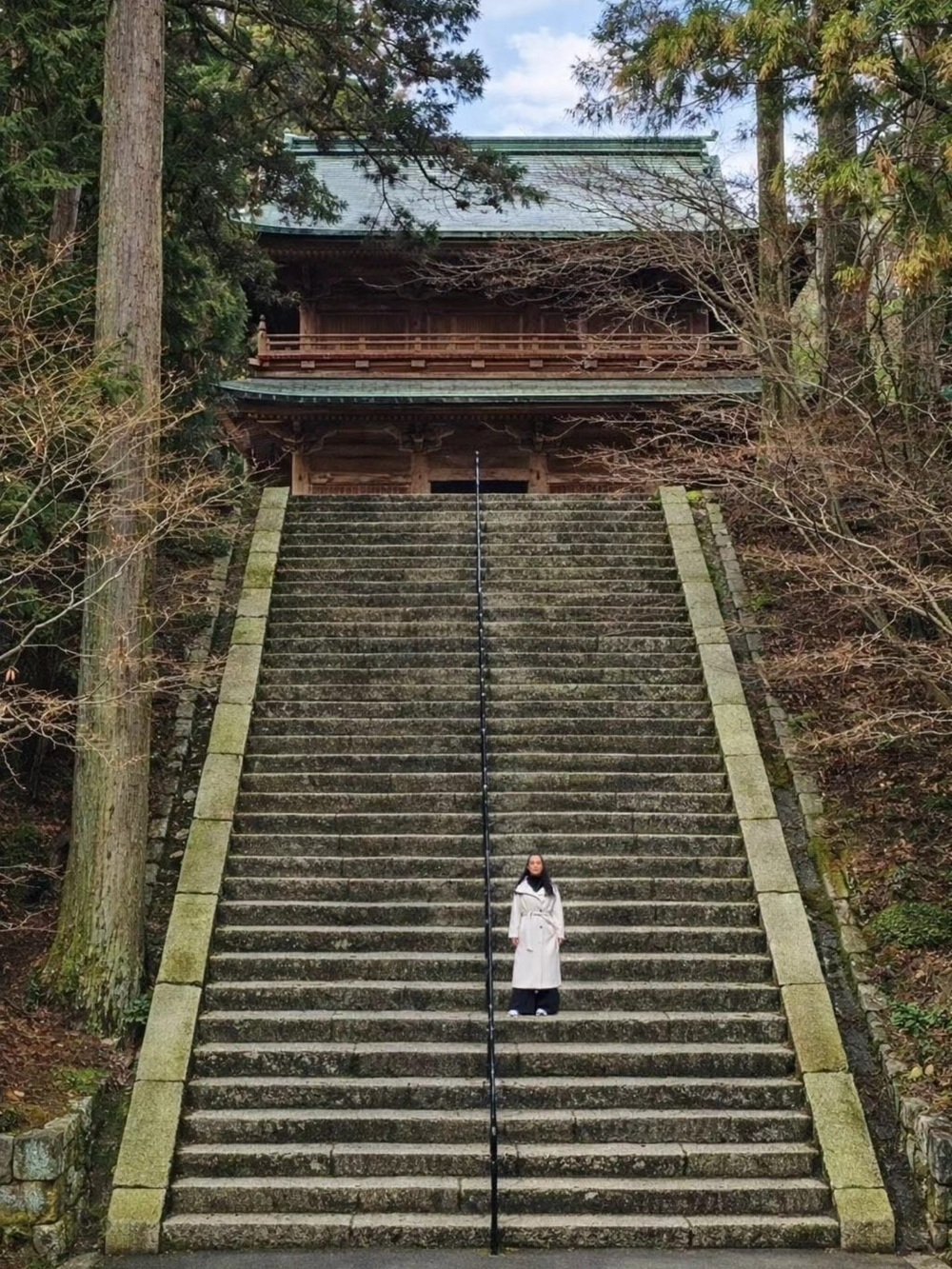
In March 2026, GENETO Art Foundation presented Architecture of Memory at the Enryaku-ji Temple Complex on Mount Hiei, Japan: a new series of works by Myrto Sakka, created during her artist residency in Kyoto.
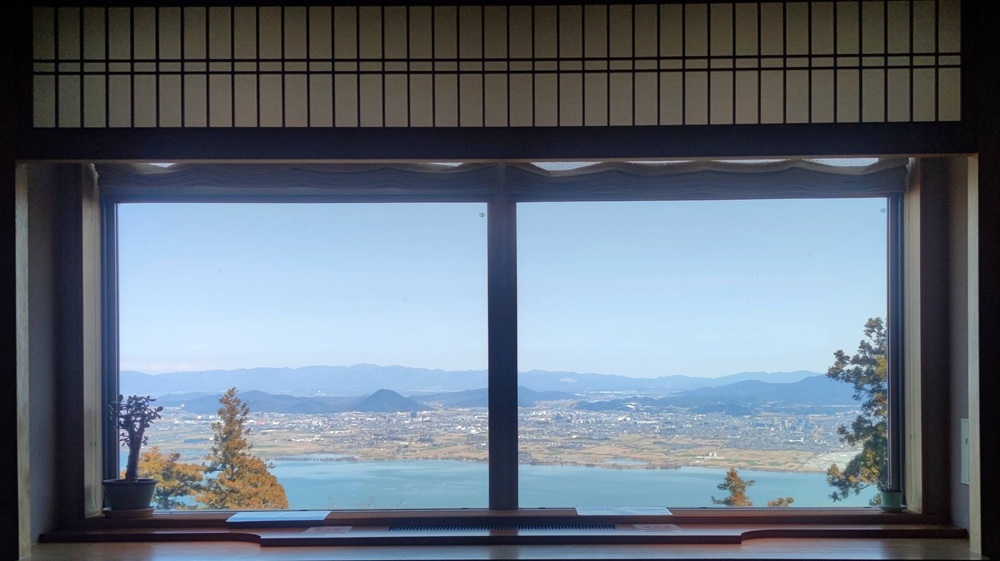
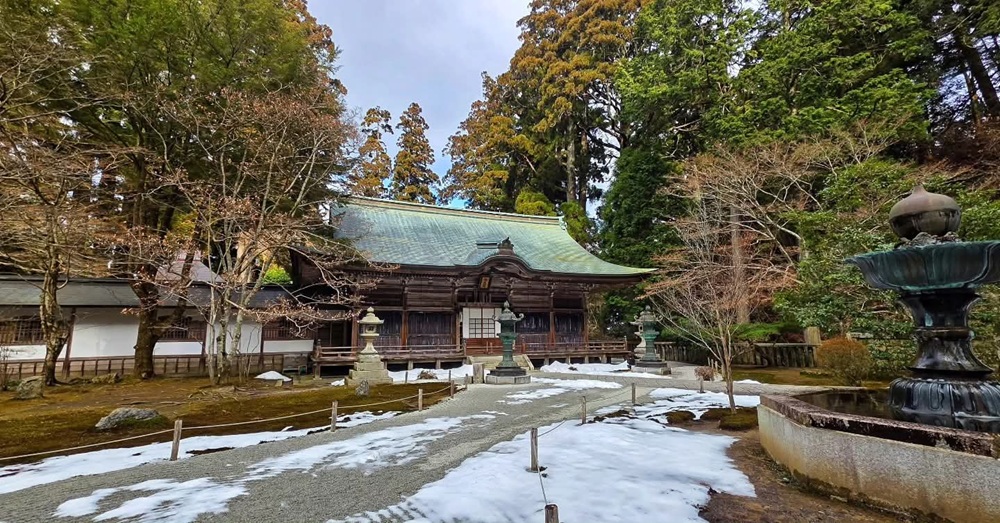
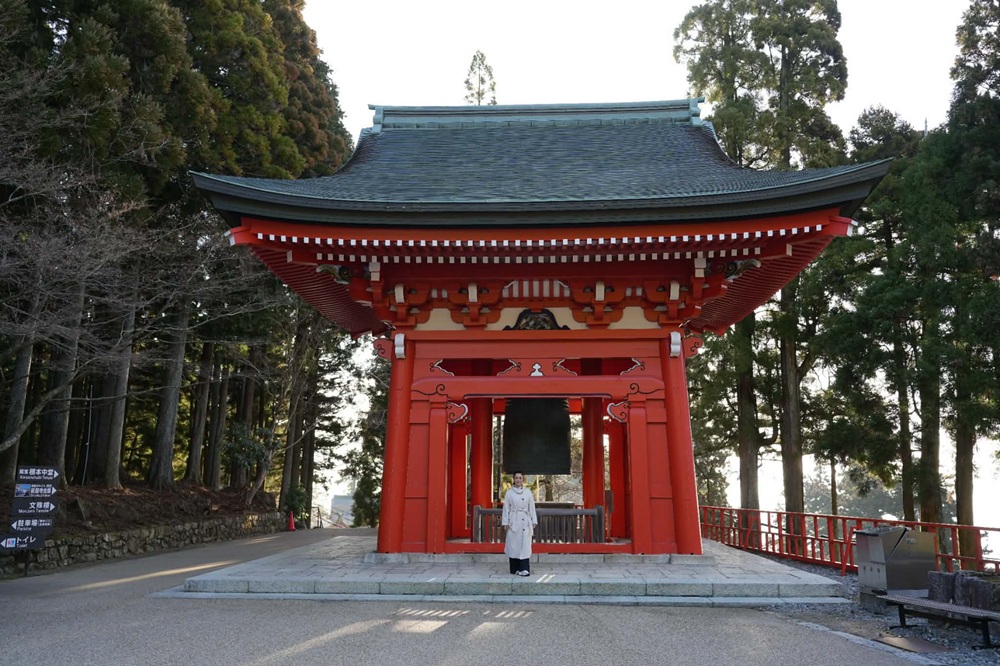
Mount Hiei is one of the most important sacred sites of Japanese Buddhism, while Enryaku-ji, the historic centre of Tendai Buddhism, forms part of the UNESCO World Heritage Site “Historic Monuments of Ancient Kyoto.”
Within this environment, where a religious and cultural tradition has been sustained for more than 1,200 years, Architecture of Memory developed as an artistic investigation into the invisible structures through which memory, history, and cultural inheritance continue to shape human experience.
Through painting and a personal symbolic language, Sakka explores how individual and collective memory are transmitted and transformed through time.
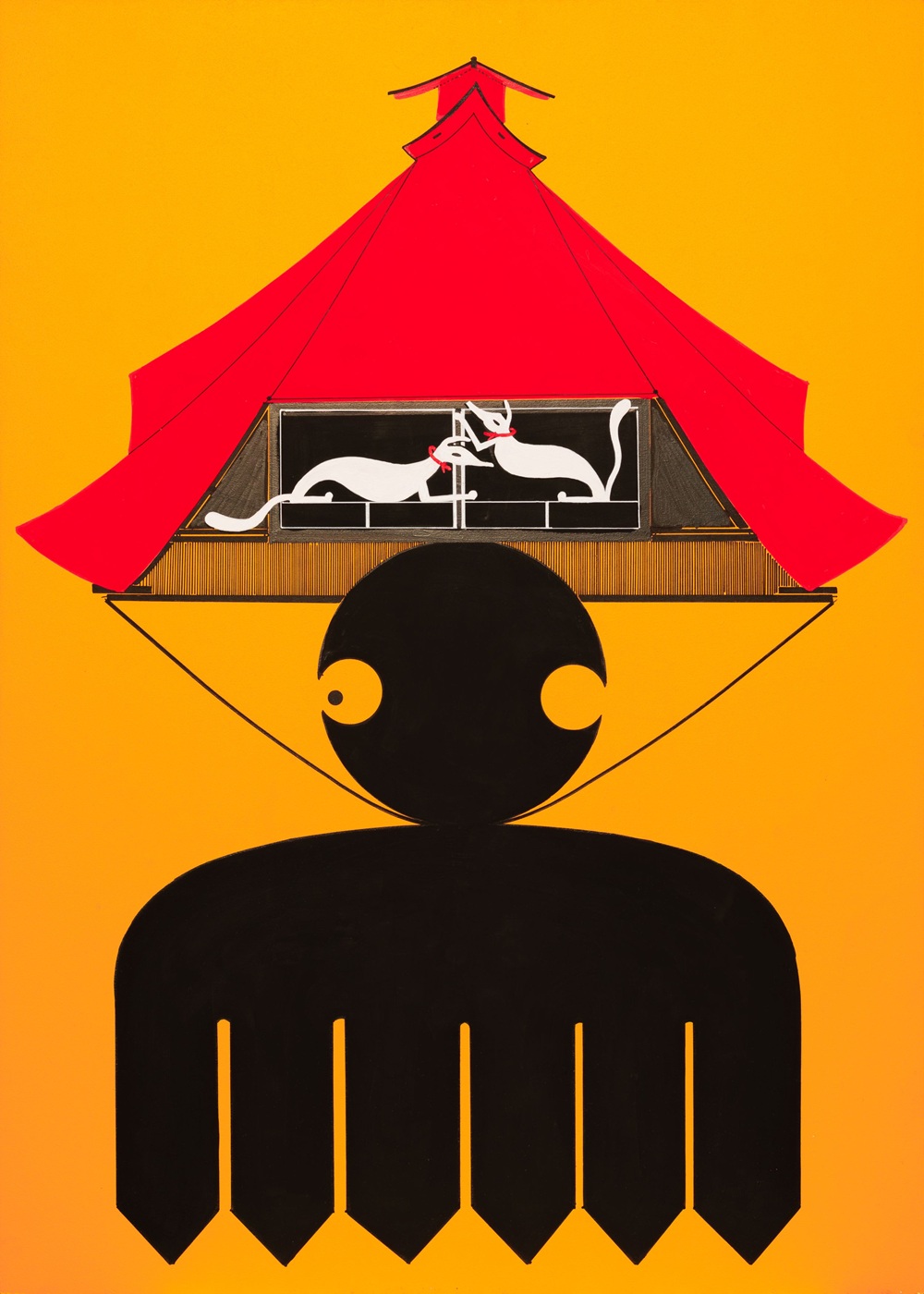
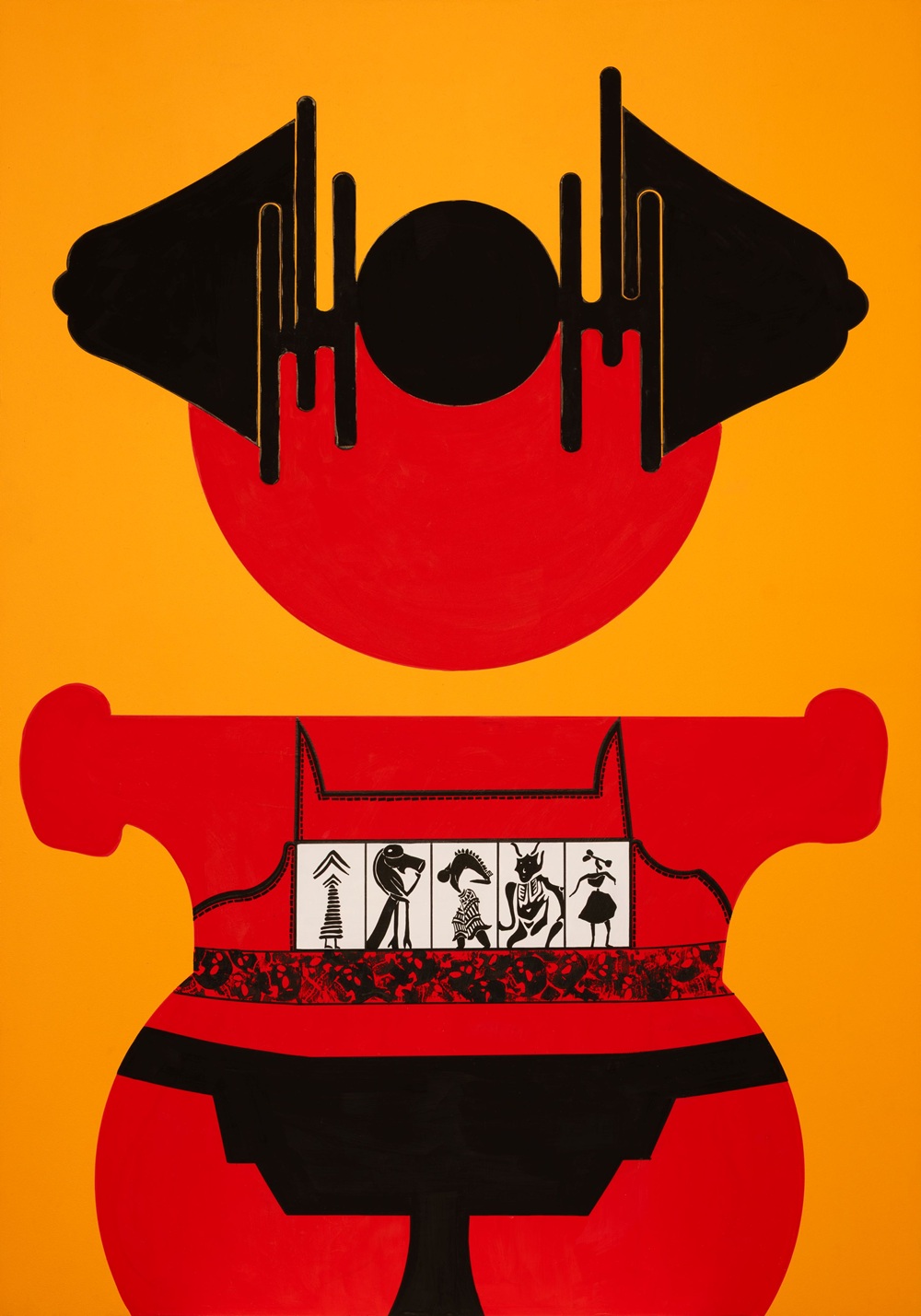
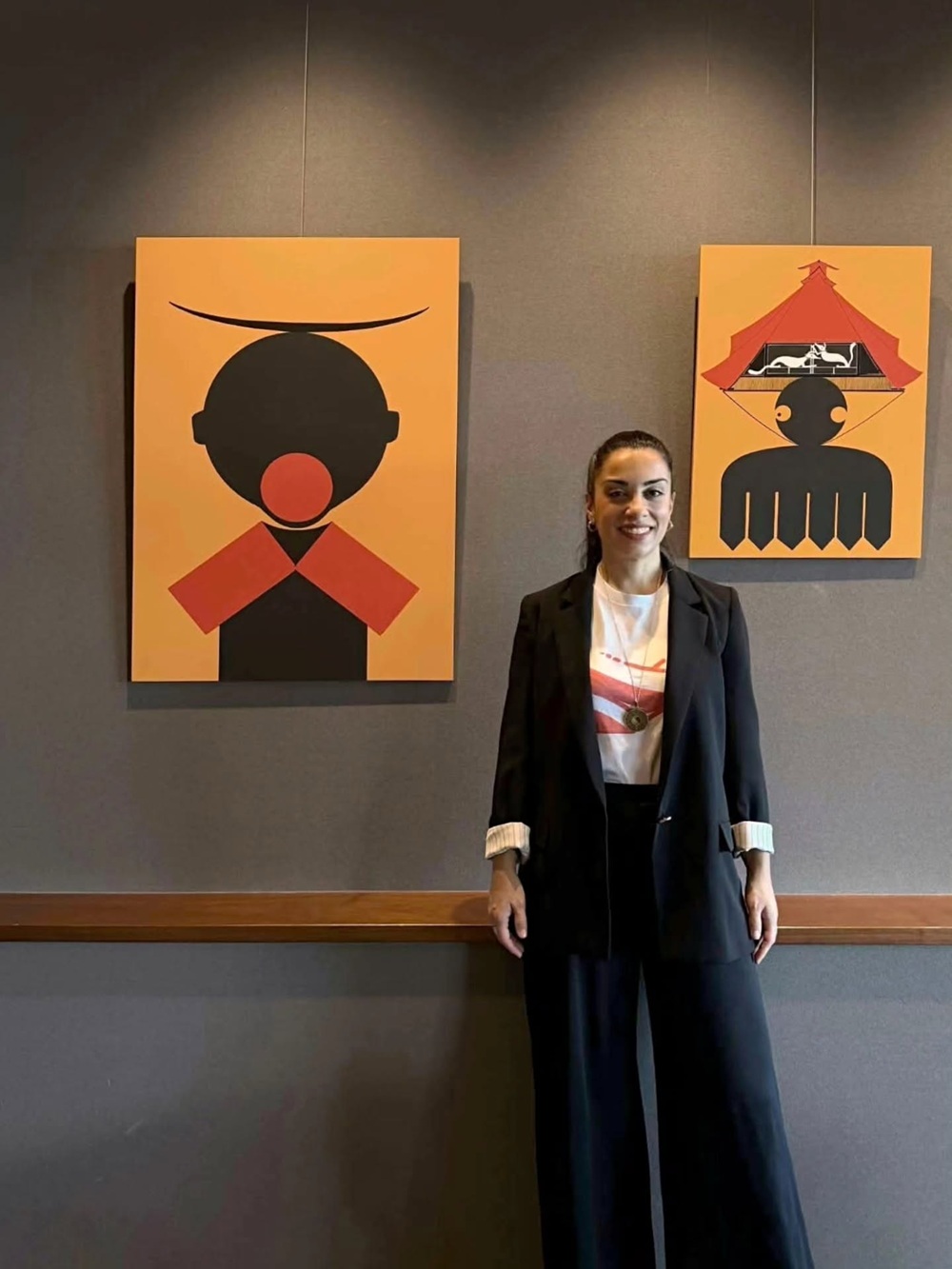
Central to this series are kamon, traditional Japanese family crests. Rather than approaching them as decorative motifs or static historical objects, Sakka considers them as carriers of lineage, identity, and cultural continuity. She reinterprets them through her own visual language, allowing historical forms to enter into new relationships and acquire new meanings.
“Her work did not simply ‘use’ Japanese symbols. It entered into conversation with them.”
Daria Luchina, curator at GENETO Art Foundation, international art producer and founder of Lens G, spoke to Days of Art in Greece about the philosophy behind GENETO’s Artist-in-Residence Program and her collaboration with Myrto Sakka.
As Luchina explains, the program is not simply about offering international artists a place to stay and work in Japan. It is designed to create direct encounters with culture, architecture, tradition, local communities, and people who would otherwise be difficult for a visiting artist to access. Its purpose is to create a space for meaningful cultural exchange while protecting the artist’s own voice.
Myrto Sakka| Architecture of Memory
Recalling her first encounter with Sakka’s work, Luchina says:
“When I first saw Myrto Sakka’s artworks, my immediate reaction was emotional. I felt that her work was extraordinarily beautiful, unique, and unlike anything I had seen before. There was a strong visual presence, but also a great depth of meaning behind it.
Even before meeting Myrto in person, I could feel her dedication, her conviction, and her belief in what she was creating. After meeting her and working with her in Japan, that feeling became even stronger.”
For Luchina, particularly significant was the way Sakka approached her experience of Japan:
“During her residency, she did not treat Japanese culture as decoration or as something superficial. She observed carefully, asked questions, listened, and allowed the experience to influence her work while still preserving her own artistic identity.
The strongest cultural exchange happens when an artist is open to learning, but does not lose their own voice. Myrto represented Greek culture through her own sensitivity, mythology, philosophical background, and artistic language, while also showing great respect toward Japanese culture and spirituality.”
This potential for an encounter between different cultural worlds was one of the reasons Luchina proposed Sakka for the residency:
“I proposed Myrto’s work because I felt her practice could enter into a powerful dialogue with Japan. Her work is concerned with memory, symbols, lineage, and the invisible structures that shape human experience.”
For Luchina, the idea of “Invisible Architecture” refers precisely to these unseen structures: memory, history, family, tradition, relationships, cultural inheritance, and the emotional atmosphere of a place.
“In Myrto’s paintings, this invisible architecture becomes visible through color, symbol, and form. Her work gives shape to what is usually quiet or hidden — the layers of memory and meaning that exist between people, cultures, and places.
What moved me most was that her work did not simply ‘use’ Japanese symbols. It entered into conversation with them. Through her Greek background and her own artistic practice, she created a meeting point between cultures.”
“The most meaningful cultural exchange occurs when an artist is open to learning, without losing her own voice. Myrto brought with her her Greek cultural heritage, mythology, philosophical background, and personal artistic language, while at the same time approaching Japanese culture and its spiritual tradition with great respect.”
An Encounter Between Two Cultural Traditions
Koji Yamanaka, architect, researcher and founder of GENETO Art Foundation, spoke to Days of Art in Greece about his relationship with Enryaku-ji and the possibility of bringing a historic centre of Japanese Buddhism into dialogue with contemporary art.
As he explains, Enryaku-ji is one of the central pillars of Japanese Buddhism, with a history spanning more than 1,200 years. Through his encounter with Reverend Gyokai Imadegawa, senior monk of Enryaku-ji and Chairperson of GENETO Art Foundation, discussions began about creating a connection between Enryaku-ji and contemporary art.
For Yamanaka, such an encounter is not contrary to the history of the place. On the contrary, it reflects the very processes through which Kyoto itself developed culturally:
“Kyoto’s culture has long developed through exchanges with cultures that arrived from the Asian continent. In that sense, Kyoto and Enryaku-ji have never existed in isolation; they have grown through encounters, transmission, and transformation.
For this reason, I believe that inviting international artists to engage with Japanese culture and create new work here is not something unusual. Rather, it is historically natural and meaningful. It continues the long cultural movement through which Kyoto has absorbed, transformed, and transmitted new values.”
In Architecture of Memory, Yamanaka recognised a particular potential for dialogue between Japanese spiritual traditions and Sakka’s Greek mythological and philosophical heritage:
“Myrto approached Japanese Buddhism and Shinto with an open and sincere attitude. She tried to understand the culture not only as visual material, but as something connected to belief, history, and daily life.
I believe one reason this exchange worked so naturally is that Greek culture also has a strong mythological background. There was a shared point of understanding through the idea of the divine, even though the forms of spirituality are different.”
For Yamanaka, the significance of the residency did not lie simply in transferring Japanese motifs into the work of an artist from another cultural tradition, but in allowing them to encounter her own heritage and visual language:
“What made this residency meaningful was not simply that a foreign artist used Japanese motifs. Rather, it was that she approached them with respect, and allowed her own cultural background to meet Japanese spirituality through contemporary art.
In that sense, her exhibition became a valuable example of how cultural heritage can continue to live in the present. It showed that tradition is not only something to preserve, but also something that can inspire new forms of expression when approached with sincerity and respect.”
Enryaku-ji: 1.200 Years of History and Continuity
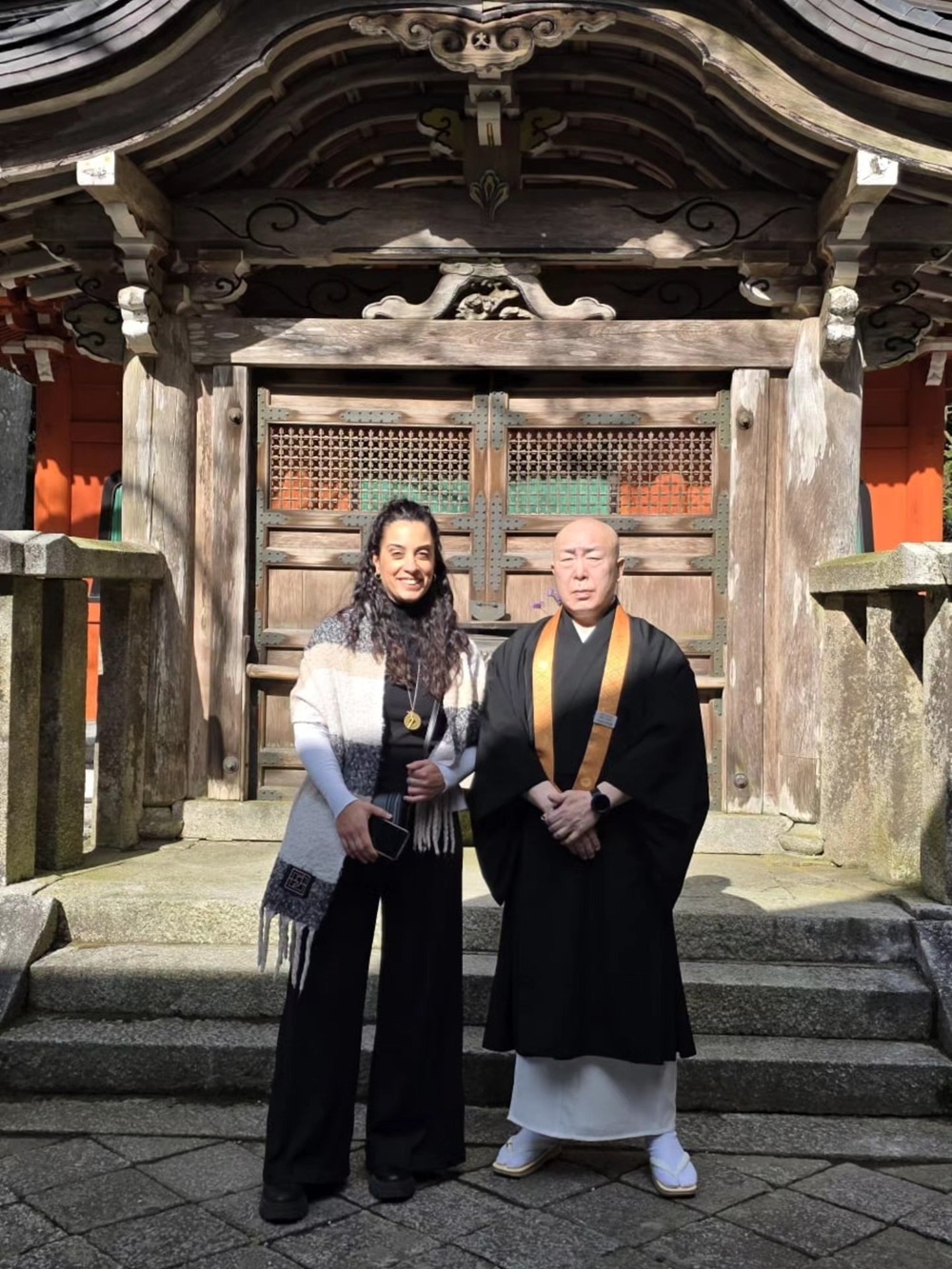
Reverend Gyokai Imadegawa, senior monk of Hieizan Enryaku-ji and Chairperson of GENETO Art Foundation, spoke to Days of Art in Greece about the history of Enryaku-ji, his own path in Buddhism, and his impressions of Myrto Sakka’s Architecture of Memory.
As he explains, Enryaku-ji Temple, located on Mount Hiei in Otsu City, Shiga Prefecture, is one of the most important sacred sites in Japanese Buddhism. The entire area of Mount Hiei is considered part of the temple grounds, and Mount Hiei is often called “the mother mountain of Japanese Buddhism.”
Enryaku-ji is the head temple of the Tendai school of Buddhism and was founded in 788 by Saichō, also known as Dengyō Daishi. Throughout its long history, it served as a comprehensive centre of Buddhist education. Many founders of major Buddhist schools in Japan, including Hōnen, Eisai, Shinran, Dōgen, and Nichiren, studied there in their youth before establishing their own traditions. For this reason, Enryaku-ji is regarded as one of the great sources of Japanese Buddhism.
The temple is also part of the UNESCO World Heritage Site “Historic Monuments of Ancient Kyoto.” Surrounded by rich nature, it consists of three main areas: Todo, Saito, and Yokawa. At its heart is the Konpon Chūdō, where the “Inextinguishable Dharma Light” (Fumetsu no Hōtō), first lit by Saichō, has been protected continuously for more than 1,200 years and still shines today.
Speaking about his own path, Imadegawa explains that he received ordination and Buddhist precepts in 1977. In 1988, he completed the Shido Kegyo training. From 1990, he entered the three-year Komoriyama training on Mount Hiei, during which he practised disciplines including the One-Hundred-Day Kaihogyo and Jozan Zanmai.
In 1993, he completed the Komoriyama training and was appointed Head Priest of Nanrakubo at Enryaku-ji Temple. From 2003, he served for three years at Yokawa Ganzan Daishi-do. From 2016, he served four terms as an Executive Officer of Enryaku-ji, including as Deputy Executive and Head of the Worship Department. Since May 2024, he has served as Executive Officer, Deputy Executive, and Head of the Religious Education Department.
“The exhibition by Myrto Sakka, a contemporary artist from Greece, at Enryaku-ji on Mount Hiei—a sacred site with more than 1,200 years of history and faith—was a deeply moving and unforgettable experience for me.”
Reflecting on tradition and how it can be transmitted into the present, he says:
“My basic approach is rooted in the teachings of Buddhism: we must not only preserve precious traditions and teachings, but also transform them into forms that can truly reach people living in the present age.
In our activities, we place great importance on ‘creating connections’ through Buddhism. By widening the entrance to Buddhism and traditional culture, which are sometimes seen as difficult or distant, we hope to create opportunities for younger generations and many others to encounter their profound value.
In one sentence, I would say that my work is to ensure that the ‘noble light’ inherited from the past is never extinguished, but is polished in a contemporary way and passed on to many people in the future.”
Speaking about Sakka’s exhibition, Imadegawa describes it as a deeply moving and memorable experience:
“The exhibition of Myrto Sakka, a contemporary artist from Greece, held at Enryaku-ji Temple on Mount Hiei, a sacred site with more than 1,200 years of history and faith, became a deeply moving and memorable experience for me.
On one side, there is Greece, with its roots in Western philosophy and mythology. On the other side stands Mount Hiei, one of the great spiritual centers of Japanese Buddhism. At first glance, these may seem like two distant spiritual worlds. However, through Myrto’s works, they resonated with each other in a surprisingly natural and beautiful way.
Her exhibition allowed us to feel that different cultures, beliefs, and spiritual traditions can meet through art. It became a meaningful opportunity to connect the history of Enryaku-ji with contemporary artistic expression, and to share this dialogue with people beyond Japan.”
Painting as a Process of Discovery
Speaking about Sakka’s creative process, Alexandros J. Stanas, Artistic Director of the Kastela Art Center Residency Program, describes it as demanding and at times arduous: a process of searching and uncertainty in which some paintings may emerge almost “in a single breath,” while others require a far more laborious journey.
Sakka describes art as an inexhaustible “gift,” one that reveals itself the deeper one descends into the layers of the psyche, where individual experience encounters the collective unconscious.
Her training in Systemic Constellations has also been fundamental to the way she approaches painting. Systemic Constellations examine the individual as part of wider systems, exploring the relationships, dynamics, and patterns that emerge within them. For Sakka, these are not two separate fields of practice. The mode of observation she has developed through Systemic Constellations has also shaped the way she approaches a place, a historical event, or a collective experience through painting.
In Sakka’s paintings, forms recalling ancient Greek amphorae, Archaic kouroi, and Minoan symbols coexist with references to prehistoric Japanese dogū figures and traditional family kamon.
When working in relation to a specific place, she does not necessarily begin with a predetermined image or an already formed narrative. She connects with the place and what it carries, its memory, its history, and the human experiences inscribed within it, and observes which images, forms, and relationships begin to emerge. In this sense, her painting follows a process closely related to Systemic Constellations: she first observes what appears, and only afterwards begins to investigate the relationships and meanings it may contain.
Research often follows at a later stage. Historical, mythological, archaeological, or symbolic references may emerge retrospectively, revealing connections with forms that had already appeared in the work without having been consciously planned from the outset. These discoveries subsequently become part of the artistic research, expanding the possible readings of the work.
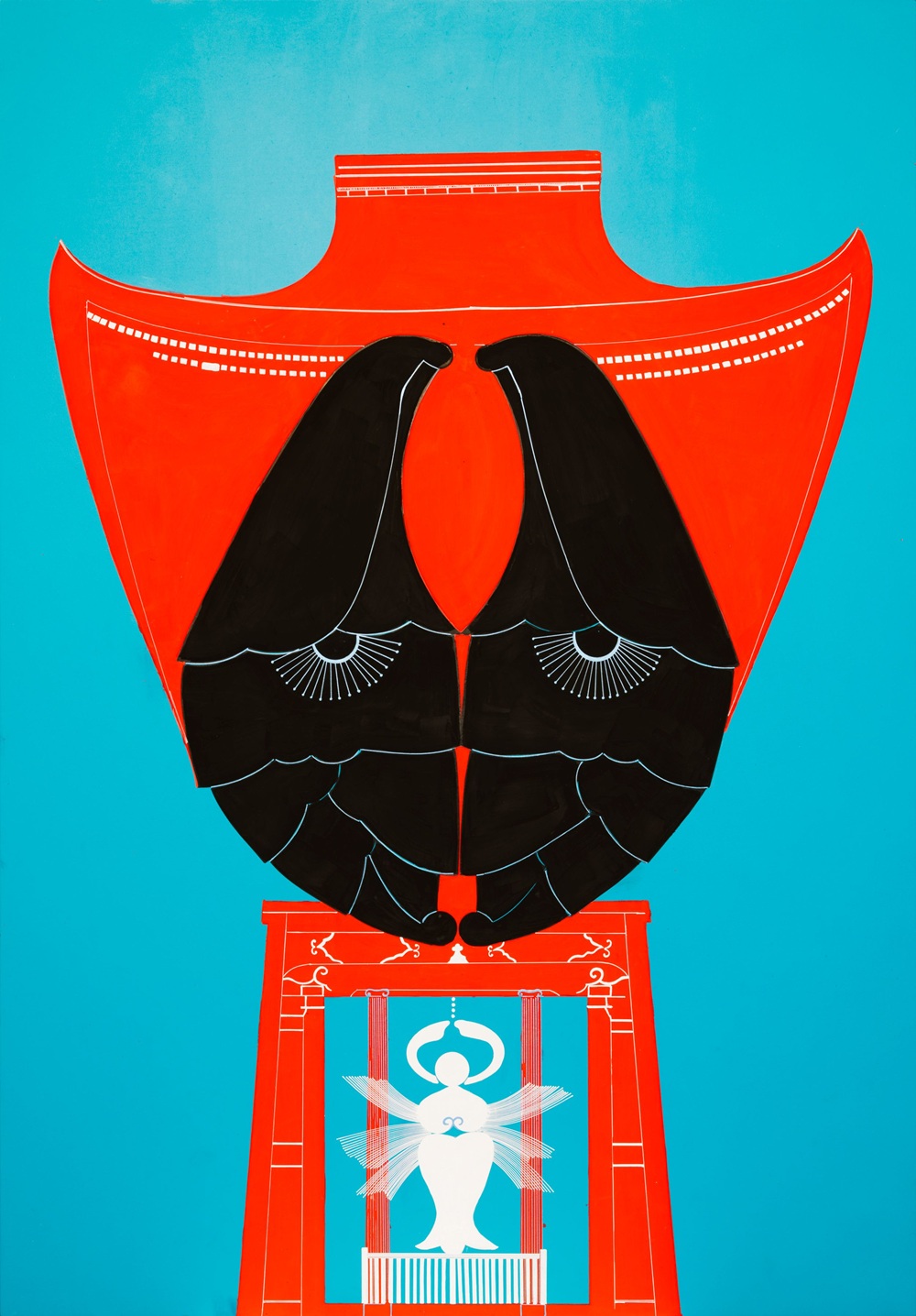
Myrto Sakka| Architecture of Memory
Dreams also play a significant role. Images, forms, and even movements of the brush sometimes appear in her dreams and return to the painting after waking. For Sakka, painting becomes a state of deep concentration in which images and meanings may emerge before they have acquired a conscious interpretation.
During her conversations with the monks of Enryaku-ji, connections also emerged between her investigation of repetition, memory, and intergenerational patterns and Buddhist concepts such as karma and samsara.
A Journey Through Japan’s Collective Memory
Before and during her residency in Kyoto, Sakka undertook a research journey across Japan, visiting, among other places, Fukushima, Hiroshima, and Nagasaki — sites where historical trauma remains deeply inscribed in collective memory.
Her initial research focused on these major historical events and on the ways in which the trauma of a place is carried through time. Gradually, however, her attention began to shift. In the everyday life of Kyoto, memory revealed itself in another form: not only through the traces of historical catastrophe, but through small, recurring forms that continue to connect the present with the past.
The cultural bridge created in Japan marks the beginning of a relationship she hopes to continue in the opposite direction: by welcoming Japanese collaborators and artists to Greece and creating new spaces of encounter between the two cultural traditions.
Among these were the kamon, traditional family crests that she encountered on temples, houses, and textiles. Their recurring presence directed her research towards lineage, ancestry, and cultural continuity. Architecture of Memory therefore began to take shape not only around the memory of trauma, but around the ways in which memory survives, is transmitted, and is transformed from one generation to another.
This movement, from trauma towards continuity, from major historical events towards the subtle traces of memory embedded in everyday life, became one of the central threads of Architecture of Memory.
From Mnemosyne to Kamon
Sakka’s experience of Japan encounters her own Greek cultural heritage within the paintings.
In ancient Greek mythology, memory is personified by Mnemosyne, mother of the Muses — a genealogy that places memory at the very origin of artistic creation.
In Sakka’s paintings, forms recalling ancient Greek amphorae, Archaic kouroi, and Minoan symbols coexist with references to prehistoric Japanese dogū figures and traditional family kamon.
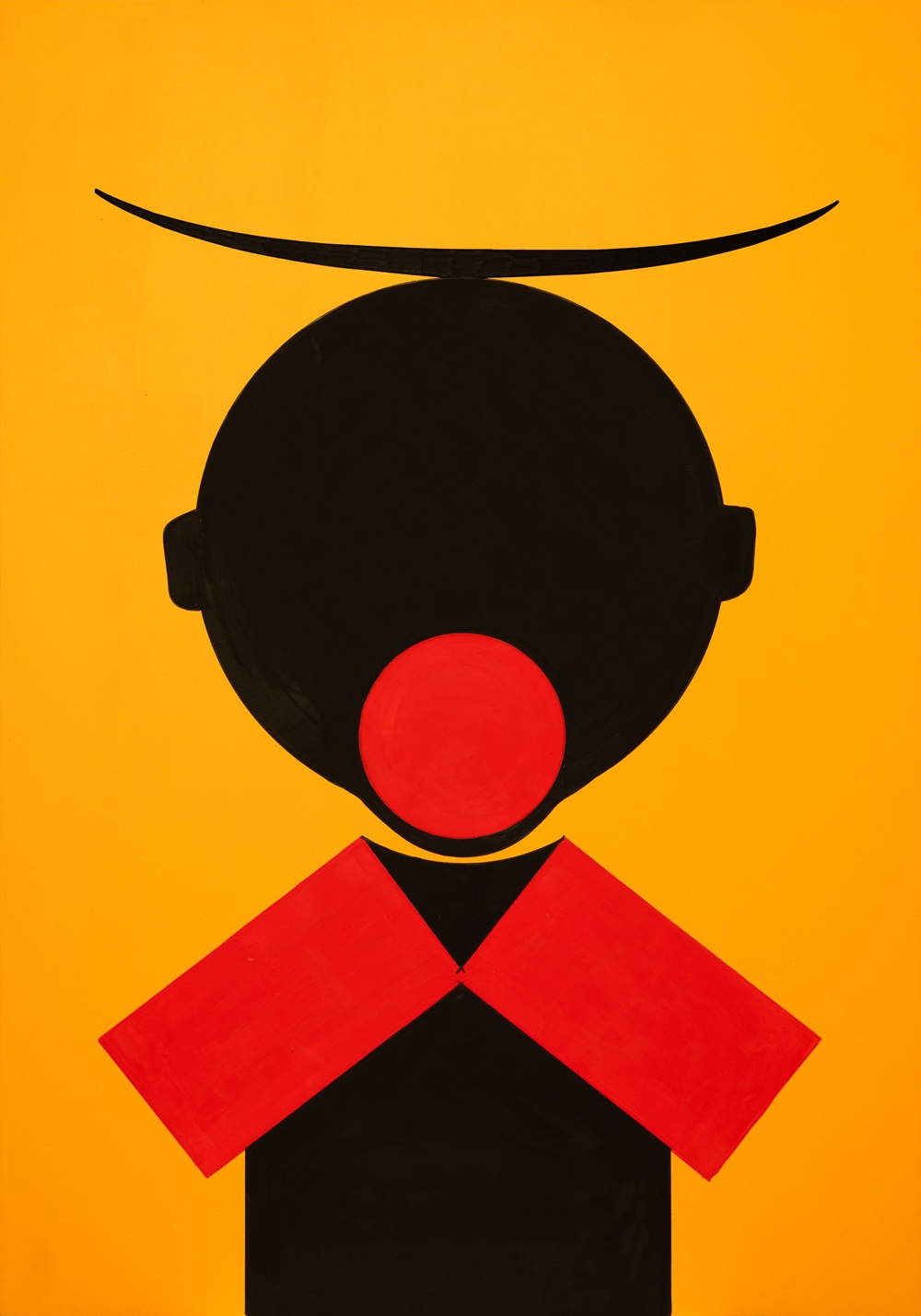
Myrto Sakka| Architecture of Memory
These correspondences do not attempt to equate two distinct cultures. Instead, they create a meeting ground in which different traditions can enter into dialogue around shared human questions: memory, ancestry, continuity, loss, and our relationship to what we inherit.
Through this encounter, a dialogue emerges between the mythological understanding of memory in the Greek world and the contemplative tradition of Japanese Buddhism, without either cultural language absorbing the other.
When the Viewer enters the Artwork
Sakka’s investigation into the invisible structures of memory also extends into the participatory dimension of her practice, where contemporary art enters into dialogue with Systemic Constellations.
A characteristic example is The Spiral, a participatory artwork in which the viewer no longer stands simply in front of an image, but is invited to enter the space of the work itself.
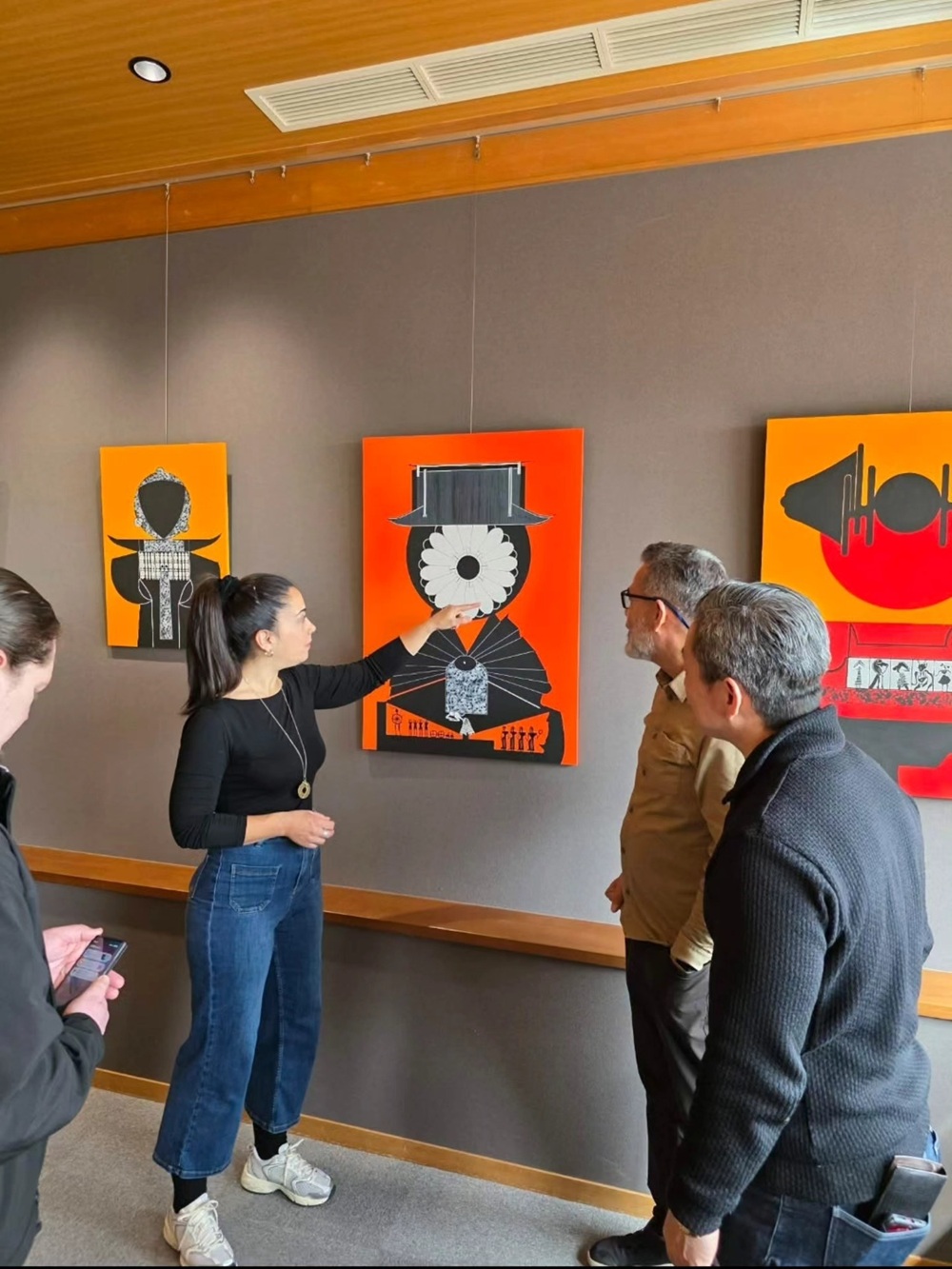
Participants move within a visual structure composed of circles, colours, symbols, and images drawn from the artist’s painterly universe. Painting becomes a space of participation and embodied experience, where movement, presence, and the relationships that develop between people activate different readings of memory, lineage, and individual and collective experience.
The work forms part of Sakka’s broader investigation into the possibility of painting moving beyond the boundaries of the image and becoming a space in which the viewer does not merely observe the artwork, but experiences it through presence and movement.
The Bridge Returns to Greece
For Myrto Sakka, Architecture of Memory does not end with the exhibition on Mount Hiei.
The cultural bridge created in Japan marks the beginning of a relationship she hopes to continue in the opposite direction: by welcoming Japanese collaborators and artists to Greece and creating new spaces of encounter between the two cultural traditions.
Biography
Myrto Sakka is a visual artist and Systemic Constellations facilitator based in Athens, Greece. Her practice explores the relationship between individual and collective experience through painting, mythology, lineage, and a personal symbolic language. A central aspect of her research is the dialogue between art and Systemic Constellations, as well as the development of participatory works in which painting becomes a space of human presence and embodied experience.
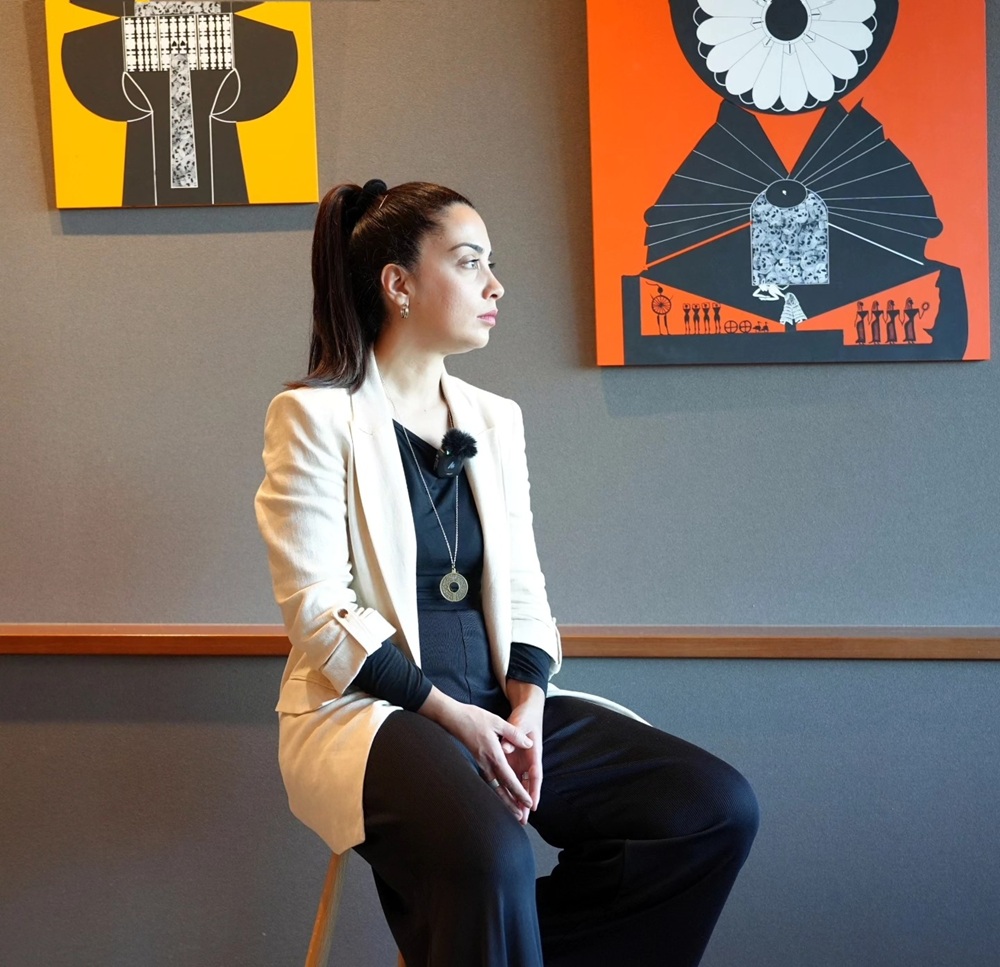
She has attended painting classes and workshops, experimenting with various techniques and media. She holds a BA in Business Administration and an MSc in Marketing and Communication from the Athens University of Economics & Business. She also holds a diploma in Fashion Design. She was trained in Life and Business Coaching at the Athens Institute of Coaching and then completed her studies in Family Constellations in Brussels at the European Institute for Systemic Education and Coaching.
Exhibitions
February 2025: Group exhibition Light and Shadow: Playful Reflections in Contemporary Art, The Holy Art Gallery, Athens
June 2025: Solo exhibition Portal of Consciousness, Back to Athens 2025 International Art Meeting, The Division of Life – a review
August 2025: Group exhibition Hopeless Romantic, Diachronic Museum of Larissa, as part of the Thessalian Poetry Festival
October–December 2025: Solo exhibition Oracles, Kastela Art Center, Piraeus
October 2025: Group exhibition Skin and Bones, Open Art Link, Piraeus Project 2025
November 2025–January 2026: Group exhibition Imposing Sensitivity, Depo Darm Gallery, Kaisariani, Athens
November 2025–January 2026: Group exhibition Fabulous Fabric, Attica Department Store (The Upper House), Athens
March 2026: Solo exhibition Architecture of Memory, Enryaku-ji Temple Complex, Mount Hiei, Japan — part of the UNESCO World Heritage Site “Historic Monuments of Ancient Kyoto” and the historic center of Tendai Buddhism
Residencies
May–December 2025: Kastela Art Center Residency Program, Piraeus, Greece
January–March 2026: GENETO Art Foundation Artist-in-Residence Program, Kyoto, Japan


Leave A Comment