An Interview to Margarita Kataga
Art Critic
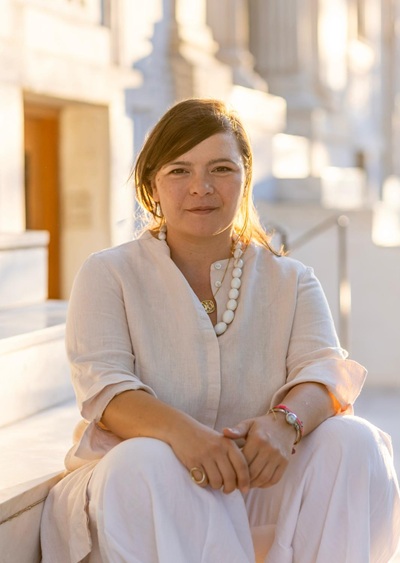
The founder of the Platforms Project, visual artist, curator, and assistant professor in the Department of Graphic Design and Visual Communication at the University of West Attica, Artemis Potamianou, speaks to Days of Art in Greece about the identity of this innovative project. She outlines the factors behind the initiative’s realization and success, drawing on her own artistic journey and a personal vision that has become a collective one.
For the past 14 years, audiences in Athens and around the world have had the opportunity, for a few days, to explore the latest trends in international contemporary art and its independent, experimental side through the collaborative nature of Platform Projects.
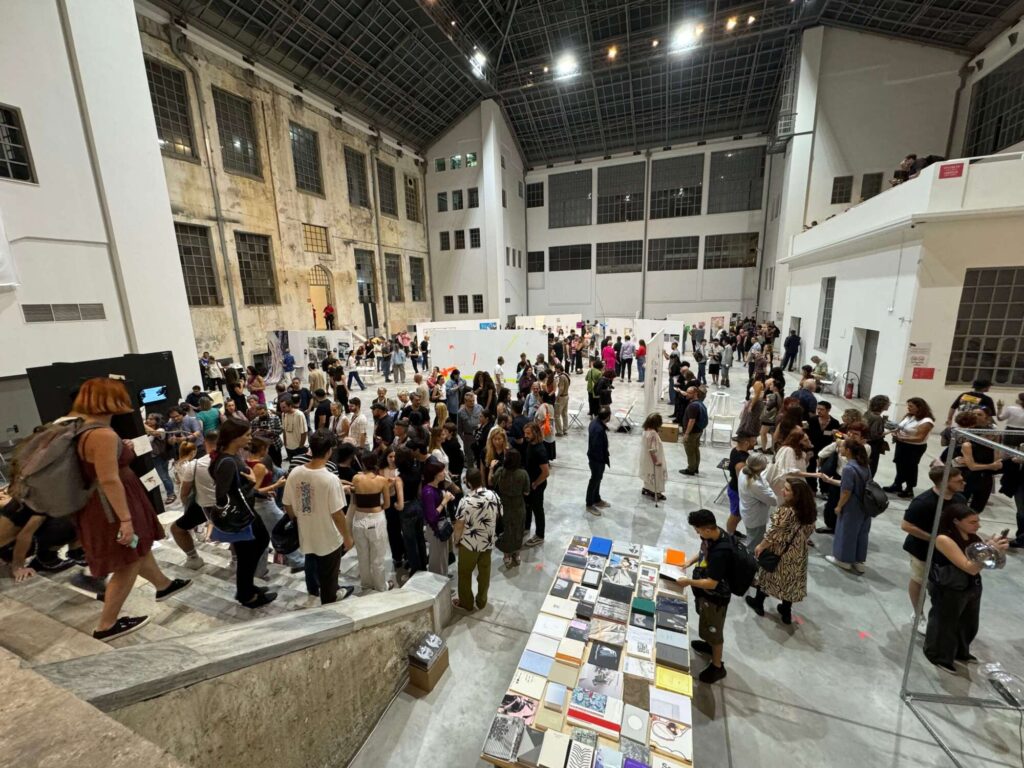
For the third consecutive year, the Tobacco Factory will host and facilitate dialogue among artistic platforms that convey the new artistic pulse through experimentation and self-organization. From September 17 to 20, 2026, the Tobacco Factory of the Hellenic Parliament will convey the pulse of art’s democratic, independent dimension—a step beyond the organized, hierarchical dimension of official institutions and the art market.
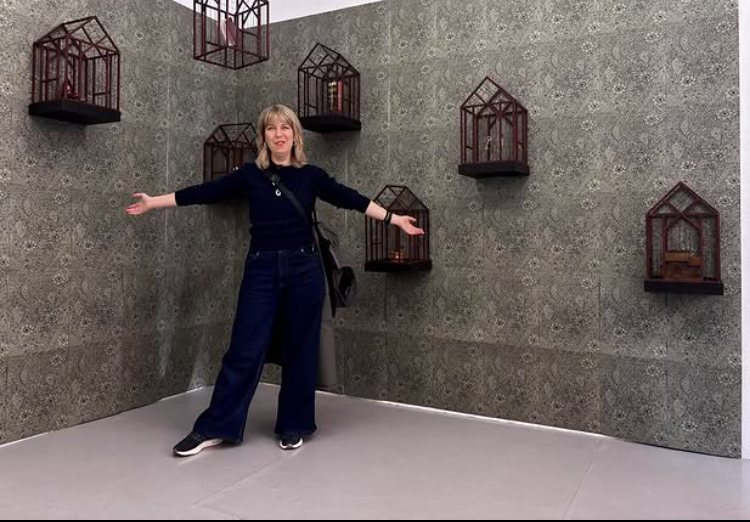
“…My dream is for the Platforms Project to continue to evolve without losing its original essence. To expand its international network even further and create new opportunities for artists…”
Margarita Kataga: Dear Ms. Potamianou, the Platforms Project has been running successfully for 14 years. What was your rationale for conceiving and launching it? How would you describe your vision?
Artemis Potamianou: The Platforms Project began with the need to create a space for the independent art scene, where artists themselves could organize, present their work, and communicate directly with the public. My vision was to create an international platform that would function not merely as an exhibition, but as a place for meeting, exchanging ideas, and building relationships.
After 14 years, I believe that what matters most is that this initial idea has evolved into a true international community, one that continues to grow without losing its independent character.
M.K.: How have you managed to make this project visible outside Greece?
A.P.: An international presence is built primarily through relationships. From the very beginning, we sought to create an international network and invite platforms from different countries and cultural backgrounds to Greece.
It is also important to note that the Platforms Project is not limited to presenting works, but facilitates direct encounters between artists, curators, art professionals, and the public. Through these encounters, new collaborations and exchanges are formed that continue beyond the duration of the event. In this way, Greece is not merely the host country but becomes an active hub within an international artistic network.
M.K.: Could you quantify the success of the initiative?
A.P.: The numbers reflect a significant part of the Platforms Project’s journey: 14 years of continuous operation, participants from 57 countries, and over 9,500 artists and 549 platforms that have been part of the event over the years. Every year the network expands, and this year’s event is the largest to date, with the highest number of participants.
Equally important is the international visibility the event has gained, with coverage in Greek and international media and a steadily growing audience. For me, however, there is one more figure that cannot be easily quantified: the collaborations, friendships, and new artistic connections that have been forged through the Platforms Project.
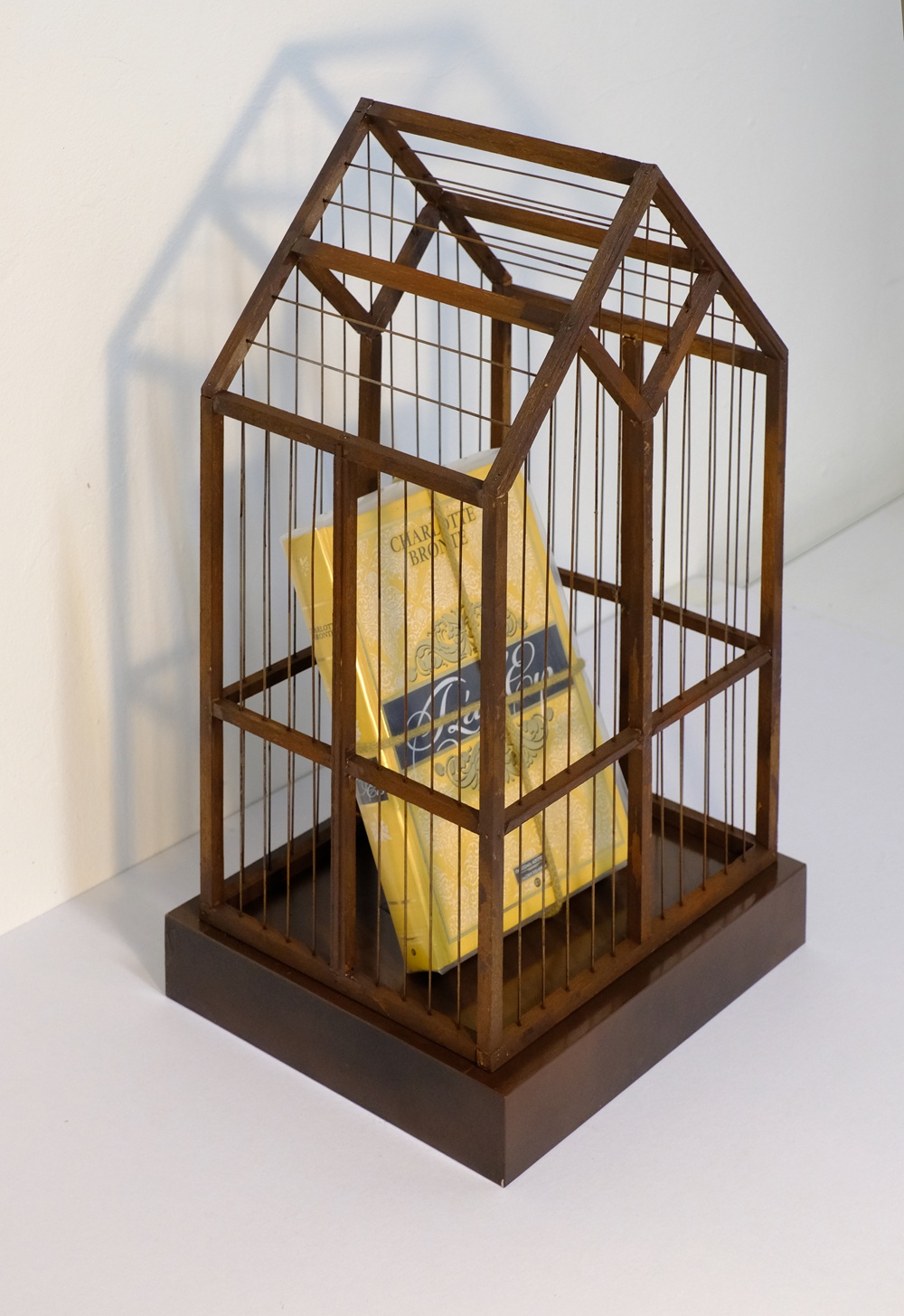
A representative work from Artemis Potamianou’s solo exhibition, Which Side Are You On?
M.K.: What do “collectivity” and community-based artistic activity mean to you in terms of the evolution of art?
A.P.: Collectivity is one of the core principles of the Platforms Project. I believe that art evolves not only through individual creation, but also through dialogue, exchange, and the coexistence of different perspectives.
Independent platforms often create their own conditions for production and function as small communities of research and experimentation. There, ideas can emerge that might not be able to develop within more rigid institutional frameworks. Collectivity does not negate the artist’s individuality; on the contrary, it can provide a broader sphere of communication.
M.K.: What contemporary and global issues do you follow and relate to your artistic practice?
A.P.: I’m particularly interested in issues related to identity, memory, history, politics, social and technological changes, ecology, and new forms of power and control. I also observe a strong need among artists to reexamine personal and collective memory and to challenge the narratives we once took for granted.
Contemporary art often functions as a space where these issues can be raised without the need for easy answers.
M.K.: Do you think you’ve set new rules in the field?
A.P.: I wouldn’t say that setting “new rules” was our goal from the start. We were more interested in creating a different way for the independent scene to come together. Along the way, however, I believe that the Platforms Project has helped raise awareness of the importance of independent artistic initiatives and the communities created by the artists themselves.
What matters to me is that an institution can achieve longevity and recognition without losing its independence and diversity of voices.
M.K.: Has your initiative been replicated internationally? Do you think other institutions and organizations have been influenced by it?
A.P.: It’s hard to say whether an initiative has been “copied.” I know that since the Platforms Project took place, many commercial art fairs in Europe and the U.S. have tried to incorporate a parallel program featuring platforms, and two or three fairs dedicated to platforms and collectives have been organized in various countries.
What I can say, however, is that the idea of independent artistic platforms has gained much greater visibility internationally, and that today we’re seeing more initiatives based on collectivity, self-organization, and networking.
I believe that the Platforms Project has contributed to this development, and that is something that gives me particular joy. For me, the success of an idea isn’t in it remaining unique, but in its ability to inspire other ideas.
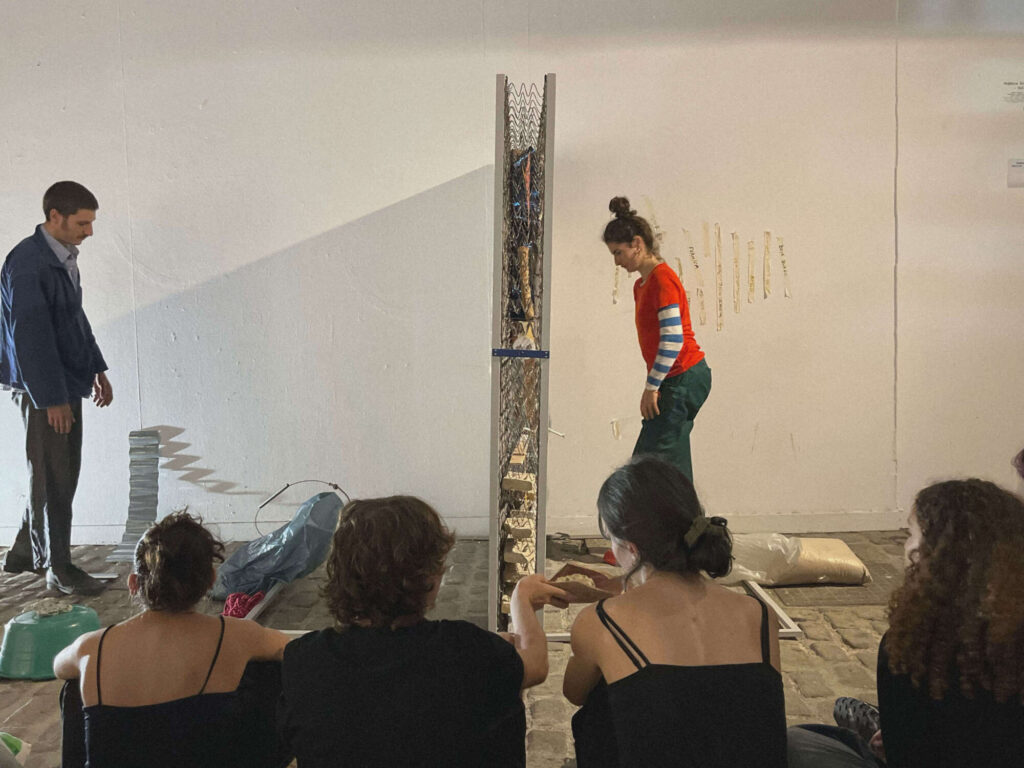
M.K.: As an artist and university professor, what advice do you give to young artists?
A.P.: Don’t try to create what you think you “should” create. Seek out your own voice and stick to it, even when there’s no immediate recognition.
An artistic journey takes time, research, perseverance, and often failure. I would also tell them not to be afraid of collaboration. To build relationships, share their work, and seek out people with whom they can exchange ideas. Art is a personal endeavor, but it doesn’t have to be a solitary one.
“…Collectivity is one of the core principles of the Platforms Project. I believe that art evolves not only through individual creation, but also through dialogue, exchange, and the coexistence of different perspectives.”
M.K.: What is your dream, and what is your next personal step?
A.P.: My dream is for the Platforms Project to continue to evolve without losing its original essence. To further expand its international network and create new opportunities for artists.
At the same time, as an artist, I want to continue my personal research and artistic practice. That is what I am above all else: a visual artist. But I believe that these two fields feed into one another. I don’t see the next step as a final destination, but as yet another starting point.
M.K.: Is there anything new in this year’s event that we haven’t seen in previous years?
A.P.: Yes. This year’s event is the largest in the history of the Platforms Project, both in terms of the number of participants and its international scope. Of particular significance is also the parallel exhibition “M#3, Moments, Meetings, Memories,” curated by Liesbeth Bos and Konstantin Economou, featuring 43 artists who have participated in the Platforms Project in previous years.
The exhibition serves as a retrospective look at the institution’s journey, through works, experiences, and personal narratives. For the first time, then, we have the opportunity to see, in one place, not only the history of the participations but also the memory of the relationships forged through them.
I think this is particularly important for an institution like the Platforms Project: to be able to look back on its past, not as an archive, but as a living community that continues to evolve.
ΒΙΟ
Artemis Potamianou is a visual artist and curator based in Athens. As a visual artist, she has held 24 solo exhibitions, including at the Borough Museum & Art Gallery (Newcastle), the Hellenic-American Union, the MAC (Midlands Art Center in Birmingham), the Museum of Contemporary Art of Crete (Rethymno), the Hellenic Centre (London), the ENIA Gallery, the Fizz Gallery (Athens), and the Tint Gallery (Thessaloniki), among others. She has presented her work in over 130 group exhibitions, including the 1st Thessaloniki Biennale, BIDA—the Spanish Biennale (Greek Representation), the 3rd Athens Biennale, the Biennale Internazionale dell’Arte Contemporanea (Florence), the EMST (Athens), the State Museum of Contemporary Art (Thessaloniki), the Vista Mare Foundation (Italy), and International Young Art 2002: Sotheby’s Amsterdam, Sotheby’s Tel Aviv, Sotheby’s Moscow, at Change & Partner Contemporary Art (Rome), at Colesman Project Space (London), at the “Greek Sale” at Bonhams (London), at Photokyria 2005 (Thessaloniki), at Open 2012 (Venice), at Tensta Kulturhus (Stockholm), etc. She studied at the Athens School of Fine Arts (BA) and at Staffordshire University (MA). He has curated more than 50 exhibitions featuring prominent visual artists on the international scene who make extensive use of elements of discourse, language, and political thought in their work, including Joseph Kosuth, Joseph Beuys, Damien Hirst, Terry Atkinson, Peter Greenaway, Candice Brietz, the Guerrilla Girls, and numerous group exhibitions at institutions and alternative venues. Potamianou is the founder and director of the Platforms Project – Independent Art Fair. She has been the radio producer of the visual arts program Art Therapy*on Beton7 radio since 2011 and has served as the visual arts editor for the architecture magazine GRA Review since 2010. Since 2015, she has served on the Board of Directors and as Treasurer of AICA HELLAS (the Greek Section of the International Association of Art Critics). She has also written numerous texts for exhibition catalogs and books.
Leave A Comment